Background

Råbjerg Mile

Denmark's largest migrating sand dune—a dramatic desert landscape moving 15 metres yearly across northern Jutland.

4.8

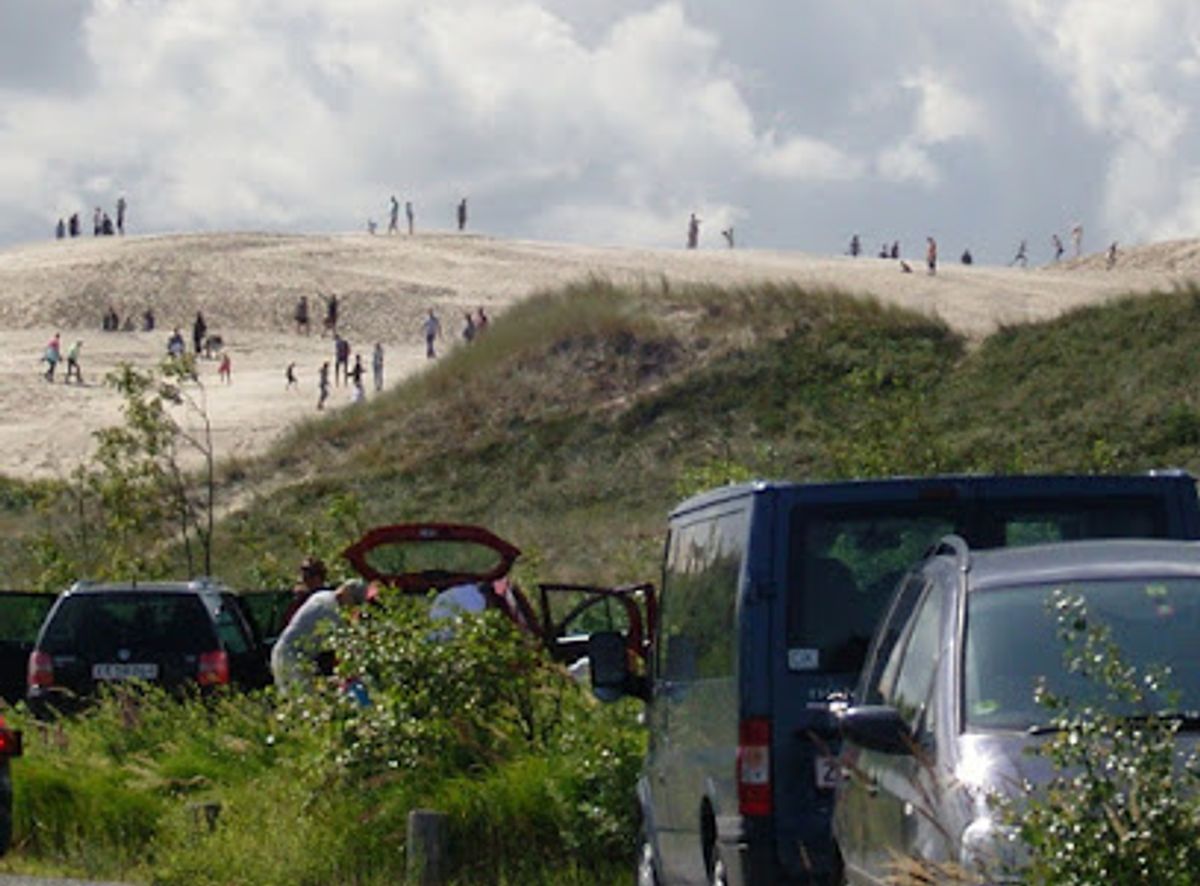
Denmark's largest migrating sand dune, Råbjerg Mile is a dramatic natural phenomenon covering approximately 1 square kilometre with heights reaching 40 metres above sea level. Located near Skagen in northern Jutland, this active dune moves northeast at an average rate of 15 metres per year, leaving behind a moist sand layer and creating an ever-changing landscape. Home to over 250,000 annual visitors, it offers a unique desert-like experience in the heart of Denmark, with expansive views and challenging terrain that rewards exploration.

A brief summary to Råbjerg Mile

  • Råbjerg Mile Vej, Skagen, 9990, DK
  • Duration: 0.5 to 4 hours
  • Free
  • Environment icon Outdoor
  • Mobile reception: 4 out of 5
  • Monday 12 am-12 am
  • Tuesday 12 am-12 am
  • Wednesday 12 am-12 am
  • Thursday 12 am-12 am
  • Friday 12 am-12 am
  • Saturday 12 am-12 am
  • Sunday 12 am-12 am

Local tips

  • Visit during clear, calm weather for the best views and most comfortable walking. Windy conditions intensify sand drift and reduce visibility, while rain can create slippery surfaces.
  • Wear closed-toe shoes and bring extra socks—fine sand is nearly impossible to avoid. Consider gaiters or sand socks designed for desert hiking to minimise sand entry.
  • Avoid completely flat areas with dark, water-soaked sand where quicksand is most likely. Stick to firmer, lighter-coloured sand and sloped terrain for safer exploration.
  • Bring plenty of water and sun protection—the dune offers no shade and the sand reflects intense sunlight. The exposed location provides no shelter from wind or weather.
  • Arrive early morning or late afternoon to avoid peak crowds and enjoy softer light for photography. The dune's appearance changes dramatically throughout the day as shadows shift across the ridges.
widget icon

Getting There

  • Car from Skagen

    Drive southwest from Skagen on Route 40 towards Kandestederne for approximately 20 minutes (16 kilometres). Follow clear signposting for Råbjerg Mile. Free parking is available at Råbjerg Mile Vej. This is the most flexible and direct option, allowing flexible timing and return scheduling.

  • Train and walk from Hulsig Station

    Take the Frederikshavn–Skagen train line to Hulsig Station. From the station, it is approximately 4 kilometres to Råbjerg Mile—roughly 50 minutes on foot along local roads. This option requires good walking fitness and suitable footwear. Train services run regularly throughout the day with varying frequency depending on season.

  • Summer bus service 99

    During summer months, bus 99 operates direct service to Råbjerg Mile from Skagen and surrounding towns. Journey time varies depending on starting point but typically ranges from 20 to 40 minutes. Service frequency is limited to summer season only; check local schedules before planning a winter visit.

  • Bicycle from Skagen

    Cycle southwest from Skagen on Route 40 towards Kandestederne, following signposting for Råbjerg Mile (approximately 16 kilometres, 45–60 minutes depending on fitness). The route is relatively flat with good road surfaces. Bicycle parking facilities are available at the site, though no secure storage is provided.

Råbjerg Mile location weather suitability

  • Weather icon Clear Skies
  • Weather icon Mild Temperatures
  • Weather icon Windy Conditions

Unlock the Best of Råbjerg Mile

Buy tickets

    No tickets available

Book tours with entry

    No tours available

Book tours without entry

    No tours available

Discover more about Råbjerg Mile

A Living Monument to Nature's Power

Råbjerg Mile stands as Denmark's largest and most dynamic sand dune, an extraordinary natural phenomenon that continues to reshape the landscape of northern Jutland. Containing approximately 3.5 million cubic metres of sand spread across roughly 1 square kilometre, this migrating dune rises 40 metres above sea level, making it the largest moving dune in Northern Europe. Unlike stabilised dunes elsewhere in Denmark, Råbjerg Mile has been deliberately preserved in its natural, migratory state since 1900, when the Danish state purchased the central area specifically to maintain it as an active geological feature for future generations to witness and study. The dune's relentless northeast movement—averaging 15 metres annually—means it has shifted approximately 1,750 metres eastward since 1900. At this rate, within 100 to 200 years, Råbjerg Mile will cover the main road leading to Skagen. As the massive dune advances, it leaves behind a distinctive moist sand layer stretching westward towards Skagerrak, where the dune originally formed more than 300 years ago. This trailing moisture creates a unique ecological gradient that gradually supports vegetation recovery as the sand passes over the landscape.

Centuries of Sand Drift and Human Struggle

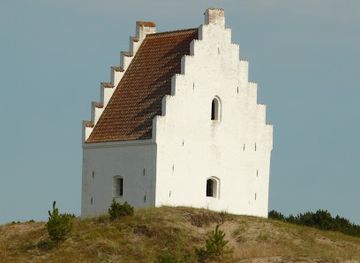
During the 16th and 17th centuries, the entire region around Skagen and much of Denmark's west coast was devastated by catastrophic sand drift. Enormous dunes, some extending up to 7 kilometres inland, advanced relentlessly across farmland, burying roads, destroying agricultural land, and forcing entire communities to abandon their homes. The Sand-Covered Church, built in the late 14th century and dedicated to Saint Lawrence of Rome, stands as a haunting testament to this era—by the 18th century it was almost entirely engulfed in sand, and by 1795 it was abandoned to the dunes. Today, only its tower remains visible above the sand, a poignant reminder of the destructive power that once dominated the region. By the late 19th century, the Danish state recognised the crisis and took decisive action. The Sand Drift Acts of 1857 authorised the purchase and expropriation of affected areas, and systematic reforestation efforts began in earnest after 1880. Dune grasses and coniferous plantations were established across vast areas to stabilise the shifting sands. These interventions proved remarkably successful, and by the 1950s, the sand drifts were largely controlled. However, Råbjerg Mile was deliberately excluded from this stabilisation programme, preserved instead as a living laboratory and historical record of the natural forces that once threatened to consume the entire region.

Exploring the Dune Landscape

Visiting Råbjerg Mile is an immersive sensory experience that few Danish attractions can match. The undulating terrain invites exploration, with numerous sandy hilltops offering progressively expansive views across the dune system and westward towards the Skagerrak coast. Climbing these slopes is physically demanding—the fine sand shifts underfoot, making ascents strenuous—but the effort rewards visitors with panoramic vistas that stretch across an otherwise flat landscape. The dune's scale becomes apparent only when standing within it; the surrounding ridges and valleys create a desert-like environment that feels utterly removed from Denmark's typically verdant countryside. Visitors should be prepared for sand in their shoes and clothing; the fine grains are nearly impossible to avoid. A 15 to 30-minute visit provides a basic sense of the dune's character, though many visitors spend several hours exploring different perspectives and climbing various peaks. The experience is highly weather-dependent: clear, dry conditions offer the best visibility and most comfortable walking, while windy days intensify the sand drift and create dramatic visual effects. A cautionary note: the dune contains areas of quicksand, particularly on completely flat surfaces with dark, water-soaked sand. While adults typically sink no deeper than the knees, it is prudent to avoid these zones entirely.

Ecological Significance and Conservation

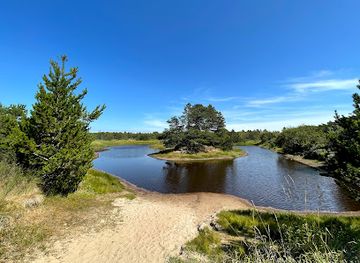
Beyond its geological importance, Råbjerg Mile holds considerable ecological value. The area serves as an internationally important staging site for migrating raptors and provides critical breeding habitat for the Eurasian golden plover and wood sandpiper. The dune's unique environment—with its shifting substrate, variable moisture levels, and sparse vegetation—creates ecological niches found nowhere else in Denmark. Small lakes and indentations form within the dune system due to fluctuating groundwater levels; these initially nutrient-poor water bodies gradually support increasing plant diversity as vegetation colonises the surrounding sand. The dune's continued migration presents ongoing conservation challenges. As Råbjerg Mile drifts eastward onto privately owned land, the Danish state has engaged in successive rounds of protective legislation and land acquisition to ensure the dune's unimpeded movement. In 1962, a major conservation designation protected approximately 1,450 hectares surrounding the dune. Further protections were enacted in 1994 to secure land east of the dune, guaranteeing its future migration path. In 2018, Råbjerg Mile was selected as part of Denmark's National Canon of Nature, recognising its exceptional significance to Danish natural heritage.

Practical Visitor Information

Råbjerg Mile is located 16 kilometres southwest of Skagen, accessed via Route 40 towards Kandestederne, with clear signposting from the main road. Free parking is available at Råbjerg Mile Vej, and a seasonal toilet facility operates during summer months. The site is open year-round and free to visit. The nearest railway station is Hulsig, approximately 4 kilometres away on the Frederikshavn–Skagen line, and summer bus service 99 provides direct access. The dune's exposed location means weather conditions significantly influence the experience; visitors should dress appropriately for wind and bring sun protection for clear days.

Busiest months of the year

Busiest hours of the day

Popular Experiences near Råbjerg Mile

Popular Hotels near Råbjerg Mile

Select Currency