Rubjerg Knude Lighthouse and Wandering Dunes
A windswept dune sea, a rescued lighthouse and a coastline slowly disappearing into the North Sea on Denmark’s dramatic northwest edge.
Windswept Dunes Above the North Sea
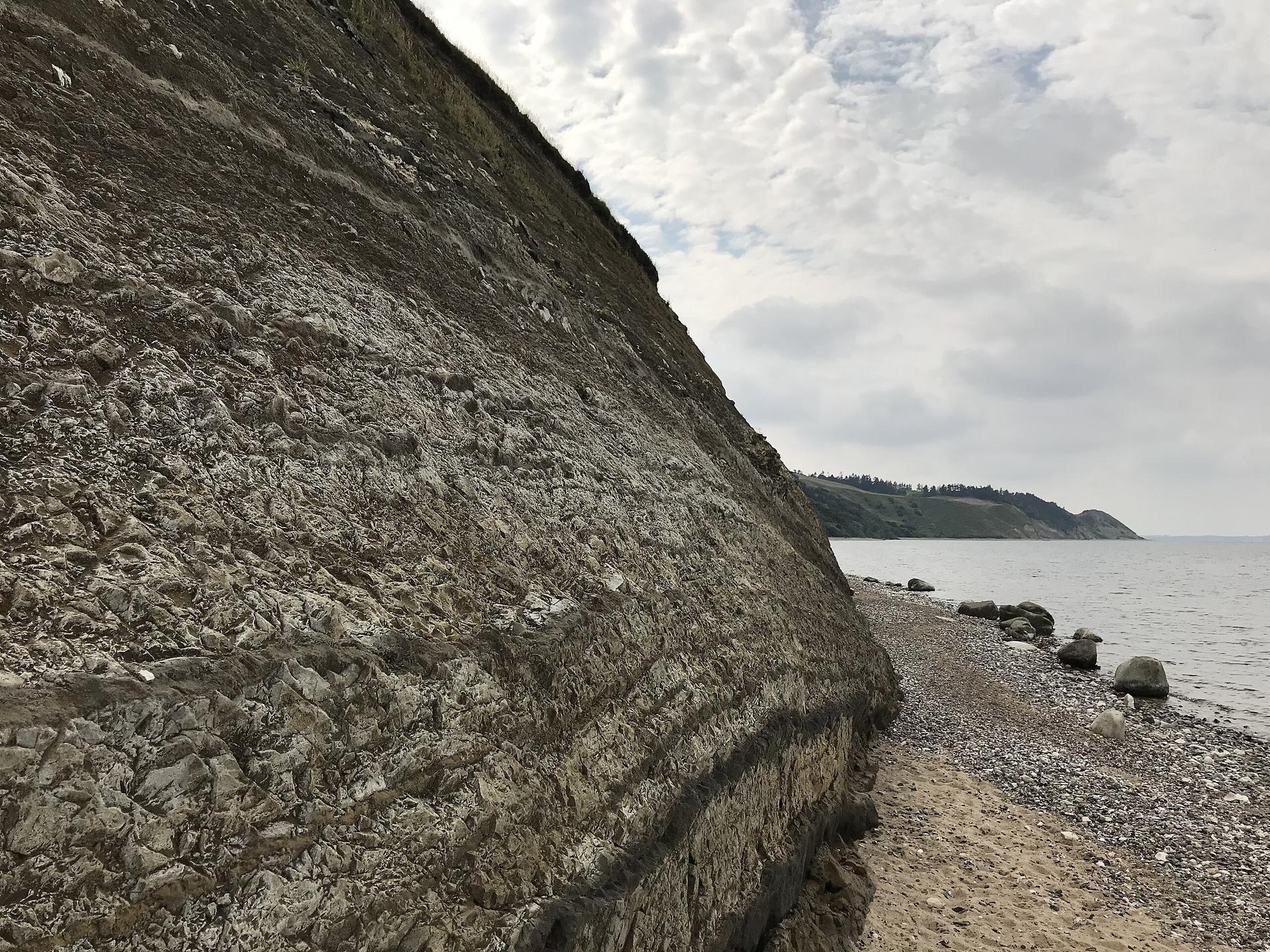
Rubjerg Knude rises like a pale desert above the deep blue of the North Sea, a dune landscape sculpted by relentless wind. You stand on loose, fine sand that has been driven inland from the beach below, piling up into a vast, shifting ridge that can reach around 50 metres in height. From the crest, the views stretch along the rugged coast of North Jutland, with steep clay and sand cliffs plunging down to the surf. Despite being in temperate Denmark, the sensation here is almost otherworldly: sand underfoot, wide skies overhead, and the constant sound of wind and waves. Footprints are quickly erased, and each visit reveals new ripples and ridges, a reminder that this is a living landscape in motion rather than a static viewpoint.A Lighthouse Built for a Changing Coast
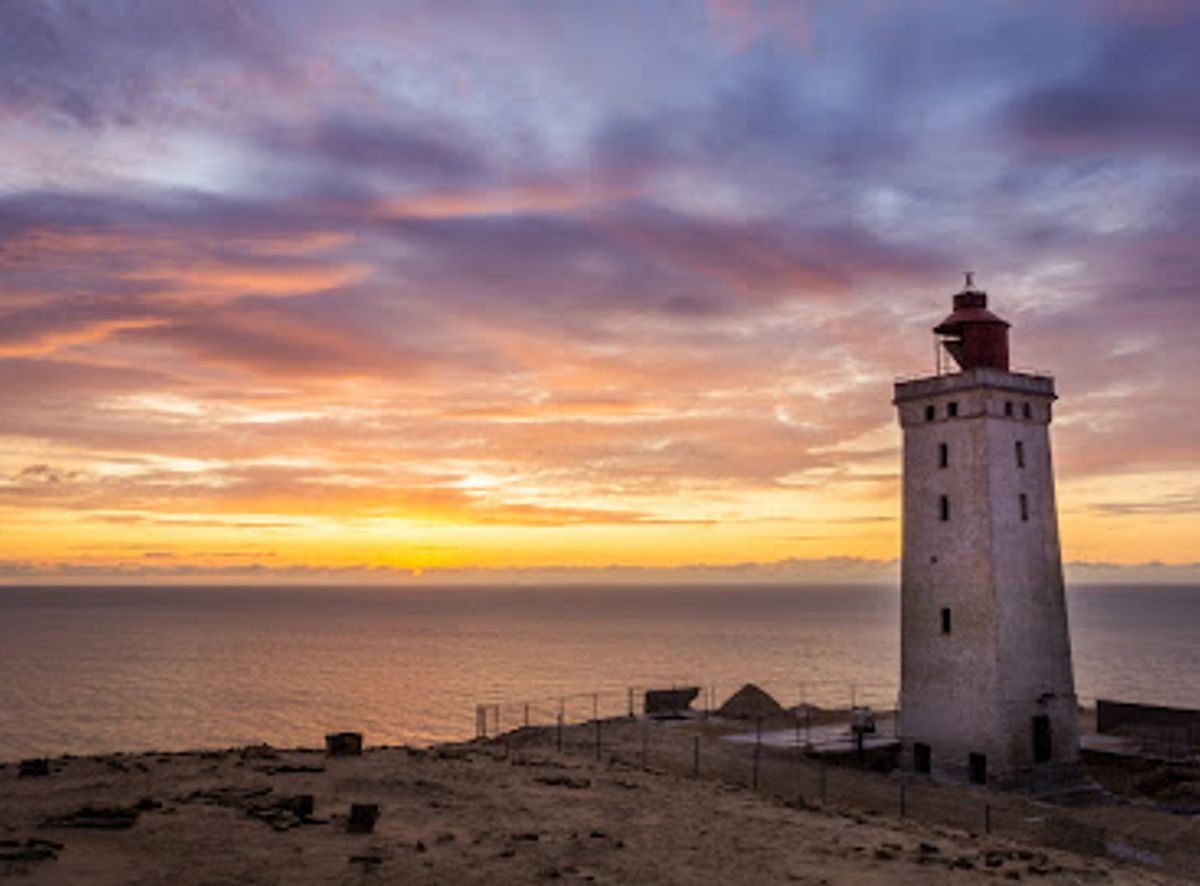
Construction of Rubjerg Knude Lighthouse began in 1899, and it first shone its beam in 1900 from a position then set well back from the coast, about 60 metres above sea level. The 23‑metre tower rose from a small complex of keeper’s houses and outbuildings, intended to guide ships safely past this treacherous stretch of the North Sea. For decades it produced its own gas for the lantern and served as a vital navigation point. Over time, however, the same winds that helped carry its light began to work against it. Sand blown up the cliff gradually built a dune that engulfed the surrounding buildings, while powerful waves steadily undercut the cliff itself. By the late 1960s the sand was so extensive that ships could barely see the light, and the lighthouse was decommissioned in 1968, later reborn for a time as a small museum and café.Nature’s Slow Siege and a Dramatic Rescue
The dunes and the sea continued their advance. The former keeper’s houses were eventually crushed and buried by the weight of sand, and by the early 2000s they had to be demolished as the area was abandoned. Meanwhile the cliff edge crept closer, eroding roughly one to two metres each year. For a long time, it was assumed that the tower would topple into the sea sometime after 2020, completing a long, slow natural demolition. Instead, engineers and local authorities opted for an extraordinary solution. In 2019, after reinforcing the foundation, they placed the 720‑ton lighthouse on steel beams and special rails, then inched it about 70 metres inland over several hours. The move was both a feat of engineering and a public spectacle, and it is expected to give the lighthouse several more decades of life before the sea catches up again.Climbing the Tower and Reading the Landscape
Today visitors can climb the metal staircase inside the weathered tower, counting the steps as the wind hums around the walls. Narrow windows offer glimpses of sand and sky, before you emerge onto the top platform with open views in every direction. To the west lies the endless horizon of the North Sea; to the east, rolling farmland and heath; and along the coast you can clearly see how the cliffs are being eaten away. Standing here, it is easy to imagine earlier versions of this landscape: when the tower stood in green fields, when the dune was still forming, and when the outbuildings and nearby Mårup Church had yet to be claimed by erosion. Interpretive boards in the wider area help explain these changes, but the evidence is visible all around in collapsed cliff sections and exposed geological layers.A Coastal Walk on the Edge of Time
Visiting Rubjerg Knude is as much about the walk as the lighthouse itself. Approaching across the sandy ridge, you may feel the wind tugging at clothing and hear it whistling over the dune top, while seabirds circle far below along the updrafts of the cliff. The light changes quickly here: bright, crisp mornings, hazy afternoons, and glowing sunsets that cast long shadows over the sand. Whether you stay briefly for the panorama or linger to watch the colours shift towards evening, the experience is shaped by movement—of air, water and land. Rubjerg Knude is a place where erosion, engineering and history intersect, and where you can quite literally see the coastline of Denmark being redrawn year by year beneath your feet.Local tips
- Wear sturdy shoes; you will be walking on loose sand and climbing a dune, which can feel like walking on a steep, shifting beach.
- Bring windproof layers year-round, as the exposed cliff-top can be very breezy even on warm, sunny days.
- If you plan to climb the lighthouse, be prepared for a narrow metal staircase and a noticeable sway of wind around the tower at the top.
- Time your visit for late afternoon on clear days to enjoy soft light over the dunes and vibrant sunsets above the North Sea.
- In dry weather, protect cameras and phones from blowing sand, which can be surprisingly abrasive on lenses and screens.
A brief summary to Rubjerg Knude
- Fyrvejen 110, Løkken, 9480, DK
- +4572543653
- Monday 12 am-12 am
- Tuesday 12 am-12 am
- Wednesday 12 am-12 am
- Thursday 12 am-12 am
- Friday 12 am-12 am
- Saturday 12 am-12 am
- Sunday 12 am-12 am
Getting There
-
Car from Hjørring
From Hjørring, reach Rubjerg Knude by car in about 20–25 minutes, mainly on regional roads toward Løkken. The final approach is along a minor road followed by a walk of roughly 10–20 minutes over firm paths and sand. Parking near the trailhead is typically free or low-cost, but spaces can fill up in peak summer and on sunny weekends.
-
Bus and walk from Løkken
Regional buses connect Hjørring and Løkken in around 30–40 minutes, with tickets usually in the range of 25–50 DKK one way depending on zone and discount. From Løkken, you can walk to Rubjerg Knude in about 1.5–2 hours each way along marked coastal and countryside trails. The route is mostly gentle but includes sandy sections and some exposed stretches where strong winds are common.
-
Bicycle from Løkken or Lønstrup
Cyclists can follow local roads and signed cycle routes from Løkken or the nearby village of Lønstrup, typically taking 20–40 minutes depending on starting point and pace. The terrain is gently rolling with occasional short climbs and can be challenging in headwinds. Bicycles must be left at designated areas near the main access paths before you continue on foot across the sand.