Saint Hans Church, Odense Travel Guide
Free Guide: A medieval monastic church of red brick and quiet light, Saint Hans links Odense’s castle, sacred history and old-town charm in one compact, atmospheric stop.


A brief summary of Saint Hans Church
A medieval monastic church of red brick and quiet light, Saint Hans links Odense’s castle, sacred history and old-town charm in one compact, atmospheric stop.
Saint Hans Church, tucked beside Odense Castle on Sankt Hans Plads, is one of Odense’s oldest surviving churches and a quiet counterpoint to the city’s lively centre. First mentioned in 1295 and founded by the Knights Hospitaller, this brick Gothic church once formed part of a medieval monastery complex. Today it offers an evocative mix of monastic history, castle views, and contemplative atmosphere just steps from Odense’s main sights.
On-site amenities
 Restrooms
 Seating areas
 Trash bins
 Information boards
- Address
- Sankt Hans Pl. 2, 5000 Odense
- Phone
- Website
Getting there
On foot from Odense city centre
City bus within Odense
Bicycle within Odense
Taxi from Odense Banegård Center
Discover more about Saint Hans Church
Medieval roots beside Odense Castle
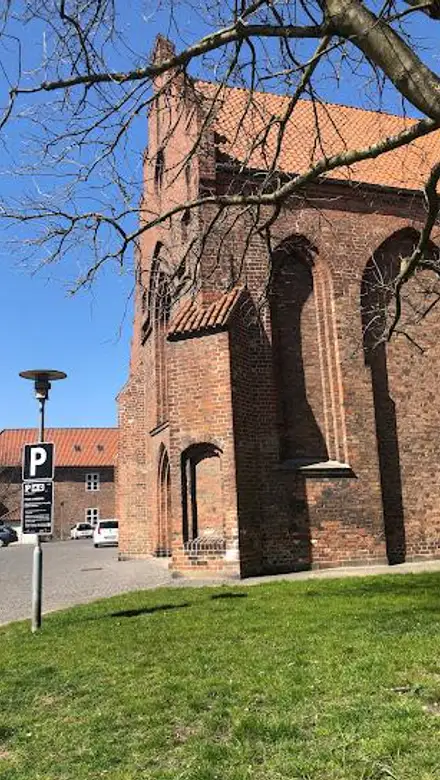
Saint Hans Church stands in the heart of Odense, its red brick tower rising beside the pale walls of Odense Castle, to which it is still physically connected by a discreet wing. In the Middle Ages this was the abbey church of a monastery run by the Knights Hospitaller, a powerful religious order also known as the Order of Saint John. The church is first mentioned in 1295, but the foundations are thought to be older, tied to a period when Odense was emerging as a major religious centre.Walking around the exterior, you can still sense this monastic past in the compact footprint and the way the church nestles into the castle gardens rather than dominating a large square. The setting speaks of cloistered life, with the sacred space of the church and the more worldly authority of the castle sharing a single, enclosed precinct.
Brick Gothic details and quiet interiors
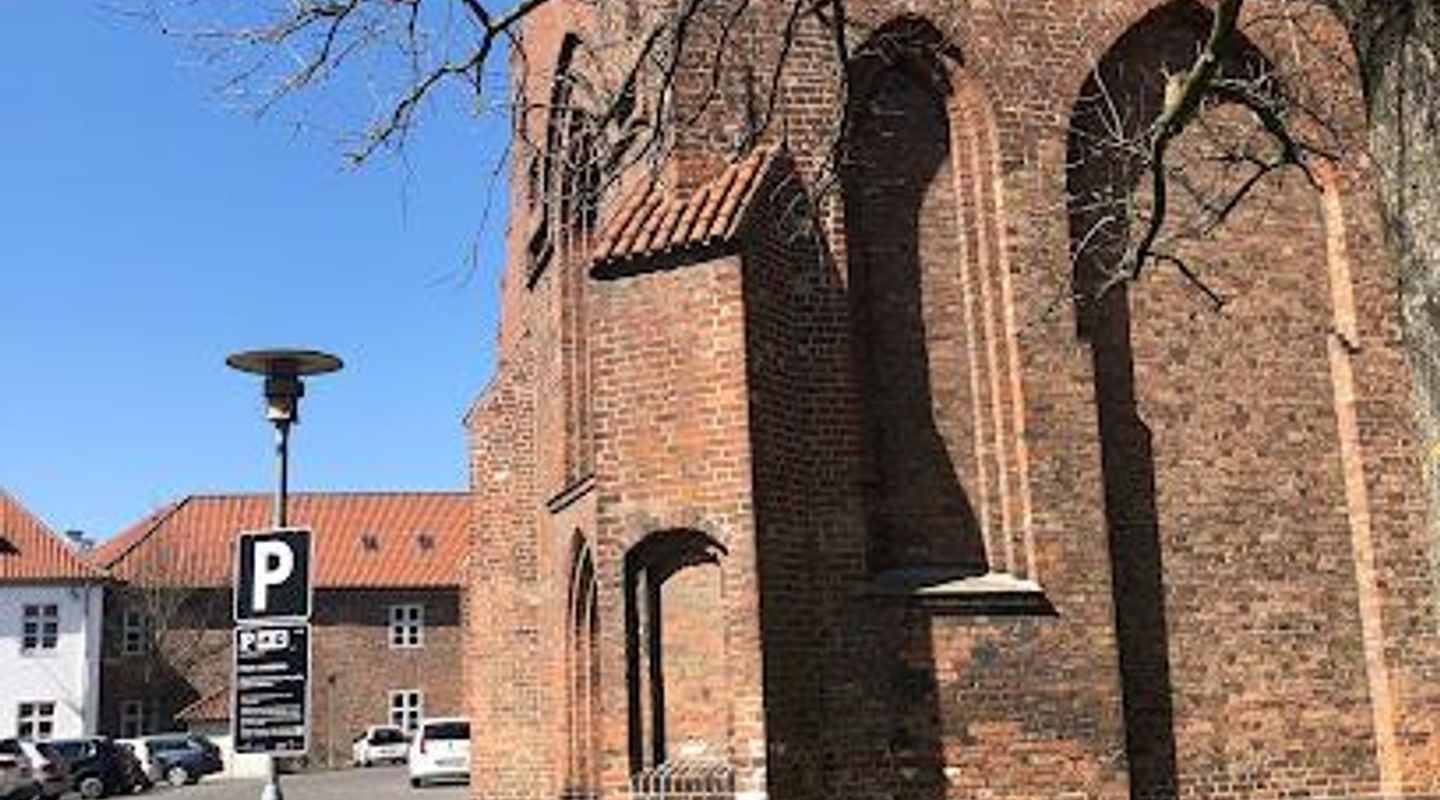
Like many churches on Funen, Saint Hans is built almost entirely of brick, a hallmark of northern European Gothic. The exterior is defined by stepped gables, pointed-arch windows and a sturdy tower that once acted as both bell tower and symbol of spiritual power. Subtle patterns in the brickwork add texture, catching the low Danish light on clear days.Inside, the atmosphere softens. Whitewashed walls, ribbed vaults and simple wooden furnishings create a light, uncluttered space. Compared with larger cathedrals, the interior feels intimate, with clear sightlines from the nave to the choir. A carved altar, pulpit and a handful of memorials to prominent citizens recall centuries of worship, while the organ gallery hints at the role of music in the church’s life.
Traces of the Knights Hospitaller
Saint Hans is unusual in Denmark for its direct association with the Knights Hospitaller. This order combined religious vows with a mission of care and, at times, military defence. Here in Odense they established a monastery complex that included the church and the buildings that once occupied the site of today’s castle. For a time, this was one of the order’s key strongholds in the region.Although the monastic cloisters themselves have long since disappeared, the connection between church and castle still hints at the original layout. The idea of monks moving in procession between chapel, refectory and infirmary adds an extra layer of imagination to a modern visit, especially if you explore the surrounding gardens.
A side note in Odense’s wider story
The church’s story is woven into the broader history of Odense, a city that became a major ecclesiastical centre in the Middle Ages with several monasteries and important churches. While Saint Canute’s Cathedral took on the role of royal pilgrimage site, Saint Hans remained more closely tied to monastic life and later to the royal administration that moved into the former monastery buildings.Some historical accounts link Saint Hans Church with episodes in the life of Hans Christian Andersen, who was born in Odense in 1805 and grew up within walking distance. The church stands within the same old-town fabric of cobbled lanes, merchant houses and small squares that shaped his childhood world, making it a natural stop on any exploration of the city’s literary heritage.
Experiencing the church today
Today Saint Hans Church functions as an active Lutheran parish church while also welcoming visitors interested in history and architecture. Outside service times, the interior often offers a calm refuge from city bustle, with the muffled sound of traffic giving way to the creak of wooden pews and the distant hum of the organ when rehearsals are under way.The small square and green spaces around the church provide attractive viewpoints of both the tower and nearby castle. Photographers find appealing angles in the contrast between red brick, white castle walls and the seasonal greenery of the gardens. Whether you step inside briefly or linger to trace the outlines of the former monastery, Saint Hans Church adds a quietly evocative chapter to any visit to Odense’s historic core.
Evendo Review Centre
 Google
Guest reviews
Best time to go
Quietest: Jan, Feb & Nov · before 7am or from 8pm
Busy times are Evendo estimates for a typical year, to help you plan. Actual crowds vary with events, school holidays and the weather.
Explore Saint Hans Church on the map
A handpicked selection of must-see spots near Saint Hans Church, mapped for you.
Get your free copy of our complete guide to Saint Hans Church, delivered straight to you.
Everything on this page, from opening hours and how to get there to Eve’s tips and the best time to go, in one PDF you can read offline, print or share.
Already have an account? Sign in
Your Saint Hans Church guide is ready.
We'll send it to · Not you? Sign out

Getting your guide ready…
We are putting together a fresh copy of the Saint Hans Church guide. This can take up to a minute.
This can take a few moments. If your browser asks, choose Allow so the download can start. You'll find the guide in your Downloads folder.
Nothing happened? Download it again
Sorry, the guide is taking longer than usual. Please try again in a minute, or get it by email instead.
Unlock the best of Saint Hans Church
Skip-the-line tickets, guided tours with entry, and walking tours of the area, booked in a few clicks.


Other nearby places you may find interesting
The closest places of the same kind, if this one is not quite what you had in mind.
-
-
-
-
-


Swipe for more places
More to explore near Saint Hans Church

 Best experiences near Saint Hans Church
 Best hotels near Saint Hans Church
 Best landmarks near Saint Hans Church
 Best attractions near Saint Hans Church
 Best shops near Saint Hans Church
 Best restaurants near Saint Hans Church
 Best bars near Saint Hans Church
Do you manage this location?
Take control to get all the benefits, like improved information, better appearance, and stronger visibility across AI-powered discovery.
Explore more

Explore more of Odense
Discover Odense, Denmark's enchanting city where fairy tales come to life amidst historic streets, vibrant culture, and scenic beauty.
Explore Odense
Explore more of Denmark
Discover Denmark: A perfect blend of history, modern design, and the cozy concept of hygge. Explore vibrant cities, serene landscapes, and world-class cuisine.
Explore Denmark