
Møntergården, Odense Travel Guide
A pocket-sized historic quarter where cobbled courtyards, timbered houses and multimedia galleries bring the story of Odense and Funen vividly to life.
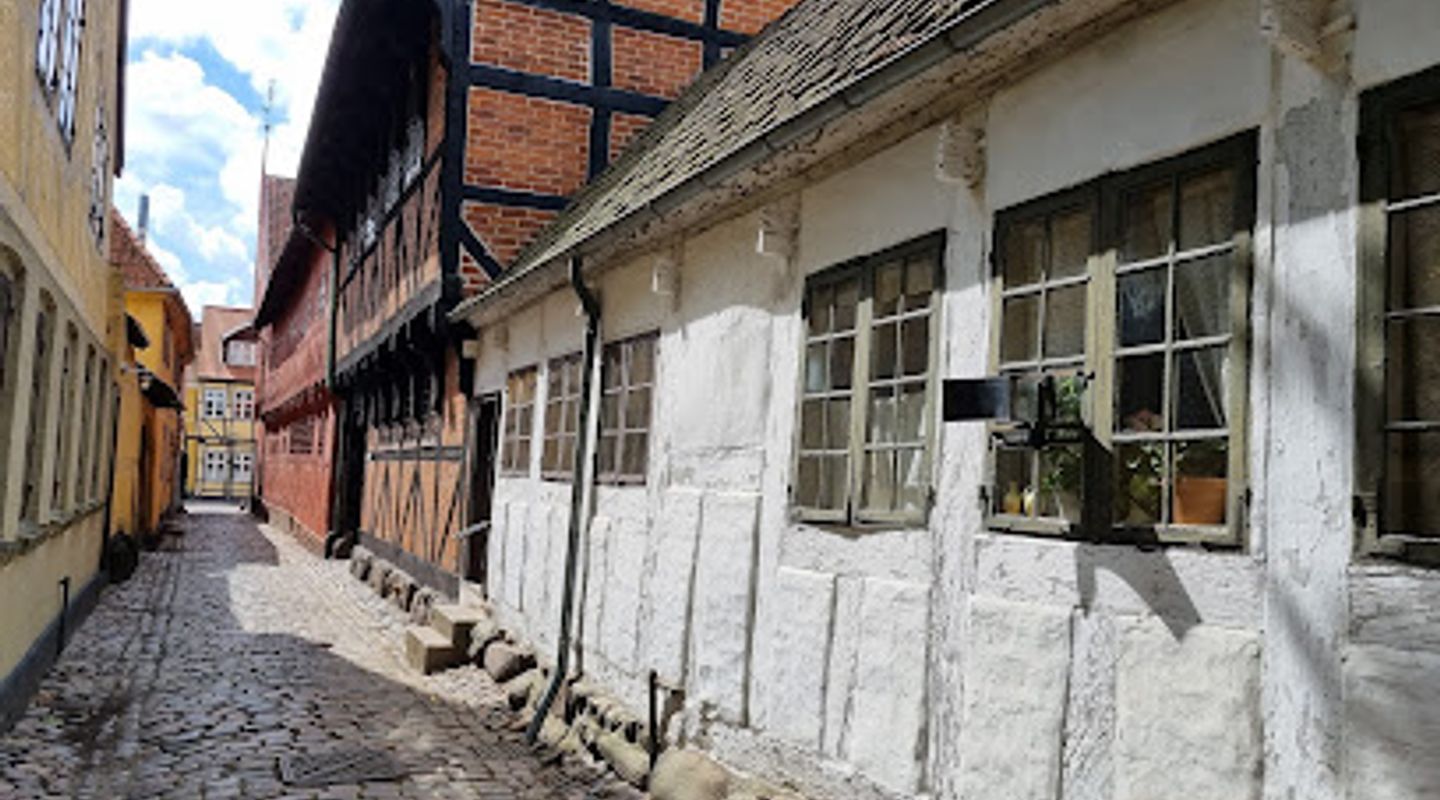
Tucked into the cobbled streets of Odense’s old town, Møntergården – now part of TID – Museum for Odense – is a beautifully restored city museum that threads together centuries of local history. Renaissance merchants’ houses, 17th‑century courtyards and modern exhibition buildings create a small historical quarter where you move from medieval lanes to contemporary, multimedia galleries in just a few steps. Inside, immersive displays tell the story of Odense and Funen from prehistoric finds to bustling market town, while the dedicated children’s museum lets younger visitors climb, dress up and play their way through the past.
A brief summary to Møntergården
- Møntestræde 1, Odense C, Odense C, 5000, DK
- Click to display
- Click to display
- Duration: 1.5 to 3 hours
- Mid ranged
-
 Mixed
Mixed
- Mobile reception: 5 out of 5
- Tuesday 10 am-4 pm
- Wednesday 10 am-4 pm
- Thursday 10 am-4 pm
- Friday 10 am-4 pm
- Saturday 10 am-4 pm
- Sunday 10 am-4 pm

Know before you go
Hi, I'm Eve. Here are a few practical things to know before exploring Møntergården.
- Combine your visit with H.C. Andersen’s House; joint tickets often include free or discounted entry to Møntergården, making it good value if you plan multiple museums.
- Aim for a weekday morning for quieter galleries and more space in the children’s areas; school holidays and weekends can be notably busier with family activities.
- Allow extra time to explore the outdoor courtyards and historic houses, not just the main modern building; some of the most atmospheric spaces are in the older wings.
- If you are not fluent in Danish, check for English summaries or audio material at the entrance and focus on the more visual, object‑rich sections for easier understanding.
- Wear comfortable shoes; the complex spans several buildings connected by cobbles and steps, and you may find yourself walking more than expected in a relatively small area.
Do you manage this location?
Take control to get all the benefits, like improved information, better appearance, and stronger visibility across AI-powered discovery. Learn more about listing your business on Evendo
Activate your presenceOther nearby places you may find interesting
The closest places of the same kind, if this one is not quite what you had in mind.
Explore Møntergården on the Map
A handpicked selection of must-see spots near Møntergården, mapped for you.
Getting There
-
On foot from central Odense
From the central pedestrian shopping streets in Odense C, reaching Møntergården on foot typically takes 5–10 minutes along flat, paved routes. The old town has cobblestones and some narrow passages, so wheelchair users and those with strollers should allow extra time and be prepared for slightly uneven surfaces, but overall the distance is short and suitable for most visitors year‑round.
-
By bus within Odense
City buses running through Odense C stop within a 5–10 minute walk of the museum; travel from outlying neighbourhoods usually takes around 15–25 minutes depending on route and traffic. A standard adult ticket on local buses is generally in the range of 20–30 DKK per ride. Services run frequently in daytime but can be reduced in the late evening and on Sundays, so it is worth checking timetables if you are travelling outside normal hours.
-
Train to Odense Station plus walk
If you are coming from elsewhere on Funen or from larger Danish cities, regional and intercity trains arrive at Odense Station, which lies roughly 10–15 minutes’ walk from the museum through the central districts. Train journey times vary from about 15–30 minutes from nearby towns on Funen to around 1½ hours from Copenhagen and 1–1½ hours from parts of Jutland. One‑way adult fares on regional trains typically range from about 80–200 DKK depending on distance and ticket type.
-
Car or taxi within Odense
Driving from most parts of Odense to the city centre takes 10–20 minutes in normal traffic. Several public car parks and street parking zones are available within walking distance of the old town; expect to pay in the region of 10–25 DKK per hour depending on the zone and time of day. The narrow historic streets immediately around the museum are not suited to through‑traffic, so plan to park slightly away and walk the final stretch. Taxis within the city typically cost 70–150 DKK for short central journeys, depending on distance and time.
For the on-the-go comforts that matter to you
-
 Restrooms
-
 Drink Options
-
 Drinking Water
-
 Food Options
-
 Seating Areas
-
 Sheltered Areas
-
 Trash Bins
-
 Information Boards
-
 Visitor Center
Discover more about Møntergården
Historic courtyards in the heart of Odense
Møntergården sits inside a compact city block of cobbled lanes and timbered houses right in Odense’s old quarter, feeling almost like a small, walled village. Step through the gate and the traffic noise drops away, replaced by echoes of footsteps on stone, the creak of old wood and the murmur of nearby church bells. The courtyards are framed by richly coloured facades in red brick and painted timber, some dating back to the 1500s.Benches invite you to pause between the main buildings, and in good weather these outdoor spaces are as much a part of the visit as the exhibitions themselves. The tight passageways, overhanging upper floors and small gardens hint at how densely packed life once was in this part of town, when merchants, craftsmen and poorer families all lived within a few doors of one another.Merchant houses and everyday lives
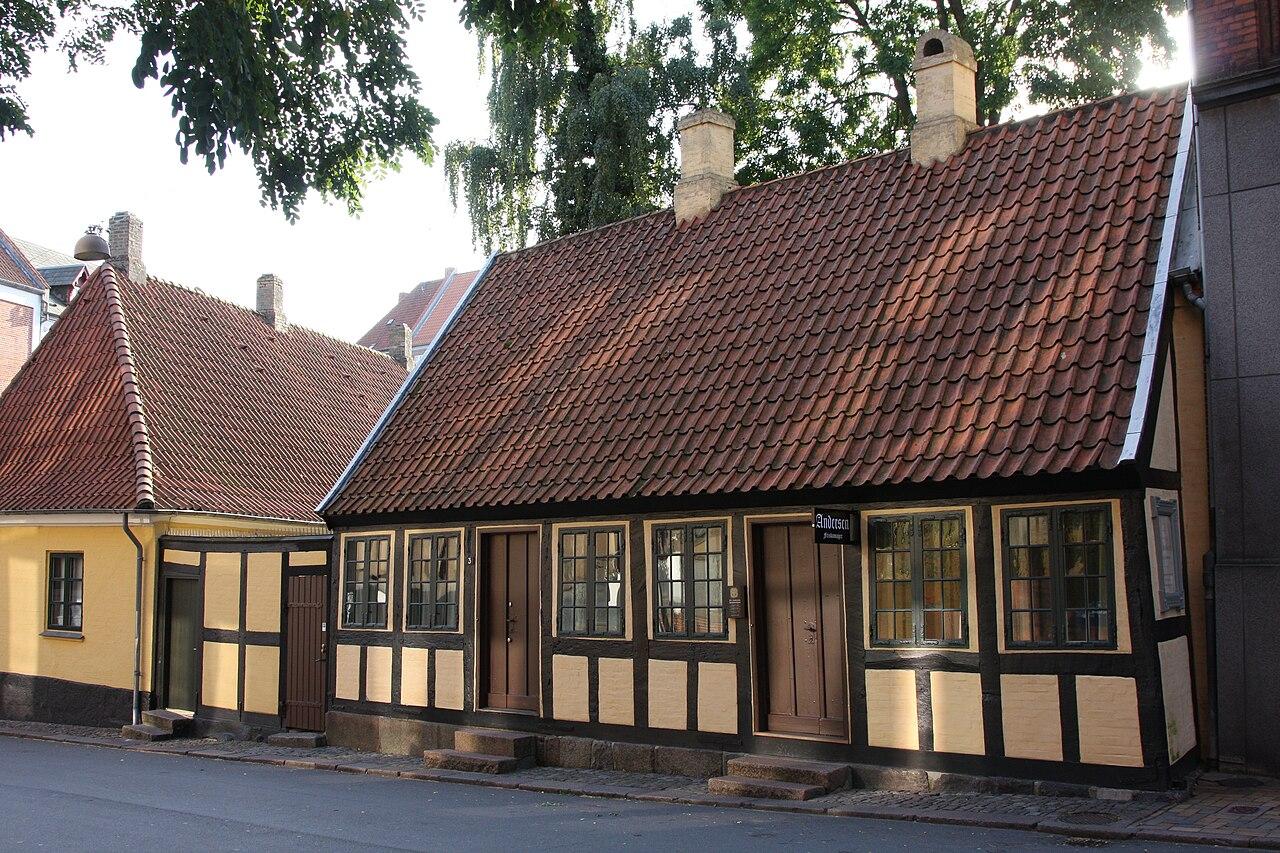
Several of the most atmospheric buildings are original townhouses from the 17th century, carefully restored to show how people in Odense once lived and worked. In Falk Gøyes Gård, named after a wealthy merchant, the timber beams and panelled rooms suggest the world of prosperous traders whose fortunes were tied to the markets and harbours of Funen.Nearby, the former poorhouse known as Pernille Lykkes Boder reveals a very different reality. Here, recreated interiors from the 1600s and from the 1930s–40s show tight living quarters, modest furniture and the small personal objects that made up an ordinary life. Moving between these houses you get a sense of the social contrasts within a single city street, and how Odense changed as industries, welfare and war reshaped the town.From prehistory to a modern Danish city
Behind a striking contemporary facade, the newest exhibition building uses themed galleries to trace the wider story of Funen and Odense. Archaeological finds, scale models, soundscapes and film clips chart the island’s development from early settlements through the Middle Ages and into the industrial era.Rather than marching you through a strict timeline, the displays pick out themes such as trade, faith, power and daily routines. One room might plunge you into a medieval streetscape, while another focuses on objects linked to global trade or political change. Together they reveal how an island in the middle of Denmark has always been connected to wider currents in European history.A museum designed with children in mind
One of the most distinctive features of Møntergården is its children’s wing, a dedicated museum-within-a-museum aimed at roughly 4–11‑year‑olds. Here, history is something to climb into: miniature backyards recreate an 1890s city environment complete with workshop corners, household chores to try and dressing-up clothes for make‑believe.Another house, filled with carefully chosen original objects, invites curious kids to get close to real artefacts through playful storytelling. Labels are written with younger readers in mind, and many elements are hands‑on, making this an easy place for families to linger while adults absorb a quieter layer of information in the background.Blending old architecture and new storytelling
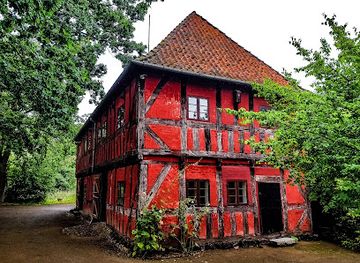
Architecturally, the museum is a study in contrasts. The renaissance buildings and half‑timbered houses, with their steep roofs and small-paned windows, sit alongside a sleek modern complex of glass and brick. Inside, traditional vitrines mix with large-scale projections, interactive games and atmospheric lighting that shifts from room to room.This mix allows you to move fluidly between periods: you might emerge from a digital installation about global connections and find yourself back in a courtyard where chickens once scratched between water pumps and firewood stacks. For photographers, the sightlines from the inner gardens towards the old roofs and contemporary walls offer strong, layered cityscapes.Planning your time at the museum
Although the physical area of Møntergården is relatively compact, the density of exhibitions means visits can be surprisingly absorbing. Many travellers allow a couple of hours for a broad overview, but you could easily stretch this if you read widely, explore every house and take time out in the courtyards. Families often move at a slower pace as children become engrossed in role‑play corners and interactive games.There is usually somewhere to sit and rest between sections, and you are welcome to enjoy a simple picnic in the outdoor spaces, making the museum a relaxed half‑day base in the centre of Odense. Combined tickets with the nearby H.C. Andersen attractions are common, so many visitors weave Møntergården into a wider day focused on the city’s literary and historical heritage.












Your all‑in‑one travel companion app
Explore expert travel guides, compare and book tours, experiences, hotels, and more—all from the palm of your hand. Download now for seamless trip planning wherever your wanderlust takes you.


Explore More of Odense
Looking beyond Møntergården? Discover Odense for broader travel guides, local hot-spots, and regional highlights.
Explore Odense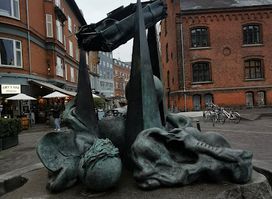
A bronze suitcase poised for takeoff above a shimmering fountain, this H.C. Andersen–inspired sculpture turns a small Odense square into a quiet fairytale scene.
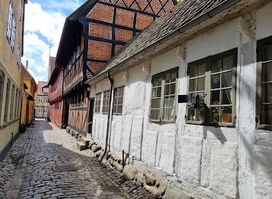
Dive into 10,000 years of Odense history in a maze of courtyards and historic houses, where archaeology, city life and hands-on children’s exhibits meet.
