Stork Fountain (Storkespringvandet), Amagertorv
Elegant bronze storks, royal history and everyday city life meet at this compact but iconic fountain in the very heart of Copenhagen’s old town.
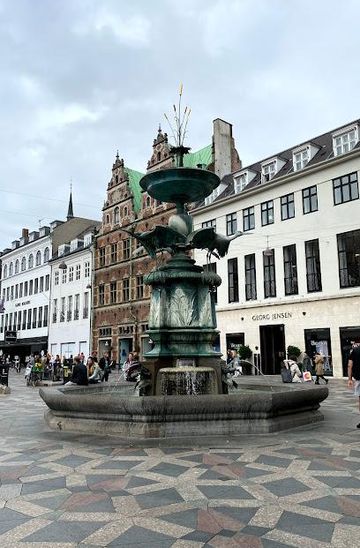
Anchoring the busy Amagertorv square in Copenhagen’s historic center, the Stork Fountain is a graceful bronze landmark on the city’s main pedestrian artery, Strøget. Unveiled in 1894 as a silver‑wedding gift to Crown Prince Frederik (later Frederik VIII) and Crown Princess Louise, its trio of storks poised for flight has become a classic meeting point, photo stop, and backdrop to the rhythm of everyday life in the Danish capital.
A brief summary to Stork Fountain
- Amagertorv 6, Copenhagen, Indre By, 1160, DK
- Click to display
- Click to display
- Duration: 0.5 to 1 hours
- Free
-
 Outdoor
- Mobile reception: 5 out of 5

Know before you go
Hi, I'm Eve. Here are a few practical things to know before exploring Stork Fountain.
- Come early in the morning or later in the evening if you want clear photos of the fountain without large crowds on Strøget.
- Take time to walk a slow circle around the basin: from different angles you can appreciate both the storks’ poised movement and the historic façades behind them.
- Combine a visit with a short exploration of Amagertorv’s side streets, where you will find classic Danish design stores, cafés, and quieter corners for a break.
Do you manage this location?
Take control to get all the benefits, like improved information, better appearance, and stronger visibility across AI-powered discovery. Learn more
Activate your presence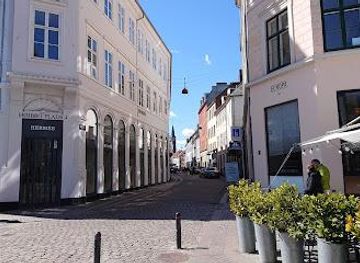

Getting There
-
Metro from central Copenhagen
From major central stations such as Nørreport or Kongens Nytorv, take the M1, M2, M3 or M4 metro lines and ride 1–2 stops to either Gammel Strand or Kongens Nytorv. The journey typically takes 3–6 minutes, with trains running every few minutes most of the day. A single zone ticket or city pass costs roughly 20–30 DKK. From either station, expect a 5–10 minute walk along pedestrian streets to reach the Stork Fountain on Amagertorv.
-
City bus to Strøget area
Several city buses serve stops close to the pedestrian zone, including routes that stop near Rådhuspladsen and Christiansborg. Travel times within the central area are usually 10–20 minutes depending on traffic, and a standard bus ticket costs around 20–30 DKK, valid across buses, metro and trains within the same zones. From nearby bus stops, allow 5–12 minutes on foot through level, paved streets to arrive at the fountain.
-
Bicycle within the inner city
Cycling is one of the most convenient ways to reach Amagertorv from neighborhoods such as Vesterbro, Nørrebro or Østerbro. Expect 10–20 minutes of cycling on dedicated bike lanes almost the entire way. Several bike-share schemes and rental shops offer bicycles from about 80–150 DKK per day. Bicycles are not allowed along the busiest stretches of Strøget itself, so plan to dismount and walk the final few hundred meters to the fountain.
-
Walking from nearby central districts
If you are already in the inner city, reaching the Stork Fountain on foot is straightforward and often the most pleasant option. From landmarks such as the City Hall Square or Christiansborg, most walks take 10–20 minutes along flat, cobbled and paved streets. Surfaces are generally suitable for buggies and wheelchairs, though the density of pedestrians can slow progress at busy times and during major events.
For the on-the-go comforts that matter to you
-
 Restrooms
-
 Drink Options
-
 Drinking Water
-
 Food Options
-
 Seating Areas
-
 Trash Bins
-
 Information Boards
-
 Visitor Center
Discover more about Stork Fountain
A bronze landmark in Copenhagen’s historic heart
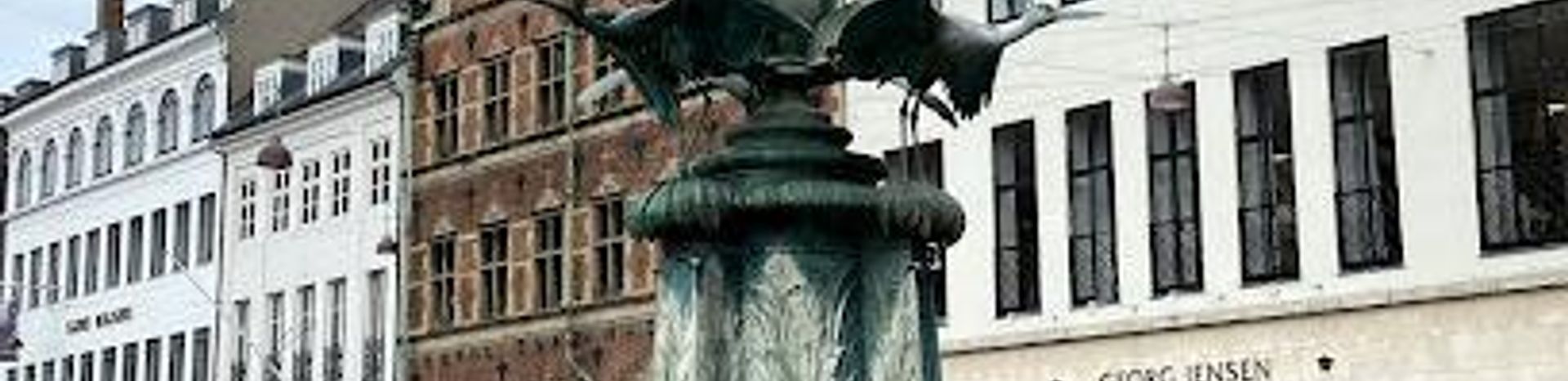
The Stork Fountain stands at the very center of Amagertorv, one of Copenhagen’s oldest squares and a key crossroads on the pedestrian street Strøget. Surrounded by elegant façades and busy shopfronts, the fountain forms a natural focal point: a small island of sculpture and splashing water amid a steady flow of shoppers, street musicians, and strolling locals.Look closely and you will see three slim storks balanced on a tall, intricately decorated column. Their wings are half spread, necks extended, as if they are just about to lift off above the square. Below, frogs and other small creatures spout water into a circular basin, adding a gentle soundtrack to the urban scene.Royal celebration and civic pride in bronze
The fountain was inaugurated in 1894 to mark the silver wedding anniversary of Crown Prince Frederik, later King Frederik VIII, and Crown Princess Louise. Conceived as a gift "for the beautification of the city," it was the result of a design competition that sought a modern yet poetic centerpiece for Amagertorv.Danish architect Edvard Petersen designed the structure, while sculptor Vilhelm Bissen modelled the lively birds and animals. Their collaboration produced a work that is both decorative and dynamic: the vertical shaft draws the eye upwards, while the circling storks and playful water jets give the monument a sense of movement fitting for such a busy junction.Amagertorv: from medieval marketplace to meeting point
Long before the fountain arrived, Amagertorv had been a marketplace tied to the nearby island of Amager, whose farmers came here to sell their produce. Over centuries it evolved into a central trading space, then into a refined urban square framed by townhouses, guild buildings, and later, flagship stores of Danish design brands.Today the Stork Fountain links this layered past with the present-day city. Office workers cut across the cobbles on their lunch break, tour groups cluster around guides, and friends still say "let’s meet at the Stork" before heading into cafés, galleries, or the side streets of the old town.Traditions, symbolism, and modern city life
Since 1950, a whimsical tradition has seen newly graduated midwives dance around the fountain, wreaths in their hair and gowns fluttering as they circle the storks. The choice of bird is no coincidence: in European folklore, storks are associated with new life, fidelity, and domestic happiness, making them a fitting emblem for both royal marriage and the profession that welcomes newborns.The fountain’s modest scale means you can stand almost within arm’s reach of the bronze figures, tracing the details of feathers and lily pads while traffic on Strøget flows around you. On warm days, the basin’s edge becomes an informal seating ring where people linger with ice creams, coffee cups, and shopping bags.Architecture, atmosphere, and the perfect pause
What makes the Stork Fountain especially photogenic is its setting. Around it rise richly ornamented façades in warm brick and stone, including historic houses and the storied addresses of Danish porcelain and silver design. The narrow streets radiating from the square frame shifting perspectives on the fountain as you move.Visit in the morning for softer light on the bronze and fewer crowds, or come at dusk when shopfronts and streetlights glow and the storks are silhouetted against the evening sky. Whether you stay for a quick photograph or linger to people-watch, the Stork Fountain offers a compact but quintessential slice of Copenhagen’s character: graceful, human-scaled, and quietly playful at the heart of the city.Explore the best of what Stork Fountain has to offer













More about North Zealand
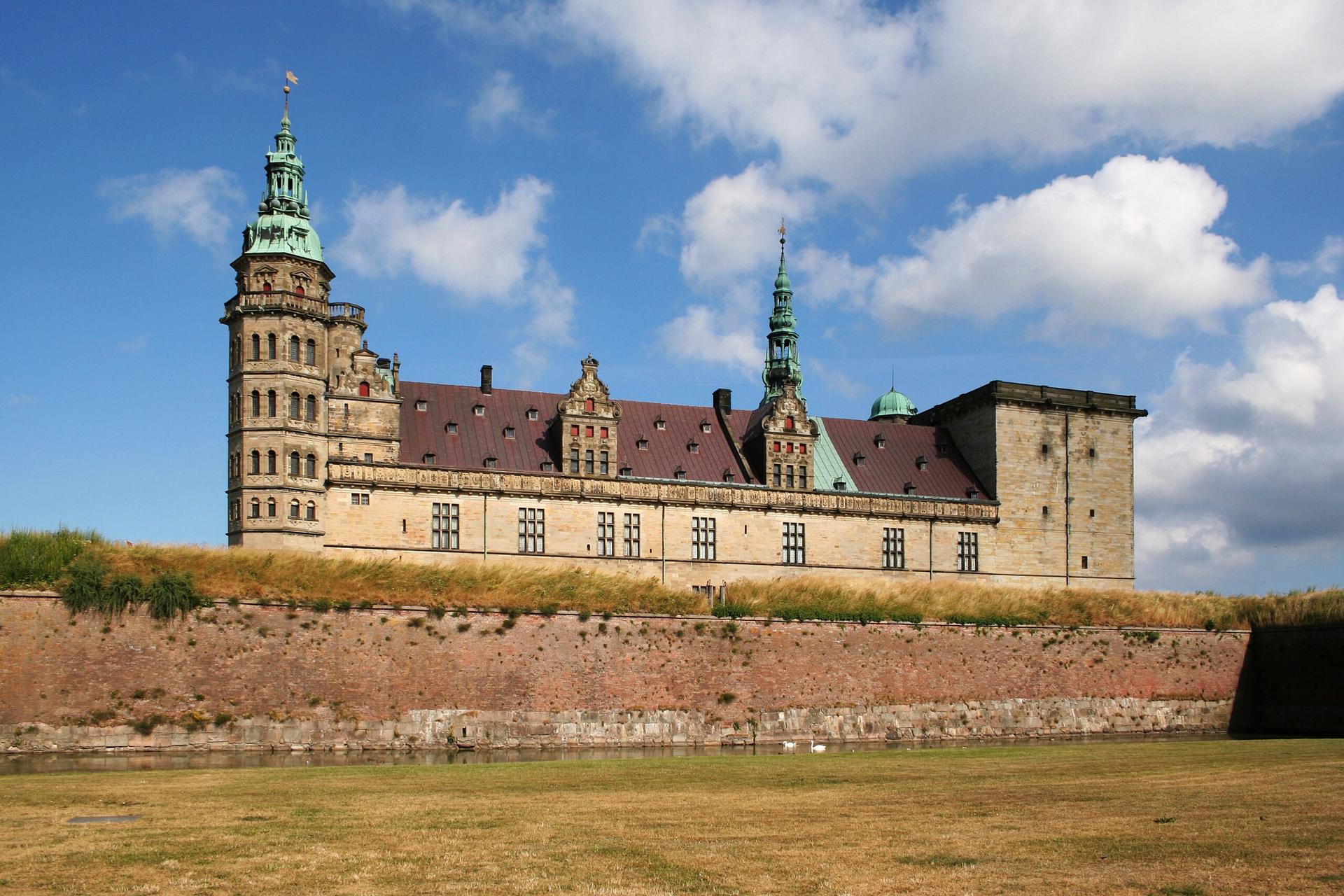
Explore North Zealand, Denmark's enchanting region of castles, beaches, and royal estates, perfect for history buffs, nature enthusiasts, and seaside lovers.
Tell me more about North Zealand
Experience the vibrant blend of history and modernity at Sankt Hans Torv, Nørrebro's lively public square.
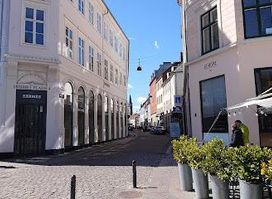
A short, atmospheric side street in Copenhagen’s Old Town, where historic façades, independent boutiques and relaxed cafés create a cosy alternative to Strøget.