

Den Tilsandede Kirke, Skagen Travel Guide
Free Guide: A Gothic tower rising from sand dunes—Denmark's haunting monument to nature's relentless power.


A brief summary of Den Tilsandede Kirke
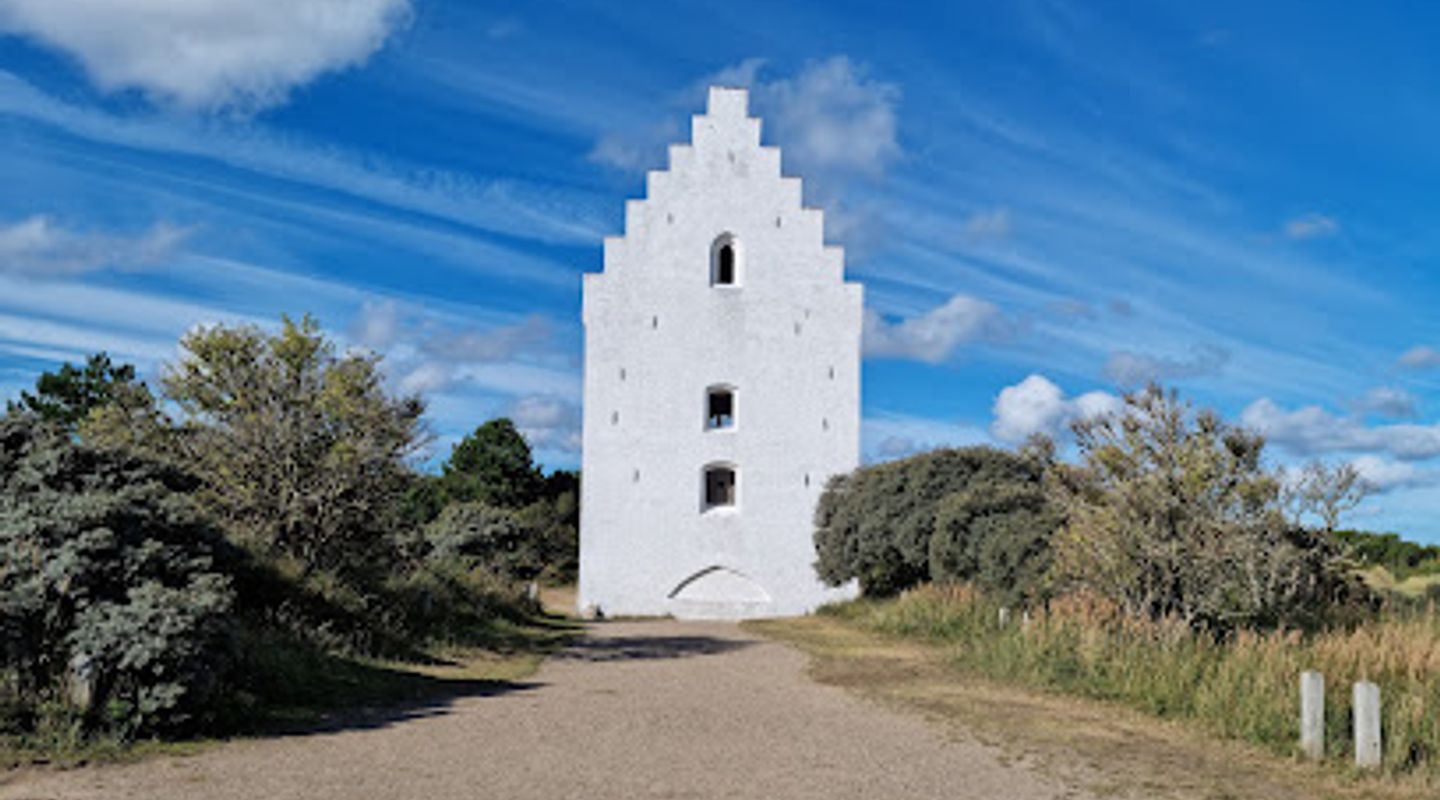
A Gothic tower rising from sand dunes—Denmark's haunting monument to nature's relentless power.
A haunting Gothic tower rising from sand dunes near Skagen marks the remains of a 14th-century church that was gradually buried by shifting sands. Once the region's largest church, Den Tilsandede Kirke was abandoned in 1795 after centuries of struggle against encroaching dunes. Today, the whitewashed tower with its distinctive crow-stepped gable stands as a poignant historical monument, surrounded by marked foundations and cemetery walls within a nature reserve.
On-site amenities
 Restrooms
 Seating areas
 Picnic areas
 Trash bins
 Information boards
 Drink options
Opening hours
- MonClosed
- TueClosed
- WedClosed
- ThuClosed
- FriClosed
- Sat10 am–4 pm
- Sun10 am–4 pm
Opening hours as listed on the venue’s Google Business Profile. Hours can change for services and special events, so check with the venue before you go.
- Address
- Gamle Landevej 63, 9990 Skagen
- Phone
Getting there
Bicycle from Skagen
Walking from Skagen
Car from Skagen
Taxi or ride-share from Skagen
Discover more about Den Tilsandede Kirke
A Church Consumed by Time and Sand
Den Tilsandede Kirke, or the Sand-Covered Church, is the evocative remains of Saint Laurentius Church, a brick structure built between 1355 and 1387 in the Gothic style. Originally one of the largest churches in the Vendsyssel region, this medieval edifice was constructed using imported bricks from the Netherlands and Germany, particularly from Lübeck. The church featured an impressive vaulted nave stretching approximately 45 meters in length, with exterior buttresses and a tower crowned with a distinctive crow-stepped gable added around 1475. For four centuries, the church served as a spiritual center for the local community, its bells calling worshippers to prayer and its walls witnessing the rhythms of medieval and early modern life.
The Relentless Advance of the Dunes
Beginning around 1600, sand began drifting from Råbjerg Mile, a moving dune located between Skagen and Frederikshavn. This desertification phenomenon, which affected multiple coastal regions around the North Sea between 1400 and 1800—including parts of Scotland and Holland—gradually transformed the landscape surrounding the church. By the late 18th century, the sand had reached the church itself, forcing the congregation into an increasingly desperate struggle for survival. On Great Prayer Day in 1775, the church door had to be excavated from sand to allow worshippers entry. For the next two decades, the community persisted in this exhausting ritual, digging free the entrance before each service, unwilling to abandon their sacred space despite the overwhelming forces of nature.
Abandonment and Demolition
By 1795, the relentless encroachment of sand finally broke the congregation's resolve. Royal decree closed the church permanently, and the main body of the structure was demolished in 1810. The valuable furnishings—including candlesticks, a bell, and the chalice—were salvaged and relocated to the new Skagen Church, designed by C.F. Hansen and completed in 1841. Some items, however, remained buried beneath the sand, including a baptismal font that was never recovered. The tower alone survived, its whitewashed walls and crow-stepped gable becoming an enduring symbol of nature's power and human resilience.
Rediscovery and Modern Preservation
Today, approximately 18 meters of the tower rises visibly above the sand. The site is part of Skagen Klitplantage, a protected nature reserve that preserves both the archaeological and natural heritage of the area. Recent studies conducted around the 200th anniversary of the church's closure have helped archaeologists map the original floor plan and cemetery boundaries. Red poles now mark the outline of the nave and sacristy, while bundled fascines (canes) indicate the known sections of the old cemetery wall. These markers transform the site into an open-air archaeological record, inviting visitors to contemplate the church's lost grandeur and the forces that claimed it.
Cultural Legacy and Literary Inspiration
The Sand-Covered Church has captured the imagination of writers and artists for generations. The Danish author Hans Christian Andersen drew inspiration from the site for his story "En Historie fra Klitterne" (A Story from the Sand Dunes), cementing the church's place in Danish cultural consciousness. The tower's haunting silhouette against the dunes has become one of Denmark's most iconic and photographed historical landmarks, attracting visitors from across the country and beyond. The church's patron saint, Lawrence of Rome, was venerated as the protector of sailors and the poor—a fitting dedication for a community living on the edge of the North Sea, facing both maritime dangers and the relentless advance of sand.
A Living Monument to Environmental Change
The Sand-Covered Church stands as a powerful testament to the dynamic relationship between human settlement and natural forces. Unlike most ruins, which mark the passage of time through decay, this site embodies the dramatic reshaping of landscape by wind and sand. The tower's survival, isolated and whitewashed against the dunes, creates a poignant visual narrative of loss and persistence. Visitors walking among the marked foundations and cemetery walls can almost hear the echoes of centuries of worship, struggle, and ultimately, surrender to forces beyond human control.
Evendo Review Centre
 Google
Guest reviews
Best time to go
Quietest: Jan, Feb & Dec · before 7am or from 8pm
Busy times are Evendo estimates for a typical year, to help you plan. Actual crowds vary with events, school holidays and the weather.
Explore Den Tilsandede Kirke on the map
A handpicked selection of must-see spots near Den Tilsandede Kirke, mapped for you.
Get your free copy of our complete guide to Den Tilsandede Kirke, delivered straight to you.
Everything on this page, from opening hours and how to get there to Eve’s tips and the best time to go, in one PDF you can read offline, print or share.
Already have an account? Sign in
Your Den Tilsandede Kirke guide is ready.
We'll send it to · Not you? Sign out

Getting your guide ready…
We are putting together a fresh copy of the Den Tilsandede Kirke guide. This can take up to a minute.
This can take a few moments. If your browser asks, choose Allow so the download can start. You'll find the guide in your Downloads folder.
Nothing happened? Download it again
Sorry, the guide is taking longer than usual. Please try again in a minute, or get it by email instead.
Unlock the best of Den Tilsandede Kirke
Skip-the-line tickets, guided tours with entry, and walking tours of the area, booked in a few clicks.

Other nearby places you may find interesting
The closest places of the same kind, if this one is not quite what you had in mind.
-
-
-
-
-


Swipe for more places
More to explore near Den Tilsandede Kirke

 Best experiences near Den Tilsandede Kirke
 Best hotels near Den Tilsandede Kirke
 Best landmarks near Den Tilsandede Kirke
 Best attractions near Den Tilsandede Kirke
 Best shops near Den Tilsandede Kirke
 Best restaurants near Den Tilsandede Kirke
 Best bars near Den Tilsandede Kirke
Do you manage this location?
Take control to get all the benefits, like improved information, better appearance, and stronger visibility across AI-powered discovery.
Explore more
Explore more of Skagen
Discover Skagen, Denmark's northernmost town, where two seas meet, artists find inspiration, and nature's beauty is unparalleled.
Explore Skagen
Explore more of Denmark
Discover Denmark: A perfect blend of history, modern design, and the cozy concept of hygge. Explore vibrant cities, serene landscapes, and world-class cuisine.
Explore Denmark
