Brundlund Castle Travel Guide
Free Guide: Moat-ringed medieval castle turned intimate art museum, where Southern Jutlandic masterpieces, Franciska Clausen’s avant‑garde works and a sculpture‑filled park meet in one serene setting.


A brief summary of Brundlund Castle
Moat-ringed medieval castle turned intimate art museum, where Southern Jutlandic masterpieces, Franciska Clausen’s avant‑garde works and a sculpture‑filled park meet in one serene setting.
Brundlund Castle in Aabenraa is a whitewashed Renaissance–Neoclassical castle turned intimate art museum, encircled by a moat and sculpture-dotted park on the edge of the old town. Inside 15th‑century chambers you’ll find atmospheric exhibitions focused on Southern Jutlandic art from the late 1700s to today, with standout works by avant‑garde artist Franciska Clausen and Golden Age painter C.W. Eckersberg. A cosy café and leafy grounds make this a gentle cultural escape.
On-site amenities
 Restrooms
 Drink options
 Drinking water
 Food options
 Seating areas
 Sheltered areas
 Trash bins
 Information boards
 Visitor centre
Opening hours
- MonClosed
- Tue11 am–5 pm
- Wed11 am–5 pm
- Thu11 am–5 pm
- Fri11 am–5 pm
- Sat11 am–5 pm
- Sun11 am–5 pm
Opening hours as listed on the venue’s Google Business Profile. Hours can change for services and special events, so check with the venue before you go.
- Address
- Brundlund Slot 1, 6200 Aabenraa
- Phone
- Website
Getting there
Regional train and short walk from Aabenraa bus terminal
Local bus within Aabenraa
Car or rental car from regional towns
Cycling from Aabenraa centre and nearby coast
Discover more about Brundlund Castle
A moat-ringed castle at the edge of Aabenraa
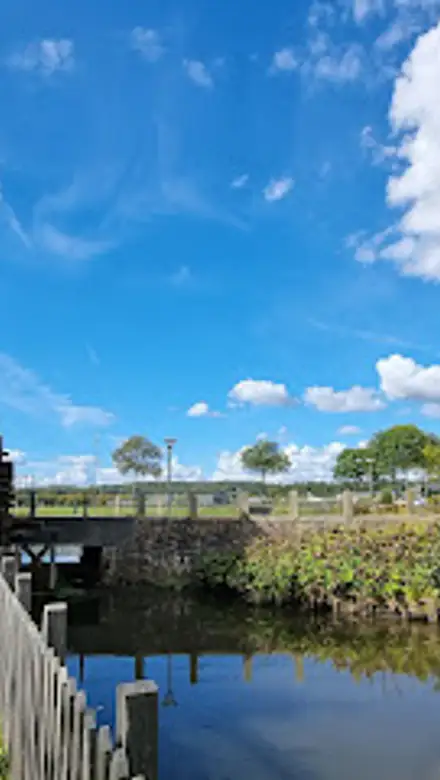
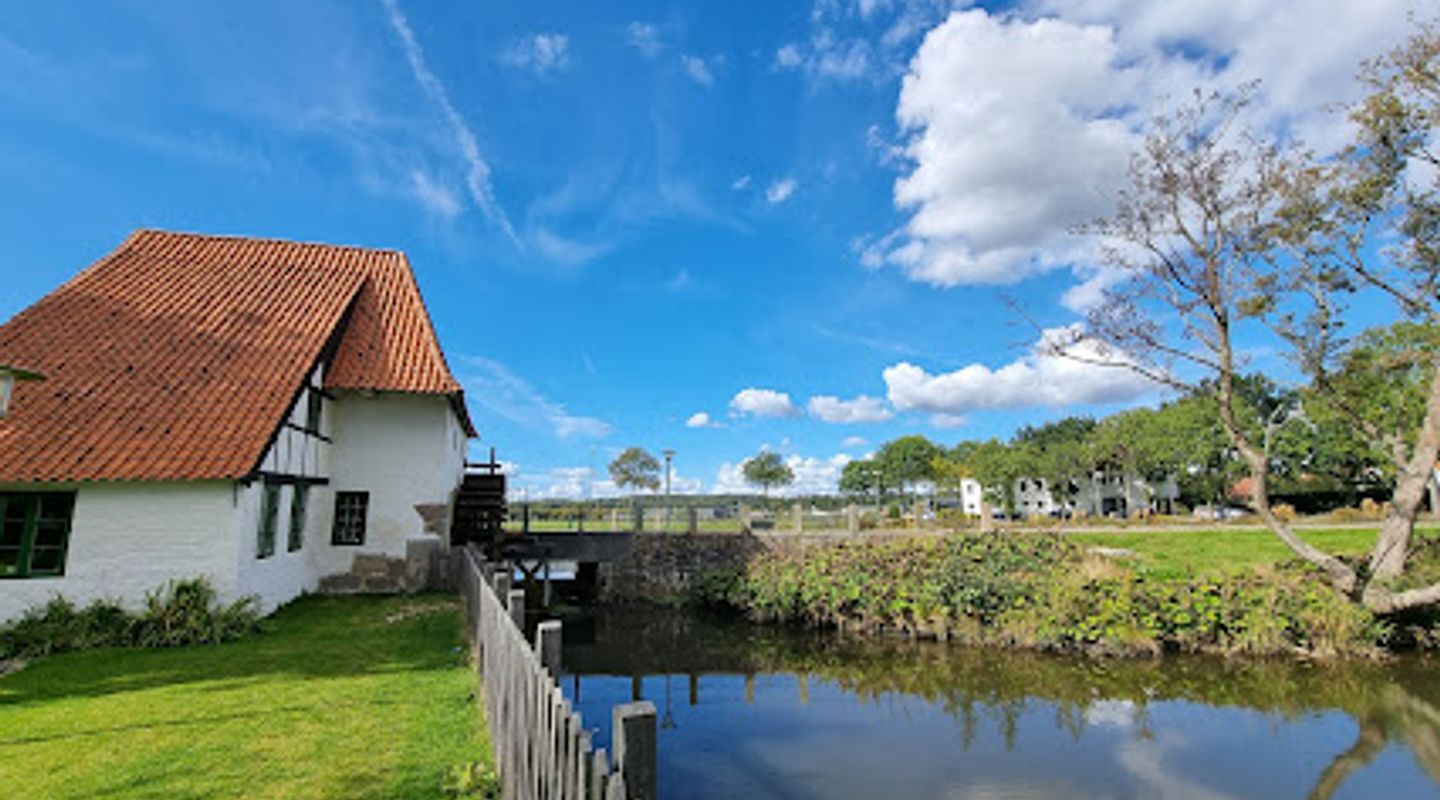
Brundlund Castle rises above its water-filled moat in a pocket of greenery just west of Aabenraa’s old town, separated from the centre by a single road and a swath of parkland. The compact, whitewashed building has an almost homely scale, yet still carries the outline of a fortress, with its elevated position, dam and traces of former defensive earthworks. Mature trees frame views of the castle from the surrounding lawns, where the former moat now widens into a small lake alive with reflections and birdlife.Approaching across the tree-lined dam, you step from ordinary streets into a self-contained world. The island that once held a private garden is now an open public park, yet the sense of enclosure remains strong: the water, the curving banks and the low castle walls together create a calm buffer from urban bustle. In spring and summer, the lawns fill with wildflowers and leafy shade, while in autumn mist clings to the moat and the castle glows softly against bronze foliage.
From medieval stronghold to royal residence
The story of Brundlund begins in the early 15th century, when Queen Margrete I secured the right to build a new castle here as part of consolidating the Danish crown in Southern Jutland. The first, larger fortress has vanished, but its strategic hill above the town remains the foundation for the current building. Around 1530 King Frederik I raised the main castle we see today, combining gatehouse and residence in a single compact block at the heart of the fortified site.Over the following centuries, new rulers reshaped Brundlund to reflect changing tastes and purposes. In the late 1500s, the castle was remodelled in Renaissance style, with octagonal corner turrets, a stair turret and an open gallery adding decorative flourish to its defensive core. In the early 1800s the architect C.F. Hansen transformed the exterior again, stripping back some ornament and giving the building the clear lines and measured proportions of Neoclassicism. Through all these phases, Brundlund served as a seat of power for local administrators and a symbol of royal authority in the borderlands.
Castle rooms filled with Southern Jutlandic art
Since 1998 the castle has housed an art museum dedicated to Southern Jutland and the wider border region. The focus is on art from the late 18th century to the present, tracing how painters and sculptors here have responded both to local landscapes and to international movements. You move through a sequence of relatively small, characterful rooms rather than white cubes, with low ceilings, thick walls and creaking floors that make each gallery feel like a lived-in space.Two artists anchor the collection. Franciska Clausen, born in Aabenraa in 1899, experimented with avant‑garde currents from Constructivism to Surrealism; the museum holds thousands of her works, from bold geometric abstractions to intimate drawings. Alongside her, Golden Age painter C.W. Eckersberg and portraitist C.A. Jensen represent a more classical side of Danish art, connecting the region to the national canon. Temporary exhibitions rotate around these core strengths, often highlighting lesser-known artists whose lives and careers were shaped by this contested borderland.
A sculpture park wrapped around the moat
Outside, the castle park extends the museum experience into the open air. Contemporary sculptures are dotted among old trees, lawns and water, sometimes half-hidden along the shoreline, sometimes standing in clear sightlines towards the castle. Walking the circular paths, you catch alternating vistas: a figure framed by branches, a sleek abstract form mirrored in the lake, the castle itself rising behind a work in stone or metal.The park is free to wander even when the museum is closed, which makes it a popular place for quiet strolls and reflective benches. The dam built in the 18th century still carries you into the complex, flanked by rows of trees whose canopies meet overhead in summer. In winter, when leaves have fallen, the geometry of the castle and the curve of the moat feel more pronounced, and sculptures stand out in sharp silhouette against the pale walls and often leaden sky.
Café corners, creative rooms and family-friendly spaces
Inside the castle a small café offers hot and cold drinks, cakes and light snacks, opening onto a terrace that overlooks the park. On bright days chairs spill outside, turning the moat-side into a relaxed spot to linger after an exhibition. The café’s windows frame artworks in the garden, underscoring how closely the museum’s identity is tied to its landscape setting.A dedicated creative room invites children and adults to experiment with colour, form and collage, drawing inspiration from works they have just seen in the galleries. This space, included in the museum ticket, underscores the institution’s educational role and makes Brundlund particularly welcoming for families. Combined with the manageable size of the collection and the gentle loop through the historic rooms, it makes for an outing that blends culture, light play and fresh air in a single compact visit.
Evendo Review Centre
 Google
Guest reviews
Best time to go
Quietest: Jan, Feb & Mar · before 9am or from 6pm
Busy times are Evendo estimates for a typical year, to help you plan. Actual crowds vary with events, school holidays and the weather.
Explore Brundlund Castle on the map
A handpicked selection of must-see spots near Brundlund Castle, mapped for you.
Get your free copy of our complete guide to Brundlund Castle, delivered straight to you.
Everything on this page, from opening hours and how to get there to Eve’s tips and the best time to go, in one PDF you can read offline, print or share.
Already have an account? Sign in
Your Brundlund Castle guide is ready.
We'll send it to · Not you? Sign out

Getting your guide ready…
We are putting together a fresh copy of the Brundlund Castle guide. This can take up to a minute.
This can take a few moments. If your browser asks, choose Allow so the download can start. You'll find the guide in your Downloads folder.
Nothing happened? Download it again
Sorry, the guide is taking longer than usual. Please try again in a minute, or get it by email instead.
Other nearby places you may find interesting
The closest places of the same kind, if this one is not quite what you had in mind.
-
-
-
-
-


Swipe for more places
More to explore near Brundlund Castle

 Best experiences near Brundlund Castle
 Best hotels near Brundlund Castle
 Best landmarks near Brundlund Castle
 Best attractions near Brundlund Castle
 Best shops near Brundlund Castle
 Best restaurants near Brundlund Castle
 Best bars near Brundlund Castle
Do you manage this location?
Take control to get all the benefits, like improved information, better appearance, and stronger visibility across AI-powered discovery.
Explore more
Explore more of Sønderjylland
Sønderjylland: A Journey Through Denmark's Scenic Landscapes, Rich History, and Vibrant Traditions.
Explore Sønderjylland
Explore more of Denmark
Discover Denmark: A perfect blend of history, modern design, and the cozy concept of hygge. Explore vibrant cities, serene landscapes, and world-class cuisine.
Explore Denmark