Nybøl Mølle
A hilltop windmill where traditional engineering, borderland battles and quiet fields meet in a single white tower north of Nybøl.
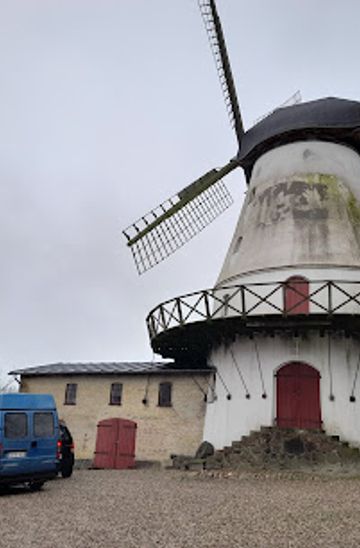
Nybøl Mølle is a beautifully preserved historic tower mill in the countryside north of Nybøl, a short distance from Sønderborg in Southern Jutland. Dating back to the 18th century and rebuilt in its present tower form in the early 1800s, the mill combines classic whitewashed brickwork with a shingled cap and sweeping sails. Inside, original milling machinery and grain floors evoke the era when wind power drove rural life, while outside the hilltop position offers open views across fields that once formed the backdrop to major Danish‑Prussian conflicts. Today it is a peaceful, atmospheric small-scale heritage site where engineering history and war stories overlap.
A brief summary to Nybøl Mølle
- Bøgevej 3, Sønderborg, 6400, DK
- Duration: 0.5 to 1.5 hours
- Free
-
 Mixed
Mixed
- Mobile reception: 4 out of 5

Know before you go
Hi, I'm Eve. Here are a few practical things to know before exploring Nybøl Mølle.
- Bring a light jacket; the exposed hilltop catches more wind and can feel noticeably cooler than in the nearby town.
- Allow time to walk all the way to the top floor of the mill to follow the path of the power from sails to millstones.
- Combine the visit with nearby Dybbøl Banke and other 19th‑century battlefields to place the mill’s war stories in context.
- Wear sturdy shoes; interior stairs are steep and the surrounding ground can be uneven around the hill.
Do you manage this location?
Take control to get all the benefits, like improved information, better appearance, and stronger visibility across AI-powered discovery. Learn more
Activate your presenceGetting There
-
Car from Sønderborg
From central Sønderborg, driving to Nybøl Mølle typically takes 10–15 minutes, using the main road network towards Nybøl and local access roads for the final stretch. Expect short sections of narrow country lanes near the mill and limited parking space close by, usually free of charge. In high summer or on special event days, spaces can fill, so plan a slightly longer window for arrival and departure.
-
Local bus from Sønderborg area
Regional buses on routes between Sønderborg and villages on the Sundeved side offer services that stop within walking distance of Nybøl and nearby roads, with total travel time usually 20–35 minutes including the walk. Services run less frequently in evenings and on weekends, and standard single fares are typically in the range of 20–35 DKK depending on zones. Check timetable information in advance and be prepared for a short walk on rural roads from the nearest stop.
-
Bicycle from Sønderborg
Cycling from Sønderborg to Nybøl Mølle generally takes 30–45 minutes each way, following a mix of smaller paved roads and sections parallel to larger routes. The terrain is gently undulating with a few short climbs, including the approach up to the mill’s hilltop. This option suits visitors comfortable sharing stretches of road with traffic and offers broad views over the peninsula along the way.
For the on-the-go comforts that matter to you
-
 Information Boards
-
 Seating Areas
-
 Trash Bins
Discover more about Nybøl Mølle
Wind on the Hilltop
Nybøl Mølle stands on a gentle rise in the farmland between Sønderborg and the village of Nybøl, its white tower and dark cap clearly visible above the fields. This strategic knoll, just south of the modern motorway, has always caught the wind, which is why a mill stood here as early as the 18th century. Originally a simple post mill, it was rebuilt in the early 1800s as the taller, more efficient tower mill you see today, with a brick body and rotating cap to follow the breeze.From the outside, the mill is almost textbook Danish rural architecture: a cylindrical, whitewashed tower, conical cap clad in dark shingles, and four long lattice sails that once carried canvas. Outbuildings and the former miller’s house complete a small cluster that feels more like a farmyard than a museum, underlining how tightly milling was woven into everyday village life.Craftsmanship in Timber and Stone
Step through the doorway and you move into a vertical world of beams, hoists and millstones. Each floor has a specific function, from grain storage at the top to the great stone pairs and gearing lower down. Heavy oak shafts, cogwheels and iron fittings show the precision needed to turn irregular wind into a steady grinding motion. Much of the machinery is preserved in situ, so you can trace the path of the power from sail to shaft, from drive wheels down to the stones.Details reveal the mix of craftsmanship and pragmatism that defined rural engineering: hand-cut teeth in the wooden gears, carefully chamfered joints, and ad‑hoc repairs that kept the mill working through storms and lean harvests. The compact circular plan forces every element to fit closely together, giving a sense of robust elegance rather than ornament.War, Tragedy and Symbolism
Nybøl Mølle is more than a technical monument; it is also tied to some of Denmark’s most turbulent years. During the First Schleswig War in the mid‑19th century, the mill’s exposed position made it an excellent lookout over the surrounding countryside. It became associated with Danish victories in the fighting around Dybbøl and Nybøl, and the mill came to stand as a rural symbol of national resilience at the border.Two decades later, in the Second Schleswig War of 1864, the story took a darker turn when the mill was requisitioned as a Prussian headquarters. The same vantage that once served Danish forces was now used to observe and coordinate attacks against them. Local lore also recalls a serious accident linked to the mill, reminding visitors that traditional industry carried real risks for those who worked here day and night.Landscape and Quiet Perspectives
Outside, the surroundings feel far removed from battle. Fields stretch away in gentle waves, broken by hedgerows, clusters of trees and the occasional farmhouse. From the mill’s platform and nearby ground you can look out towards the former front lines at Dybbøl and across the Sundeved peninsula, reading the terrain that once shaped troop movements and artillery lines.On calm days the site is defined by birdsong, distant farm machinery and the creak of timber when the wind picks up. The contrast between the tranquil present and the mill’s dramatic past adds a reflective quality; it is easy to imagine signal flags or smoke on the horizon while standing in what now feels like an almost pastoral scene.Visiting a Working Memory
When open, Nybøl Mølle occasionally hosts guided showings, demonstrations of the gearing, and small-scale events linked to milling traditions and regional history. Volunteers and local associations help to keep the structure maintained, from the cap and sails down to the masonry base, ensuring the building continues as a living piece of heritage rather than a frozen relic.A visit is typically unhurried. You might spend time studying the machinery floor by floor, pausing at windows to line up the view with historical maps, or simply enjoying the play of light on old beams and stone. The experience is intimate, concentrated in a single building that manages to condense agriculture, technology and borderland history into one compact silhouette on a hill.Explore the best of what Nybøl Mølle has to offer















More about South Jutland
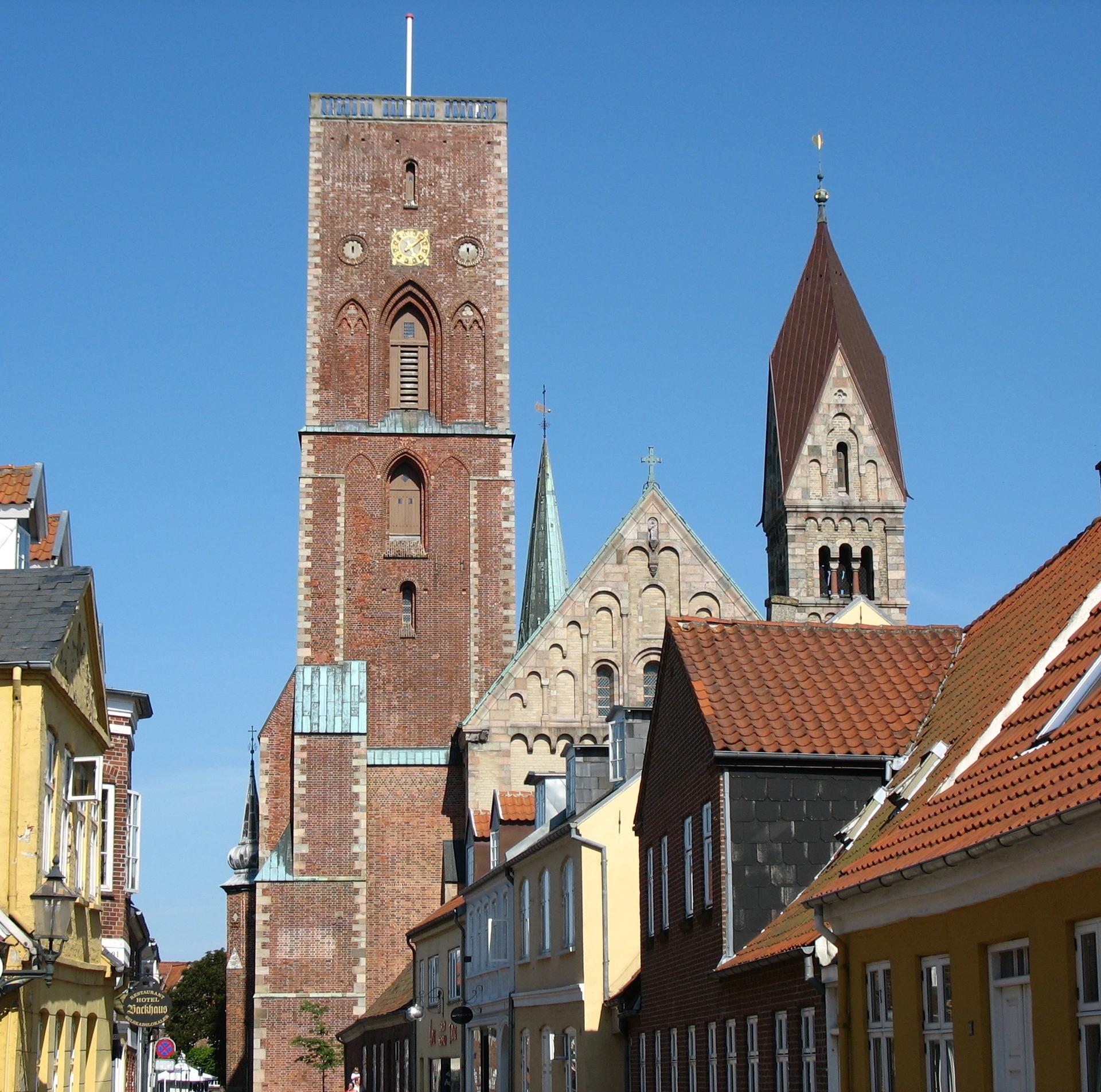
Discover the beauty and charm of South Jutland, Denmark's southern treasure, with its rich history, stunning landscapes, and delightful local cuisine.
Tell me more about South Jutland