
Sandbjerg Manor, Sonderborg Travel Guide
An 18th‑century Rococo manor turned scholarly retreat, framed by lake, fjord and parkland on the edge of Sønderborg in South Jutland.
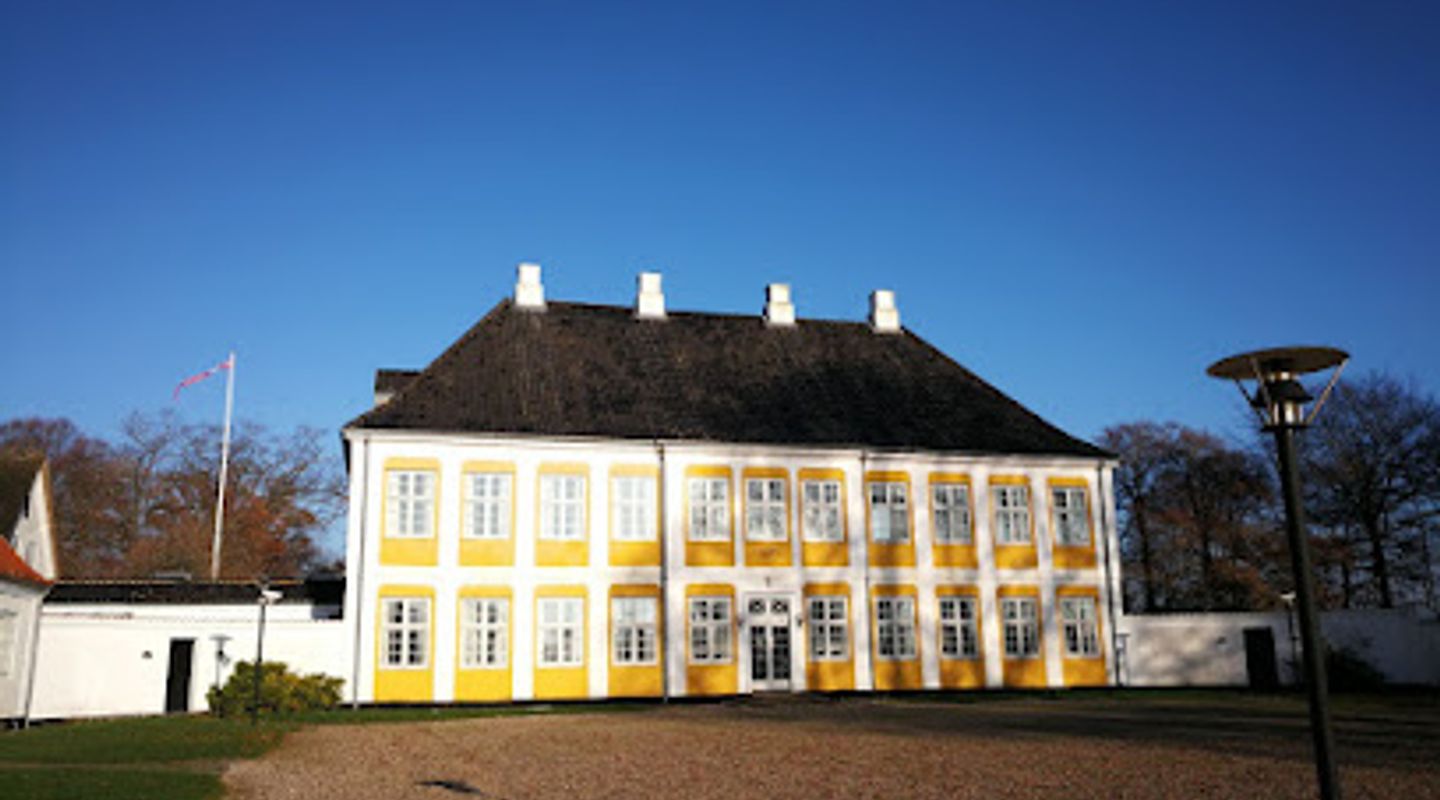
Sandbjerg Manor is an elegant 18th‑century Rococo estate set between lake and fjord just northwest of Sønderborg in South Jutland. Once home to the powerful Reventlow family and later a Prussian military headquarters, it now serves as Aarhus University’s conference centre. Guests encounter grand yet intimate salons, a historic library and garden rooms, framed by mature parkland, woodlands and water views that make the manor feel both scholarly retreat and country escape.
A brief summary to Sandbjerg Manor
- Sandbjergvej 102, Sønderborg, 6400, DK
- Click to display
- Click to display
- Duration: 1.5 to 8 hours
- Mid ranged
-
 Mixed
Mixed
- Mobile reception: 4 out of 5
- Monday 8 am-4 pm
- Tuesday 8 am-4 pm
- Wednesday 8 am-4 pm
- Thursday 8 am-4 pm
- Friday 8 am-2 pm

Know before you go
Hi, I'm Eve. Here are a few practical things to know before exploring Sandbjerg Manor.
- Book well in advance if you plan to attend or organise a conference or retreat here, as the estate primarily serves university-related events and fills early.
- Allow time to walk the grounds between Mølle Lake and Alssund; bring comfortable shoes and a light jacket, as the breeze off the water can feel cool even in summer.
- If you are not staying overnight, check in advance whether the estate grounds are accessible on the day of your visit, as some areas may be reserved for private groups.
- Photographers should visit in early morning or late afternoon, when low light softens the manor’s façade and reflections on the lake are at their most atmospheric.
Do you manage this location?
Take control to get all the benefits, like improved information, better appearance, and stronger visibility across AI-powered discovery. Learn more about listing your business on Evendo
Activate your presenceOther nearby places you may find interesting
The closest places of the same kind, if this one is not quite what you had in mind.
Explore Sandbjerg Manor on the Map
A handpicked selection of must-see spots near Sandbjerg Manor, mapped for you.
Getting There
-
Car from central Sønderborg
Driving from central Sønderborg to Sandbjerg Manor typically takes 10–15 minutes, covering about 6–8 km on ordinary paved roads through semi-rural surroundings. Traffic is usually light, but the final approach uses narrow local roads where low speed is advisable. Parking is available on the estate grounds for guests and event participants at no extra cost. In winter, roads are generally well maintained, though occasional snow or ice can slightly extend travel time.
-
Taxi from Sønderborg Station or Airport
From Sønderborg Station, taxis reach Sandbjerg in roughly 10–15 minutes, while from Sønderborg Airport the journey usually takes 15–20 minutes. Fares commonly range from about 150–250 DKK depending on distance, time of day and traffic. Taxis are metered and can be found at ranks outside the station and terminal or booked by phone. This is the most convenient option if you arrive by train or plane and are carrying luggage or conference materials.
-
Bicycle from Sønderborg area
Cycling from Sønderborg to Sandbjerg takes around 25–40 minutes each way, depending on your starting point and pace. The route uses a mix of town streets and quieter country roads with gentle gradients, suitable for most reasonably fit riders. There are no dedicated bike lanes for the entire distance, so you share some stretches with local traffic. Strong winds off the water and occasional rain showers are common, so bring a windproof layer and lights if returning late.
For the on-the-go comforts that matter to you
-
 Restrooms
-
 Drink Options
-
 Drinking Water
-
 Food Options
-
 Seating Areas
-
 Sheltered Areas
-
 Trash Bins
-
 Information Boards
Discover more about Sandbjerg Manor
A Rococo Manor Between Lake and Sound
Sandbjerg Manor sits on a low rise between Mølle Lake and the Alssund, its pale Rococo façade and tall hipped roof mirrored in still water and framed by old trees. Built in 1788 for Conrad Georg Reventlow, the current mansion replaced earlier estate buildings that had stood here since the 16th century, when Sandbjerg first appeared in written records. From the outside it looks compact and harmonious, yet it anchors a sizeable estate of park, woodland and farm buildings that still read clearly as a historical manor landscape.The setting is one of its quiet triumphs. To one side, lawns fall gently towards the lake; to the other, paths lead through groves and along the shoreline of Alssund, where reeds rustle and small boats occasionally pass. You are never far from the water or from long views across South Jutland’s rolling countryside, which gives the estate an almost island-like calm despite its proximity to Sønderborg.From Royal Lands to Reventlow Stronghold
Sandbjerg’s story begins under the Danish Crown, but its character was shaped by the aristocratic Reventlow family, who acquired the estate in the late 17th century. For nearly 250 years their fortunes and political influence were reflected in the life of the manor, from its agricultural holdings to the social circles it attracted. Family connections reached deep into Danish history, including the dramatic tale of Anne Sophie Reventlow, whose relationship with King Frederick IV would eventually make her queen and embroil the family in royal intrigue.Over time the estate also brushed against military and national history. In the 19th century, during conflicts in the Schleswig region, the manor served at one point as a Prussian military headquarters, placing this seemingly secluded country house at the heart of European power struggles. Yet the house itself remained essentially domestic: a place of salons, dinners and summer evenings by the water, even as politics and war swirled around it.Literary Salons and Scholarly Retreat
In the late 18th and 19th centuries, Sandbjerg developed a reputation as a cultivated refuge, hosting poets, statesmen and officers. Naval hero General Frederik Bülow spent his later years here, and Danish writers such as Jens Baggesen and Adam Oehlenschläger were among the guests invited to enjoy the estate’s good food, wine and conversation. The combination of ordered gardens, reflective water and warm interiors created an ideal backdrop for long discussions and quiet work.That tradition of contemplation deepened in the 20th century. After passing out of Reventlow hands, the estate eventually came into the care of Ellen Dahl, sister of author Karen Blixen. She opened it to cultural and scientific circles and later gifted it to Aarhus University. Since 1959 Sandbjerg has been a university-owned centre for research stays, courses and academic conferences, continuing its evolution from noble residence to intellectual haven.Inside the Manor: Historic Rooms with Modern Comforts
Step inside the main house and the layout still reflects its 18th‑century origins. Ground-floor rooms form a suite of interlinked spaces: dining rooms with strong wall colours and grey woodwork, a library lined with books, intimate gentlemen’s rooms and a garden room that draws light from the park. High ceilings, tall windows and simple stucco details give these rooms an understated elegance that feels more lived-in than palatial.Careful modernisation has added discreet comforts without diluting the historic feel. Across the estate there are guest rooms in the manor and in converted stable and farm buildings, fitted out with neutral tones and simple furniture that complement old beams and masonry. Meeting and seminar rooms occupy former service spaces, so a walk to a conference session may take you past cobbled yards, old brick walls and glimpses of horses’ stalls now repurposed for 21st‑century use.Parks, Paths and the Atmosphere of Retreat
Outside, a network of paths encourages slow exploration. You can stroll along the water’s edge, where the view opens across Alssund, or loop around Mølle Lake under tall trees that filter the wind and dapple the ground with light. The parkland is deliberately simple: lawns, scattered mature trees, and a few geometric traces of earlier garden designs that soften into meadow and woodland at the edges.This landscape is central to the experience of Sandbjerg. Between sessions or sightseeing, many visitors simply walk, sit on a bench overlooking the water, or step down to the shore to watch the changing light. The estate’s position in a relatively open rural area means birdsong carries clearly, and on still days you can hear the distant hum of activity on the opposite shore while remaining wrapped in the manor’s own quiet world.Today’s Role and Who Enjoys It Most
Today Sandbjerg functions mainly as a residential conference and course centre for groups connected to Aarhus University and other institutions, with facilities tailored to seminars, workshops and retreats. Overnight guests typically stay on site, taking meals in the historic dining rooms and using the lounges and library as informal gathering spaces.For travellers in the region, Sandbjerg is primarily appreciated from the outside: as a classic South Jutland manor in a beautiful setting, with walking possibilities in the surrounding landscape and a strong sense of continuity between past and present. Those who respond to quiet atmospheres, architectural character and layered history will find that even a short visit to its grounds can feel like stepping sideways in time, from the busy modern world into a slower, more reflective rhythm.












Your all‑in‑one travel companion app
Explore expert travel guides, compare and book tours, experiences, hotels, and more—all from the palm of your hand. Download now for seamless trip planning wherever your wanderlust takes you.


Explore More of Sonderborg
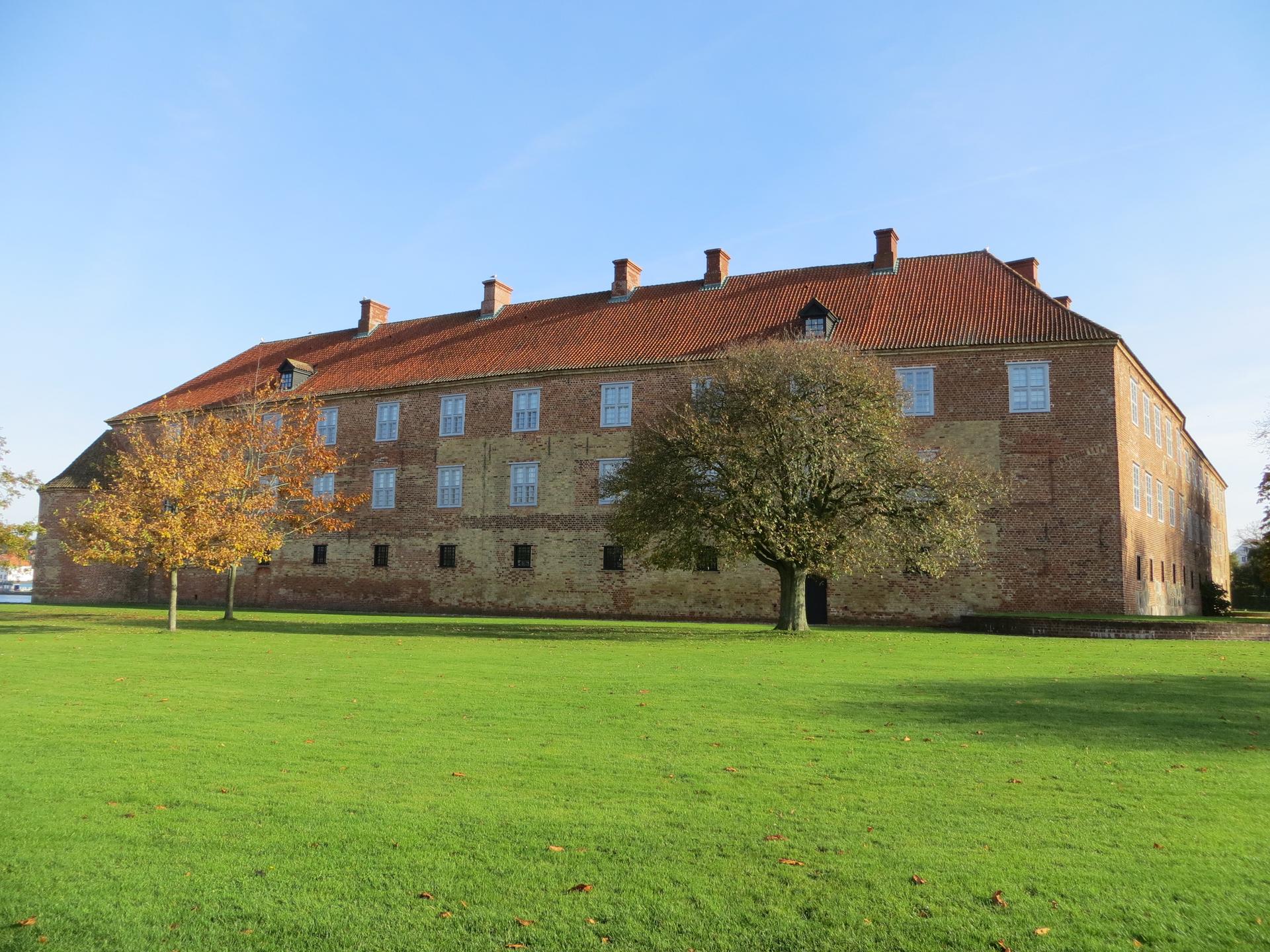
Looking beyond Sandbjerg Manor? Discover Sonderborg for broader travel guides, local hot-spots, and regional highlights.
Explore Sonderborg

