Faaborg Clock Tower Travel Guide
Free Guide: Medieval bell tower turned standalone landmark, Faaborg’s Klokketårnet offers melodic chimes, historic atmosphere and sweeping views over town, harbour and sea.


A brief summary of Faaborg Clock Tower
Medieval bell tower turned standalone landmark, Faaborg’s Klokketårnet offers melodic chimes, historic atmosphere and sweeping views over town, harbour and sea.
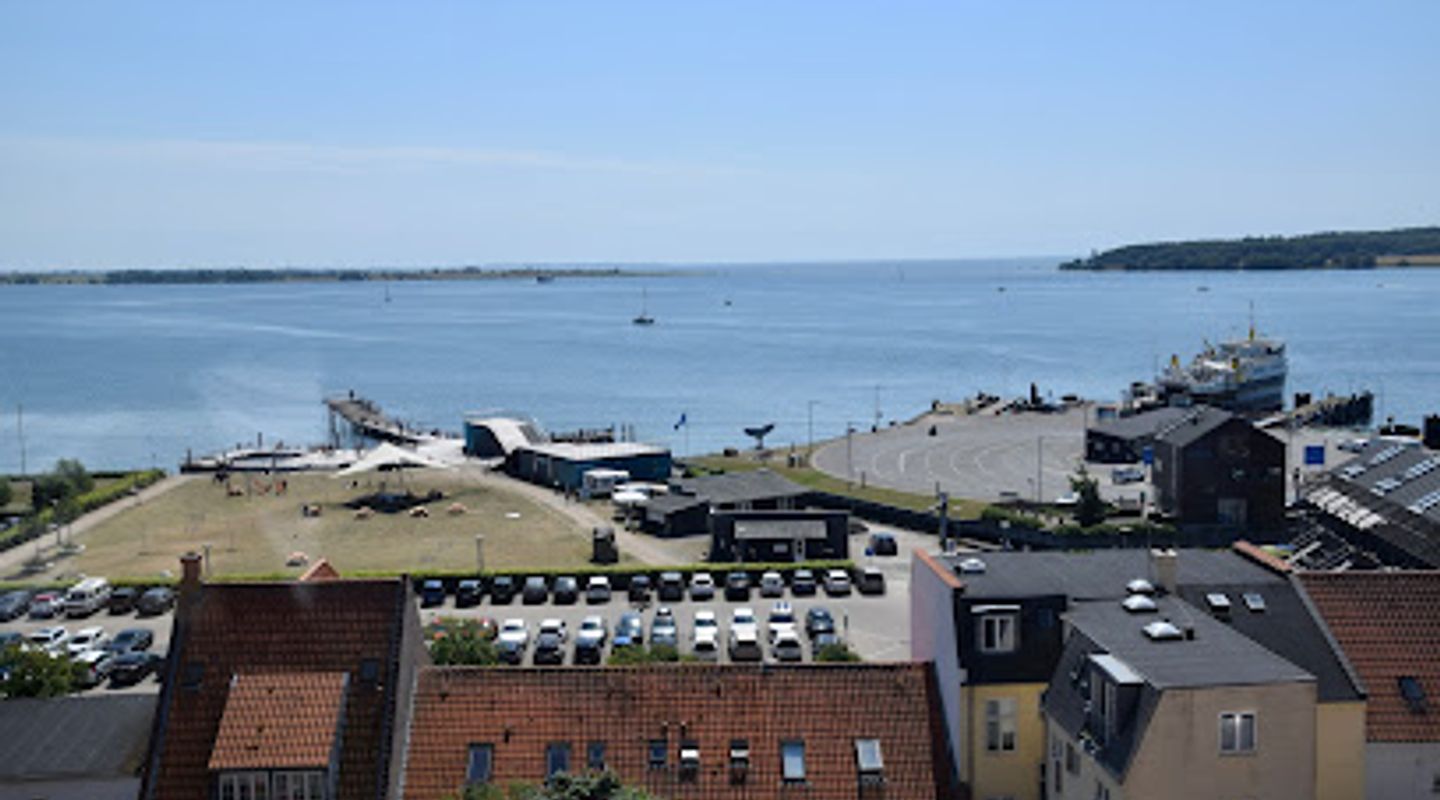
Rising above the red-tiled roofs of Faaborg’s old town, the freestanding Faaborg Clock Tower is the last remnant of medieval St Nicholas Church and the city’s defining landmark. Dating back to around 1250, the tower’s melodic chimes drift through the cobbled streets, while a climb up its 108 steps rewards you with sweeping views over the harbour, the South Funen archipelago and the town’s tightly packed historic houses.
On-site amenities
 Restrooms
 Drink options
 Drinking water
 Food options
 Seating areas
 Trash bins
 Information boards
 Visitor centre
- Address
- Tårnstræde, 5600 Faaborg
- Phone
- Website
Getting there
Regional train and walking from Odense
Bus connection from Svendborg
Car from Odense and South Funen
Cycling on the South Funen routes
Discover more about Faaborg Clock Tower
A medieval church tower without its church
Faaborg Clock Tower, or Klokketårnet, stands alone in the middle of the old town where St Nicholas Church once rose above the harbour. The church was originally built around 1250 but was demolished after the Reformation in the 16th century, leaving only its robust bell tower as a silent witness to the transition from medieval religious life to a more modern market town.Today the tower’s thick walls and simple, sturdy form still feel unmistakably medieval. Built in brick and later altered, it carries traces of several periods: Gothic verticality, later Baroque touches and the practical additions needed to house large bells and a clock mechanism. Standing at its base, in narrow Tårnstræde, you sense how the town once grew tightly around its parish church.
The soundscape of Faaborg’s historic center
For centuries the clock tower has set the rhythm of daily life in Faaborg. Its melodic chimes mark the hours, echoing down cobbled lanes lined with colourful merchants’ houses and small town homes from the 1700s and 1800s. In the evenings of summer, the sound of the bells blends with the calls of the traditional night watchmen, who still patrol the streets on guided walks that start and end by the tower.The bells themselves have changed over time, but their function remains the same: to be heard across the harbour, out towards the South Funen archipelago and into the surrounding countryside. Standing nearby when the carillon plays, you feel how the tower still connects different parts of the town, both physically and symbolically.
Climbing inside the tower
In the main season visitors can enter the interior and climb the 108 steps that spiral up through the structure. The route combines wooden stairs and narrower passages, gradually revealing the tower’s working heart: the clockworks, the bell mechanisms and the heavy timbers that carry their weight. It is an intimate way to experience the building as a piece of living machinery rather than just an exterior silhouette.Near the top, small openings frame slices of town and sea, while on the penultimate level you reach some of the best views over Faaborg. From here the old ramparts, harbour baths, museum roofs and distant hills all fall into place, and the tower’s role as a lookout over centuries of maritime trade becomes clear.
Faaborg’s skyline and story
Seen from the harbour or the surrounding hills, the clock tower is the element that pins Faaborg’s skyline together. It rises above the jumble of red roofs, church spires and masts, a vertical marker that helps you understand the town’s compact layout. Its survival was never guaranteed: city gates and other medieval fortifications were dismantled elsewhere in town, but the tower remained in use and was restored in later centuries, securing its place in the streetscape.Together with nearby Vesterport, the remaining town gate, and the cluster of old houses around it, the tower gives Faaborg an unusually complete historic core. Walking the surrounding lanes, you move through a patchwork of centuries, with the tower as the constant point of reference.
Experiencing the tower today
A visit to Faaborg Clock Tower is compact but atmospheric. Time inside the structure is usually short, yet it rewards unhurried observation: the worn steps, the scent of old wood, the faint vibration when the bells ring. The climb is not suitable for everyone due to the narrow stairs and height, but even from street level the tower adds a strong sense of character to the town.Combined with a stroll through the old market streets, a stop at the nearby church and perhaps a harbourfront walk, the clock tower helps you piece together Faaborg’s development from medieval trading post to modern coastal town. It is a small site with a long memory, and an essential part of understanding why this corner of Funen feels so distinct.
Evendo Review Centre
 Google
Guest reviews
Best time to go
Quietest: Jan, Feb & Mar · before 9am
Busy times are Evendo estimates for a typical year, to help you plan. Actual crowds vary with events, school holidays and the weather.
Explore Faaborg Clock Tower on the map
A handpicked selection of must-see spots near Faaborg Clock Tower, mapped for you.
Get your free copy of our complete guide to Faaborg Clock Tower, delivered straight to you.
Everything on this page, from opening hours and how to get there to Eve’s tips and the best time to go, in one PDF you can read offline, print or share.
Already have an account? Sign in
Your Faaborg Clock Tower guide is ready.
We'll send it to · Not you? Sign out

Getting your guide ready…
We are putting together a fresh copy of the Faaborg Clock Tower guide. This can take up to a minute.
This can take a few moments. If your browser asks, choose Allow so the download can start. You'll find the guide in your Downloads folder.
Nothing happened? Download it again
Sorry, the guide is taking longer than usual. Please try again in a minute, or get it by email instead.
Other nearby places you may find interesting
The closest places of the same kind, if this one is not quite what you had in mind.
-
-
-
-
-


Swipe for more places
More to explore near Faaborg Clock Tower

 Best experiences near Faaborg Clock Tower
 Best hotels near Faaborg Clock Tower
 Best landmarks near Faaborg Clock Tower
 Best attractions near Faaborg Clock Tower
 Best shops near Faaborg Clock Tower
 Best restaurants near Faaborg Clock Tower
 Best bars near Faaborg Clock Tower
Do you manage this location?
Take control to get all the benefits, like improved information, better appearance, and stronger visibility across AI-powered discovery.
Explore more

Explore more of The South Funen Archipelago
Discover the South Funen Archipelago: A tranquil haven of over 55 islands with lush landscapes, serene beaches, and rich cultural heritage in the Baltic Sea.
Explore The South Funen Archipelago
Explore more of Denmark
Discover Denmark: A perfect blend of history, modern design, and the cozy concept of hygge. Explore vibrant cities, serene landscapes, and world-class cuisine.
Explore Denmark