Schwabentor, Freiburg Travel Guide
Free Guide: Discover the historic Schwabentor in Freiburg, a medieval gate offering a glimpse into the city's past, surrounded by charming shops, restaurants, and cultural attractions in the heart of the Altstadt.


A brief summary of Schwabentor
Discover the historic Schwabentor in Freiburg, a medieval gate offering a glimpse into the city's past, surrounded by charming shops, restaurants, and cultural attractions in the heart of the Altstadt.
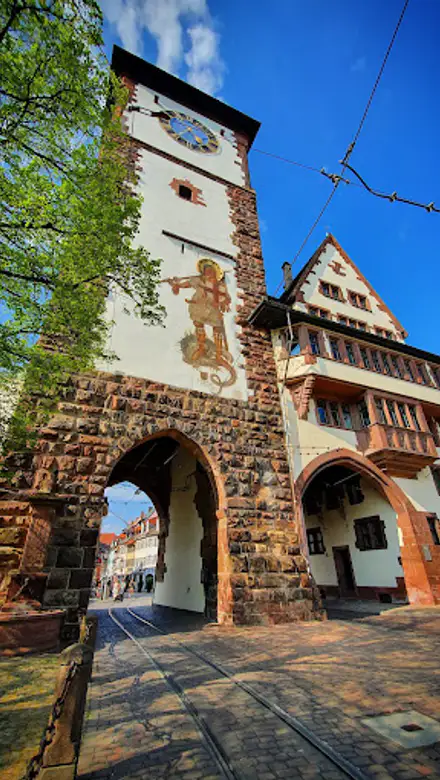
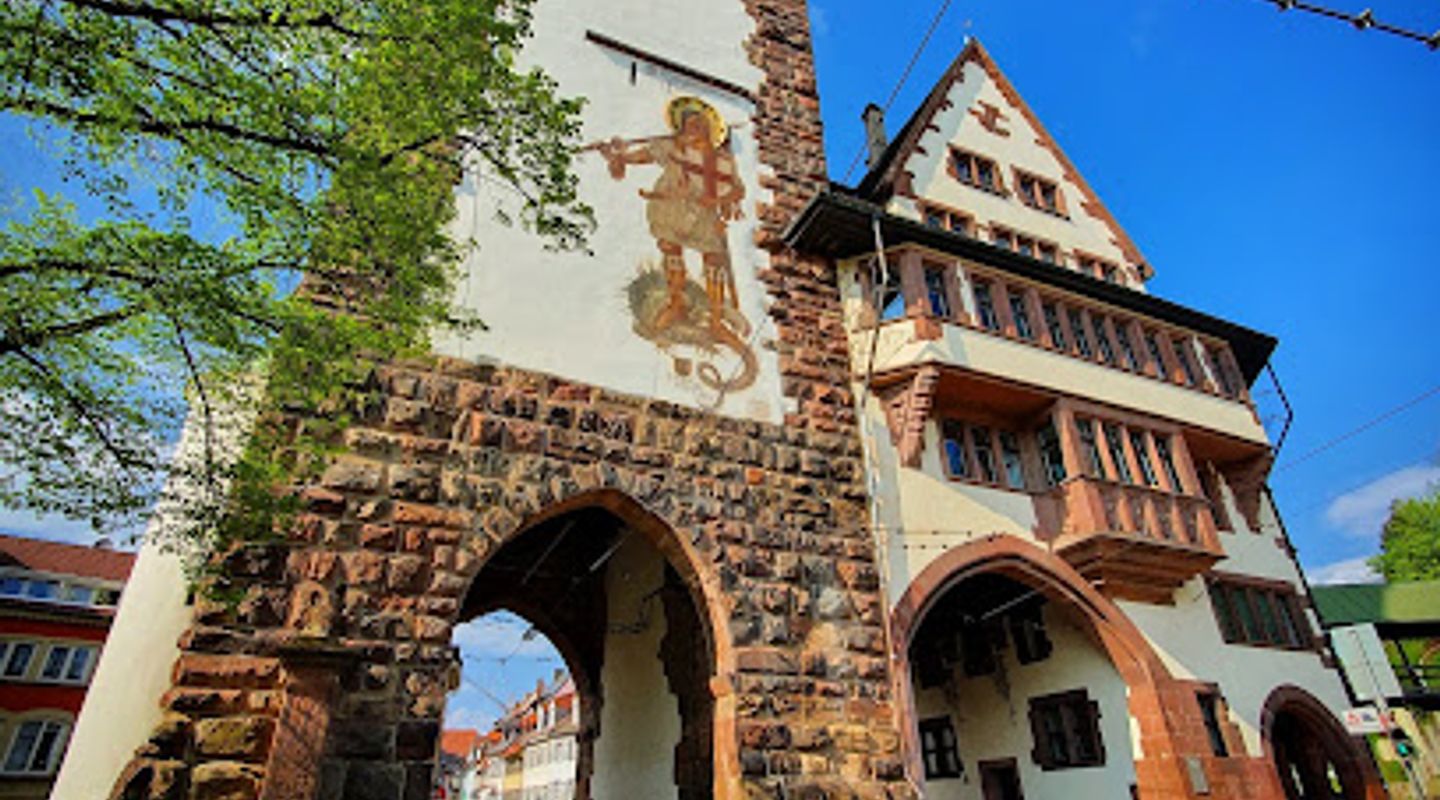
The Schwabentor, or Swabian Gate, is one of Freiburg's two remaining medieval city gates, a picturesque landmark steeped in history and local lore. Built around 1250, it once formed a crucial part of the city's defensive fortifications. Over the centuries, it has been modified and restored, blending its original medieval charm with later architectural styles. Today, the Schwabentor stands as a symbol of Freiburg's rich cultural heritage, offering visitors a glimpse into the city's past. Admire the intricate details, including the 'Boy with Thorn' keystone and the exterior mural of St. George, and explore the adjacent Steinmosaik, a stone mosaic depicting scenes from Freiburg's history. The gate is a must-see for anyone exploring Freiburg's Altstadt (Old Town), providing a tangible connection to the city's fascinating story.
- Address
- Schlossbergring 2, 79098 Freiburg im Breisgau
Getting there
Walking
Public Transport
Taxi/Ride-Share
Driving
Discover more about Schwabentor
Overview
The Schwabentor, also known as the Swabian Gate, stands proudly as one of the last two remaining city gates of Freiburg im Breisgau, a testament to the city's rich medieval past. Constructed around 1250, this imposing structure once served as a vital component of Freiburg's defensive fortifications, protecting its citizens from potential invaders. Today, it welcomes visitors into the heart of the Altstadt, offering a tangible link to the city's captivating history and cultural heritage. Originally called the Obertor (Upper Gate), the Schwabentor's architecture reflects a blend of medieval design and later modifications. The gate tower, initially open towards the city, was enclosed with a stone wall in 1547. In 1572, a stair turret was added, and Matthias Schwäri painted a merchant with a cart on the inner wall, sparking a local legend about a Swabian man who attempted to buy Freiburg with barrels of sand and pebbles, his gold having been secretly replaced by his wife. The gate remained largely unchanged until the late 19th century when it was significantly altered, nearly doubling in height with a crow-stepped gable inspired by North German city towers. In 1903, Fritz Geiges added a painting of St. George, Freiburg's patron saint, slaying a dragon on the exterior. Passing through the Schwabentor is like stepping back in time. The gate's sturdy stone walls, the ogival archway, and the intricate details evoke a sense of medieval Freiburg. Look closely at the keystone of the inner arch, where you'll find a Romanesque depiction of the 'Boy with Thorn,' a symbol of humanity's struggle with original sin. On the inner wall, discover the image of the salt merchant, a reminder of the city's historical trade routes and economic prosperity. The exterior displays the vibrant mural of St. George, a symbol of Freiburg's strength and protection. Adjacent to the Schwabentor is the Steinmosaik, a stone mosaic created between 1976 and 1980 by artist Dietrich Schön. This intricate artwork depicts various scenes from Freiburg's past, offering a visual journey through the city's history. The mosaic incorporates symbols and images representing key moments and figures, from the arrival of St. Fridolin to the establishment of the University of Freiburg. The Steinmosaik provides a fascinating context for understanding the Schwabentor's role in Freiburg's development. Beyond its historical significance, the Schwabentor is also a cultural hub, surrounded by charming shops, restaurants, and cafes. Explore the Konviktstraße, a lively street known for its historic buildings and unique atmosphere. Stroll along the Bächle, the small canals that run through the streets of Freiburg, adding to the city's unique charm. Climb the Schlossberg, the hill overlooking the city, for panoramic views of Freiburg and the surrounding Black Forest. The Schwabentor is more than just a gate; it's a symbol of Freiburg's resilience, its cultural heritage, and its enduring spirit. Whether you're a history enthusiast, an architecture lover, or simply a curious traveler, the Schwabentor offers a captivating experience that will leave you with a lasting impression of this beautiful city. Take a moment to appreciate the gate's intricate details, learn about its fascinating history, and imagine the countless stories that have unfolded within its walls. The Schwabentor is a must-see destination for anyone seeking to discover the heart and soul of Freiburg im Breisgau. To fully appreciate the Schwabentor, consider visiting the Zinnfigurenklause, a unique museum of miniature tin figures located inside the gate. This museum showcases various historical scenes from the region using approximately 9,000 tin figures in dioramas. The exhibits predominantly depict events related to the freedom movements in southern Germany, including the Battle of Sempach, peasant revolts, and the 1848 Revolution in Baden, as well as moments from the Protestant Reformation era. The museum offers a fascinating glimpse into the region's history and culture. The area surrounding the Schwabentor is also a vibrant hub of activity. The nearby Munsterplatz, with its iconic Freiburg Minster, is a must-visit destination. Explore the market stalls, admire the cathedral's Gothic architecture, and soak in the lively atmosphere of this central square. The Augustinerplatz, home to the Augustiner Museum, offers another opportunity to delve into Freiburg's history and art. The museum's collection includes medieval gargoyles and a modern print exhibit, providing a unique perspective on the city's cultural heritage. Whether you're exploring the Schwabentor itself, delving into the city's history at the Augustiner Museum, or simply enjoying the vibrant atmosphere of the Altstadt, Freiburg offers a wealth of experiences for every traveler. The Schwabentor stands as a reminder of the city's rich past and its enduring spirit, inviting visitors to discover the heart and soul of this beautiful city.
Evendo Review Centre
 Google
Guest reviews
Explore Schwabentor on the map
A handpicked selection of must-see spots near Schwabentor, mapped for you.
Get your free copy of our complete guide to Schwabentor, delivered straight to you.
Everything on this page, from opening hours and how to get there to Eve’s tips and the best time to go, in one PDF you can read offline, print or share.
Already have an account? Sign in
Your Schwabentor guide is ready.
We'll send it to · Not you? Sign out

Getting your guide ready…
We are putting together a fresh copy of the Schwabentor guide. This can take up to a minute.
This can take a few moments. If your browser asks, choose Allow so the download can start. You'll find the guide in your Downloads folder.
Nothing happened? Download it again
Sorry, the guide is taking longer than usual. Please try again in a minute, or get it by email instead.
Unlock the best of Schwabentor
Skip-the-line tickets, guided tours with entry, and walking tours of the area, booked in a few clicks.
 Tour with entry
Private Old Town tour with a native Freiburg resident (approx. 90 min)
from $69.31 Tour with entry
Private Old Town tour with a native Freiburg resident (approx. 120 min)
from $85.33 Tour with entry
Private tour in Italian in Freiburg im Breisgau
from $96.12 Tour with entry
Photogenic Freiburg walking tour with a Local
from $105.73


Other nearby places you may find interesting
The closest places of the same kind, if this one is not quite what you had in mind.
-
-
-
-
-


Swipe for more places
More to explore near Schwabentor

 Best experiences near Schwabentor
 Best hotels near Schwabentor
 Best landmarks near Schwabentor
 Best attractions near Schwabentor
 Best shops near Schwabentor
 Best restaurants near Schwabentor
 Best bars near Schwabentor
Do you manage this location?
Take control to get all the benefits, like improved information, better appearance, and stronger visibility across AI-powered discovery.
Explore more
Explore more of Freiburg
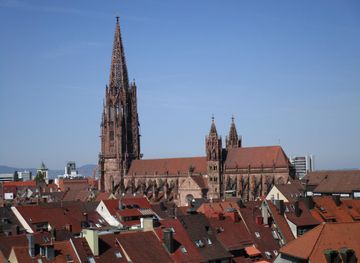
Discover Freiburg: A blend of medieval charm, green living, and scenic beauty, nestled at the edge of the Black Forest with the most sunshine hours in Germany.
Explore Freiburg
Explore more of Germany
Experience Germany: where history meets innovation, and urban energy blends with natural beauty. Discover diverse cultures, delicious cuisine, and stunning landscapes.
Explore Germany