

Great River Road, Iowa Travel Guide
Discover the scenic beauty and rich history along Iowa's Great River Road, where charming towns and outdoor adventures await along the Mississippi River.
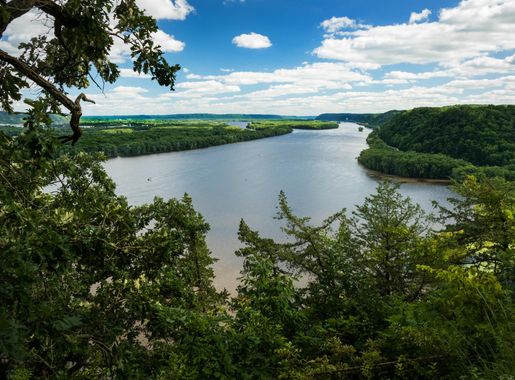
The Great River Road in Iowa is a picturesque route that follows the majestic Mississippi River. This scenic byway offers travelers a blend of charming small towns, rich history, and natural beauty. The road stretches for 328 miles, providing countless opportunities to stop and explore the river’s edge and its surrounding landscapes. As you journey along the Great River Road, you will encounter a variety of attractions, from historic sites to vibrant cultural centers. In towns like Dubuque, you can visit the National Mississippi River Museum and Aquarium, which offers a deep dive into the river's ecology and the history of the region. In Bellevue, the stunning views from Bellevue State Park are not to be missed. Outdoor enthusiasts will find plenty of activities to enjoy. The numerous parks along the route offer hiking, fishing, and bird watching. The river itself is perfect for boating and kayaking. Whether you are looking for a relaxing drive or an adventurous outdoor escape, the Great River Road in Iowa has something for everyone.

Know before you go
Hi, I'm Eve. Here are a few practical things to know before exploring Great River Road.
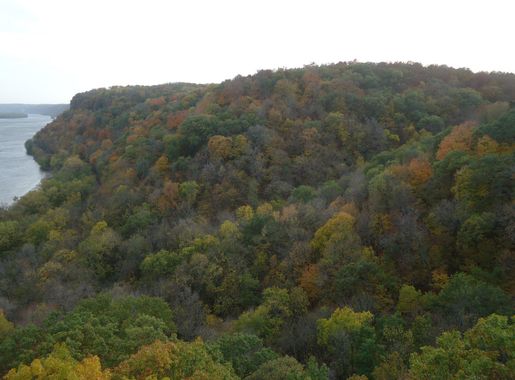
- Visit in the fall for breathtaking autumn foliage along the river.
- Stop at local diners and cafes for a taste of regional cuisine.
- Bring binoculars for bird watching, as the area is home to many species.
- Check local event calendars for festivals and farmers' markets.
- Wear comfortable shoes for exploring parks and historic sites.
Explore Great River Road: Things to Do, Places to Eat, Hotels & More
Handpicked recommendations for top attractions, local dining, accommodations, and more

Best attractions in Great River Road
Top-rated picks
Best Attractions

Crystal Lake Cave
Explore the mesmerizing Crystal Lake Cave in Dubuque, Iowa, where nature's artistry creates an unforgettable underground adventure.

Bixby State Preserve
Explore Bixby State Preserve: A breathtaking nature preserve in Iowa with stunning trails, wildlife, and unique ice caves.

Explore Great River Road on the Map
A handpicked selection of must-see spots in Great River Road, mapped for you.
Great River Road Essentials
-
The Great River Road in Iowa spans approximately 328 miles along the Mississippi River. The closest major airports are in Minneapolis, Minnesota, and Chicago, Illinois. From these cities, you can rent a car or take a bus to reach the Great River Road. Alternatively, smaller regional airports like the Quad City International Airport in Moline, Illinois, and the Eastern Iowa Airport in Cedar Rapids, Iowa, offer closer access points. Amtrak also offers train services to nearby cities such as Burlington and Fort Madison.
-
Driving is the most convenient way to explore the Great River Road. Car rentals are available at major airports and in larger cities along the route. For those preferring public transportation, local buses operate in cities like Dubuque and Davenport, although they may not cover the entire route. Biking is a popular option for shorter segments, and several bike rental shops can be found along the way. Riverboat cruises also offer a unique perspective of the Mississippi River and its surroundings.
-
The official currency is the United States Dollar (USD). Credit and debit cards are widely accepted at hotels, restaurants, and shops along the Great River Road. ATMs are readily available in cities and towns. However, it's advisable to carry some cash for smaller establishments and rural areas where card payments may not be accepted.
-
The Great River Road is generally safe for tourists. However, like any travel destination, it's important to take standard precautions. Avoid walking alone at night in unfamiliar areas and keep an eye on your belongings in crowded places. While there are no specific high-crime areas targeting tourists along the route, it's always best to stay vigilant and aware of your surroundings. Cities like Davenport and Burlington have some neighborhoods where caution should be exercised, especially after dark.
-
In case of emergency, dial 911 for immediate assistance. Hospitals and medical facilities are available in larger cities along the Great River Road, such as Dubuque, Davenport, and Burlington. It's recommended to have travel insurance that covers medical emergencies. For minor health issues, pharmacies are available in most towns along the route.
-
Fashion: Do dress in layers, as the weather can vary along the route. Comfortable walking shoes are essential. Avoid wearing overly revealing clothing. Religion: Do respect local customs and traditions when visiting religious sites. Remove hats and keep voices low inside churches. Public Transport: Do be respectful and give up your seat to elderly passengers. Don't eat or drink on public transport. Greetings: Do greet people with a friendly hello or handshake. Midwesterners are generally very polite. Eating & Drinking: Do try local delicacies and enjoy the regional cuisine. Don't forget to tip your servers, as it's customary in the U.S.
-
To experience the Great River Road like a local, visit farmers' markets and local festivals. Engage with locals, as they are often friendly and willing to share stories and recommend hidden gems. Don't miss the opportunity to explore state parks and nature reserves along the route for some stunning landscapes and outdoor activities. Local diners and cafes often offer the best of regional cuisine, so make sure to stop by for a meal.
When is the best time to visit Great River Road?
Useful Local Phrases for Great River Road
You don't need to speak the language perfectly. Even learning a few simple words can make conversations warmer—and locals usually appreciate the effort.
— Eve

Here are the phrases I use most often in Great River Road. Try a few—you'll be surprised how far they go! 😊
❤️
-
- HelloHowdy
[hah-dee] - GoodbyeSee ya
[see yuh] - YesYep
[yep] - NoNah
[nah] - Please/You're welcomePlease/No problem
[pleez / no prob-lem] - Thank youThanks
[thanks] - Excuse me/SorryPardon me/My bad
[par-dun me / mah bad] - How are you?How's it goin'?
[hows it go-in] - Fine. And you?Good. You?
[good. yuh?] - Do you speak English?Y'all speak English?
[yawl speak in-glish] - I don't understandI don't get it
[I don't get it]
- HelloHowdy
-
- I'd like to see the menu, pleaseCan I see the menu, please
[can I see the menu, please] - I don't eat meatI don't eat meat
[I don't eat meat] - Cheers!Cheers!
[cheers] - I would like to pay, pleaseI'd like to settle up, please
[I'd like to settle up, please]
- I'd like to see the menu, pleaseCan I see the menu, please
-
- Help!Help!
[help] - Go away!Git!
[git] - Call the Police!Call the Cops!
[call the cops] - Call a doctor!Call a Doc!
[call a doc] - I'm lostI'm lost
[I'm lost] - I'm illI'm feelin' bad
[I'm feelin' bad]
- Help!Help!
-
- I'd like to buy...I wanna buy...
[I wanna buy...] - I'm just lookingJust browsin'
[just brow-sin] - How much is it?How much does it cost?
[how much does it cost] - That's too expensiveThat's pricey
[that's price-ee] - Can you lower the price?Can you come down on the price?
[can you come down on the price]
- I'd like to buy...I wanna buy...
-
- What time is it?What's the time?
[what's the time] - It's one o'clockIt's one
[it's one] - Half past (10)Half past ten
[half past ten] - MorningMornin'
[mornin'] - AfternoonAfternoon
[afternoon] - EveningEvenin'
[evenin'] - YesterdayYesterdee
[yesterdee] - TodayToday
[today] - TomorrowTomorrow
[tomorrow] - 1One
[one] - 2Two
[two] - 3Three
[three] - 4Four
[four] - 5Five
[five] - 6Six
[six] - 7Seven
[seven] - 8Eight
[eight] - 9Nine
[nine] - 10Ten
[ten]
- What time is it?What's the time?
-
- Where's a/the...?Where's the...?
[where's the] - What's the address?What's the address?
[what's the address] - Can you show me (on the map)?Can you show me (on the map)?
[can you show me on the map] - When's the next (bus)?When's the next (bus)?
[when's the next bus] - A ticket (to ....)A ticket (to ....)
[a ticket to]
- Where's a/the...?Where's the...?
History of Great River Road
-
Long before European settlers arrived, the area now known as the Great River Road in Iowa was home to various Native American tribes, including the Ioway, Sauk, and Meskwaki. Archaeological evidence, such as burial mounds and ancient artifacts, indicates that these tribes thrived along the fertile banks of the Mississippi River, utilizing its abundant resources for agriculture, hunting, and fishing.
-
In the late 17th century, European explorers such as Louis Jolliet and Father Jacques Marquette navigated the Mississippi River, marking the first recorded European presence in the region. Their exploration opened the door for further expeditions and eventual settlement. The French were particularly influential in the early development of the area, establishing trade networks with Native American tribes and mapping the river's course.
-
The Louisiana Purchase of 1803 was a monumental event that reshaped the future of the Great River Road in Iowa. When the United States acquired the territory from France, it gained control over the Mississippi River, which was crucial for transportation and trade. This acquisition spurred westward expansion and the establishment of new settlements along the river, including what would become key towns and cities in Iowa.
-
The advent of steamboats in the early 19th century revolutionized transportation and commerce along the Mississippi River. Steamboats enabled the efficient movement of goods and people, fostering economic growth and connecting Iowa’s river towns to larger markets. This era saw the rise of bustling river ports like Dubuque, Davenport, and Burlington, which became vital hubs of trade and industry.
-
During the Civil War, the Mississippi River was a strategic asset for both the Union and the Confederacy. Iowa, as a Union state, contributed significantly to the war effort with troops and resources. The river served as a crucial supply line and transport route for Union forces, and several Iowa towns along the Great River Road played roles in supporting the war effort, whether through manufacturing, logistics, or providing soldiers.
-
In the latter half of the 19th century, the growth of railroads began to overshadow river transport. Rail lines were built parallel to the Mississippi River, further enhancing the region's connectivity and economic importance. Towns along the Great River Road adapted to this shift, with many becoming key railroad junctions and experiencing renewed growth and development as a result.
-
In the 20th century, efforts to preserve the cultural and historical heritage of the Great River Road in Iowa gained momentum. The establishment of scenic byways and historical markers has helped to protect and promote the rich history of the area. Today, the Great River Road is recognized as one of America's most scenic and historically significant routes, drawing visitors from around the world to explore its storied past and vibrant present.
Cities in Great River Road
Browse our curated selection of top destinations, scenic points, and must-visit spots in the area.


Neighbouring destination travel guides
Browse our curated selection of top destinations, scenic points, and must-visit spots in the area.




Your all‑in‑one travel companion app
Explore expert travel guides, compare and book tours, experiences, hotels, and more—all from the palm of your hand. Download now for seamless trip planning wherever your wanderlust takes you.


Explore More of Mississippi River Valley

Looking beyond Great River Road? Discover Mississippi River Valley for broader travel guides, local hot-spots, and regional highlights.
Explore Mississippi River ValleyExplore More of Iowa

Looking beyond Great River Road? Discover Iowa for broader travel guides, local hot-spots, and regional highlights.
Explore IowaGreat River Road in Photos
Browse through our photo collection highlighting the charm and character of the destination.



Exploring the Scenic Wonders of Iowa's Great River Road
The Great River Road in Iowa is a picturesque route that follows the majestic Mississippi River. This scenic byway offers travelers a blend of charming small towns, rich history, and natural beauty. The road stretches for 328 miles, providing countless opportunities to stop and explore the river’s edge and its surrounding landscapes. As you journey along the Great River Road, you will encounter a variety of attractions, from historic sites to vibrant cultural centers. In towns like Dubuque, you can visit the National Mississippi River Museum and Aquarium, which offers a deep dive into the river's ecology and the history of the region. In Bellevue, the stunning views from Bellevue State Park are not to be missed. Outdoor enthusiasts will find plenty of activities to enjoy. The numerous parks along the route offer hiking, fishing, and bird watching. The river itself is perfect for boating and kayaking. Whether you are looking for a relaxing drive or an adventurous outdoor escape, the Great River Road in Iowa has something for everyone.