

Marsaxlokk Fishing Village Travel Guide - Free Web & App
Your ultimate guide to Marsaxlokk Fishing Village. Discover top landmarks, proposed trips, and local tips. Free on the web or via the Evendo companion app.


Marsaxlokk Fishing Village in Malta pairs colourful luzzu boats, seafood restaurants, Sunday markets, coastal walks and historic sites near Delimara.
A Traditional Harbour on Malta’s Southeast Coast
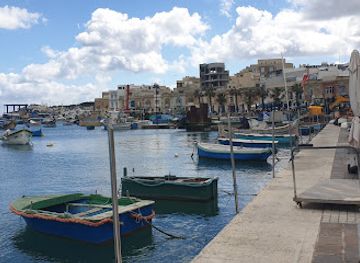
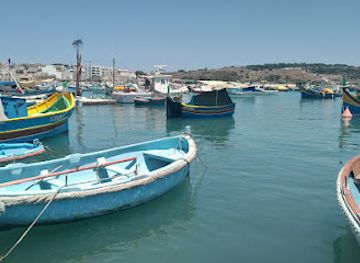
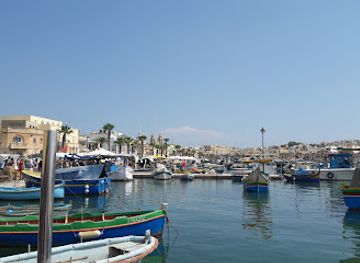
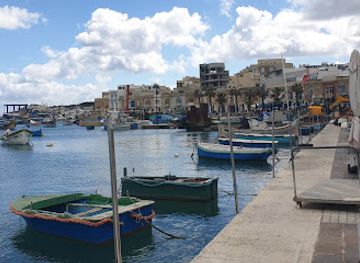
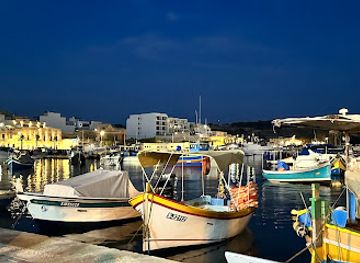
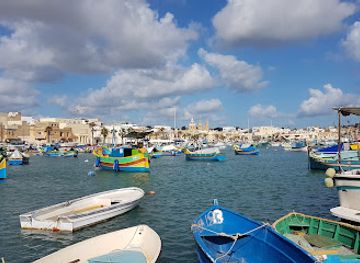
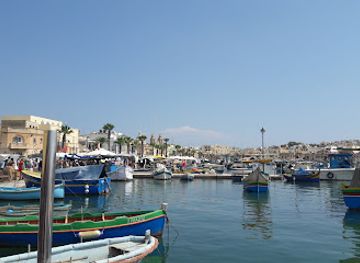
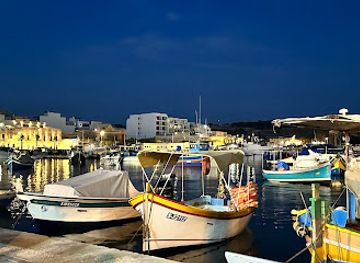
Marsaxlokk Fishing Village occupies a broad, sheltered bay on Malta’s southeastern coast, where brightly painted luzzu fishing boats gather beside a waterfront lined with cafés, restaurants and market stalls. The village takes its name from marsa, meaning harbour, and xlokk, the southeast wind, reflecting both its maritime setting and exposure to the Mediterranean weather. Unlike Malta’s fortified urban centres, Marsaxlokk is defined by its working harbour, low-rise waterfront and enduring connection with fishing.Read more about Marsaxlokk Fishing Village
Coast, Countryside and Archaeology
Village Life and Visitor Character
When is the best time to visit Marsaxlokk Fishing Village?
Best: May–July · 24–32°C| Month | High (°C) | Rainfall (mm) |
|---|---|---|
| January | 18 | 87 |
| February | 18 | 80 |
| March | 19 | 68 |
| April | 20 | 45 |
| May (best) | 24 | 18 |
| June (best) | 28 | 9 |
| July (best) | 32 | 5 |
| August | 32 | 8 |
| September | 30 | 29 |
| October | 26 | 67 |
| November | 22 | 100 |
| December | 18 | 127 |
Getting to and around Marsaxlokk Fishing Village
How to get there
Transportation
Best attractions in Marsaxlokk Fishing Village
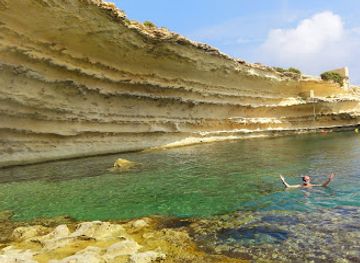
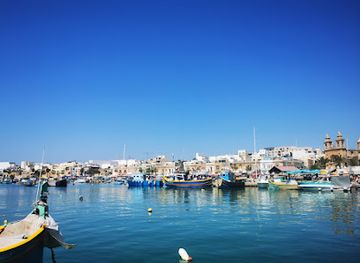
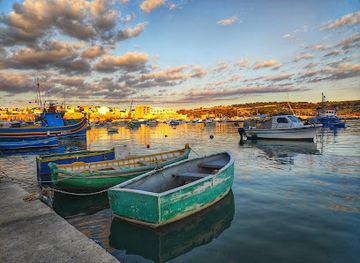
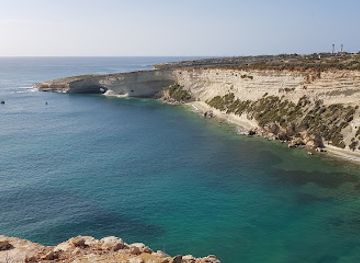
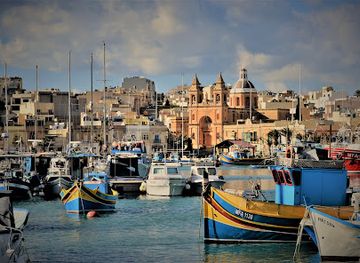
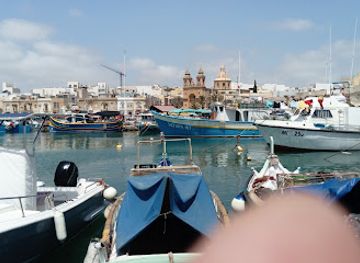
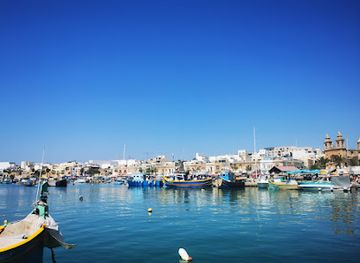
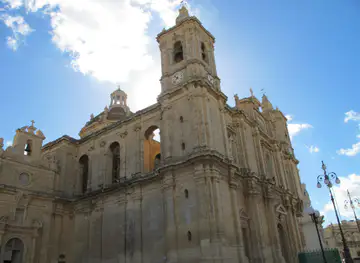
Marsaxlokk’s principal attraction is its broad waterfront, where colourful luzzu boats and fishing vessels line the harbour against a backdrop of low-rise village buildings. Sunday’s market adds a busy local dimension, while the parish church of Our Lady of Pompei gives the settlement a prominent architectural focus. Beyond the village, the Delimara Peninsula offers open coastal scenery, rocky coves and access to St Peter’s Pool, a natural swimming inlet whose conditions and entry points require care. Xrobb l-Għaġin Nature Park combines coastal views with a wooded recreational landscape, while Tas-Silġ provides an archaeological perspective on the area’s ancient religious importance. Fort San Lucian stands near the head of the bay and reflects Marsaxlokk’s strategic maritime past. The attractions are spread between the compact village and the more rural peninsula, so exploring them together is easier with planned transport and suitable footwear.
-
Tourist attraction
Xrobb l-Għaġin
Discover the natural beauty and stunning coastal views at Xrobb l-Għagin, a scenic park in Marsaxlokk, Malta, perfect for nature lovers.
-
Historical place
It-Torri ta' San Lucjan
Explore Malta's rich history at It-Torri ta' San Lucjan, a historic fortress offering breathtaking views and a glimpse into the island's maritime past.
-
Tourist attraction
Ballut ta' Marsaxlokk
Explore the picturesque Marsaxlokk, Malta's vibrant fishing village known for its colorful boats, seafood delights, and breathtaking coastal views.
-
Tourist attraction
Salt Pans
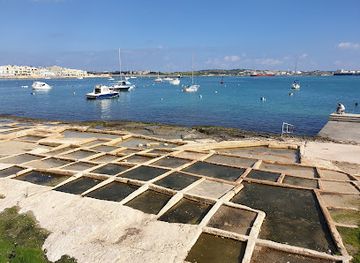
Discover the picturesque Salt Pans of Birżebbuġa, a unique blend of natural beauty and rich cultural history in Malta.
Best landmarks in Marsaxlokk Fishing Village
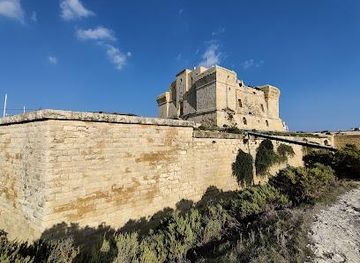
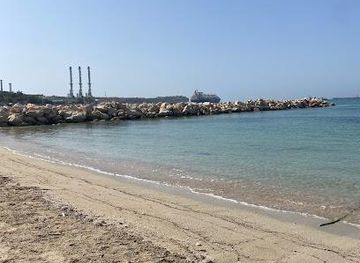
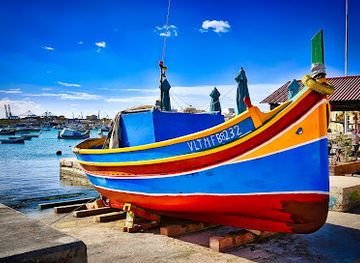
The harbour itself is Marsaxlokk’s defining landmark, its surface filled with traditional luzzu whose coloured hulls and painted eyes have become closely associated with Maltese fishing culture. The parish church of Our Lady of Pompei dominates the village skyline and reflects Marsaxlokk’s Catholic identity. Fort San Lucian, overlooking the bay, is a significant defensive landmark linked to the Order of St John and Malta’s maritime security. On the Delimara Peninsula, St Peter’s Pool is a natural rock-cut inlet rather than a developed beach, while the headland’s open terrain reveals the coast’s strategic and industrial character. Tas-Silġ is the area’s principal archaeological landmark, preserving evidence of a sanctuary used across successive ancient periods above the bay.
-
Market
Marsaxlokk Open Market
Experience the vibrant Marsaxlokk Open Market, a cultural feast of fresh produce, local crafts, and delicious Maltese cuisine in a charming fishing village.
-
Tourist attraction
Marsaxlokk Harbour
Experience the vibrant culture, delicious seafood, and stunning views at Marsaxlokk Harbour, a must-visit destination in Malta's picturesque fishing village.
-
Scenic spot
Xrobb l-Għaġin
Experience the serene beauty of Xrobb l-Għagin, a scenic park in Marsaxlokk, Malta, where nature and tranquility unite.
-
Catholic church
Santwarju tal-Madonna ta’ Pompei
Discover the serene beauty of Santwarju tal-Madonna ta’ Pompei, a captivating Catholic church in charming Marsaxlokk, Malta.
Explore Marsaxlokk Fishing Village on the map
Plan your trip on one map. See where the top attractions, landmarks, restaurants and hotels are, and book hotels and experiences in a few clicks.
Best hotels in Marsaxlokk Fishing Village
Best restaurants in Marsaxlokk Fishing Village
Food in Marsaxlokk is strongly linked to the harbour, with restaurants and cafés along and near the waterfront serving fish, seafood and familiar Maltese dishes. Lampuki, when in season, is an important Maltese fish, while dishes such as aljotta, a fish soup, and pastizzi reflect the island’s wider culinary traditions. Menus vary with the catch and the establishment, so diners should ask about the day’s fish rather than assuming every dish is locally landed. The greatest concentration of choice is in Marsaxlokk itself; visitors staying around Delimara or exploring the coast should not expect restaurants beside every attraction. Nearby Żejtun and other southeastern settlements provide additional everyday dining options, while the village market offers a chance to browse local produce and prepared food in a more informal setting.
-
Seafood
La Nostra Padrona
Experience authentic Maltese seafood at La Nostra Padrona in Marsaxlokk - where every dish tells a story of tradition and freshness.
-
Seafood
Roots Restaurant
Experience authentic Maltese seafood at Roots Restaurant in Marsaxlokk - where freshness meets tradition by the beautiful Mediterranean coast.
-
Restaurant
Carrubia | Restaurant - Pizzeria
Experience authentic Italian cuisine with stunning sea views at Carrubia Restaurant - Pizzeria in Marsaxlokk.
-
European
Skuna
Experience authentic Maltese cuisine at Skuna in Marsaxlokk, where fresh seafood meets Mediterranean charm.
Best bars in Marsaxlokk Fishing Village
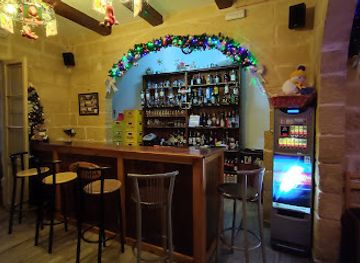
Marsaxlokk is not a clubbing destination, and evenings are generally quiet once the daytime market and harbour activity have eased. The village’s evening life centres on waterfront restaurants, cafés and local bars, where visitors can sit near the boats rather than seek a large entertainment district. Traditional village hospitality is more characteristic than late-night dancing, and seasonal religious festivities may bring temporary activity to the streets, although programmes vary. Visitors looking for a wider choice of bars, live music or late-night venues will usually need to travel to larger Maltese centres outside Marsaxlokk. Checking local opening arrangements is sensible, particularly outside the main summer period and on quieter weekdays.
-
Seafood
La Nostra Padrona
Experience the best of Mediterranean seafood at La Nostra Padrona in the picturesque village of Marsaxlokk, Malta.
-
Seafood
Roots Restaurant
Discover the flavors of Malta at Roots Restaurant, where fresh seafood meets stunning harbor views in a charming setting.
-
Restaurant
Carrubia | Restaurant - Pizzeria
Experience authentic Maltese cuisine and stunning harbor views at Carrubia Restaurant in the heart of Marsaxlokk.
-
European
Skuna
Discover the culinary treasures of Malta at Skuna, where fresh seafood meets European flavors in the heart of Marsaxlokk.
Best nightclubs in Marsaxlokk Fishing Village
Marsaxlokk is not a clubbing destination, and evenings are generally quiet once the daytime market and harbour activity have eased. The village’s evening life centres on waterfront restaurants, cafés and local bars, where visitors can sit near the boats rather than seek a large entertainment district. Traditional village hospitality is more characteristic than late-night dancing, and seasonal religious festivities may bring temporary activity to the streets, although programmes vary. Visitors looking for a wider choice of bars, live music or late-night venues will usually need to travel to larger Maltese centres outside Marsaxlokk. Checking local opening arrangements is sensible, particularly outside the main summer period and on quieter weekdays.
-
Bar
Remissa M’Xlokk Coffee & Sport Bar
Discover the heart of Marsaxlokk at Remissa M’Xlokk Coffee & Sport Bar, where local culture and vibrant atmosphere meet for an unforgettable experience.
-
Night club
Oyster Lounge
Discover the electrifying nightlife at Oyster Lounge in Marsaxlokk, Malta, where music, dance, and local culture collide for an unforgettable evening.
Best shops in Marsaxlokk Fishing Village
Shopping in Marsaxlokk is concentrated along the waterfront and is particularly associated with the Sunday market. Stalls commonly offer clothing, household goods, souvenirs, fresh produce and food items, although the exact selection changes and visitors should distinguish everyday market merchandise from locally made products. The village’s strongest regional purchase is culinary rather than luxury retail: fish, Maltese food products and island specialities may be available through local traders and shops. Small businesses in Marsaxlokk serve residents as well as visitors, while larger retail choices are found in neighbouring towns and Malta’s main commercial centres. Anyone buying craftwork, pottery, lace or regional foods should ask about provenance rather than assuming an item was made locally.
-
Market
Marsaxlokk Open Market
Explore the vibrant Marsaxlokk Open Market, where fresh seafood, local crafts, and Mediterranean charm create an unforgettable shopping experience.
-
Tourist attraction
Marsaxlokk Harbour
Explore the vibrant Marsaxlokk Harbour, a picturesque fishing village in Malta, known for its colorful boats and delicious seafood.
-
Seafood
Roots Restaurant
Experience the best of Maltese seafood at Roots Restaurant in the charming village of Marsaxlokk, where freshness meets tradition.
-
Italian
T'Annamari Restaurant
Experience the essence of Southern Italian and Mediterranean flavors at T'Annamari Restaurant, nestled in the heart of Marsaxlokk's charming fishing village.

Get your free copy of our complete guide to Marsaxlokk Fishing Village, delivered straight to you.
Everything on this page, from attractions and restaurants to essentials and local phrases, in one PDF you can read offline, print or share.
Already have an account? Sign in
Your Marsaxlokk Fishing Village guide is ready.
We'll send it to · Not you? Sign out

Getting your guide ready…
We are putting together a fresh copy of the Marsaxlokk Fishing Village guide. This can take up to a minute.
This can take a few moments. If your browser asks, choose Allow so the download can start. You'll find the guide in your Downloads folder.
Nothing happened? Download it again
Sorry, the guide is taking longer than usual. Please try again in a minute, or get it by email instead.
Marsaxlokk Fishing Village essentials
Currency and Payment
Safety
Emergency Situations
Do's and Don'ts
Local Tips
From Eve
Local phrases worth knowing
You don't need to get them perfect. A few words go a long way, and locals appreciate the effort.
Basics
| English | Local | Say it |
|---|---|---|
| Hello | Merħba | [mer-hba] |
| Goodbye | ċaw | [chaw] |
| Yes | Iva | [ee-va] |
| No | Le | [leh] |
| Please/You're welcome | Jekk jogħġbok | [yekk yohb-hok] |
| Thank you | Grazzi | [grat-see] |
| Excuse me/Sorry | Skuzani | [skoo-za-nee] |
| How are you? | Kif int? | [keef eent] |
| Fine. And you? | Tajjeb. U int? | [tai-yeb. oo eent] |
| Do you speak English? | Titkellem bl-Ingliż? | [tit-kel-lem bing-lees] |
| I don't understand | Ma nifhimx | [ma neef-heems] |
Eating & Drinking
| English | Local | Say it |
|---|---|---|
| I'd like to see the menu, please | Nixtieq inara l-menù, jekk jogħġbok | [nix-tee-ek ee-na-ra l-men-oo, yekk yohb-hok] |
| I don't eat meat | Ma niekolx laħam | [ma nee-e-kolsh la-ham] |
| Cheers! | Saħħa! | [sa-ha] |
| I would like to pay, please | Nixtieq inħallas, jekk jogħġbok | [nix-tee-ek in-hal-las, yekk yohb-hok] |
Emergencies
| English | Local | Say it |
|---|---|---|
| Help! | Għajjat! | [ay-yat] |
| Go away! | Mur lejn! | [moor layn] |
| Call the Police! | Illejla l-Pulizija! | [il-lay-la pul-ee-zee-ya] |
| Call a doctor! | Illejla tabib! | [il-lay-la ta-beeb] |
| I'm lost | Inkejt | [in-keet] |
| I'm ill | Nixtieq tabilħi | [nix-tee-ek ta-bil-hee] |
Shopping
| English | Local | Say it |
|---|---|---|
| I'd like to buy... | Nixtieq inixtri... | [nix-tee-ek ini-stree] |
| I'm just looking | Qed insib biss | [ked in-seeb bees] |
| How much is it? | Kemm huwa? | [kem hoo-wa] |
| That's too expensive | Dan huwa wisq ieftin | [dan hoo-wa wees-uk yef-teen] |
| Can you lower the price? | Tista' tilħaq il-prezz? | [tis-ta til-hak il-prez] |
Time & Numbers
| English | Local | Say it |
|---|---|---|
| What time is it? | Xi ħin huwa? | [she heen hoo-wa] |
| It's one o'clock | Huwa l-ewwel siegħa | [hoo-wa l-ew-wel see-eha] |
| Half past (10) | Nofs il-għaxra | [noffs il-aakra] |
| Morning | Filgħodu | [fil-gho-doo] |
| Afternoon | Fl-ewwel wara nofsinhar | [fl-ew-wel wa-ra nof-sin-har] |
| Evening | Filgħaxija | [fil-ak-si-ya] |
| Yesterday | Ilbieraħ | [il-bier-ah] |
| Today | Illum | [il-lum] |
| Tomorrow | Għada | [ada] |
| 1 | Wieħed | [wee-hed] |
| 2 | Tnejn | [t-nain] |
| 3 | Tlieta | [tlie-ta] |
| 4 | Erba' | [er-ba] |
| 5 | Ħamsa | [ham-sa] |
| 6 | Sitta | [sit-ta] |
| 7 | Seba' | [se-ba] |
| 8 | Tmenin | [tme-neen] |
| 9 | Disgħa | [dis-ya] |
| 10 | Għaxra | [aakra] |
Transport & Directions
| English | Local | Say it |
|---|---|---|
| Where's a/the...? | Fejn hemm... | [feyn hemm] |
| What's the address? | X'inhu l-indirizz? | [shin-hoo l-in-di-reez] |
| Can you show me (on the map)? | Tista' tiluri (fuq il-mappa)? | [tis-ta til-oo-ree fooq il-map-pa] |
| When's the next (bus)? | Meta jmiss? | [me-ta y-miss] |
| A ticket (to ....) | Biljett (għal ....) | [bil-yet gal] |
History of Marsaxlokk Fishing Village
A Harbour Shaped by the Southeast Wind
Marsaxlokk’s name combines marsa, the Arabic-derived Maltese word for harbour, with xlokk, the southeast wind. The bay’s sheltered waters made it a natural anchorage and fishing base, while its position facing the southeastern Mediterranean gave it strategic importance. The village developed around maritime work rather than the dense fortifications associated with Valletta and the Three Cities. Fishing, boat building and coastal trade helped shape the waterfront settlement, and the harbour remained closely connected to the surrounding agricultural communities.
Ancient Worship at Tas-Silġ
On the ridge above Marsaxlokk Bay, Tas-Silġ preserves evidence of religious activity stretching from the later prehistoric period through the Phoenician and Punic eras and into Roman times. The site is associated with a long-lived sanctuary complex, although its remains represent several phases of occupation rather than one single building. Its position overlooking the harbour helps explain the importance of the area in ancient maritime networks. Archaeological work has revealed how religious practice and Mediterranean contact changed across successive cultures.
Coastal Defence and Maritime Conflict
Marsaxlokk’s open bay made it a useful landing place as well as a fishing harbour, leaving the coast exposed during periods of conflict. The area was involved in Malta’s wider history of maritime raids and military defence, while Fort San Lucian was built by the Order of St John in the seventeenth century to guard the bay. Its later alterations reflect changing defensive needs. The fort and surrounding coastal works remain reminders that Marsaxlokk was valued not only for fishing but also for controlling access to Malta’s southeastern shore.
From Fishing Community to Visitor Harbour
Marsaxlokk retained its identity as a fishing village while Malta’s economy and transport patterns changed during the nineteenth and twentieth centuries. The traditional luzzu, with its brightly painted hull and protective eyes on the bow, became an enduring symbol of Maltese maritime culture. The harbour’s visual character increasingly attracted visitors, but fishing and seafood remained central to local life. Today, the village combines a working waterfront with tourism, while the Delimara Peninsula and nearby countryside continue to show the pressures and contrasts of modern coastal development.
Marsaxlokk Fishing Village in Photos
Browse through our photo collection highlighting the charm and character of the destination.
Cities in Marsaxlokk Fishing Village
The towns and cities of Marsaxlokk Fishing Village, and the easiest places to base yourself.
-

-

-


Swipe for more cities
Neighbouring destination travel guides
The closest destinations to Marsaxlokk Fishing Village, if you have time for more than one.
-

-

-

-
-


Swipe for more destinations
Explore more

Explore more of Tas-Silġ Area
Discover the ancient wonders of Tas-Silġ Area in Malta, a serene archaeological site rich in history, culture, and natural beauty.
Explore Tas-Silġ Area
Explore more of Malta
Discover Malta's crystal-clear waters, rich history, and vibrant culture. From ancient temples to modern nightlife, this Mediterranean gem offers something for everyone.
Explore Malta