

Free Martha's Vineyard Travel Guide & Mobile App
Plan your Martha's Vineyard trip with Evendo. Get free guides to top attractions, restaurants, hotels, and bars. Web access or download the mobile app.


Martha's Vineyard blends Atlantic beaches, whaling villages, lighthouses and island culture with scenic cycling, seafood and coastal escapes.
Six Villages, One Island
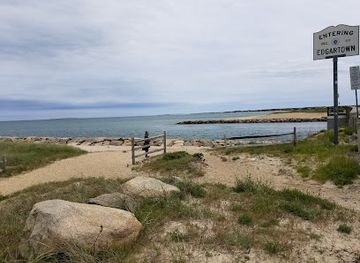
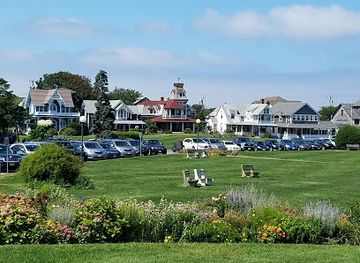
Martha's Vineyard lies south of Cape Cod in Massachusetts, reached primarily by ferry or air and shaped by the Atlantic on every side. It is not a single incorporated town but an island of six distinctive communities: Vineyard Haven, Oak Bluffs, Edgartown, West Tisbury, Chilmark and Aquinnah. Each has a different character. Vineyard Haven is the year-round working port, Oak Bluffs is known for its colourful gingerbread cottages and lively waterfront, Edgartown preserves an elegant whaling-era streetscape, while West Tisbury, Chilmark and Aquinnah extend into quieter rural landscapes, stone-walled lanes and open shorelines.Read more about Martha's Vineyard
Coastal Heritage and Island Life
Landscapes and Cultural Traditions
When is the best time to visit Martha's Vineyard?
Best: June–August · 23–26°C| Month | High (°C) | Rainfall (mm) |
|---|---|---|
| January | 3 | 76 |
| February | 4 | 73 |
| March | 8 | 89 |
| April | 13 | 89 |
| May | 18 | 83 |
| June (best) | 23 | 76 |
| July (best) | 26 | 75 |
| August (best) | 26 | 86 |
| September | 23 | 86 |
| October | 18 | 95 |
| November | 12 | 103 |
| December | 6 | 94 |
Getting to and around Martha's Vineyard
How to get there
Transportation
Best attractions in Martha's Vineyard
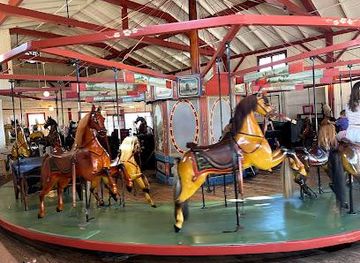
Martha's Vineyard's attractions are spread across six villages and a landscape of beaches, harbours, farms and conservation land. In Oak Bluffs, the Martha's Vineyard Camp Meeting Association's gingerbread cottages create one of the island's most distinctive residential districts, while the Flying Horses Carousel preserves a much-loved piece of seaside amusement history. Edgartown combines a walkable harbour with the Martha's Vineyard Museum's maritime and island collections, and the nearby Edgartown Lighthouse stands at the entrance to Katama Bay. At the western end, Aquinnah's Gay Head Cliffs overlook the Atlantic and Elizabeth Islands, with the Gay Head Lighthouse nearby. Menemsha offers a working fishing harbour and memorable coastal light, while the Manuel F. Correllus State Forest provides an inland contrast of pine woods and cycling roads. Beaches such as South Beach, Lucy Vincent Beach and Long Point Wildlife Refuge reveal different aspects of the island's shore, though access rules and parking arrangements vary.
-
Scenic spot
Nobska Lighthouse
Discover the scenic beauty and rich history of Nobska Lighthouse, a must-see attraction on Cape Cod, Massachusetts.
34 min drive · 14 km from city centre
-
Amusement park ride
Flying Horses Carousel a Vineyard Preservation Trust Property
Experience the charm of the historic Flying Horses Carousel, the oldest operating carousel in the U.S., in scenic Oak Bluffs, Massachusetts.
22 min drive · 7.3 km from city centre
-
Tourist attraction
Flying Horses Carousel
Experience the enchanting charm of the historic Flying Horses Carousel in Oak Bluffs, a delightful amusement ride that captures the essence of nostalgia.
22 min drive · 7.3 km from city centre
-
Public beach
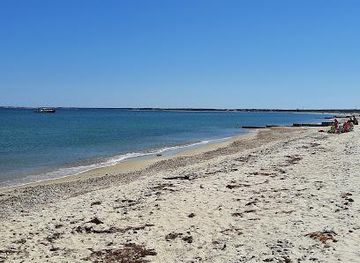
Joseph Sylvia State Beach
Experience the beauty and tranquility of Joseph Sylvia State Beach in Edgartown, a perfect spot for relaxation and recreation on Martha's Vineyard.
14 min drive · 4.7 km from city centre

Best landmarks in Martha's Vineyard
Martha's Vineyard's landmarks express its maritime history, religious traditions and Wampanoag heritage. The Gay Head Lighthouse at Aquinnah, first established in the nineteenth century and later moved because of coastal erosion, stands above the island's famous clay cliffs. Edgartown Lighthouse and East Chop Lighthouse mark important approaches to the island's historic harbours, while the West Chop Lighthouse completes a wider network of navigational structures. In Oak Bluffs, the ornate cottages of the Martha's Vineyard Camp Meeting Association form an exceptionally distinctive surviving camp-meeting landscape, and the Flying Horses Carousel reflects the town's resort history. Edgartown's Old Whaling Church and rows of preserved Greek Revival-era houses recall the prosperity of the whaling period. Aquinnah's cliffs and surrounding landscape are also culturally significant to the Wampanoag Tribe of Gay Head (Aquinnah), making them places of heritage as well as scenery.
-
Amusement park ride
Flying Horses Carousel
Discover the historic Flying Horses Carousel in Oak Bluffs, a delightful ride steeped in Americana and perfect for families visiting Martha's Vineyard.
22 min drive · 7.3 km from city centre
-
Public beach
Joseph Sylvia State Beach
Discover the unspoiled beauty of Joseph Sylvia State Beach, a tranquil public beach in Edgartown, perfect for relaxation and family fun.
14 min drive · 4.7 km from city centre
-
Bridge
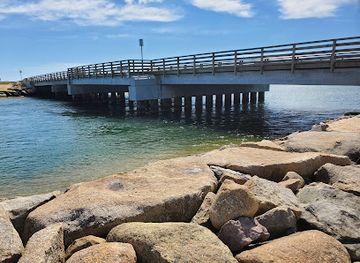
Jaws Bridge
Experience the iconic Jaws Bridge in Edgartown, MA—where cinematic history meets stunning natural beauty for an unforgettable visit.
14 min drive · 4.6 km from city centre
-
Beach
Inkwell Beach
Discover the beauty of Inkwell Beach in Oak Bluffs, a perfect blend of relaxation, stunning views, and local culture on Martha's Vineyard.
21 min drive · 7.0 km from city centre
Explore Martha's Vineyard on the map
Plan your Martha's Vineyard trip on one map. See where the top attractions, landmarks, restaurants, bars and hotels are, find what's near where you're staying, and book hotels and experiences in a few clicks.
Best hotels in Martha's Vineyard
Best restaurants in Martha's Vineyard
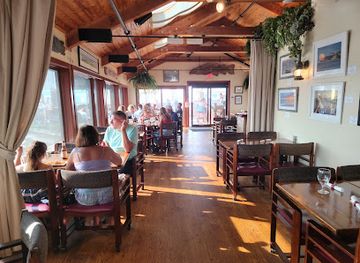
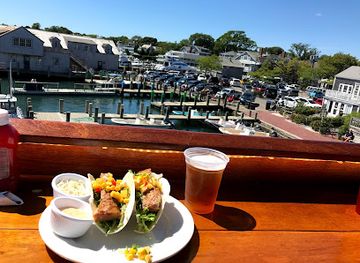
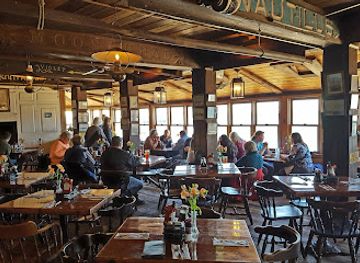
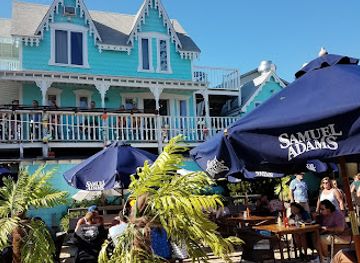
Martha's Vineyard dining is shaped by the sea, the farming landscape and the island's seasonal rhythm. Menus commonly feature local shellfish, oysters, clams, bluefish and other New England seafood, alongside produce from island farms and farmers' markets. Edgartown, Oak Bluffs and Vineyard Haven offer the broadest concentration of restaurants, cafés, bakeries and harbour-side dining, while Chilmark and West Tisbury are associated with farm stands, country stores and a more rural food culture. Menemsha is closely linked with casual seafood eaten near the working harbour, including fish prepared simply rather than elaborately. The island also has a strong tradition of ice-cream shops, breakfast cafés and seasonal lobster and clam dishes. Contemporary restaurants may combine regional ingredients with broader American and international influences, but the most distinctive meals retain a sense of place through seafood, field produce and an informal coastal setting.
-
Seafood
Lookout Tavern
Experience coastal dining at Lookout Tavern in Oak Bluffs - savor fresh seafood with stunning waterfront views.
22 min drive · 7.4 km from city centre
-
Family-friendly
Nancy's Restaurant
Discover Nancy's Restaurant: A family-friendly dining gem in Oak Bluffs serving fresh seafood and Middle Eastern cuisine amid charming historical surroundings.
22 min drive · 7.3 km from city centre
-
Seafood
The Seafood Shanty
Experience fresh seafood and sushi at The Seafood Shanty in Edgartown—where coastal flavors meet stunning views.
23 min drive · 7.5 km from city centre
-
American
The Black Dog Tavern
Experience the essence of American cuisine at The Black Dog Tavern in Vineyard Haven – where delicious food meets breathtaking views.
18 min drive · 6.0 km from city centre
Best bars in Martha's Vineyard
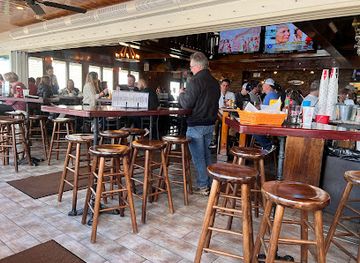
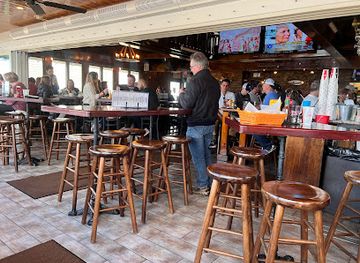
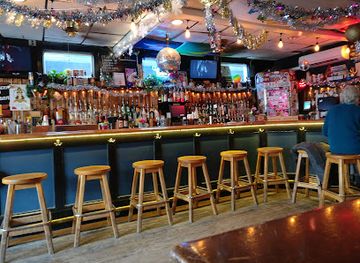
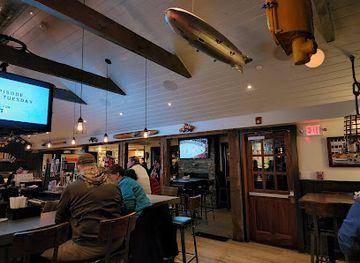
Martha's Vineyard has an active but generally relaxed evening scene rather than a large nightclub culture. Oak Bluffs and Edgartown have the greatest concentration of seasonal bars, harbour venues, pubs and restaurants where evenings extend into drinks, live music and informal socialising. Vineyard Haven offers a quieter mix of cafés, restaurants and cultural events, while smaller villages tend to close earlier and focus on community gatherings rather than late-night entertainment. Summer calendars may include outdoor concerts, performances, film events and music at local venues, but programmes vary by season. A sunset at Menemsha or an evening walk through Oak Bluffs' Camp Meeting grounds can be as characteristic as a bar visit. Visitors should arrange transport carefully after dark, since rural roads are poorly lit and late public transport is limited compared with mainland cities.
-
Seafood
Lookout Tavern
Discover the best seafood dining experience at Lookout Tavern in Oak Bluffs, where fresh flavors meet stunning ocean views.
22 min drive · 7.4 km from city centre
-
Bar
Nancy's Restaurant
Experience the best of Oak Bluffs at Nancy's Restaurant, where seafood delights and Middle Eastern flavors meet in a historic setting.
22 min drive · 7.3 km from city centre
-
American
The Black Dog Tavern
Experience the heart of New England at The Black Dog Tavern, a cozy American restaurant in Vineyard Haven known for its delicious breakfast and inviting atmosphere.
18 min drive · 6.0 km from city centre
-
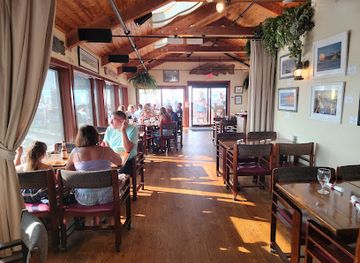
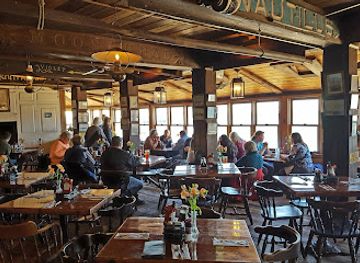
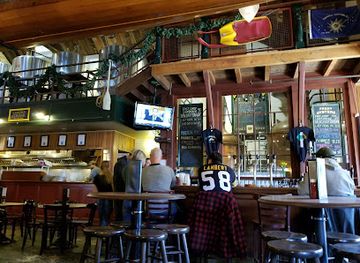
Brewpub
Offshore Ale Co
Discover the vibrant flavors of Offshore Ale Co, a top brewpub in Oak Bluffs, offering handcrafted beers and delectable dishes in a cozy atmosphere.
22 min drive · 7.2 km from city centre
Best nightclubs in Martha's Vineyard
Martha's Vineyard has an active but generally relaxed evening scene rather than a large nightclub culture. Oak Bluffs and Edgartown have the greatest concentration of seasonal bars, harbour venues, pubs and restaurants where evenings extend into drinks, live music and informal socialising. Vineyard Haven offers a quieter mix of cafés, restaurants and cultural events, while smaller villages tend to close earlier and focus on community gatherings rather than late-night entertainment. Summer calendars may include outdoor concerts, performances, film events and music at local venues, but programmes vary by season. A sunset at Menemsha or an evening walk through Oak Bluffs' Camp Meeting grounds can be as characteristic as a bar visit. Visitors should arrange transport carefully after dark, since rural roads are poorly lit and late public transport is limited compared with mainland cities.
-
Seafood
The Wharf
Discover The Wharf in Edgartown, a seafood restaurant offering fresh catches, live music, and a lively atmosphere perfect for a memorable night out.
22 min drive · 7.4 km from city centre
-
Bar
The Ritz • Martha's Vineyard & The Loud Kitchen Experience
Experience the vibrant nightlife at The Ritz, your go-to spot for karaoke, live music, and delicious food in Oak Bluffs, Martha's Vineyard.
22 min drive · 7.3 km from city centre
-
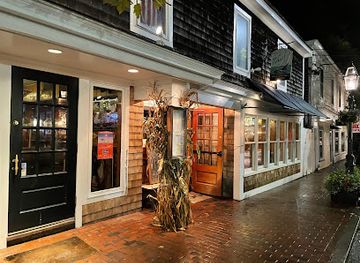
Grill
SAND BAR
Experience the vibrant atmosphere and mouthwatering grilled dishes at Sand Bar, a must-visit grill in Oak Bluffs, Massachusetts.
22 min drive · 7.3 km from city centre
-
Grill
Town Bar and Grill MV
Discover the flavors of Edgartown at Town Bar and Grill MV, where delicious grill dishes meet innovative sushi and refreshing cocktails in a lively atmosphere.
19 min drive · 6.4 km from city centre
Best shops in Martha's Vineyard
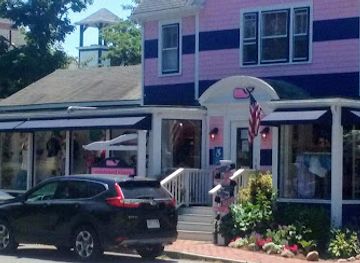
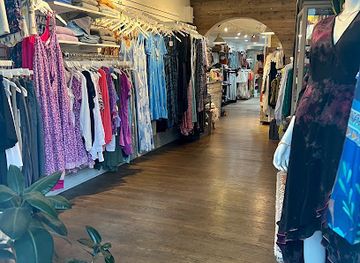
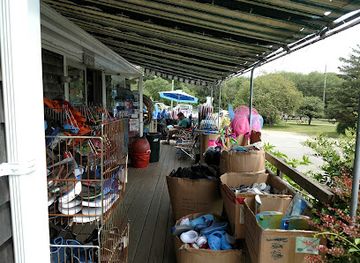
Shopping on Martha's Vineyard centres on independent businesses, island-made goods and practical coastal essentials rather than large retail complexes. Circuit Avenue in Oak Bluffs, Main Street in Edgartown and Main Street in Vineyard Haven contain boutiques, galleries, bookshops, jewellery stores and specialist shops, while smaller villages offer studios, farm stands and country stores. Local products include pottery, paintings, photography, textiles, handmade jewellery, illustration and food from island farms and fisheries. West Tisbury's seasonal farmers' market is an important place to encounter island produce and small-scale makers, while galleries across the island reflect a long-established connection with artists and landscape. Visitors will also find nautical clothing, beach equipment and souvenirs inspired by lighthouses, boats and the distinctive gingerbread cottages. Shopping hours and stock can be strongly seasonal, particularly outside the main village centres.
-
Gift shop
C'est La Vie
Discover unique gifts and local treasures at C'est La Vie, the charming gift shop in Oak Bluffs, Massachusetts, perfect for tourists seeking memorable souvenirs.
21 min drive · 7.0 km from city centre
-
Boutique
Suka Boutique
Discover unique women's fashion at Suka Boutique in Edgartown - where style meets sophistication in a charming shopping experience.
22 min drive · 7.3 km from city centre
-
Department store
Trader Fred's
Discover Trader Fred's, the ultimate destination for fishing gear and unique finds in Edgartown, Martha's Vineyard.
17 min drive · 5.8 km from city centre
-
Gift shop
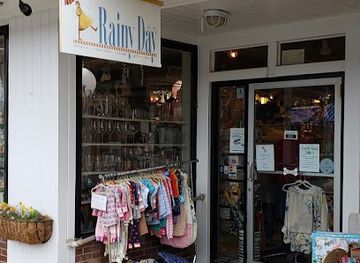
Rainy Day
Discover unique gifts and local treasures at Rainy Day, a charming gift shop in Vineyard Haven, capturing the essence of Martha's Vineyard.
19 min drive · 6.2 km from city centre
Get your free copy of our complete guide to Martha's Vineyard, delivered straight to you.
Everything on this page, from attractions and restaurants to essentials and local phrases, in one PDF you can read offline, print or share.
Already have an account? Sign in
Your Martha's Vineyard guide is ready.
We'll send it to · Not you? Sign out

Getting your guide ready…
We are putting together a fresh copy of the Martha's Vineyard guide. This can take up to a minute.
This can take a few moments. If your browser asks, choose Allow so the download can start. You'll find the guide in your Downloads folder.
Nothing happened? Download it again
Sorry, the guide is taking longer than usual. Please try again in a minute, or get it by email instead.
Martha's Vineyard essentials
Currency and Payment
Safety
Emergency Situations
Do's and Don'ts
Local Tips
From Eve
Local phrases worth knowing
You don't need to get them perfect. A few words go a long way, and locals appreciate the effort.
Basics
| English | Local | Say it |
|---|---|---|
| Hello | Wunna | [wuhn-uh] |
| Goodbye | Bye bye | [bahy bahy] |
| Yes | Yeah | [yeh] |
| No | Nah | [nah] |
| Please/You're welcome | Please | [pleez] |
| Thank you | Tank ya | [tangk yuh] |
| Excuse me/Sorry | Sowwy | [saw-ee] |
| How are you? | How ya doin'? | [haw yuh doo-in] |
| Fine. And you? | Fine. An' you? | [fahyn. an' yuh?] |
| Do you speak English? | Ya speak Inglis? | [yuh speek ing-glish] |
| I don't understand | I dunno wuh ya sayin' | [ahy duhn-no wuh yuh say-in] |
Eating & Drinking
| English | Local | Say it |
|---|---|---|
| I'd like to see the menu, please | Can I see da menu, please | [kan ahy see duh men-yoo pleez] |
| I don't eat meat | I don' eat no meat | [ahy dohnt eet noh meet] |
| Cheers! | Cheers! | [cheers] |
| I would like to pay, please | I wanna pay now, please | [ahy wahn-nuh pay now pleez] |
Emergencies
| English | Local | Say it |
|---|---|---|
| Help! | Help! | [help] |
| Go away! | Go way! | [goh way] |
| Call the Police! | Call da cops! | [kawl duh cops] |
| Call a doctor! | Call da doc! | [kawl duh dawk] |
| I'm lost | I's lost | [ahy-z lost] |
| I'm ill | I's sick | [ahy-z sik] |
Shopping
| English | Local | Say it |
|---|---|---|
| I'd like to buy... | I wanna buy... | [ahy wahn-nuh buy] |
| I'm just looking | Jus' browsin' | [juhst brow-sin] |
| How much is it? | How much dat cost? | [haw much dat kawst] |
| That's too expensive | Dat too pricy | [dat too pry-see] |
| Can you lower the price? | Can ya drop da price? | [kan yuh drop duh pryce] |
Time & Numbers
| English | Local | Say it |
|---|---|---|
| What time is it? | Wuh time it be? | [wuh tyme it bee] |
| It's one o'clock | It be one o'clock | [it bee wuhn oh-klok] |
| Half past (10) | Half ten | [haf ten] |
| Morning | Mornin' | [morn-in] |
| Afternoon | Afternoon | [af-ter-noon] |
| Evening | Evenin' | [eev-nin] |
| Yesterday | Yestuhday | [yes-tuh-day] |
| Today | Today | [tuh-day] |
| Tomorrow | Tomorruh | [tom-or-uh] |
| 1 | One | [wuhn] |
| 2 | Two | [too] |
| 3 | Tree | [tree] |
| 4 | Fo' | [foh] |
| 5 | Five | [fahyv] |
| 6 | Six | [siks] |
| 7 | Seven | [seh-vuhn] |
| 8 | Eight | [eyt] |
| 9 | Nine | [nahyn] |
| 10 | Ten | [ten] |
Transport & Directions
| English | Local | Say it |
|---|---|---|
| Where's a/the...? | Wuh's da...? | [wuhz duh] |
| What's the address? | Wuh's da addy? | [wuhz duh ad-dee] |
| Can you show me (on the map)? | Show me where on da map? | [shoh mee wair on duh map] |
| When's the next (bus)? | Wen da next bus be? | [wen duh nekst bus bee] |
| A ticket (to ....) | A ticket (to ....) | [ay tik-it (tuh)] |
History of Martha's Vineyard
Wampanoag Homeland
Before European settlement, Martha's Vineyard was inhabited by Wampanoag communities whose descendants remain connected to the island today. The Wampanoag Tribe of Gay Head (Aquinnah) is based at the western end of the island, where Aquinnah's cliffs and surrounding lands hold enduring cultural significance. Traditional life drew on fishing, shellfishing, hunting, farming and the resources of the coastal environment. European arrival brought new diseases, land pressures and changing political relationships, but Wampanoag identity and community survived. The island's modern place names, landscape and public history therefore reflect both colonial settlement and the continuing presence of the first inhabitants.
English Settlement and Towns
English colonists began settling Martha's Vineyard in the seventeenth century, with Thomas Mayhew and his family playing a major role in establishing colonial communities and missionary activity. The island gradually developed into separate townships, including Tisbury, Edgartown, Chilmark and the area now known as Aquinnah. Agriculture, coastal trade and small-scale fishing supported the population, while maritime connections linked the island with Cape Cod and mainland New England. Oak Bluffs emerged later from a Wesleyan Methodist Camp Meeting community, eventually becoming a distinct town in the nineteenth century. This pattern of dispersed villages still shapes the island's geography.
Whaling and Maritime Prosperity
During the eighteenth and nineteenth centuries, Martha's Vineyard became closely connected with the Atlantic whaling economy. Edgartown in particular prospered as a port, and sea captains' houses, merchants' buildings and churches reflected the wealth generated by maritime commerce. Vineyard Haven and other harbours supported shipping, fishing and boatbuilding, while islanders also worked at sea far beyond Massachusetts. The decline of whaling later in the nineteenth century forced economic change, but the period left a powerful architectural and cultural legacy. Edgartown's preserved streetscape and maritime museums offer some of the clearest reminders of this seafaring era.
Camp Meetings and Victorian Resorts
Oak Bluffs developed from the Wesleyan Grove Camp Meeting, founded in the 1830s as a summer gathering place for Methodists. Over time, temporary tents gave way to elaborate cottages decorated with colourful woodwork, carved details and fanciful forms. The community became a resort open to a wider public, and steamship connections encouraged tourism across the island. In the nineteenth and early twentieth centuries, Martha's Vineyard also attracted artists, intellectuals and holidaymakers seeking coastal air and relative seclusion. Oak Bluffs' Camp Meeting grounds, known as the Martha's Vineyard Camp Meeting Association community, preserve this distinctive chapter of American religious and resort history.
Modern Island Identity
In the twentieth century Martha's Vineyard moved from a primarily maritime and agricultural economy towards seasonal tourism, while retaining year-round residents, working farms and fishing communities. Better ferry services and improved roads increased access, and the island became associated with beaches, sailing, conservation and summer culture. Its landscapes have also appeared in American popular culture, notably through the filming of Jaws in several island locations during the 1970s. At the same time, preservation efforts have protected historic villages, open land and coastal habitats. Contemporary Martha's Vineyard continues to negotiate the pressures of seasonal development with Wampanoag heritage, local livelihoods and environmental stewardship.
Martha's Vineyard in Photos
Browse through our photo collection highlighting the charm and character of the destination.
Cities near Martha's Vineyard
The closest cities to Martha's Vineyard, if you have time for more than one stop.
-

-

-

-

-


Swipe for more cities
Explore more

Explore more of Massachusetts
Discover Massachusetts: A blend of rich history, stunning landscapes, and vibrant culture. From Boston's historic sites to Cape Cod's beaches, it's the heart of New England.
Explore Massachusetts