

Free Taxco Travel Guide & Mobile App
Plan your Taxco trip with Evendo. Get free guides to top attractions, restaurants, hotels, and bars. Web access or download the mobile app.


Taxco, Mexico, pairs silver workshops and Baroque Santa Prisca with steep cobbled streets, mountain views, markets and memorable Guerrero culture.
A Mountain City Shaped by Silver
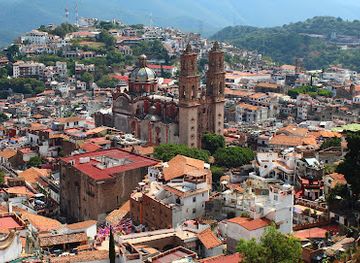
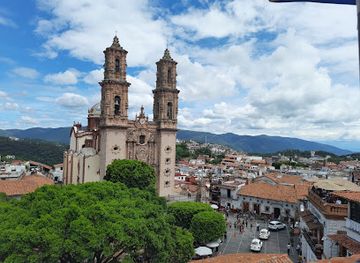
Taxco rises across the wooded hills of northern Guerrero, its whitewashed buildings and red-tiled roofs following the contours of a steep landscape. Silver made the settlement prosperous, particularly during the eighteenth century, and the metal remains central to its identity through workshops, family businesses and specialist shops. The historic centre is best explored on foot, although its cobbled lanes can be demanding: streets climb sharply, narrow between old façades and open unexpectedly onto views of surrounding ridges.Read more about Taxco
Baroque Monuments and Everyday Life
Traditions in the Guerrero Highlands
When is the best time to visit Taxco?
Best: January–March · 26–27°C| Month | High (°C) | Rainfall (mm) |
|---|---|---|
| January (best) | 26 | 10 |
| February (best) | 26 | 9 |
| March (best) | 27 | 8 |
| April | 27 | 6 |
| May | 28 | 5 |
| June | 29 | 5 |
| July | 28 | 6 |
| August | 28 | 7 |
| September | 28 | 8 |
| October | 27 | 12 |
| November | 27 | 15 |
| December | 26 | 15 |
Getting to and around Taxco
How to get there
Transportation
Best attractions in Taxco
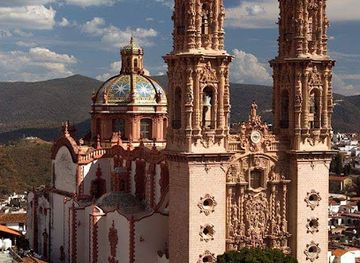
Taxco's principal sightseeing area is the historic centre, where the Zócalo opens before Santa Prisca y San Sebastián and lanes lead through whitewashed streets lined with workshops, cafés and small galleries. The Casa Borda Cultural Centre occupies part of a historic residence and presents exhibitions and cultural activity, while the Museo de la Platería Antonio Pineda explains the town's twentieth-century silver revival through crafted objects and design. The former convent of San Bernardino de Siena adds an older religious setting, and the Museo de Arte Virreinal, housed in the Casa Humboldt, explores colonial art and domestic life. For broader views, the Teleférico climbs above the town towards Monte Taxco, revealing the dense historic fabric against wooded hills. Small plazas, chapels and lookout points reward unhurried exploration, while the Mercado de Plata offers a concentrated introduction to Taxco's enduring craft economy.
-
Theme park
Jardines de México
Discover the vibrant beauty of Jardines de México, an enchanting garden and theme park that offers a serene escape filled with colorful blooms and attractions.
54 min drive · 34 km from city centre
-
Tourist attraction
Cristo Rey. Cristo Monumental.
Explore Cristo Rey in Taxco, a monumental statue offering breathtaking views, rich history, and a serene atmosphere for reflection and inspiration.
8 min walk · 0.6 km from city centre
-
Archaeological site
Zona Arqueológica de Malinalco
Explore the ancient wonders of Zona Arqueológica de Malinalco, a breathtaking archaeological site offering history, nature, and stunning views.
1 h 5 min drive · 45 km from city centre
-
Archaeological museum
Site Museum Xochicalco
Explore the rich heritage of the Xochicalco civilization at the Site Museum, where history comes alive through captivating exhibits and artifacts.
1 h 3 min drive · 43 km from city centre


Best landmarks in Taxco
Santa Prisca y San Sebastián is Taxco's defining landmark, an eighteenth-century church commissioned by José de la Borda and distinguished by its elaborate Baroque façade, twin towers and richly decorated interior. Its presence on the Zócalo expresses the wealth generated by colonial silver mining. The former convent of San Bernardino de Siena, associated with the Franciscan order, reflects an earlier stage of the town's religious and urban development, while the Casa Borda preserves the memory of the mining magnate whose name is attached to both the house and the cultural centre. Casa Humboldt, now the Museo de Arte Virreinal, is a notable historic residence in the old town. Together with the small chapels, stone fountains and tightly packed white façades of the centre, these buildings show how Taxco's architecture adapted to a steep mountain site.
-
National park
Parque Nacional Grutas de Cacahuamilpa
Explore the breathtaking Parque Nacional Grutas de Cacahuamilpa, a national park in Guerrero, Mexico, featuring stunning limestone caves and lush natural landscapes.
36 min drive · 16 km from city centre
-
Tourist attraction
Cristo Rey. Cristo Monumental.
Discover the breathtaking Cristo Rey in Taxco, a monumental statue offering stunning views and a deep sense of spirituality in a picturesque setting.
8 min walk · 0.7 km from city centre
-
Hotel
Hotel Montetaxco
Experience luxury and breathtaking views at Hotel Montetaxco, your ultimate getaway in the picturesque town of Taxco de Alarcón.
5 min drive · 1.7 km from city centre
-
Tourist attraction
Zocalo, Taxco
Experience the vibrant atmosphere and rich history of Zocalo, the heart of Taxco, surrounded by stunning colonial architecture and local culture.
1 min walk · 0.1 km from city centre

Explore Taxco on the map
Plan your Taxco trip on one map. See where the top attractions, landmarks, restaurants, bars and hotels are, find what's near where you're staying, and book hotels and experiences in a few clicks.
Best hotels in Taxco
Best restaurants in Taxco
Taxco's food culture combines the everyday cooking of Guerrero with dishes associated with Mexico's wider central highlands. Menus commonly include pozole, tamales, soups, grilled meats, enchiladas and regional preparations of beans and maize, while local markets provide an informal setting for antojitos, fruit, sweets and fresh juices. Jumiles, small aromatic insects traditionally gathered in the surrounding hills, are a distinctive seasonal ingredient and may appear in local specialities, though availability varies. Cafés and family-run restaurants around the historic centre serve food in courtyards, plazas or narrow streets, while more contemporary dining rooms adapt Mexican ingredients to visitors' tastes. Guerrero's mezcal also appears in drinks and tasting menus, although the state is not defined by one single style of preparation. Prices, menus and payment methods vary considerably between established restaurants and market stalls.
-
Mexican
Tía Calla
Experience authentic Mexican cuisine at Tía Calla in Taxco—a must-visit destination for food lovers seeking traditional flavors.
1 min walk · 0.1 km from city centre
-
Mexican
Pozoleria Tia Calla Plateros
Experience the rich flavors of traditional Mexican cuisine at Pozoleria Tia Calla Plateros in Taxco de Alarcón – home of exquisite pozole dishes.
8 min walk · 0.6 km from city centre
-
 Hotel
Hotel Agua Escondida
Discover comfort and tradition at Hotel Agua Escondida in beautiful Taxco de Alarcón, where local charm meets modern hospitality.
1 min walk · 0.1 km from city centre
-
Mexican
Rosa Amaranto
Discover authentic Mexican flavors at Rosa Amaranto in Taxco – where culinary tradition meets vibrant culture.
4 min walk · 0.3 km from city centre


Best bars in Taxco
Taxco's evenings are generally sociable and atmospheric rather than centred on a large club scene. The Zócalo and surrounding lanes retain activity after dark, with cafés, casual bars and restaurant terraces offering views of illuminated façades and Santa Prisca. Some hotels and dining venues serve cocktails, Mexican spirits and live or recorded music, while local celebrations may bring bands, processions or public performances into the streets. Nightlife is modest compared with Mexico City's, and venues can change with the season, so accommodation staff are the best source of current information. The town's steep terrain and uneven paving make taxis useful after dark, particularly for hillside lodging. Visitors should keep noise low near churches and residential streets, where evening life remains closely connected to local routines rather than a dedicated entertainment district.
-
Mexican
Del Angel Inn Restaurant
Experience the delightful fusion of traditional Mexican and Italian dishes at Del Angel Inn Restaurant in the heart of Taxco, Guerrero.
2 min walk · 0.1 km from city centre
-
Bar
La Bambina Taxco
Discover the vibrant flavors of Mexico at La Bambina Taxco, a charming bar and restaurant in the heart of Taxco, perfect for unwinding and enjoying local cuisine.
5 min walk · 0.4 km from city centre
-
Bar
LA CHOPERIA TAXCO
Discover the vibrant nightlife of La Choperia in Taxco, where lively atmosphere meets delicious drinks in a historic setting.
1 min walk · 0.1 km from city centre
-
Mexican
Sotavento Restaurante Bar
Experience the vibrant flavors of authentic Mexican cuisine at Sotavento Restaurante Bar in Taxco, a culinary gem for every traveler.
2 min walk · 0.1 km from city centre


Best nightclubs in Taxco
Taxco's evenings are generally sociable and atmospheric rather than centred on a large club scene. The Zócalo and surrounding lanes retain activity after dark, with cafés, casual bars and restaurant terraces offering views of illuminated façades and Santa Prisca. Some hotels and dining venues serve cocktails, Mexican spirits and live or recorded music, while local celebrations may bring bands, processions or public performances into the streets. Nightlife is modest compared with Mexico City's, and venues can change with the season, so accommodation staff are the best source of current information. The town's steep terrain and uneven paving make taxis useful after dark, particularly for hillside lodging. Visitors should keep noise low near churches and residential streets, where evening life remains closely connected to local routines rather than a dedicated entertainment district.
-
Bar
LA CHOPERIA TAXCO
Experience the vibrant nightlife of Taxco at La Choperia, where delicious drinks and lively music create an unforgettable atmosphere.
1 min walk · 0.1 km from city centre
-
Bar
Bar Berta
Discover the vibrant nightlife at Bar Berta in Taxco, where local culture meets delicious drinks in an unforgettable atmosphere.
1 min walk · 0.1 km from city centre
-
Brewpub
YOLOTL Cerveza Artesanal
Experience the best of Taxco at YOLOTL Cerveza Artesanal, where artisanal brews and local cuisine come together in a vibrant atmosphere.
4 min walk · 0.3 km from city centre
-
Bar
MeZcalería Xoco
Experience the vibrant nightlife at MeZcalería Xoco in the heart of Taxco, offering mezcal tastings and authentic Mexican cuisine.
2 min walk · 0.2 km from city centre


Best shops in Taxco
Silver shopping is Taxco's most recognisable retail experience, with specialist streets, market stalls, family workshops and established galleries selling jewellery, vessels and decorative pieces. Visitors should compare craftsmanship, ask whether an item is solid silver or silver-plated, inspect purity marks and request written details before buying. The Mercado de Plata offers a broad range of designs, while shops around the historic centre provide more curated displays and opportunities to discuss techniques with sellers. Other purchases may include Mexican textiles, ceramics, leather goods, carved objects, regional sweets and Guerrero mezcal, although provenance and quality vary. The town's retail character is shaped by small businesses rather than a large modern shopping complex, so shopping is closely connected with its silver history and the narrow streets of the old centre.
-
Tourist attraction
Cristo Rey. Cristo Monumental.
Experience the awe-inspiring Cristo Rey in Taxco, where spirituality meets breathtaking views and rich cultural heritage.
8 min walk · 0.7 km from city centre
-
Catholic church
Santa Prisca de Taxco
Explore the stunning baroque architecture and cultural heritage of Santa Prisca de Taxco, a must-see landmark in the heart of Guerrero, Mexico.
1 min walk · 0.1 km from city centre
-
Local history museum
Mina Prehispánica de Taxco
Explore the ancient silver mining history at Mina Prehispánica de Taxco, a local history museum offering captivating insights and stunning views.
8 min walk · 0.6 km from city centre
-
Wholesale jeweler
Silver Tianguis
Explore the Silver Tianguis in Taxco, where exquisite craftsmanship and vibrant local culture come together in a dazzling marketplace.
5 min walk · 0.4 km from city centre


Get your free copy of our complete guide to Taxco, delivered straight to you.
Everything on this page, from attractions and restaurants to essentials and local phrases, in one PDF you can read offline, print or share.
Already have an account? Sign in
Your Taxco guide is ready.
We'll send it to · Not you? Sign out

Getting your guide ready…
We are putting together a fresh copy of the Taxco guide. This can take up to a minute.
This can take a few moments. If your browser asks, choose Allow so the download can start. You'll find the guide in your Downloads folder.
Nothing happened? Download it again
Sorry, the guide is taking longer than usual. Please try again in a minute, or get it by email instead.
Taxco essentials
Currency and Payment
Safety
Emergency Situations
Do's and Don'ts
Local Tips
From Eve
Local phrases worth knowing
You don't need to get them perfect. A few words go a long way, and locals appreciate the effort.
Basics
| English | Local | Say it |
|---|---|---|
| Hello | Hola | [o-la] |
| Goodbye | Adiós | [a-di-ós] |
| Yes | Sí | [sí] |
| No | No | [no] |
| Please/You're welcome | Por favor/De nada | [por fa-vor/de na-da] |
| Thank you | Gracias | [gra-cias] |
| Excuse me/Sorry | Perdón/Lo siento | [per-dón/lo sien-to] |
| How are you? | ¿Cómo estás? | [¿có-mo es-tás?] |
| Fine. And you? | Bien. ¿Y tú? | [bien. ¿y tú?] |
| Do you speak English? | ¿Hablas inglés? | [¿ha-blas in-glés?] |
| I don't understand | No entiendo | [no en-tien-do] |
Eating & Drinking
| English | Local | Say it |
|---|---|---|
| I'd like to see the menu, please | Me gustaría ver el menú, por favor | [me gus-ta-ría ver el me-nú, por fa-vor] |
| I don't eat meat | No como carne | [no co-mo car-ne] |
| Cheers! | ¡Salud! | [¡sa-lud!] |
| I would like to pay, please | Me gustaría pagar, por favor | [me gus-ta-ría pa-gar, por fa-vor] |
Emergencies
| English | Local | Say it |
|---|---|---|
| Help! | ¡Ayuda! | [¡a-yu-da!] |
| Go away! | ¡Vete! | [¡ve-te!] |
| Call the Police! | ¡Llama a la policía! | [¡ya-ma a la po-li-cía!] |
| Call a doctor! | ¡Llama a un médico! | [¡ya-ma a un mé-di-co!] |
| I'm lost | Estoy perdido | [es-toy per-di-do] |
| I'm ill | Estoy enfermo | [es-toy en-fer-mo] |
Shopping
| English | Local | Say it |
|---|---|---|
| I'd like to buy... | Quisiera comprar... | [qui-sie-ra com-prar...] |
| I'm just looking | Solo estoy mirando | [so-lo es-toy mi-ran-do] |
| How much is it? | ¿Cuánto cuesta? | [¿cuan-to cues-ta?] |
| That's too expensive | Eso es demasiado caro | [e-so es de-ma-sia-do ca-ro] |
| Can you lower the price? | ¿Puedes bajar el precio? | [¿pue-des ba-jar el pre-cio?] |
Time & Numbers
| English | Local | Say it |
|---|---|---|
| What time is it? | ¿Qué hora es? | [¿qué ho-ra es?] |
| It's one o'clock | Es la una | [es la u-na] |
| Half past (10) | Y media (las diez) | [y me-dia (las diez)] |
| Morning | Mañana | [ma-ña-na] |
| Afternoon | Tarde | [tar-de] |
| Evening | Noche | [no-che] |
| Yesterday | Ayer | [a-yer] |
| Today | Hoy | [hoy] |
| Tomorrow | Mañana | [ma-ña-na] |
| 1 | Uno | [u-no] |
| 2 | Dos | [dos] |
| 3 | Tres | [tres] |
| 4 | Cuatro | [cua-tro] |
| 5 | Cinco | [cin-co] |
| 6 | Seis | [seis] |
| 7 | Siete | [siete] |
| 8 | Ocho | [o-cho] |
| 9 | Nueve | [nue-ve] |
| 10 | Diez | [diez] |
Transport & Directions
| English | Local | Say it |
|---|---|---|
| Where's a/the...? | ¿Dónde está un/el...? | [¿dón-de es-tá un/el...?] |
| What's the address? | ¿Cuál es la dirección? | [¿cúal es la di-rec-ción?] |
| Can you show me (on the map)? | ¿Me puedes mostrar (en el mapa)? | [¿me pue-des mos-trar (en el ma-pa)?] |
| When's the next (bus)? | ¿Cuándo es el próximo (autobús)? | [¿cúan-do es el pró-xi-mo (au-to-bús)?] |
| A ticket (to ....) | Un boleto (a ....) | [un bo-le-to (a ....)] |
History of Taxco
Indigenous Taxco Before Spanish Rule
Before the Spanish conquest, the area formed part of a wider Nahua cultural and trading landscape in the mountains of present-day Guerrero. The settlement known as Taxco el Viejo, south of the modern town, is associated with the pre-Hispanic community from which the colonial name developed, although the modern city grew at a different site. Indigenous communities worked the land, traded across the highlands and maintained political relationships with neighbouring peoples. Spanish descriptions later noted mineral resources in the region, but those resources existed within an inhabited landscape rather than an empty frontier. This earlier history remains important to understanding Taxco's name, geography and continuing connection with the cultural traditions of Guerrero.
The Colonial Mining Settlement
Spanish mining activity began in the sixteenth century, and the settlement that became Taxco developed around the rich silver-bearing hills of the region. Its position on difficult mountain terrain influenced the compact form of the town, while mining connected it to colonial trade routes linking central Mexico with wider markets. Indigenous labour, African and European participation, and changing systems of land and mineral administration shaped the society that grew around the mines. The town's churches and houses gradually occupied the slopes, creating the irregular streets, small plazas and white façades that still define the historic centre. Taxco's early prosperity was therefore tied both to mineral extraction and to the colonial economic networks that carried silver beyond Guerrero.
Eighteenth-Century Silver Prosperity
Taxco reached a high point of colonial wealth in the eighteenth century, when renewed mining activity brought influential entrepreneurs and substantial investment. The most celebrated figure was José de la Borda, whose fortune from the mines financed Santa Prisca y San Sebastián between 1751 and 1758. The church's elaborate Churrigueresque Baroque decoration expressed both religious devotion and the social power created by silver. Around the same period, prosperous residents built substantial homes and improved civic and religious institutions. Mining fortunes fluctuated, however, and the town remained vulnerable to changes in production, labour and colonial markets. The architectural legacy of this period is the clearest visible expression of Taxco's colonial economy.
Independence and a Changing Economy
The upheavals of the Mexican War of Independence reached the Taxco region in the early nineteenth century. Insurgent forces led by José María Morelos occupied Taxco in 1811, part of the wider struggle that disrupted colonial administration and mining networks. Independence altered political authority but did not immediately restore the mines to sustained prosperity; production and investment continued to rise and fall during the nineteenth century. As silver extraction declined from its colonial peak, Taxco retained its churches, mining traces and urban character, even while its economic importance diminished. The town's historic centre later became an asset in its own right, offering the architectural foundation for a new phase based on crafts and tourism.
The Revival of Silver Craft
Taxco's modern silver identity was strengthened in the twentieth century by the American designer William Spratling, who settled in the town in 1929 and established a workshop that trained local artisans and helped develop modern Mexican silver design. His work built on existing metalworking skills rather than creating the tradition from nothing, and Taxco subsequently became associated with distinctive jewellery, tableware and decorative objects. Other workshops and designers expanded the craft economy, giving the town an international reputation while maintaining production within family businesses and small enterprises. Silverworking also provided a new cultural and commercial foundation as industrial mining ceased to dominate local life.
Heritage Town in Contemporary Mexico
In the late twentieth and early twenty-first centuries, Taxco increasingly presented its colonial streets, churches, silver workshops and mountain setting as a heritage destination. The town was incorporated into Mexico's Pueblos Mágicos programme in 2002, reflecting its recognised cultural and architectural character. Tourism now supplements the local economy alongside crafts, commerce and services, while religious traditions remain visible in annual observances such as Holy Week. Conservation is complicated by the demands of daily life in a steep historic centre, where residents, vehicles, businesses and visitors share a compact urban fabric. Contemporary Taxco is therefore not simply a preserved colonial setting, but a working Guerrero town whose historic identity continues to shape its future.
Taxco in Photos
Browse through our photo collection highlighting the charm and character of the destination.
Cities near Taxco
The closest cities to Taxco, if you have time for more than one stop.
-

-

-

-

-


Swipe for more cities
Explore more

Explore more of Mexico
Discover Mexico: A land of ancient ruins, vibrant culture, and stunning natural landscapes. Experience diverse cuisine, rich traditions, and warm hospitality.
Explore Mexico