

Fox Glacier Travel Guide - Free Web & App
Your ultimate guide to Fox Glacier. Discover top landmarks, proposed trips, and local tips. Free on the web or via the Evendo companion app.


Fox Glacier, New Zealand: explore rainforest, alpine rivers, Lake Matheson, glacier viewpoints and guided West Coast adventures near Aoraki Mount Cook.
Glacier Country on the West Coast
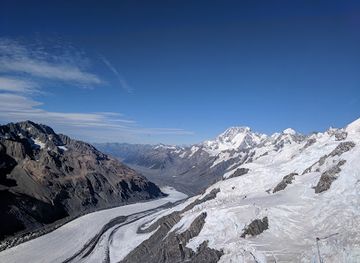
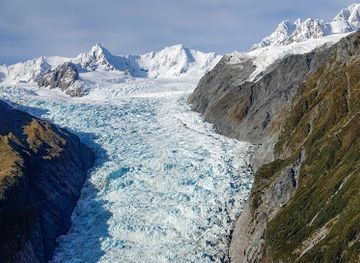
Fox Glacier lies on the western side of New Zealand’s South Island, where the Southern Alps descend towards the Tasman Sea through a landscape of temperate rainforest, braided rivers and steep mountain valleys. The settlement, also known by its Māori name Weheka, serves as a compact base for exploring Fox Glacier and the surrounding part of Te Wāhipounamu–South West New Zealand World Heritage Area. The glacier flows from the Southern Alps towards the coast, but its terminus and access tracks change as ice, rockfall, rainfall and flooding reshape the valley. Visitors should follow current local guidance rather than assuming that older viewpoints remain accessible.Read more about Fox Glacier
Forest, Lakes and High Mountains
Exploring Responsibly
When is the best time to visit Fox Glacier?
Best: December–February · 18–19°C| Month | High (°C) | Rainfall (mm) |
|---|---|---|
| January (best) | 18 | 170 |
| February (best) | 18 | 154 |
| March | 16 | 158 |
| April | 15 | 250 |
| May | 11 | 388 |
| June | 9 | 448 |
| July | 9 | 420 |
| August | 10 | 366 |
| September | 13 | 284 |
| October | 15 | 232 |
| November | 17 | 191 |
| December (best) | 19 | 182 |
Getting to and around Fox Glacier
How to get there
Transportation
Best attractions in Fox Glacier
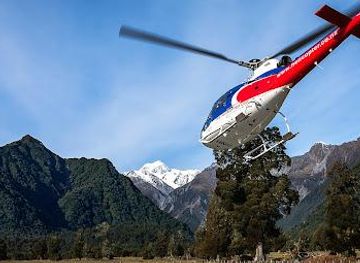
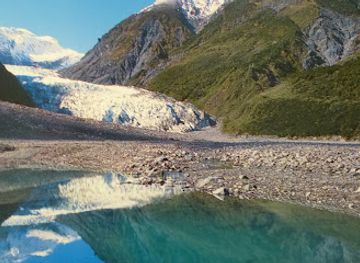
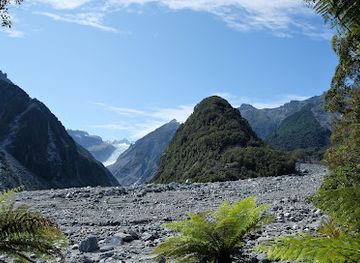
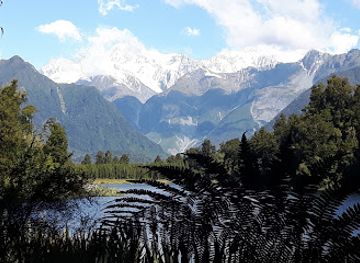
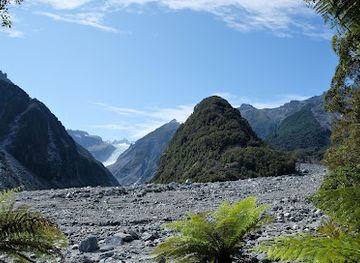
Fox Glacier is the principal natural attraction, flowing from the Southern Alps through a valley framed by rainforest and steep mountain slopes, although its viewpoints and access routes change as the ice retreats and the valley evolves. Lake Matheson provides an accessible forest and lakeside experience, with possible reflections of Aoraki Mount Cook and Mount Tasman in calm weather. Gillespies Beach combines a broad West Coast shore with remnants and interpretation associated with historic gold mining, while the Fox River and surrounding roads reveal the region’s braided waterways and dense vegetation. Short walks near the township offer an introduction to the forest environment, and longer routes into the national park require current guidance because rainfall, flooding, slips and closures can affect access. Scenic flights and guided glacier excursions may provide different perspectives on the ice and high peaks, but these are weather-dependent and should be arranged through established local providers.
-
Helicopter tour agency
Mountain Helicopters Fox Glacier
Experience the breathtaking beauty of Fox Glacier from above with Mountain Helicopters—an unforgettable adventure in New Zealand's stunning landscapes.
-
Helicopter tour agency
The Helicopter Line Fox Glacier
Discover the breathtaking views of Fox Glacier with thrilling helicopter tours, revealing the beauty and majesty of New Zealand's natural wonders.
Best landmarks in Fox Glacier
Fox Glacier itself is the defining natural landmark, a river of ice descending from the Southern Alps towards the West Coast, while its Māori name, Te Moeka o Tuawe, connects the landscape with local tradition. The glacier is part of the greater mountain and rainforest environment protected within Westland Tai Poutini National Park and the Te Wāhipounamu World Heritage Area. Lake Matheson is a notable landscape landmark for its dark, forested water and potential views towards Aoraki Mount Cook and Mount Tasman. At Gillespies Beach, the open coastline, river mouth and surviving traces of gold-mining history provide a human counterpoint to the alpine scenery. The Fox River, rainforest valleys and distant peaks are also significant features, illustrating the close relationship between heavy rainfall, glacial ice, braided waterways and coastal landforms.
-
Tour operator
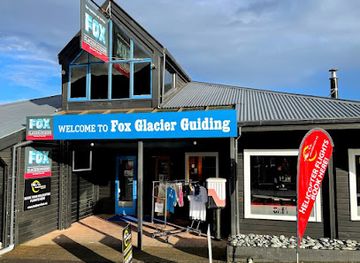
Fox Glacier Guiding - Glacier Tours & Adventures
Experience the breathtaking beauty of Fox Glacier with expert-led tours and unforgettable adventures in New Zealand’s stunning landscapes.
-
Nature preserve
Fox Glacier South Side walk (start point)
Discover the breathtaking landscapes and stunning views of the Fox Glacier South Side Walk in New Zealand's pristine Westland Tai Poutini National Park.
-
Hiking area
Minnehaha Walk
Discover the stunning Minnehaha Walk in Westland Tai Poutini National Park, a must-visit hiking area for nature lovers and adventure seekers.
-
Helicopter tour agency
Glacier Helicopters Fox Glacier
Discover the stunning beauty of New Zealand's Fox Glacier from above with Glacier Helicopters. Experience unforgettable aerial views and adventure.
Explore Fox Glacier on the map
Plan your trip on one map. See where the top attractions, landmarks, restaurants and hotels are, and book hotels and experiences in a few clicks.
Best hotels in Fox Glacier
Best restaurants in Fox Glacier
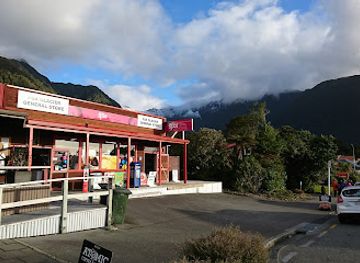
Fox Glacier’s dining scene is small and closely tied to the needs of visitors staying overnight before or after exploring the mountains. Cafés, restaurants, takeaway options and hotel or lodge dining in the township typically provide practical meals for walkers and tour participants rather than a large restaurant district. Menus in the wider West Coast region commonly draw on New Zealand ingredients, including lamb, beef, seasonal produce, seafood and locally produced dairy, although individual offerings vary. A few food supplies can be bought locally for picnics or self-catering, but travellers on longer road journeys should stock up in larger centres such as Hokitika, Greymouth or Wanaka according to their route. Franz Josef, a separate nearby settlement, provides additional food options, but visitors should check current opening arrangements rather than assume every business operates throughout the year.
-
Restaurant
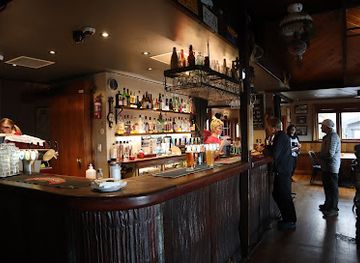
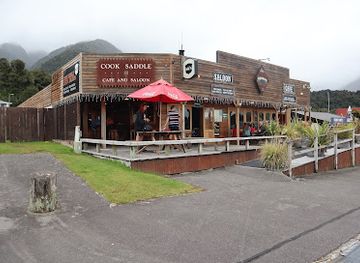
Cook Saddle Cafe & Saloon
Discover Cook Saddle Cafe & Saloon: where rustic charm meets delicious cuisine in stunning Fox Glacier.
-
Restaurant
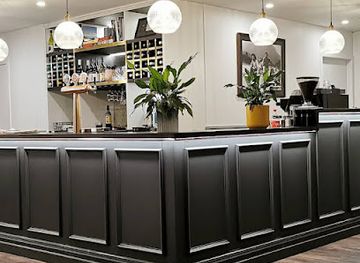
Betsey Jane Eatery & Bar
Savor delicious local cuisine at Betsey Jane Eatery & Bar in Fox Glacier - A must-visit destination for food lovers exploring New Zealand.
-
Restaurant
The Last Kitchen
Experience exceptional dining at The Last Kitchen - where local flavors meet stunning views in Fox Glacier.
-
Restaurant
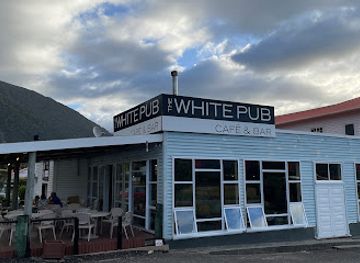
The White Pub Cafe & Bar
Experience delightful local flavors at The White Pub Cafe & Bar in Fox Glacier—your perfect dining retreat amidst breathtaking scenery.

Best bars in Fox Glacier
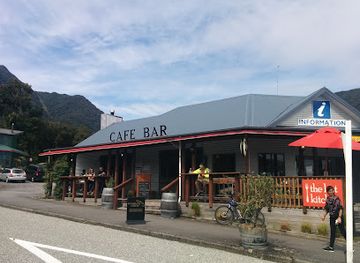
Fox Glacier does not have a substantial nightclub scene or a concentrated late-night entertainment district. Evenings are generally quiet, with visitors gathering in established pubs, hotel bars, cafés or restaurants for a drink and conversation after a day outdoors. The atmosphere is shaped by shift changes, weather and seasonal tourism rather than by scheduled nightlife, and options may be limited outside busier periods. Small-scale live entertainment or community events may occur from time to time, but availability should be verified locally. Franz Josef, a separate nearby settlement, can offer an alternative evening base, although it remains a compact rural visitor centre rather than a major nightlife destination. The most characteristic evening experience is often simply watching the light change over the mountains when conditions allow.
-
Restaurant
Cook Saddle Cafe & Saloon
Experience the warmth and flavors of New Zealand at Cook Saddle Cafe & Saloon, a culinary haven nestled in the heart of Fox Glacier.
-
Restaurant
Betsey Jane Eatery & Bar
Experience the rich flavors of New Zealand at Betsey Jane Eatery & Bar, the culinary treasure of Fox Glacier, perfect for every food lover.
-
Cafe
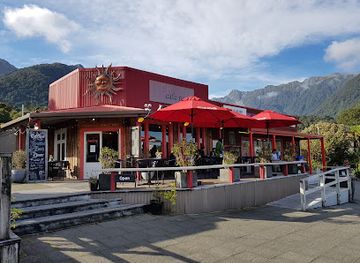
Cafe Nevé
Discover the warmth and flavors of Cafe Nevé, a cozy cafe in Fox Glacier offering exceptional coffee and delightful meals amidst stunning landscapes.
-
Motel
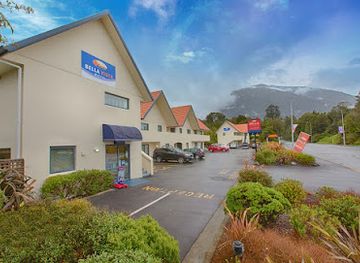
Bella Vista Fox Glacier
Experience the perfect blend of comfort and adventure at Bella Vista Fox Glacier, your gateway to stunning natural wonders.
Best nightclubs in Fox Glacier
Fox Glacier does not have a substantial nightclub scene or a concentrated late-night entertainment district. Evenings are generally quiet, with visitors gathering in established pubs, hotel bars, cafés or restaurants for a drink and conversation after a day outdoors. The atmosphere is shaped by shift changes, weather and seasonal tourism rather than by scheduled nightlife, and options may be limited outside busier periods. Small-scale live entertainment or community events may occur from time to time, but availability should be verified locally. Franz Josef, a separate nearby settlement, can offer an alternative evening base, although it remains a compact rural visitor centre rather than a major nightlife destination. The most characteristic evening experience is often simply watching the light change over the mountains when conditions allow.
-
 Holiday Park
Fox Glacier Top 10 Holiday Park & Motels
Discover the beauty of New Zealand's Fox Glacier at Top 10 Holiday Park & Motels, your base for adventure and relaxation in stunning landscapes.
-
Restaurant
Cook Saddle Cafe & Saloon
Discover the taste of New Zealand at Cook Saddle Cafe & Saloon, where hearty meals meet stunning mountain views in Fox Glacier.
-
Restaurant
Betsey Jane Eatery & Bar
Discover the flavors of Fox Glacier at Betsey Jane Eatery & Bar, where local ingredients meet exceptional culinary creativity in a cozy setting.
-
Motel
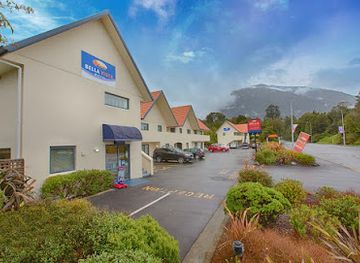
Bella Vista Fox Glacier
Experience the beauty of Fox Glacier with a stay at Bella Vista, where comfort meets adventure in New Zealand's stunning landscapes.
Best shops in Fox Glacier
Shopping in Fox Glacier is limited and centres on practical supplies for travellers, outdoor needs, food for self-catering and locally themed souvenirs rather than a broad retail district. The township’s visitor-oriented businesses may offer books, small gifts, photography, clothing or products associated with the West Coast, while accommodation and activity providers can sometimes supply essential equipment or information. More extensive supermarkets, services and general retail are found in larger regional centres such as Hokitika and Greymouth, depending on the direction of travel. Visitors looking for New Zealand-made food, crafts, art or wool products may find a wider choice in those towns or in independent businesses along the West Coast, but product ranges and opening arrangements vary. There is no justification for treating remote glacier viewpoints or Gillespies Beach as shopping areas.
-
Tour operator
Fox Glacier Guiding - Glacier Tours & Adventures
Explore the breathtaking Fox Glacier with expert guides, offering unforgettable glacier tours and adventures in New Zealand’s stunning wilderness.
-
Restaurant
Cook Saddle Cafe & Saloon
Discover the culinary treasures of Cook Saddle Cafe & Saloon, a must-visit restaurant in Fox Glacier, New Zealand, offering delicious local cuisine.
-
Cafe
Cafe Nevé
Discover Café Nevé in Fox Glacier for a cozy atmosphere, delicious food, and stunning views, perfect for a relaxing break in nature.
-
Nature preserve
Fox Glacier South Side walk (start point)
Discover breathtaking views and serene landscapes at the Fox Glacier South Side Walk, a nature preserve in New Zealand's stunning Westland Tai Poutini National Park.
Get your free copy of our complete guide to Fox Glacier, delivered straight to you.
Everything on this page, from attractions and restaurants to essentials and local phrases, in one PDF you can read offline, print or share.
Already have an account? Sign in
Your Fox Glacier guide is ready.
We'll send it to · Not you? Sign out

Getting your guide ready…
We are putting together a fresh copy of the Fox Glacier guide. This can take up to a minute.
This can take a few moments. If your browser asks, choose Allow so the download can start. You'll find the guide in your Downloads folder.
Nothing happened? Download it again
Sorry, the guide is taking longer than usual. Please try again in a minute, or get it by email instead.
Fox Glacier essentials
Currency and Payment
Safety
Emergency Situations
Do's and Don'ts
Local Tips
From Eve
Local phrases worth knowing
You don't need to get them perfect. A few words go a long way, and locals appreciate the effort.
Basics
| English | Local | Say it |
|---|---|---|
| Hello | Kia ora | [Kee-ah ora] |
| Goodbye | Haere rā | [High-ree rah] |
| Yes | Āe | [Eye] |
| No | Kāore | [Kah-oh-reh] |
| Please/You're welcome | Whakawhetai | [Fah-kah-feh-tie] |
| Thank you | Kia ora | [Kee-ah ora] |
| Excuse me/Sorry | Whakapāha | [Fah-kah-pah-ha] |
| How are you? | Kei te pēhea koe? | [Key teh pay-ha kweh] |
| Fine. And you? | Te pai. Ā, koe? | [Teh pie. Eye, kweh] |
| Do you speak English? | Kōrerotia koe i te reo Pākehā? | [Koh-reh-roh-tee-ah kweh ee teh reh-oh pah-keh-hah] |
| I don't understand | Kāore au e mārama | [Kah-oh-reh ow eh mah-rah-mah] |
Eating & Drinking
| English | Local | Say it |
|---|---|---|
| I'd like to see the menu, please | Me āta kite i te menewa, tēnā | [Meh a-tah key-teh ee teh meh-neh-wah, teh-nah] |
| I don't eat meat | Kāore au e kai kau | [Kah-oh-reh ow eh kai cow] |
| Cheers! | Ārahi! | [Eye-rah-hee] |
| I would like to pay, please | Me te utu, tēnā | [Meh teh oo-too, teh-nah] |
Emergencies
| English | Local | Say it |
|---|---|---|
| Help! | Āwhina! | [Eye-fee-nah] |
| Go away! | Haere atu! | [High-ree ah-too] |
| Call the Police! | Karanga ki te Pirihimana! | [Kah-rang-ah kee teh pee-ree-hee-mah-nah] |
| Call a doctor! | Karanga ki te rata! | [Kah-rang-ah kee teh rah-tah] |
| I'm lost | I wareware au | [Ee wah-reh-wah-reh ow] |
| I'm ill | Mate au | [Mah-teh ow] |
Shopping
| English | Local | Say it |
|---|---|---|
| I'd like to buy... | Me hiahia ki te hoko... | [Meh hee-ah-hee-ah kee teh haw-kaw] |
| I'm just looking | Kei te titiro noa au | [Key teh tee-tee-raw noh-ah ow] |
| How much is it? | E hia te utu? | [Eh hee-ah teh oo-too] |
| That's too expensive | He nui rawa te utu | [Heh noo-ee rah-wah teh oo-too] |
| Can you lower the price? | Me kore koe i te utu? | [Meh kor-reh kweh ee teh oo-too] |
Time & Numbers
| English | Local | Say it |
|---|---|---|
| What time is it? | He aha te wā? | [Heh ah-hah teh wah] |
| It's one o'clock | Kotahi te hāora | [Kaw-tah-hee teh hah-oh-rah] |
| Half past (10) | Tekau mā rima | [Teh-kow mah ree-mah] |
| Morning | Ahiahi | [Ah-hee-ah-hee] |
| Afternoon | Ahiahi | [Ah-hee-ah-hee] |
| Evening | Pō | [Paw] |
| Yesterday | Ināianei | [Ee-nah-ee-ah-nay] |
| Today | Ā tēnei rā | [Eye teh-nay rah] |
| Tomorrow | Āpōpō | [Eye-paw-paw] |
| 1 | Tahi | [Tah-hee] |
| 2 | Rua | [Roo-ah] |
| 3 | Toru | [Toh-roo] |
| 4 | Whā | [Fah] |
| 5 | Rima | [Ree-mah] |
| 6 | Ono | [Oh-no] |
| 7 | Whitu | [Fee-too] |
| 8 | Waru | [Wah-roo] |
| 9 | Iwa | [Ee-wah] |
| 10 | Tekau | [Teh-kow] |
Transport & Directions
| English | Local | Say it |
|---|---|---|
| Where's a/the...? | Kei hea te...? | [Key heh-ah teh] |
| What's the address? | He aha te wāhitau? | [Heh ah-hah teh wah-hee-tow] |
| Can you show me (on the map)? | Me whakaatu koe i ahau (i te mahere)? | [Meh fah-kah-ah-too kweh ee ah-how (ee teh mah-heh-reh)] |
| When's the next (bus)? | Āhea te whakamutunga (waka)? | [Eye-heh teh fah-kah-moo-toong-ah (wah-kah)] |
| A ticket (to ....) | He tiki (ki ....) | [Heh tee-kee (kee)] |
History of Fox Glacier
Glacial Landscapes and River Valleys
Fox Glacier is part of a landscape shaped by the Southern Alps, uplift along the Alpine Fault and repeated advances and retreats of valley glaciers. Ice moving from high snowfields has carved steep valleys and transported rock towards the coast, while the Fox River and other waterways continue to alter the lowland margins. The region’s exceptionally wet climate feeds the glaciers but also contributes to unstable slopes, flooding and rapid changes in tracks and river channels. These natural processes remain central to understanding why the glacier terminus and surrounding access routes cannot be treated as fixed historical features.
Māori Travel and Place Names
Long before European tourism, Māori travelled through the South Island’s western landscapes, using coastal and inland routes and drawing on resources from forests, rivers and the sea. Fox Glacier is known in Māori as Te Moeka o Tuawe, a name associated with the story of Tuawe, who is said to have travelled into the mountains in search of a loved one. Māori place names across Westland preserve relationships between people, journeys and the land, even though the severe alpine terrain limited permanent settlement in the glacier valleys themselves.
European Exploration and Naming
European mapping and exploration increased during the nineteenth century, alongside wider interest in the West Coast’s rivers, passes and mineral resources. Fox Glacier was named after Sir William Fox, a nineteenth-century New Zealand premier, following visits and surveys in the region. The nearby settlement developed as a small service centre for travellers, local work and access to the glacier country. Roads and later tourist infrastructure gradually made the area more accessible, although the journey along the West Coast remained an important part of the destination’s character.
Gold, Roads and Early Tourism
Gold mining influenced the wider West Coast and left a particularly visible historical association at Gillespies Beach, south of Fox Glacier. Mining activity was never the only story of the region: farming, forestry, road building and guiding also shaped local livelihoods. As transport improved, visitors began arriving to see the glaciers and the mountains, initially relying on local guides and arduous approaches. The settlement’s continued role as a gateway reflects this transition from resource-based frontier activity to a tourism economy centred on scenery, walking and access to the Southern Alps.
Conservation and World Heritage
Fox Glacier lies within the wider protected landscapes of Westland Tai Poutini National Park, established in 1960, and Te Wāhipounamu–South West New Zealand, inscribed as a UNESCO World Heritage Site in 1990. Protection recognises the international importance of the region’s glaciers, rainforests, mountains, rivers and native habitats. Modern tourism operates within a landscape where conservation, climate change and natural hazard management are closely connected. Glacier retreat, changing access and pressure on sensitive environments have made responsible visitor behaviour and accurate, current information increasingly important.
Fox Glacier in Photos
Browse through our photo collection highlighting the charm and character of the destination.
Neighbouring destination travel guides
The closest destinations to Fox Glacier, if you have time for more than one.
-

-

-

-

-


Swipe for more destinations
Explore more

Explore more of West Coast
Explore New Zealand's West Coast: A land of glaciers, rainforests, and coastal wonders, offering adventure, history, and natural beauty in every corner.
Explore West Coast
Explore more of New Zealand
New Zealand: Discover awe-inspiring landscapes, vibrant Maori culture, and thrilling adventures in a land of breathtaking natural beauty and welcoming locals.
Explore New Zealand