

Mount Victoria (Wellington) Travel Guide - Free
Explore Mount Victoria in Wellington with Evendo's free guide. Find the best shops, historic streets, restaurants, and gems on web or mobile.


Mount Victoria in Wellington pairs historic timber villas, Town Belt walks, Embassy Theatre culture and summit views with easy access to the city centre.
Villas Beneath the Town Belt
Mount Victoria rises immediately east of central Wellington, its slopes covered with streets of timber villas, weatherboard cottages and carefully maintained gardens. The suburb takes its name from the hill that dominates the city skyline, while the summit is also known by the Māori name Matairangi. From the Mount Victoria Lookout, Wellington’s harbour, central business district, airport approaches and surrounding ranges unfold in a single wide panorama. The climb is part of the experience: streets become steeper as they approach the Town Belt, and the forested reserve provides a striking contrast to the dense city below.Read more about Mount Victoria
Residential Streets and City Culture
Walking, Views and Everyday Wellington
Best attractions in Mount Victoria
Mount Victoria’s principal attraction is the Mount Victoria Lookout, where a short climb or drive leads to expansive views across Wellington harbour, the central city, Miramar Peninsula and the surrounding hills. The summit is also the starting point for exploring the Town Belt, whose paths pass through regenerating native vegetation and open grassed areas close to the urban centre. On the lower slopes, the neighbourhood’s streets provide an informal architectural trail of timber villas, cottages, verandas and steep lanes. The Embassy Theatre, near the western edge on Kent Terrace, adds a major cultural venue with a long cinematic history and an ornate interior. Visitors can also combine the hill with nearby Courtenay Place, the waterfront and the Basin Reserve area, although these lie at or beyond Mount Victoria’s recognised edges rather than forming part of its residential core.
-
Tourist attraction
Wellington Botanic Garden
Discover the vibrant flora, stunning landscapes, and serene pathways of Wellington Botanic Garden, a nature lover's paradise in New Zealand's capital.
5 min drive · 1.6 km from neighbourhood centre
-
 Tourist attraction
Zealandia Te Māra a Tāne
Explore Zealandia Te Māra a Tāne, a premier wildlife sanctuary in Wellington, showcasing New Zealand's breathtaking nature and unique biodiversity.
7 min drive · 2.4 km from neighbourhood centre
-
Tourist attraction
Wellington Waterfront Walk
Experience the beauty of Wellington with a stroll along its stunning waterfront, showcasing art, culture, and breathtaking harbor views.
4 min walk · 0.3 km from neighbourhood centre
-
Tourist attraction
Hobbit's Hideaway
Experience the enchanting Hobbit's Hideaway at Mount Victoria, where stunning views and Tolkien's magic come together in Wellington, New Zealand.
15 min walk · 1.2 km from neighbourhood centre


Best landmarks in Mount Victoria
The Mount Victoria Lookout is the neighbourhood’s defining landmark, both as a public viewpoint and as a high point in Wellington’s urban landscape. Matairangi, the hill’s Māori name, reflects the area’s older cultural geography, while the later name Mount Victoria records the city’s colonial period. The Town Belt is another major physical landmark: its protected slopes preserve a broad green backdrop behind the suburb’s closely spaced houses. At street level, the Embassy Theatre on Kent Terrace is an important early twentieth-century cinema building and a visible reminder of Wellington’s entertainment history. The steep terraces, timber villas and retaining walls are collectively significant rather than monumental, showing how residents and builders adapted to the hill. Mount Victoria Tunnel is closely associated with the neighbourhood’s transport history, though its eastern entrance is in neighbouring Hataitai.
-
Observation deck
Mount Victoria Lookout
Explore Mount Victoria Lookout for stunning panoramic views of Wellington, from the vibrant harbor to the lush hills. A must-see for every traveler!
14 min walk · 1.1 km from neighbourhood centre
-
Scenic spot
Oriental Bay Lookout
Discover the stunning panoramic views of Wellington at Oriental Bay Lookout, a scenic spot perfect for relaxation and photography.
10 min walk · 0.8 km from neighbourhood centre
-
Historical landmark
Hobbit's Hideaway
Experience the breathtaking views and enchanting landscapes at Hobbit's Hideaway, a historical landmark in Wellington's Mount Victoria.
15 min walk · 1.2 km from neighbourhood centre
-
Tourist attraction
The Way of Nazgûl
Experience the breathtaking views and cinematic magic of The Way of Nazgûl, a must-visit tourist attraction in Wellington's Mount Victoria.
13 min walk · 1.0 km from neighbourhood centre


Explore Mount Victoria on the map
A handpicked selection of must-see spots in Mount Victoria, mapped for you.
Best hotels in Mount Victoria
Best restaurants in Mount Victoria
Mount Victoria’s food scene is concentrated around its lower western and southern edges, where local cafés, bakeries and small eateries serve residents, office workers and visitors walking between the central city and the Town Belt. The neighbourhood itself is less restaurant-dense than nearby Courtenay Place, but that quieter scale makes it useful for a coffee or casual meal before tackling the hill. Kent Terrace and the streets towards Majoribanks Street provide the most convenient orientation points, while the central-city dining precinct begins only a short walk away. Expect a mixture of contemporary café fare, takeaway food and informal international cooking rather than a single Mount Victoria culinary tradition. The area’s residential history is reflected in converted villas and small commercial frontages, while its proximity to theatres and the waterfront brings additional options just beyond the suburb’s boundaries.
-
Seafood
Ortega Fish Shack
Discover fresh seafood delights at Ortega Fish Shack in Wellington – where every dish is crafted from local treasures of the sea.
5 min walk · 0.4 km from neighbourhood centre
-
Fast Food
Mt Vic Chippery
Discover Mt Vic Chippery: Wellington's favorite spot for fresh fish & chips and local seafood delights in a cozy setting.
4 min walk · 0.3 km from neighbourhood centre
-
Restaurant
Genghis Khan
Experience the vibrant flavors of Mongolian barbecue at Genghis Khan in Wellington – where dining becomes an adventure.
5 min walk · 0.4 km from neighbourhood centre
-
Restaurant
Capitol Restaurant
Discover culinary excellence at Capitol Restaurant in Mount Victoria, Wellington—where fresh local ingredients meet sophisticated dining.
4 min walk · 0.3 km from neighbourhood centre


Best bars in Mount Victoria
Mount Victoria itself has a relatively restrained evening character, with residential streets becoming quiet as the day ends and the Town Belt unsuitable for after-dark wandering. The western edge is different: the Embassy Theatre and nearby Courtenay Place provide access to cinema, bars, live entertainment and late-night venues within a short walk, although the busiest nightlife is centred in the adjacent central-city precinct rather than deep inside the suburb. Small bars and restaurants around the lower slopes offer a more relaxed alternative to the larger entertainment strip, while the streets leading uphill are primarily shared with residents. Visitors should plan the return journey carefully after an evening out, since the climb is steep, lighting varies on quieter streets and reserve tracks should not be used as shortcuts at night.
-
Pub
Mishmosh Bar
Experience the vibrant nightlife of Wellington at Mishmosh Bar, where great drinks and a lively atmosphere await you.
2 min walk · 0.2 km from neighbourhood centre
-
Bar
The Champagneria
Experience the vibrant atmosphere and exquisite sparkling wines at The Champagneria, a top bar destination in Wellington, New Zealand.
3 min walk · 0.2 km from neighbourhood centre
-
Bar
The Welsh Dragon Bar
Experience the vibrant atmosphere of The Welsh Dragon Bar in Wellington, where great drinks and friendly locals come together.
3 min walk · 0.3 km from neighbourhood centre
-
Cocktail bar
CGR Merchant & Co
Experience Wellington's vibrant cocktail scene at CGR Merchant & Co, where infused gins and creative concoctions await.
2 min walk · 0.2 km from neighbourhood centre


Best nightclubs in Mount Victoria
Mount Victoria itself has a relatively restrained evening character, with residential streets becoming quiet as the day ends and the Town Belt unsuitable for after-dark wandering. The western edge is different: the Embassy Theatre and nearby Courtenay Place provide access to cinema, bars, live entertainment and late-night venues within a short walk, although the busiest nightlife is centred in the adjacent central-city precinct rather than deep inside the suburb. Small bars and restaurants around the lower slopes offer a more relaxed alternative to the larger entertainment strip, while the streets leading uphill are primarily shared with residents. Visitors should plan the return journey carefully after an evening out, since the climb is steep, lighting varies on quieter streets and reserve tracks should not be used as shortcuts at night.
-
Bar
The Fringe Bar
Experience the vibrant nightlife at The Fringe Bar in Wellington, featuring live music, comedy shows, and delicious dining in a lively atmosphere.
2 min walk · 0.1 km from neighbourhood centre
-
Grill
The Establishment
Experience the vibrant nightlife and exceptional grill cuisine at The Establishment in Wellington's Te Aro district.
3 min walk · 0.2 km from neighbourhood centre
-
Bar
Cavern Club Bar
Explore the Cavern Club Bar: Wellington's top spot for live music, comedy, and an unforgettable nightlife experience.
2 min walk · 0.1 km from neighbourhood centre
-
Disco club
Red Square Bar
Dive into Wellington's vibrant nightlife at Red Square Bar, a premier disco club with electrifying music and an unforgettable atmosphere.
2 min walk · 0.2 km from neighbourhood centre
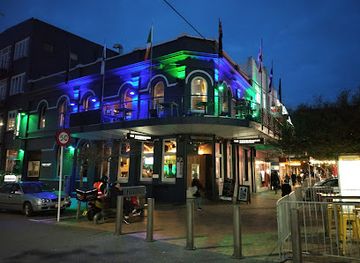


Best shops in Mount Victoria
Shopping in Mount Victoria is local and practical rather than organised around a major retail street. Small food shops, dairies, cafés and convenience businesses appear around the lower residential edges, particularly near the routes connecting the suburb with Courtenay Place, Kent Terrace and Cambridge Terrace. Independent businesses in converted houses and compact street-front premises contribute to the area’s neighbourhood scale, while larger fashion, book and specialist shopping choices are available a short walk away in central Wellington. Visitors should not expect a large market or a concentrated antiques district on the hill itself. The more distinctive retail experience comes from walking through the residential streets, where older shopfronts and villa conversions sit close to everyday services, then continuing downhill towards the waterfront or central-city shops.
-
Gift shop
Te Papa Store
Explore the vibrant Te Papa Store in Wellington for unique gifts and local art that capture the essence of New Zealand's culture.
2 min walk · 0.2 km from neighbourhood centre
-
Used clothing store
Recycle Boutique
Explore Recycle Boutique: Wellington's premier destination for sustainable fashion and unique second-hand clothing treasures.
8 min walk · 0.6 km from neighbourhood centre
-
Gift shop
Kura Gallery
Explore Kura Gallery in Wellington for unique, handcrafted gifts that embody New Zealand's rich artistic heritage.
2 min walk · 0.1 km from neighbourhood centre
-
Gift shop
Small Acorns
Explore the charm of Small Acorns, a Wellington gift shop offering unique home goods and exquisite local designs for your perfect souvenir.
2 min walk · 0.2 km from neighbourhood centre


Mount Victoria essentials
Getting There
Getting Around
Safety
Emergency Situations
Do's and Don'ts
Local Tips

From Eve
Local phrases worth knowing
You don't need to get them perfect. A few words go a long way, and locals appreciate the effort.
Basics
| English | Local | Say it |
|---|---|---|
| Hello | Kia ora | [kee-ah oh-rah] |
| Goodbye | Haere rā | [high-ree rah] |
| Yes | Ae | [eye] |
| No | Kāo | [kah-oh] |
| Please/You're welcome | Whakawhetai | [fah-kah-feh-tie] |
| Thank you | Kia ora | [kee-ah oh-rah] |
| Excuse me/Sorry | Aroha mai | [ah-roh-hah my] |
| How are you? | Kei te pēhea koe? | [key teh pay-he-ah koh-eh] |
| Fine. And you? | Kei te pai. Āu? | [key teh pie. ow] |
| Do you speak English? | Kōrerotia koe i te reo Pākehā? | [koh-reh-roh-tee-ah koh-eh ee teh reh-oh pah-keh-hah] |
| I don't understand | Kaore au e mohio | [kah-oh-reh oh-eh moh-hee-oh] |
Eating & Drinking
| English | Local | Say it |
|---|---|---|
| I'd like to see the menu, please | Me tiro atu au i te whārangi kai, tēnā | [meh tee-roh ah-too ow ee teh fah-rah-nee kai, teh-nah] |
| I don't eat meat | Kaore au e kai mīti | [kah-oh-reh oh-eh kai mee-tee] |
| Cheers! | Ngā mihi! | [nah mee-hee] |
| I would like to pay, please | Me utu au, tēnā | [meh oo-too ow, teh-nah] |
Emergencies
| English | Local | Say it |
|---|---|---|
| Help! | Āwhina! | [ow-fee-nah] |
| Go away! | Haere atu! | [high-ree ah-too] |
| Call the Police! | Karanga atu ki te Pirihimana! | [kah-rah-ngah ah-too kee teh pee-ree-hee-mah-nah] |
| Call a doctor! | Karanga atu ki te Rata! | [kah-rah-ngah ah-too kee teh rah-tah] |
| I'm lost | I wareware ahau | [ee wah-reh-wah-reh ah-how] |
| I'm ill | Kei te pōuri ahau | [key teh paw-oo-ree ah-how] |
Shopping
| English | Local | Say it |
|---|---|---|
| I'd like to buy... | Me hoko au... | [meh hoh-koh ow] |
| I'm just looking | Kei te titiro anō au | [key teh tee-tee-roh ah-noh ow] |
| How much is it? | E hia te utu? | [eh hee-ah teh oo-too] |
| That's too expensive | He nui rawa te utu | [heh noo-ee rah-wah teh oo-too] |
| Can you lower the price? | Me whakaiti te utu? | [meh fah-kai-tee teh oo-too] |
Time & Numbers
| English | Local | Say it |
|---|---|---|
| What time is it? | He aha te wā? | [heh ah-hah teh wah] |
| It's one o'clock | Kotahi o ngā karaka | [koh-ta-hee oh nah kah-rah-kah] |
| Half past (10) | Tekau mā rima | [teh-kow mah ree-mah] |
| Morning | Ahiahi | [ah-hee-ah-hee] |
| Afternoon | Pō | [paw] |
| Evening | Pō | [paw] |
| Yesterday | Ināianei | [ee-nah-ee-ah-neh-ee] |
| Today | Ā tēnei rā | [ow teh-nay rah] |
| Tomorrow | Āpōpō | [ow-paw-paw] |
| 1 | Tahi | [tah-hee] |
| 2 | Rua | [roo-ah] |
| 3 | Toru | [toh-roo] |
| 4 | Whā | [fah] |
| 5 | Rima | [ree-mah] |
| 6 | Ono | [oh-noh] |
| 7 | Whitu | [fee-too] |
| 8 | Waru | [wah-roo] |
| 9 | Iwa | [ee-wah] |
| 10 | Tekau | [teh-kow] |
Transport & Directions
| English | Local | Say it |
|---|---|---|
| Where's a/the...? | Kei hea te...? | [key hey-ah teh] |
| What's the address? | He aha te wāhi? | [heh ah-hah teh wah-hee] |
| Can you show me (on the map)? | Me whakaatu koe (i te mahere)? | [meh fah-kah-ah-too koh-eh ee teh mah-heh-reh] |
| When's the next (bus)? | Ahea te (pahi) e whai mai? | [ah-heh-ah teh pah-hee eh fah-ee my] |
| A ticket (to ....) | He tiki (ki ...) | [heh tee-kee kee] |
History of Mount Victoria
Matairangi and the Harbour Hills
The hill now commonly called Mount Victoria is known in Māori as Matairangi, a name associated with the prominent height overlooking the harbour. Before Wellington’s colonial development, the surrounding hills and coastal approaches formed part of the wider landscape used and travelled by Māori communities. European settlement altered the area rapidly after the founding of Wellington in the 1840s, when the hill was given its colonial name in honour of Queen Victoria. Its elevated position made it an enduring reference point for navigation and later an important setting for the city’s public open space.
The Town Belt Reservation
Mount Victoria’s slopes were shaped decisively by the creation of Wellington’s Town Belt in the nineteenth century. The reserve was intended to protect a broad band of open land around the growing settlement, limiting construction on the upper hills and preserving space for public recreation. On Mount Victoria this produced the characteristic meeting of houses and regenerating bush that remains visible today. Lower slopes were subdivided for streets and residences, while the higher ground retained a less formal landscape of ridges, gullies and walking routes. The Town Belt continues to give the suburb much of its distinctive physical character.
Villas and an Urban Suburb
As Wellington expanded during the late nineteenth and early twentieth centuries, Mount Victoria developed as a residential suburb close to the commercial centre. Builders adapted the steep terrain with narrow streets, stairways and compact plots, filling them with timber villas, cottages and later apartment buildings. The suburb’s proximity to the city made it attractive to professionals and families, while its slopes offered air and outlook above the increasingly busy central streets. Many surviving houses reflect the practical timber construction and decorative details associated with Wellington’s historic domestic architecture, although the neighbourhood has also experienced continual alteration and redevelopment.
The Tunnel and Modern Connections
Mount Victoria Tunnel, opened in 1931, transformed movement between central Wellington and the eastern suburbs by carrying road traffic beneath the hill. Though its eastern portal lies in Hataitai, the tunnel is closely tied to Mount Victoria’s position as a gateway between the city centre and the airport-facing side of Wellington. The route reduced reliance on the hill roads and reinforced the neighbourhood’s role beside major transport corridors. In the same period, the Embassy Theatre had already established the area as a cinema and entertainment destination, a role strengthened by its association with major film events in the modern era.
Mount Victoria in Photos
Browse through our photo collection highlighting the charm and character of the destination.
Neighbourhoods near Mount Victoria
The closest neighbourhoods to Mount Victoria, if you have time for more than one stop.
-
-
-


Swipe for more neighbourhoods
Explore more

Explore more of Wellington
Wellington, New Zealand’s compact capital, pairs harbour views and Māori heritage with Te Papa, creative culture, landmark walks and lively local dining.
Explore Wellington