Stanley Dock
Victorian industrial icon and UNESCO World Heritage landmark where Liverpool's maritime empire was built.
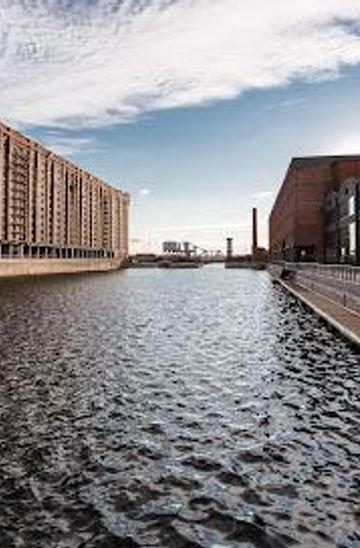
Stanley Dock is a historic dock complex in Liverpool's Vauxhall area, designed by renowned architect Jesse Hartley and opened in 1848. The site features the iconic Stanley Dock Tobacco Warehouse, once the world's largest brick building, alongside Grade II* listed warehouses and innovative dock infrastructure. Now part of Liverpool's UNESCO World Heritage Site, the dock represents a pinnacle of Victorian industrial architecture and has undergone significant regeneration, including the conversion of the North Warehouse into the Titanic Hotel. The complex showcases the city's maritime mercantile heritage and pioneering dock technology.
A brief summary to Stanley Dock
- Stanley Dock, Regent Rd, Liverpool, L3 0AN, GB
- Click to display
- Click to display
- Duration: 1.5 to 3 hours
- Free
-
 Outdoor
- Mobile reception: 5 out of 5

Know before you go
Hi, I'm Eve. Here are a few practical things to know before exploring Stanley Dock.
- Visit during daylight hours for the best photography of the Tobacco Warehouse's impressive brickwork and architectural details against the water and skyline.
- Explore the surrounding dock complex including the connected Collingwood, Bramley-Moore, Nelson, and Salisbury docks for a complete understanding of Liverpool's historic dock system.
- The Titanic Hotel in the North Warehouse offers guided tours and accommodation, providing interior access to one of the historic warehouses and deeper insight into the site's heritage.
- Walk the Leeds and Liverpool Canal towpath for scenic views of the dock complex and access to the canal locks and Victorian infrastructure.
- Allow time to examine the granite entrance towers, hydraulic systems, and railway remnants that illustrate the dock's pioneering multi-modal transport connections.
Do you manage this location?
Take control to get all the benefits, like improved information, better appearance, and stronger visibility across AI-powered discovery. Learn more
Activate your presence


Getting There
-
Public Transport via Merseyrail
Take the Merseyrail train to James Street station, approximately 8 minutes walk from Stanley Dock. From Liverpool city centre, the journey takes 3–5 minutes. Trains run every 10–15 minutes during peak hours and every 20 minutes off-peak. Single fare approximately £1.75–£2.50 depending on zone. The walk from James Street follows Strand Street and Regent Road, passing through the historic dock area.
-
Bus Service
Multiple bus routes serve the Stanley Dock area, including services 27, 61, and 62, which stop near Regent Road or Great Howard Street. Journey time from the city centre is 10–15 minutes depending on traffic and route. Single fare approximately £1.75. Buses run regularly throughout the day with reduced frequency in evenings and Sundays.
-
Taxi or Ride-Share
Taxis and ride-share services from Liverpool city centre take 8–12 minutes depending on traffic conditions. Estimated fare £8–£15 from the city centre. The dock has limited parking, so ride-share is often more convenient than driving. Evening journeys may take longer due to traffic congestion.
-
Walking from City Centre
A scenic walk of approximately 1.5 kilometres (20–25 minutes) from Liverpool city centre via the waterfront. Follow signs toward the Pier Head and Albert Dock, then continue north along the dock edge toward Stanley Dock. The route is flat and well-signposted, passing through the UNESCO World Heritage Site. This is an excellent option for experiencing the full dock landscape.
For the on-the-go comforts that matter to you
-
 Restrooms
-
 Drink Options
-
 Food Options
-
 Seating Areas
-
 Information Boards
-
 Visitor Center
Discover more about Stanley Dock
A Monument to Maritime Innovation
Stanley Dock opened on 4 August 1848, designed by the visionary architect Jesse Hartley, whose influence shaped Liverpool's entire dock system. Unlike other Liverpool docks built outward from the foreshore, Stanley Dock was uniquely excavated inland from sandstone bedrock, making it an engineering marvel of its time. The dock became the first in the world to feature multi-modal transport connections, linking directly to both the Leeds and Liverpool Canal and the railway system—a revolutionary integration that set the standard for modern port infrastructure worldwide.The complex sits at the heart of Liverpool's docks, the largest and most complete system of historic docks anywhere in the globe. It forms one of six key areas within the Liverpool Maritime Mercantile City UNESCO World Heritage Site, bearing witness to the city's role as a supreme commercial port during Britain's greatest global influence in the 18th and 19th centuries.The Tobacco Warehouse: A Colossal Testament to Industrial Ambition
The most striking feature of Stanley Dock is the monumental Tobacco Warehouse, constructed between 1900 and 1901. Built from 27 million bricks and standing 125 feet high, it was once the largest brick building in the world. The warehouse was designed by Anthony George Lyster and created by filling in the southern portion of the original dock to provide additional storage space. At its peak, the warehouse could hold 70,000 hogsheads of tobacco, each weighing 453 kilograms, serving as a crucial hub for tobacco imported from across the globe.The warehouse's design reflects the pinnacle of Victorian industrial architecture, constructed from a limited palette of materials—brick, stone, iron, and mortar—that proved both innovative and fireproof. Its vast internal spaces and intricate brickwork demonstrate the architectural ambition and economic power of Liverpool during the early 20th century. The building's scale alone commands attention, with its imposing exterior and arched windows creating an unforgettable silhouette against the docklands landscape.Historic Warehouses and Dock Infrastructure
The Stanley Dock complex includes the Grade II* listed North Warehouse (1852–1854) and the Grade II listed South Warehouse (1853–1856), both designed by Hartley in a style similar to those at Albert Dock. These original quay warehouses were built to five storeys, covering an area of 12,000 square yards. The North Warehouse sustained damage during World War II air raids but was preserved and has since been converted into the Titanic Hotel, a boutique hotel devoted to the White Star Line's RMS Titanic, which has strong historical links to Liverpool's shipping heritage.The dock boundary features distinctive granite towers at its entrances—two from Regent Road to the south and two from Great Howard Street to the north—originally fitted with sliding gates designed by Hartley. The complex also includes the Victoria Clock Tower (1848), the Hydraulic Pumping Station (1854), and the Bascule Bridge (1932), along with remnants of railway lines, dock gates, setted roads, bollards, and capstans that collectively illustrate the sophisticated infrastructure of a working Victorian port.Industrial Heritage and Mercantile Significance
Stanley Dock was instrumental in Liverpool's dominance as a global trading centre. The dock system stored rum and tobacco imported from exotic locations across the Americas, supporting the city's role in the trans-Atlantic trade networks that fuelled the British Empire's expansion. The warehouse's cataloging system was remarkably sophisticated for its era, with each bay numbered and recorded to track which tobacco went where on which floor. The hydraulic power system—one of the first in Liverpool—lifted heavy bales of tobacco, demonstrating the dock's technological advancement.During World War II, the docks suffered heavy bombing, though much of the Stanley Dock complex survived. The American Army later used the sixth floor of the Tobacco Warehouse as a hospital base, leaving graffiti that remains visible today as a tangible reminder of wartime history.Regeneration and Contemporary Transformation
In 2006, a £20 million extension of the Leeds and Liverpool Canal was completed, providing an additional 1.4 miles of navigable waterway toward the Pier Head and reconnecting the dock to its maritime roots. The site was designated a conservation area in 2002 and featured in the Most Haunted Live! investigation in January 2009 and the 2011 superhero film Captain America: The First Avenger.The most significant recent development has been the conversion of the North Warehouse into the Titanic Hotel and conference centre, a project that has brought visitors and investment to an area historically among the poorest in the country. This success has catalysed wider regeneration efforts, with plans underway to convert the Tobacco Warehouse into 538 apartments, featuring a garden-filled courtyard created by excavating the building's centre. The complex is now a focal point of Liverpool City Council's Ten Streets regeneration project, demonstrating how historic preservation can drive economic renewal while honouring the past.Explore the best of what Stanley Dock has to offer















More about Lancashire
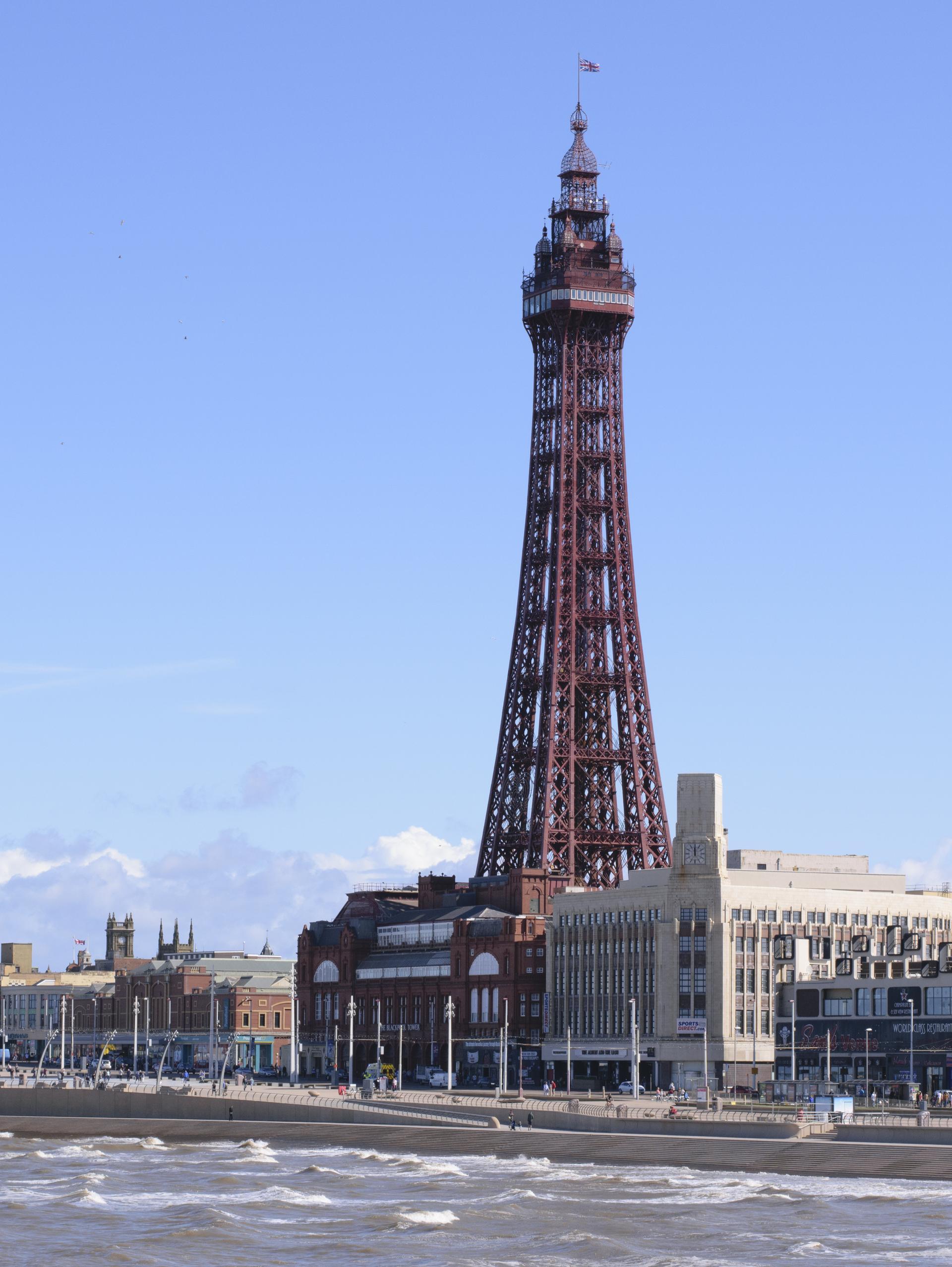
Discover Lancashire: A perfect blend of stunning landscapes, rich history, and vibrant culture in the heart of England's northwest.
Tell me more about Lancashire