

Pudding Ln Travel Guide
Free Guide: The narrow City lane where the Great Fire of London began in 1666, now marked by a plaque and forever tied to the story of the city’s destruction and rebirth.


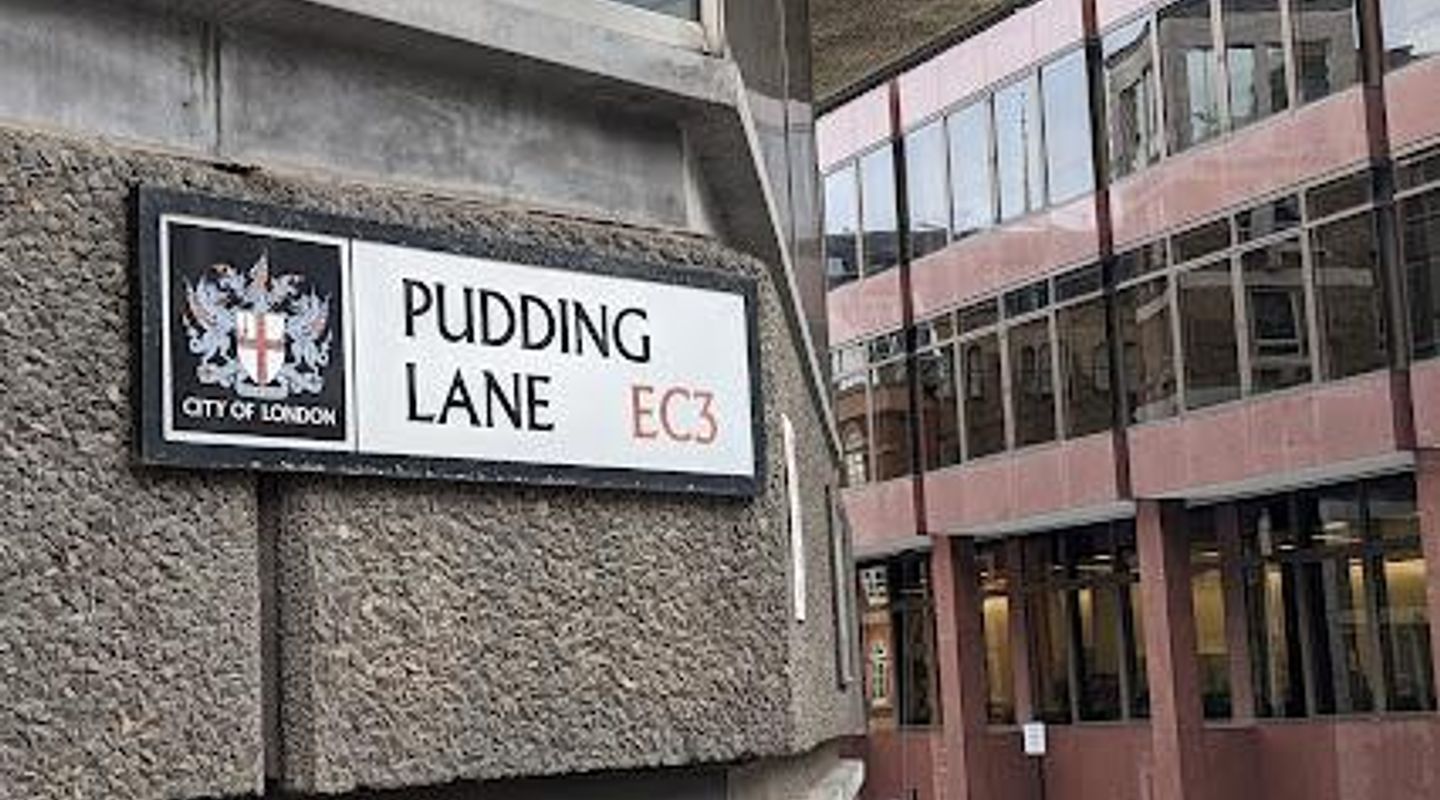
A brief summary of Pudding Ln
The narrow City lane where the Great Fire of London began in 1666, now marked by a plaque and forever tied to the story of the city’s destruction and rebirth.
A narrow City of London street forever etched in history as the starting point of the Great Fire of London in 1666. Once a bustling butchers’ lane named for animal offal, it’s now a quiet thoroughfare with a plaque marking Thomas Farriner’s bakery, where a forgotten oven sparked a disaster that reshaped the city. Nearby stands the Monument, a soaring tribute to the fire’s destruction and London’s rebirth.
On-site amenities
 Restrooms
 Drink options
 Drinking water
 Food options
 Seating areas
 Trash bins
 Information boards
- Address
- London
Getting there
Underground
Bus
Walking
Discover more about Pudding Ln
Where London Burned
Tucked between Eastcheap and Lower Thames Street, Pudding Lane is a modest City street with an outsized place in history. In the early hours of 2 September 1666, a small fire broke out in the bakery of Thomas Farriner, the king’s baker, at the northern end of the lane. A neglected oven, dry flour sacks, and a strong easterly wind turned a domestic accident into catastrophe. The flames raced along the densely packed timbered houses, leaping across narrow alleys and down to the riverside warehouses, igniting the Great Fire of London that would rage for four days and destroy most of medieval London.A simple plaque now marks the approximate site of Farriner’s bakery, a quiet reminder of the moment that changed the city forever. Though the buildings are long gone, the lane’s name and story remain central to London’s collective memory, a tangible link to the fire that consumed St Paul’s Cathedral, the Royal Exchange, and thousands of homes.
From Butchers’ Guts to One-Way Rules
Pudding Lane’s name has nothing to do with desserts. In medieval times, “pudding” referred to offal – the guts and entrails of animals slaughtered at Eastcheap, London’s main meat market. Butchers’ carts carried these offal “puddings” down the lane to waste barges on the Thames, giving the street its distinctive, if unappetising, identity. By the 17th century, the lane was home to basketmakers, turners, and labourers, a working-class artery serving the river trade.The lane also holds a quieter claim to fame: it was one of the world’s first designated one-way streets. In 1617, decades before the fire, a traffic order restricted movement along Pudding Lane and several nearby streets, an early attempt to manage the growing congestion of the City. This innovation in urban planning foreshadowed modern traffic systems, making Pudding Lane a subtle pioneer in city life as well as a symbol of disaster.
A Catalyst for Change
The Great Fire’s devastation led directly to sweeping reforms. King Charles II’s 1667 Rebuilding Act introduced London’s first comprehensive building regulations, mandating brick and stone construction, wider streets, and fire-resistant materials to prevent a repeat catastrophe. The fire also spurred the creation of fire insurance; the first fire office opened in 1680, issuing metal fire marks to insured buildings.Nearby, the Monument to the Great Fire of London, designed by Christopher Wren and Robert Hooke, stands exactly 202 feet from Pudding Lane, its gilded urn symbolising the fire itself. Together, the lane and the Monument tell a story of destruction and renewal, of a city that burned and then rebuilt itself in stone, shaping the London we know today. Pudding Lane, though unassuming, is thus a quiet monument to resilience, innovation, and the enduring power of history in the urban fabric.
Evendo Review Centre
 Google
Guest reviews
Best time to go
Quietest: Jan, Feb & Mar · before 3am
Busy times are Evendo estimates for a typical year, to help you plan. Actual crowds vary with events, school holidays and the weather.
Explore Pudding Ln on the map
A handpicked selection of must-see spots near Pudding Ln, mapped for you.
Get your free copy of our complete guide to Pudding Ln, delivered straight to you.
Everything on this page, from opening hours and how to get there to Eve’s tips and the best time to go, in one PDF you can read offline, print or share.
Already have an account? Sign in
Your Pudding Ln guide is ready.
We'll send it to · Not you? Sign out

Getting your guide ready…
We are putting together a fresh copy of the Pudding Ln guide. This can take up to a minute.
This can take a few moments. If your browser asks, choose Allow so the download can start. You'll find the guide in your Downloads folder.
Nothing happened? Download it again
Sorry, the guide is taking longer than usual. Please try again in a minute, or get it by email instead.
Unlock the best of Pudding Ln
Skip-the-line tickets, guided tours with entry, and walking tours of the area, booked in a few clicks.
Other nearby places you may find interesting
The closest places of the same kind, if this one is not quite what you had in mind.
-
-
-
-
-


Swipe for more places
More to explore near Pudding Ln

 Best experiences near Pudding Ln
 Best hotels near Pudding Ln
 Best landmarks near Pudding Ln
 Best attractions near Pudding Ln
 Best shops near Pudding Ln
 Best restaurants near Pudding Ln
 Best bars near Pudding Ln
Do you manage this location?
Take control to get all the benefits, like improved information, better appearance, and stronger visibility across AI-powered discovery.
Explore more

Explore more of Devon
Discover Devon: A blend of stunning coastlines, historic cities, and charming villages perfect for outdoor adventures and culinary delights in the heart of England's West Country.
Explore Devon
Explore more of United Kingdom
Discover the United Kingdom: A blend of rich history, stunning landscapes, and vibrant cities, offering a unique travel experience for every visitor.
Explore United Kingdom
