Blue Streak rocket, Leicestershire Travel Guide
Discover the iconic Blue Streak rocket, Britain’s Cold War missile turned pioneering European space launcher, at Leicester’s National Space Centre.
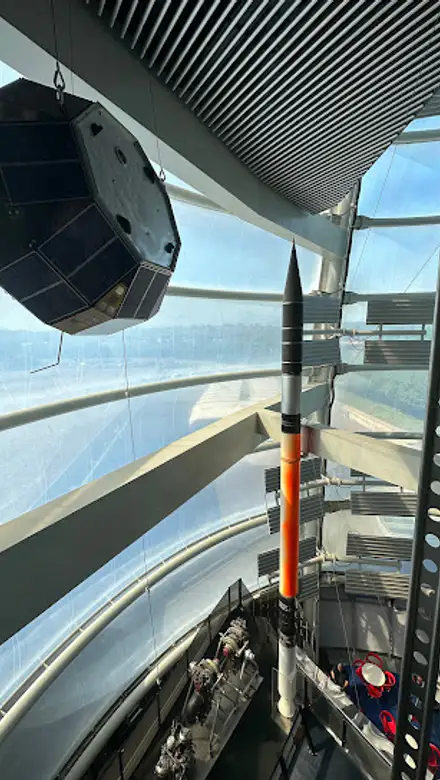
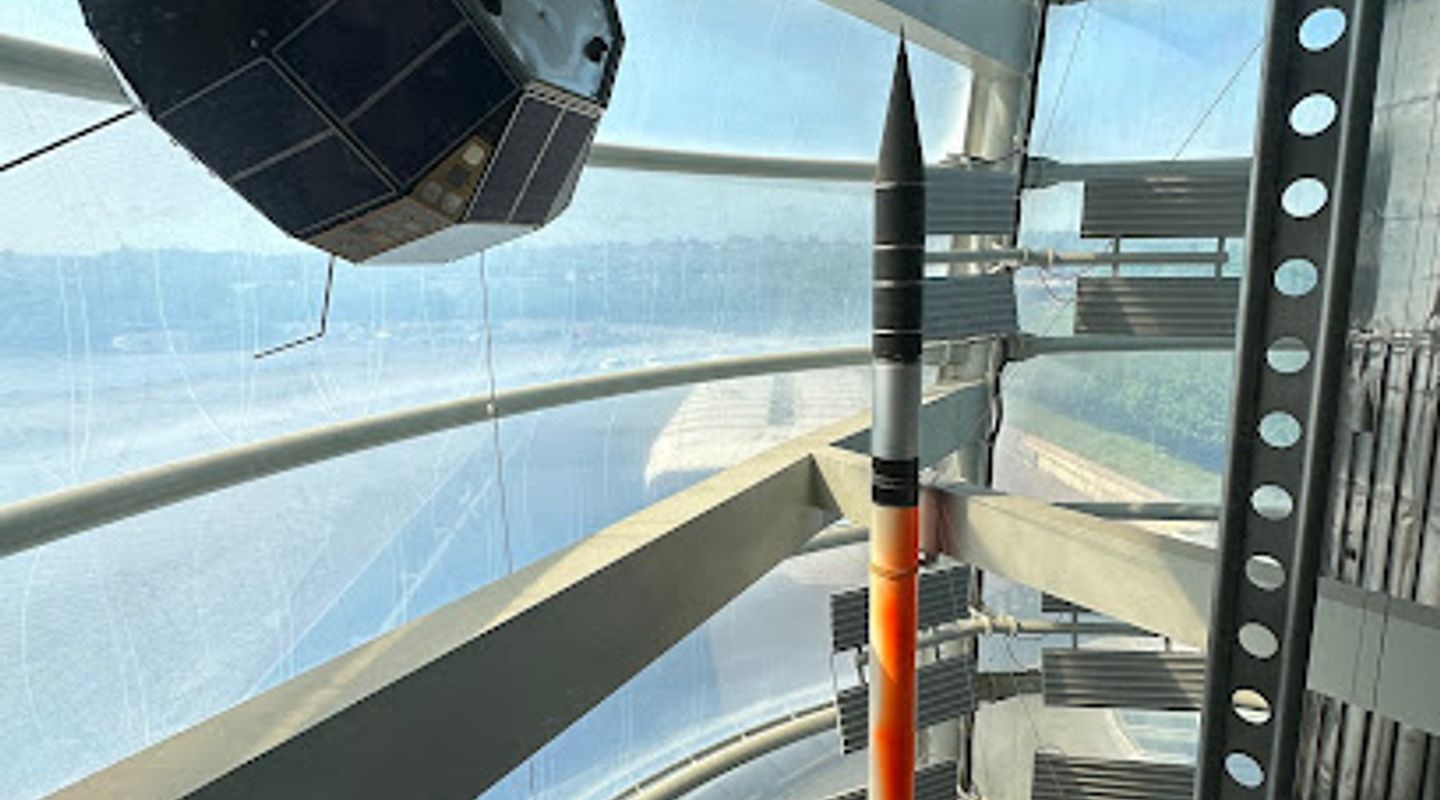
The Blue Streak rocket, a Cold War-era British missile turned pioneering space launch vehicle, is prominently displayed at the National Space Centre in Leicester. Originally designed as a nuclear-armed ballistic missile in the 1950s, Blue Streak evolved into the first stage of Europe's early satellite launcher, the Europa rocket. The exhibit showcases this historic rocket’s sleek stainless steel design and highlights its remarkable 100% success rate in test launches, symbolizing a pivotal chapter in British aerospace history.
A brief summary to Blue Streak rocket
- Leicester, LE4 5NS, GB
- Click to display
- Duration: 3.5 to 5 hours
- Mid ranged
-
 Indoor
- Mobile reception: 4 out of 5

Know before you go
Hi, I'm Eve. Here are a few practical things to know before exploring Blue Streak rocket.
- Allow at least four hours to fully explore the National Space Centre and the Blue Streak exhibit.
- Visit during weekdays or early hours on weekends to avoid peak crowds.
- Check for special events or astronomy evenings that often feature talks about Blue Streak and space history.
- Wear comfortable shoes as the centre includes multiple floors and interactive zones.
Do you manage this location?
Take control to get all the benefits, like improved information, better appearance, and stronger visibility across AI-powered discovery. Learn more about listing your business on Evendo
Activate your presenceOther nearby places you may find interesting
The closest places of the same kind, if this one is not quite what you had in mind.

Explore Blue Streak rocket on the Map
A handpicked selection of must-see spots near Blue Streak rocket, mapped for you.
Getting There
-
Bus
Take the First Bus 54 from Leicester city centre, running every 10 minutes Monday to Saturday and every 20 minutes on Sunday, with a journey time of approximately 15-20 minutes. The bus stops close to the National Space Centre entrance. Tickets cost around £2.50 one way.
-
Train and Bus Combination
Arrive at Leicester Railway Station via East Midlands Trains or CrossCountry services, then take a taxi or First Bus 54 to the National Space Centre. The taxi ride takes about 10 minutes and costs approximately £8-£12.
-
Car
Drive to the National Space Centre via the A6, located about 2 miles north of Leicester city centre. On-site parking is available with over 400 spaces, including 23 accessible bays, at a flat rate of £4 per day. Note that overnight parking is not permitted.
For the on-the-go comforts that matter to you
-
 Restrooms
-
 Drink Options
-
 Food Options
-
 Seating Areas
-
 Information Boards
-
 Visitor Center
Discover more about Blue Streak rocket
From Military Ambition to Space Exploration
The Blue Streak rocket began life in the mid-1950s as a top-secret British project aimed at developing an intermediate-range ballistic missile capable of delivering nuclear warheads during the Cold War. Designed and built by the de Havilland Aircraft Company with Rolls-Royce providing the powerful RZ.2 rocket engines, Blue Streak was intended to secure Britain's independent nuclear deterrent. Its stainless steel skin was uniquely thin and required constant pressurization to maintain structural integrity, reflecting the cutting-edge aerospace engineering of its time.Challenges and Transition to a Space Launcher
Despite its advanced technology and successful engine tests, the missile program was cancelled in 1960 due to escalating costs, vulnerability of fixed launch sites, and strategic reconsiderations. However, the rocket was repurposed for peaceful space exploration. The British government collaborated with European partners to form the European Launcher Development Organisation (ELDO), aiming to build a satellite launch vehicle. Blue Streak became the reliable first stage of the Europa rocket, with French and German contributions completing the second and third stages respectively.Test Flights and Legacy
Between 1964 and 1971, Blue Streak was launched eleven times from the Woomera test range in Australia, achieving a flawless 100% success rate as a first stage—a record matched by few rockets, including the American Saturn V. While the Europa program faced difficulties with later stages and was eventually discontinued, Blue Streak’s performance remains a testament to British aerospace prowess. Two surviving Blue Streak rockets are preserved today, one of which is exhibited at the National Space Centre in Leicester.The Exhibit and Educational Significance
Housed within the National Space Centre, the Blue Streak rocket stands as a striking symbol of Britain’s Cold War history and early space ambitions. The museum itself is a modern architectural landmark featuring a towering rocket structure clad in semi-transparent ETFE panels. Visitors can explore interactive displays, learn about the rocket’s design and missions, and appreciate its role in the broader context of European space collaboration. The exhibit connects historical military technology with the dawn of peaceful space exploration.Context within Leicester’s Space Heritage
Located in Belgrave, Leicester, the National Space Centre also partners with the University of Leicester on space science research and education. The Blue Streak rocket display complements the centre’s planetarium and other aerospace exhibits, making it a focal point for understanding the UK’s contribution to space science and technology. The site is a hub for public engagement, inspiring visitors with stories of innovation, international cooperation, and the quest to explore beyond Earth.Preserving a Pioneering Spirit
The Blue Streak rocket represents both a technological achievement and a historical narrative of Cold War tensions, scientific progress, and shifting priorities from defense to exploration. Its preservation at the National Space Centre ensures that future generations can witness this iconic piece of aerospace history and reflect on the complex interplay of politics, technology, and ambition that shaped the early space age.












Your all‑in‑one travel companion app
Explore expert travel guides, compare and book tours, experiences, hotels, and more—all from the palm of your hand. Download now for seamless trip planning wherever your wanderlust takes you.


Explore More of Leicestershire

Looking beyond Blue Streak rocket? Discover Leicestershire for broader travel guides, local hot-spots, and regional highlights.
Explore Leicestershire
A peaceful arboretum in Leicester with diverse trees, meadows, and historical charm, perfect for nature walks and quiet reflection.
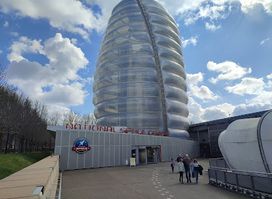
Explore the UK’s largest planetarium and iconic rocket tower at Leicester’s National Space Centre, a hub of space discovery and interactive science fun.