
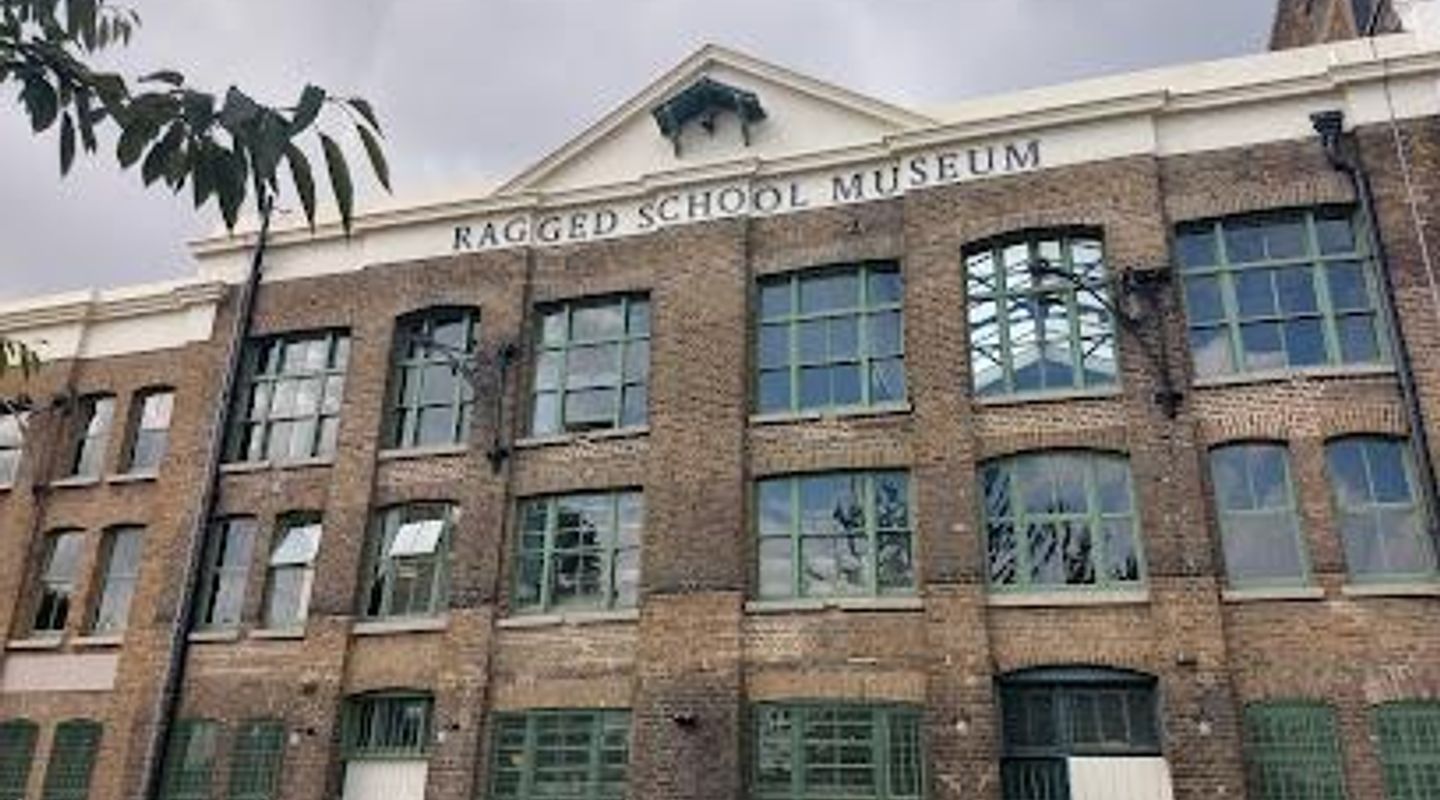
Ragged School Museum, London Travel Guide
Explore Victorian East End life and the pioneering free education movement at London’s Ragged School Museum, housed in historic canal warehouses.
The Ragged School Museum in East London preserves the legacy of Victorian-era free education for impoverished children. Housed in former canal-side warehouses once run by Dr Thomas Barnardo, it offers immersive Victorian classrooms, exhibitions on social history, and a glimpse into the harsh realities and philanthropic efforts of 19th-century East End London.
A brief summary to Ragged School Museum
- 46-50 Copperfield Rd, London, E3 4RR, GB
- Click to display
- Click to display
- Duration: 1 to 2.5 hours
- Mid ranged
-
 Indoor
- Mobile reception: 4 out of 5
- Wednesday 10 am-5 pm
- Thursday 10 am-5 pm
- Friday 10 am-5 pm
- Saturday 10 am-5 pm
- Sunday 10 am-5 pm

Know before you go
Hi, I'm Eve. Here are a few practical things to know before exploring Ragged School Museum.
- Visit on a weekday when the museum is less crowded to fully enjoy the immersive Victorian classroom experience.
- Allow time to explore the exhibitions and the café overlooking Regent’s Canal for a complete visit.
- Check the museum’s schedule for special events like art exhibitions and music festivals held in the upper floors.
- Ideal for families and school groups interested in Victorian history and social reform.
Do you manage this location?
Take control to get all the benefits, like improved information, better appearance, and stronger visibility across AI-powered discovery. Learn more about listing your business on Evendo
Activate your presenceOther nearby places you may find interesting
The closest places of the same kind, if this one is not quite what you had in mind.

Explore Ragged School Museum on the Map
A handpicked selection of must-see spots near Ragged School Museum, mapped for you.
Unlock the Best of Ragged School Museum
Buy tickets
-
No tickets available
Book tours with entry
-
No tours available
Book tours without entry

Getting There
-
Public Transport
Take the London Underground Central Line to Mile End station, approximately a 10-15 minute walk to the museum. Frequent trains run every 3-5 minutes during peak hours. No additional fare beyond standard Tube pricing applies.
-
Bus
Bus routes 25, 205, and 309 serve Copperfield Road with stops within a 5-minute walk of the museum. Buses run every 10-15 minutes, with a standard single fare of £1.75 using contactless payment or Oyster card.
-
Taxi or Rideshare
A taxi or rideshare from central London to the Ragged School Museum typically takes 20-30 minutes depending on traffic. Expect fares around £15-£25. Drop-off is available near the canal-side entrance.
-
Walking
From Mile End Park, a pleasant 15-minute walk along the Regent’s Canal towpath leads directly to the museum. The path is flat and accessible, suitable for most visitors.
For the on-the-go comforts that matter to you
-
 Restrooms
-
 Drink Options
-
 Food Options
-
 Seating Areas
-
 Information Boards
-
 Visitor Center
Ragged School Museum location weather suitability
-
 Any Weather
-
 Rain / Wet Weather
-
 Clear Skies
-
 Mild Temperatures
Discover more about Ragged School Museum
Origins of the Ragged School Movement and Barnardo's Vision
The Ragged School Museum stands as a monument to the 19th-century ragged school movement, which sought to provide free education to destitute children in Britain’s industrial cities. This movement began in the late 18th century through the efforts of middle-class philanthropists and evangelicals who aimed to rescue children from poverty and neglect. Thomas Barnardo, an Irish-born philanthropist, arrived in London in 1866 intending to become a missionary but was moved by the dire conditions of the East End. Abandoning his medical studies, he opened his first ragged school in 1867, offering free education to the poorest children. Ten years later, Barnardo expanded his efforts by opening the Copperfield Road Free School in converted canal warehouses, which became the largest ragged school in London and operated until 1908.Architectural and Historical Significance of the Site
The museum is housed in a group of three Grade II-listed former warehouses along Regent’s Canal. These buildings were originally used for goods transport before being repurposed as classrooms and facilities for Barnardo’s extensive educational and social programs. After the school closed, the buildings served various industrial uses and later faced demolition threats in the early 1980s. Local campaigners formed the Ragged School Museum Trust to preserve the site, which opened as a museum in 1990. Recent major refurbishments funded by the National Lottery Heritage Fund have restored the buildings, including a new roof, improved facilities, and a café opening onto the canal towpath.Immersive Victorian Classroom Experience
At the heart of the museum is an authentically recreated Victorian classroom, set up in one of Barnardo’s original schoolrooms. Visitors can see rows of wooden desks, a teacher’s stand-up desk complete with a cane, blackboards, slates, and even a dunce’s cap, all designed to evoke the strict schooling environment of the 1870s. This classroom serves as an educational tool, with approximately 16,000 schoolchildren annually experiencing lessons as Victorian pupils did. The museum also features a Victorian kitchen recreation and an art room where visitors can engage creatively with the history.Exhibitions and Collections Highlighting Social History
Beyond the classroom, the museum offers exhibitions on the broader social history of the Victorian East End and the impact of Barnardo’s work. Displays include Barnardo’s personal desk, a printing press, archival materials, and stories of children who attended the school, some of whom were later sent abroad for new lives. Contemporary art installations and music festivals have also been hosted in the museum’s spacious upper floors, blending historical preservation with modern cultural engagement.Community Role and Educational Outreach
The Ragged School Museum continues to serve as a community and educational resource. It collaborates with local institutions such as Queen Mary University of London and runs a Schools Programme designed to engage young minds with history through interactive learning. The museum’s café and event spaces contribute to its role as a vibrant cultural hub along the Regent’s Canal, attracting visitors interested in history, education, and social justice.Legacy and Continuing Relevance
The museum not only commemorates a pivotal chapter in the history of free education and social reform but also highlights ongoing themes of poverty, philanthropy, and community resilience. It preserves the memory of tens of thousands of children who benefited from ragged schools and serves as a reminder of the transformative power of education in urban environments.












Your all‑in‑one travel companion app
Explore expert travel guides, compare and book tours, experiences, hotels, and more—all from the palm of your hand. Download now for seamless trip planning wherever your wanderlust takes you.


Explore More of London
Looking beyond Ragged School Museum? Discover London for broader travel guides, local hot-spots, and regional highlights.
Explore London
Historic London dock transformed into a vibrant waterside community hub for leisure, water sports, and scenic urban living.
A small Limehouse museum devoted to Bible history, manuscripts and printed editions, best for a short guided visit with a strong interpretive focus.
