

Buckingham Palace, London Travel Guide
Free Guide: Explore the majestic official residence of the British monarch, from lavish State Rooms to the iconic Changing of the Guard ceremony.


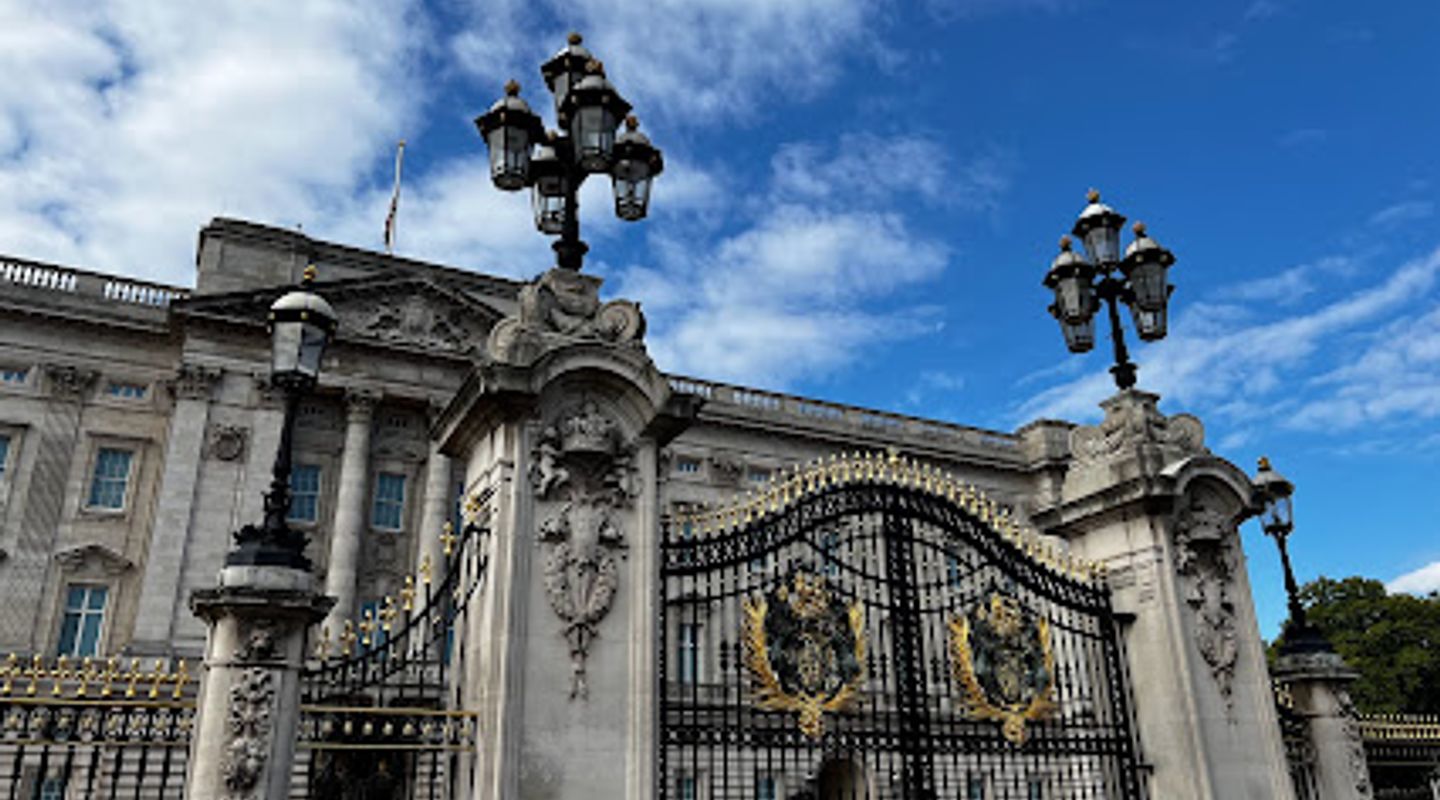
A brief summary of Buckingham Palace
Explore the majestic official residence of the British monarch, from lavish State Rooms to the iconic Changing of the Guard ceremony.
Buckingham Palace, located in London SW1A 1AA, is the official residence of His Majesty The King and a symbol of the British monarchy. Open to the public during the summer months, visitors can tour the lavishly decorated State Rooms, stroll through the beautiful gardens, and witness the famous Changing of the Guard ceremony. With 775 rooms and over 400 staff, the palace blends historic grandeur with living tradition, making it a must-see cultural landmark and tourist attraction.
On-site amenities
 Restrooms
 Drink options
 Food options
 Seating areas
 Information boards
 Visitor centre
- Address
- London SW1A 1AA London
- Phone
- Website
Getting there
London Underground
Bus
Taxi or Rideshare
Walking
Discover more about Buckingham Palace
Historical Foundations and Royal Significance
Originally built in 1703 as a large townhouse for the Duke of Buckingham, the building that is now Buckingham Palace was acquired by King George III in 1761 for Queen Charlotte and became known as the Queen’s House. Over the centuries, it evolved into the grand palace that serves as the official London residence of the reigning monarch. With 775 rooms, including 19 State Rooms used for official entertaining, it remains one of the few working royal palaces globally, symbolizing the continuity and pageantry of the British monarchy.
The Summer Opening and Visitor Experience
Each year from July to September, Buckingham Palace opens its doors to the public for approximately 10 weeks. Visitors can explore the State Rooms, richly decorated with masterpieces by artists like Canaletto and Van Dyck, as well as sculptures by Canova. The tour typically takes between two and three hours and includes access to the palace gardens, where photography is permitted. The Throne Room, often used for royal ceremonies and portraits, and the White Drawing Room, a private reception space, are among the highlights. Newly installed portraits of King Charles III and Queen Camilla add a contemporary touch to the historic interiors.
Changing of the Guard: A Timeless Ceremony
Outside the palace, the Changing of the Guard ceremony is a celebrated tradition attracting many spectators. Taking place at 11:00 a.m. on select days, the ceremony features a formal handover of responsibilities between the old and new guards, accompanied by military music and precision drill. The event is free to watch, with prime viewing spots near the eastern gates of the palace. It is a vivid display of British pageantry and discipline, enriching the visitor experience with a sense of living history.
Architecture and Surrounding Environment
The palace’s architecture reflects a blend of neoclassical and Victorian styles, marked by its iconic façade and the grand balcony overlooking The Mall. The surrounding gardens provide a tranquil green space in the heart of London, featuring a lake and wooded areas. Visitors exit through the gardens, enjoying views of the palace’s west front and the serene landscape, which contrasts with the bustling city nearby.
Royal Mews and The Queen’s Gallery
Adjacent to the palace, the Royal Mews houses the royal family’s state vehicles, including horse-drawn carriages and motor cars used in ceremonial processions. The Queen’s Gallery exhibits rotating masterpieces from the Royal Collection, offering additional insight into the monarchy’s art patronage. Combined tickets are available for these attractions, enhancing the overall royal day out.
Visitor Amenities and Practical Information
Visitors can find a café in the garden area serving refreshments such as tea, coffee, cakes, and sandwiches, providing a restful spot after the tour. Photography is prohibited inside the State Rooms but allowed in the gardens. Tickets must be booked in advance for the summer opening, with various options including standard admission and exclusive evening tours. Children under five enter free, and family discounts are available. The palace is well-staffed, with around 400 employees ensuring a smooth visitor experience and palace operations.
Evendo Review Centre
 Google
Guest reviews
Best time to go
Quietest: Jan, Feb & Mar · before 7am or from 8pm
Busy times are Evendo estimates for a typical year, to help you plan. Actual crowds vary with events, school holidays and the weather.
Explore Buckingham Palace on the map
A handpicked selection of must-see spots near Buckingham Palace, mapped for you.
Get your free copy of our complete guide to Buckingham Palace, delivered straight to you.
Everything on this page, from opening hours and how to get there to Eve’s tips and the best time to go, in one PDF you can read offline, print or share.
Already have an account? Sign in
Your Buckingham Palace guide is ready.
We'll send it to · Not you? Sign out

Getting your guide ready…
We are putting together a fresh copy of the Buckingham Palace guide. This can take up to a minute.
This can take a few moments. If your browser asks, choose Allow so the download can start. You'll find the guide in your Downloads folder.
Nothing happened? Download it again
Sorry, the guide is taking longer than usual. Please try again in a minute, or get it by email instead.
Unlock the best of Buckingham Palace
Skip-the-line tickets, guided tours with entry, and walking tours of the area, booked in a few clicks.
 Tour with entry
Podcast Tour London A Thousand Years of British Power
from $6.37 Tour with entry
Westminster Self-Guided Walking Tour In London
from $9.49 Tour with entry
Private London Westminster Area Self-Guided Tour
from $11.31 Tour with entry
Bond Mission London GPS App Walking Tour Mobile Game
from $17.01


Other nearby places you may find interesting
The closest places of the same kind, if this one is not quite what you had in mind.
-

-
-
-
-


Swipe for more places
More to explore near Buckingham Palace

 Best experiences near Buckingham Palace
 Best hotels near Buckingham Palace
 Best landmarks near Buckingham Palace
 Best attractions near Buckingham Palace
 Best shops near Buckingham Palace
 Best restaurants near Buckingham Palace
 Best bars near Buckingham Palace
Managed by Buckingham Palace
The opening hours, contact details and photos on this page are kept up to date by the venue.
- Address
- London SW1A 1AA London
- Phone
- +443031237300
Explore more

Explore more of London
Explore London: A city of iconic landmarks, rich history, vibrant culture, and endless attractions that cater to every taste, making it a must-visit destination.
Explore London
Explore more of United Kingdom
Discover the United Kingdom: A blend of rich history, stunning landscapes, and vibrant cities, offering a unique travel experience for every visitor.
Explore United Kingdom
