

Canyonlands National Park Travel Guide - Free Web & App
Your ultimate guide to Canyonlands National Park. Discover top landmarks, proposed trips, and local tips. Free on the web or via the Evendo companion app.


Canyonlands National Park in Utah reveals vast desert canyons, mesas and rivers, with scenic drives, hiking, stargazing and four-wheel-drive adventures.
Landscapes Shaped by Water
Canyonlands National Park occupies a vast high-desert region in south-eastern Utah, where the Colorado River and Green River divide a layered plateau into deep canyons, mesas, buttes and sculpted sandstone formations. Rather than a single compact landscape, the park is formed by distinct districts separated by rugged terrain and long distances. Island in the Sky, the most accessible district, stands on a broad mesa north of the rivers and offers far-reaching overlooks above the Green and Colorado river canyons. The Needles, south-east of the rivers, is recognised for colourful sandstone spires, narrow passages and more intricate hiking terrain. The Maze, on the park's remote western side, is a demanding backcountry environment reached by long, rough approaches. Horseshoe Canyon, a separate unit, protects especially significant rock art and canyon scenery.Read more about Canyonlands National Park
Desert Heritage and Living Landscapes
Exploring by District
When is the best time to visit Canyonlands National Park?
Best: April–May, October · 22–27°C| Month | High (°C) | Rainfall (mm) |
|---|---|---|
| January | 9 | 13 |
| February | 12 | 12 |
| March | 17 | 14 |
| April (best) | 22 | 11 |
| May (best) | 27 | 10 |
| June | 33 | 7 |
| July | 38 | 11 |
| August | 36 | 12 |
| September | 30 | 10 |
| October (best) | 22 | 11 |
| November | 14 | 12 |
| December | 9 | 13 |
Getting to and around Canyonlands National Park
How to get there
Transportation
Best attractions in Canyonlands National Park
Island in the Sky provides the park's most accessible sequence of desert viewpoints, including Mesa Arch, Green River Overlook, Grand View Point and the dramatic prospect from Shafer Canyon. Its short walks and mesa-top roads reveal the Colorado and Green rivers far below, while the White Rim Road descends into a more complex landscape of benches and cliffs for permitted four-wheel-drive travel. In the Needles, routes around Elephant Hill lead towards Chesler Park, where sandstone spires and narrow joints create a more enclosed and strenuous hiking environment. Horseshoe Canyon, reached by a separate remote approach, is valued for its rock art and deeply cut canyon. The Maze is the most isolated district, with convoluted canyons, long approaches and demanding backcountry conditions. River corridors offer another perspective through organised or self-supported trips, subject to permits, water levels and appropriate experience.
-
Tourist attraction
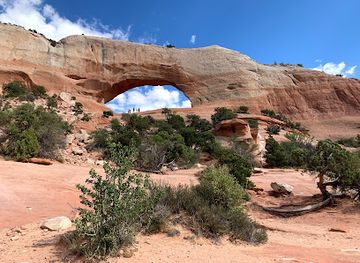
Wilson Arch
Discover the breathtaking beauty of Wilson Arch, a stunning natural landmark near Moab, Utah, perfect for hiking and photography enthusiasts.
-
Scenic spot
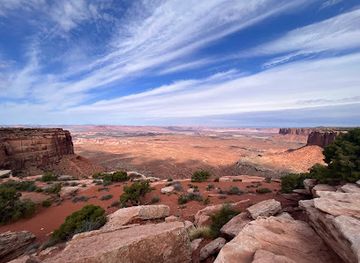
Grand View Point
Experience the stunning landscapes and panoramic views of Grand View Point at Canyonlands National Park, Utah's breathtaking natural wonder.
-
Scenic spot
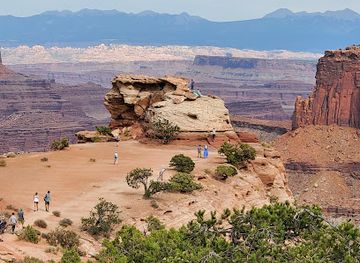
Shafer Canyon Overlook Trailhead
Experience the breathtaking vistas of Shafer Canyon Overlook in Canyonlands National Park, a scenic paradise for hikers and nature lovers.
-
Cultural landmark
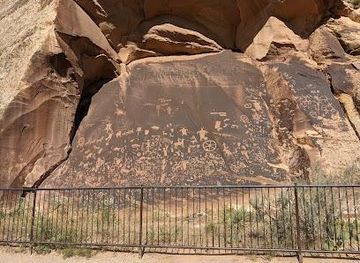
Newspaper Rock State Historical Monument
Explore Newspaper Rock State Historical Monument, a cultural gem in Utah showcasing ancient petroglyphs and rich Native American history.
Best landmarks in Canyonlands National Park
The Colorado River and Green River are Canyonlands' defining natural landmarks, their meeting within the park helping shape the immense canyon system viewed from the surrounding mesas. At Island in the Sky, Mesa Arch frames the canyon country below, while Grand View Point and Green River Overlook demonstrate the scale of the eroded plateau. The Needles district is marked by Cedar Mesa Sandstone spires, especially around Chesler Park, where erosion has produced a maze of fins, joints and passages. Upheaval Dome is a prominent and still scientifically debated geological feature on the Island in the Sky mesa. Horseshoe Canyon's walls preserve important rock art, including the celebrated Great Gallery, making it both a natural and cultural landmark. These places are significant not simply for their appearance but for the geological processes and human history recorded in the park's stone.
-
Scenic spot
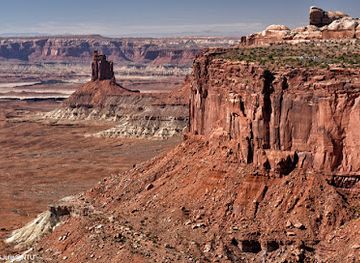
Candlestick Tower Overlook
Experience the stunning vistas and natural beauty at Candlestick Tower Overlook in Moab, Utah, a must-see destination for every traveler.
Explore Canyonlands National Park on the map
Plan your trip on one map. See where the top attractions, landmarks, restaurants and hotels are, and book hotels and experiences in a few clicks.
Best hotels in Canyonlands National Park
Get your free copy of our complete guide to Canyonlands National Park, delivered straight to you.
Everything on this page, from attractions and restaurants to essentials and local phrases, in one PDF you can read offline, print or share.
Already have an account? Sign in
Your Canyonlands National Park guide is ready.
We'll send it to · Not you? Sign out

Getting your guide ready…
We are putting together a fresh copy of the Canyonlands National Park guide. This can take up to a minute.
This can take a few moments. If your browser asks, choose Allow so the download can start. You'll find the guide in your Downloads folder.
Nothing happened? Download it again
Sorry, the guide is taking longer than usual. Please try again in a minute, or get it by email instead.
Canyonlands National Park essentials
Currency and Payment
Safety
Emergency Situations
Do's and Don'ts
Local Tips
From Eve
Local phrases worth knowing
You don't need to get them perfect. A few words go a long way, and locals appreciate the effort.
Basics
| English | Local | Say it |
|---|---|---|
| Hello | Yá'át'ééh | [yah-at-eh] |
| Goodbye | Hágoónee' | [ha-go-nee] |
| Yes | Táá | [taa] |
| No | Ní | [nee] |
| Please/You're welcome | Ahe'hee' | [ah-hay-hee] |
| Thank you | Ahéhee' | [ah-hay-hee] |
| Excuse me/Sorry | Shízhé'é | [shee-zhay] |
| How are you? | Ahe'hee' díí dóó shidine'é? | [ah-hay-hee dee doh shi-dee-neh] |
| Fine. And you? | Hágoónee'. Shi k'éé'? | [ha-go-nee. shee kay] |
| Do you speak English? | Shimá dóó shíshí dóó shił bééhózin? | [shee-mah doh shee-shee doh shi-l beh-ho-zeen] |
| I don't understand | Ní baa shí naalnish | [nee bah shee nah-lee-sh] |
Eating & Drinking
| English | Local | Say it |
|---|---|---|
| I'd like to see the menu, please | Bíízh bee haz'áanii yahíísh | [bee-zh bee haz-ah-nee yah-heesh] |
| I don't eat meat | Ní baa násdla' | [nee bah nah-sdlah] |
| Cheers! | Hágoónee' | [ha-go-nee] |
| I would like to pay, please | Bíízh bee yá'át'ééh yahíísh | [bee-zh bee yah-at-eh yah-heesh] |
Emergencies
| English | Local | Say it |
|---|---|---|
| Help! | Yá'át'ééh | [yah-at-eh] |
| Go away! | T'áá hwó'á | [taa hwo-ah] |
| Call the Police! | Bee haz'áanii yá'át'ééh | [bee haz-ah-nee yah-at-eh] |
| Call a doctor! | Bee baa hózhǫ́ǫgo | [bee bah hoh-zho-oh-go] |
| I'm lost | Ní baa yádí | [nee bah ya-dee] |
| I'm ill | Ní baa hólǫ́ | [nee bah hoh-loh] |
Shopping
| English | Local | Say it |
|---|---|---|
| I'd like to buy... | Bíízh bee nihí | [bee-zh bee nee-hee] |
| I'm just looking | Nihik'éí | [nee-hee-kay] |
| How much is it? | T'ááshdla' | [taa-shdla] |
| That's too expensive | T'áá hwó'á | [taa hwo-ah] |
| Can you lower the price? | Dóó łehiłt' | [doh leh-heelt] |
Time & Numbers
| English | Local | Say it |
|---|---|---|
| What time is it? | Haa'óóshii baa hání? | [ha-oh-shee bah ha-nee] |
| It's one o'clock | Ndaa | [nah] |
| Half past (10) | Dibé nitsaa | [dee-bay nee-tsaa] |
| Morning | Shí | [shee] |
| Afternoon | Hassááh | [hass-ahh] |
| Evening | T'áá yíízhí | [taa yee-zhee] |
| Yesterday | Éétsoh | [ayt-soh] |
| Today | Nízah | [nee-zah] |
| Tomorrow | Nihí | [nee-hee] |
| 1 | Táá | [taa] |
| 2 | Naaki | [nah-kee] |
| 3 | Tááłá' | [taa-lah] |
| 4 | Dį́į́' | [dee-dee] |
| 5 | Asdzą́ą́ | [ahsd-dzahh] |
| 6 | Hastą́ą́ | [hast-dzahh] |
| 7 | Tseebíí | [tsee-bee] |
| 8 | Tł'ógí | [tlo-gee] |
| 9 | Tááłá' | [taa-lah] |
| 10 | Nihí | [nee-hee] |
Transport & Directions
| English | Local | Say it |
|---|---|---|
| Where's a/the...? | Hááshchééh ya'át'ééh...? | [haa-shay-h yah-at-eh] |
| What's the address? | Baa hání? | [bah ha-nee] |
| Can you show me (on the map)? | Bee haz'áanii yá'át'ééh | [bee haz-ah-nee yah-at-eh] |
| When's the next (bus)? | Ndaa naalnish | [nah nah-lee-sh] |
| A ticket (to ....) | Bee nihí | [bee nee-hee] |
History of Canyonlands National Park
A Plateau Cut by Rivers
Canyonlands rests on the Colorado Plateau, a high region built from successive layers of sedimentary rock. Uplift raised the plateau, while the Colorado River, Green River and their tributaries progressively cut through the rock, creating the canyons, benches, mesas and pinnacles seen today. Erosion continues through flash floods, wind, frost and the occasional movement of water through desert channels. The park's districts reflect this long geological process: Island in the Sky is a high mesa above the major river canyons, the Needles exposes more deeply eroded sandstone formations, and the Maze occupies a remote network of convoluted canyons west of the Colorado River.
Ancient Peoples of the Canyons
People have lived in, travelled through and used the canyon country for thousands of years. Archaeological evidence in the wider region includes traces associated with Ancestral Puebloan and Fremont traditions, including dwellings, tools, granaries and rock art. Canyonlands' dry climate has helped preserve some fragile remains, but their survival is threatened by disturbance and careless collecting. Figures, animals and abstract designs incised or painted on canyon walls provide evidence of past cultural expression, while their precise meanings are not always known. Visitors are asked to treat these places as protected cultural resources rather than casual attractions.
Exploration, Ranching and Roads
Later use of the region included Indigenous travel and seasonal activity, ranching, river exploration and prospecting. Cattle operations made use of routes and water sources along the plateau margins and canyon benches, while river corridors gradually became better known to surveyors and explorers. In the twentieth century, roads associated with ranching, mining and vehicle exploration opened parts of the country without making it easily accessible. The rough White Rim route below Island in the Sky reflects this history of practical and recreational travel across terrain that remains physically demanding.
Creation of the National Park
Canyonlands National Park was established by President Lyndon B. Johnson on 12 September 1964. Its creation recognised the importance of a large, comparatively undeveloped landscape containing deep river canyons, desert ecosystems, archaeological resources and distinctive sandstone formations. Protection did not erase earlier human connections or all historic uses, but it placed the landscape under a national conservation framework. Over time, management has focused on safeguarding fragile soils, water sources, wildlife habitat, archaeological sites and dark night skies while accommodating carefully regulated recreation.
A Protected Backcountry Landscape
Modern Canyonlands is shaped by the balance between access and remoteness. Paved roads and developed viewpoints make Island in the Sky relatively straightforward to visit, whereas the Needles, Maze and Horseshoe Canyon require more planning and, in some cases, high-clearance vehicles, route-finding skills or permits. River journeys and backcountry travel continue traditions of exploration, but the scarcity of water and the vulnerability of desert soils impose strict practical limits. Conservation today includes protecting cultural sites from vandalism, reducing damage from vehicles and managing visitor use across an exceptionally large and fragile park.
Canyonlands National Park in Photos
Browse through our photo collection highlighting the charm and character of the destination.
Neighbouring destination travel guides
The closest destinations to Canyonlands National Park, if you have time for more than one.
-

-
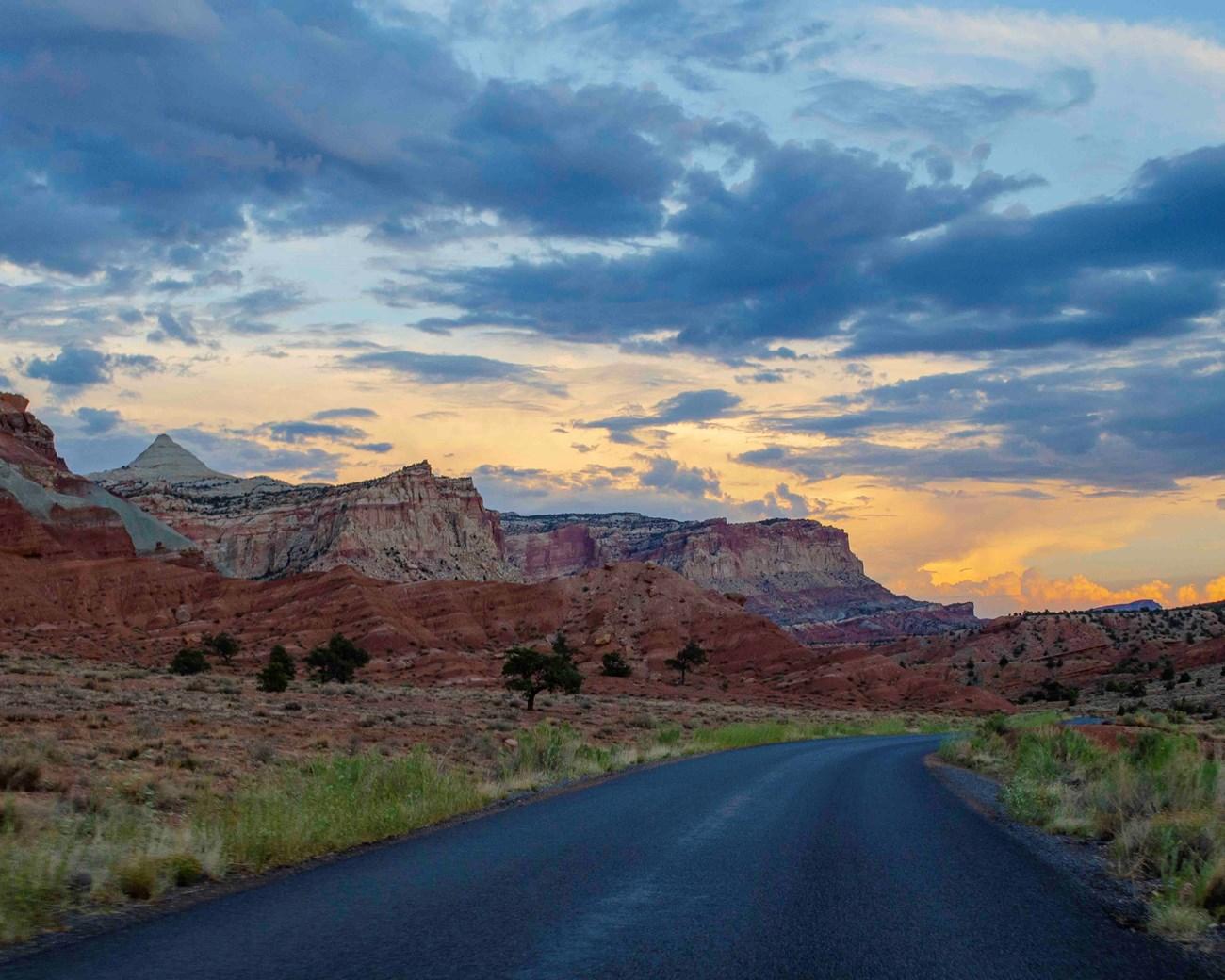 Capitol Reef National Park
, Utah, combines the Waterpocket Fold, red-rock canyons, Fruita orchards, scenic drives and hiking in vast desert country.
Capitol Reef National Park
Capitol Reef National Park, Utah, combines the Waterpocket Fold, red-rock canyons, Fruita orchards, scenic drives and hiking in vast desert country.
-

-

-


Swipe for more destinations
Explore more

Explore more of Canyonlands
Explore the untamed beauty of Canyonlands National Park in Utah, where dramatic landscapes and endless adventures await in a rugged wilderness setting.
Explore Canyonlands
Explore more of Utah
Explore Utah's stunning national parks, rich cultural heritage, and year-round outdoor adventures. Discover why this diverse state is a top destination for travelers.
Explore Utah