
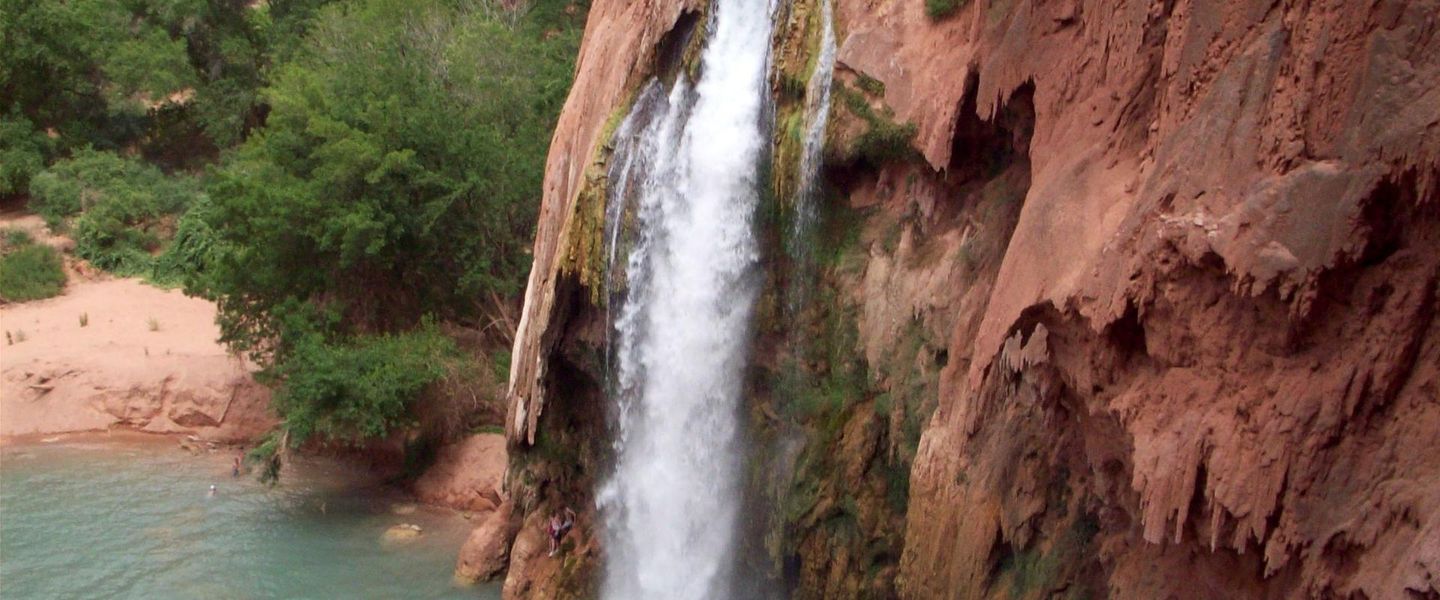
Havasu Falls, Arizona Travel Guide
Discover Havasu Falls in Arizona: A Hidden Gem with Turquoise Waters and Red Rock Cliffs, Perfect for Nature Lovers and Adventurers Seeking a Unique Experience.
Nestled deep within the Havasupai Reservation in Arizona, Havasu Falls is a breathtaking natural wonder renowned for its stunning turquoise blue waters cascading over vibrant red rocks. This enchanting waterfall is a must-see for nature lovers and adventurers alike. The falls are part of the Havasu Creek, which flows into the Colorado River, adding to the mesmerizing beauty of the Grand Canyon. Reaching Havasu Falls requires a bit of effort, as it involves a 10-mile hike from the trailhead at Hualapai Hilltop. The journey, however, is well worth it. The trail offers stunning desert landscapes, towering cliffs, and the chance to encounter local wildlife. Upon arrival, visitors are greeted with the sight of the falls plunging into a tranquil pool, perfect for a refreshing swim. The Havasupai people, who have lived in this area for centuries, manage the falls. Their rich culture and history add a unique dimension to the visit. Tourists are encouraged to respect the land and the customs of the Havasupai Tribe. Nearby, the village of Supai offers basic amenities and a glimpse into the lives of the local people. Exploring Havasu Falls provides not only a visual feast but also an opportunity to connect with the natural and cultural heritage of this unique destination.

Know before you go
Hi, I'm Eve. Here are a few practical things to know before exploring Havasu Falls.
- Book your permit well in advance; the area is highly regulated and permits sell out quickly.
- Pack light but ensure you have essentials like water, snacks, and a first-aid kit for the hike.
- Wear sturdy hiking boots; the trail can be rocky and uneven.
- Consider visiting in the off-season to avoid the crowds and enjoy a more serene experience.
- Respect the local customs and the environment; leave no trace and follow the guidelines set by the Havasupai Tribe.
Explore Havasu Falls: Things to Do, Places to Eat, Hotels & More
Handpicked recommendations for top attractions, local dining, accommodations, and more

Best attractions in Havasu Falls
Top-rated picks
Best Attractions

Havasupai Trailhead
Embark on an unforgettable backpacking adventure to the turquoise waterfalls of Havasu Canyon from the remote Havasupai Trailhead.

Havasupai Campground
Experience the magic of Havasupai: Turquoise waterfalls, stunning canyons, and a connection to the Havasupai Tribe's ancient heritage.

Little Navajo Falls
Discover the serene beauty of Little Navajo Falls, a hidden gem along Havasu Creek in the heart of the Havasupai Reservation.

Main Havasupai Rangers Office
Start your Havasupai adventure at the Rangers Office: Permits, safety info, and a glimpse into Havasupai culture await!


Best bars in Havasu Falls
Top-rated picks
Best Bars

The Havasupai Tribal Cafe
Discover authentic Havasupai cuisine at The Havasupai Tribal Cafe, your perfect pit stop in the Grand Canyon's stunning landscape.

Fry Bread Tent
Experience the authentic taste of Native American cuisine at Fry Bread Tent, a culinary delight amidst the stunning landscapes of Havasu Falls.

Best shops in Havasu Falls
Top-rated picks
Best Shops

Havasu Falls
Experience the breathtaking beauty of Havasu Falls, an iconic waterfall in Arizona's Grand Canyon, known for its turquoise waters and stunning landscapes.

Mooney Falls
Experience the breathtaking beauty of Mooney Falls, a natural wonder in Arizona, where adventure meets tranquility in the heart of Havasupai Canyon.

The Havasupai Tribal Cafe
Experience the rich flavors and warm hospitality of The Havasupai Tribal Cafe, where tradition meets breathtaking Grand Canyon vistas.

Beaver Falls
Explore the stunning turquoise waters and breathtaking landscapes of Beaver Falls, a hidden gem in Arizona's Havasupai Reservation.

Explore Havasu Falls on the Map
A handpicked selection of must-see spots in Havasu Falls, mapped for you.
Havasu Falls Essentials
-
Havasu Falls is located in the Havasupai Indian Reservation within the Grand Canyon, Arizona. The nearest major city is Flagstaff, approximately 200 miles away. To reach Havasu Falls, first drive to Hualapai Hilltop, the trailhead for the hike to the falls. From Flagstaff, take I-40 west to Seligman, then Route 66 to Indian Route 18, which leads to Hualapai Hilltop. The drive takes around 3-4 hours. From Hualapai Hilltop, it's an 8-mile hike to the Supai Village and an additional 2-mile hike to Havasu Falls. Alternatively, helicopter services are available from Hualapai Hilltop to Supai Village, or you can arrange for mule transport for your gear.
-
Once you arrive at the Hualapai Hilltop, the primary means of reaching Havasu Falls is by hiking. The trail is rugged and challenging, so be prepared with appropriate hiking gear. Helicopter services are available on certain days, offering a quicker, though more expensive, option to reach Supai Village. Mules can also be rented to carry gear. Within the Supai Village and surrounding falls area, walking is the main mode of transportation.
-
The official currency in the United States is the US Dollar (USD). In Supai Village, cash is the preferred method of payment, as credit card facilities are limited. Make sure to carry enough cash for your needs, including for meals, souvenirs, and any additional fees. There are no ATMs in the village, so plan accordingly.
-
Havasu Falls is generally a safe destination, but due to its remote location, it's important to take certain precautions. Always stay on marked trails and avoid hiking alone. Be aware of the weather conditions, as flash floods can occur. There are no high-crime areas specifically targeting tourists, but always keep an eye on your belongings and be cautious. The village and campsite are patrolled, and the local Havasupai tribe members are helpful and friendly.
-
In case of emergency, dial 911. There is a small medical clinic in Supai Village, but for serious medical emergencies, air evacuation may be necessary. Make sure you have travel insurance that covers such situations. Notify a ranger or local authority if you need assistance. For minor health issues, carry a well-stocked first-aid kit. Hydrate well and be aware of signs of heat exhaustion or dehydration.
-
Fashion: Do wear comfortable and appropriate clothing for hiking. Avoid wearing fashion items that are impractical for rugged terrain. Religion: Do respect the local Havasupai customs and traditions. Public Transport: Do use the helicopter or mule services respectfully and follow guidelines. Greetings: Do greet locals with respect and friendliness. A simple 'hello' or 'good day' is sufficient. Eating & Drinking: Do hydrate well and carry enough food and water. Don't litter; always pack out what you pack in.
-
To experience Havasu Falls like a local, take time to engage with the Havasupai people and learn about their culture and history. Visit the local store in Supai Village for basic supplies and souvenirs. Respect the natural environment by following Leave No Trace principles. Early morning hikes offer the best light for photography and cooler temperatures. Be sure to explore the other nearby waterfalls like Mooney Falls and Beaver Falls for a complete experience.
When is the best time to visit Havasu Falls?
Useful Local Phrases for Havasu Falls
You don't need to speak the language perfectly. Even learning a few simple words can make conversations warmer—and locals usually appreciate the effort.
— Eve

Here are the phrases I use most often in Havasu Falls. Try a few—you'll be surprised how far they go! 😊
❤️
-
- HelloYá'át'ééh
[yah-ah-tay] - GoodbyeHa'íí adíí
[ha-ee ah-dee] - YesHaa
[haa] - NoT'a'
[ta] - Please/You're welcomeBéésh baa hózhǫ́ǫ
[beh-sh bah hoh-zhoh] - Thank youAhe'hee
[ah-hay-hee] - Excuse me/SorryAak'eed
[ah-keed] - How are you?Anííníshní
[ah-nee-nee-shnee] - Fine. And you?Hózhó. Áá'áníníshní?
[hoh-zhoh. ah-ah-nee-nee-shnee] - Do you speak English?Baa shíni dooleeł?
[bah shee-nee doh-lay-l] - I don't understandDoo akóó hózhǫ́ǫ
[doh ah-koh hoh-zhoh]
- HelloYá'át'ééh
-
- I'd like to see the menu, pleaseHaa'óósh t'éego ánít'é
[haa-oh-sh tay-go ah-nee-tay] - I don't eat meatNaaldlooshii bizaad
[nah-ald-loh-shii bee-zaad] - Cheers!Ahe'hee
[ah-hay-hee] - I would like to pay, pleaseHaa'óósh baa yá'át'ééh
[haa-oh-sh bah yah-ah-tay]
- I'd like to see the menu, pleaseHaa'óósh t'éego ánít'é
-
- Help!Tááshé
[taa-shey] - Go away!T'áá hwó'ó
[taa hwoh-oh] - Call the Police!Bilasáana baa hózhóogo
[bee-lah-saa-nah bah hoh-zhoh-go] - Call a doctor!Bilasáana baa nááts'ózí
[bee-lah-saa-nah bah nah-tsoh-zee] - I'm lostNíłch'íí'
[neel-chi] - I'm illNíłch'íí'
[neel-chi]
- Help!Tááshé
-
- I'd like to buy...Haa'óósh bee nihiké
[haa-oh-sh bee nee-hee-kay] - I'm just lookingBihédah baa
[bee-hay-dah bah] - How much is it?Béésh bee dóó haa
[beh-sh bee doh haa] - That's too expensiveT'áá hwó'ó
[taa hwoh-oh] - Can you lower the price?Béésh bee dóó bidziil yída?
[beh-sh bee doh bee-zee-yil yee-dah]
- I'd like to buy...Haa'óósh bee nihiké
-
- What time is it?T'áá hwó'ó
[taa hwoh-oh] - It's one o'clockHwó'ó táá éí
[hwoh-oh taa ay] - Half past (10)Naakai
[nah-kai] - MorningHózhǫ́ǫ
[hoh-zhoh] - AfternoonT'áá hwó'ó
[taa hwoh-oh] - EveningHwó'ó hahoodzo
[hwoh-oh hah-hoo-dzoh] - YesterdayHawííł
[hah-wee-ll] - TodayYá'át'ééh
[yah-ah-tay] - TomorrowAnííníshní
[ah-nee-nee-shnee] - 1Táá'
[taa] - 2Naaki
[nah-kee] - 3Tááłá'
[taa-laa] - 4Dį́į́'
[dee-dee] - 5Asdzą́ą́'
[ah-sdzaan] - 6Hastą́ą́'
[hah-staan] - 7Tseebíí'
[tsee-bee] - 8T'ááłá'
[taa-laa] - 9Náhást'éí
[nah-has-tay-ee] - 10Dį́į́'
[dee-dee]
- What time is it?T'áá hwó'ó
-
- Where's a/the...?Háásh
[haash] - What's the address?Ahxéheeł
[ah-hay-hay-l] - Can you show me (on the map)?Áko'ó
[ah-koh-oh] - When's the next (bus)?Yá'át'ééh
[yah-ah-tay] - A ticket (to ....)Haa'óósh yinishyé
[haa-oh-sh yee-neesh-yay]
- Where's a/the...?Háásh
History of Havasu Falls
-
The Havasupai people, known as the 'People of the Blue-Green Waters,' have inhabited the Grand Canyon region for over 800 years. Their name is derived from the vibrant turquoise waters of Havasu Creek. The Havasupai have a deep connection to the land and water, which are central to their cultural and spiritual practices.
-
The first recorded European contact with the Havasupai tribe occurred in the late 18th century when Spanish explorers ventured into the region. The tribe managed to maintain much of their autonomy due to the remoteness of their homeland, though there were sporadic interactions with explorers and settlers over the years.
-
In 1882, the United States government established the Havasupai Reservation, which initially encompassed only a small portion of the tribe's ancestral lands. This limited area constrained their traditional way of life, but over time, the reservation was expanded to better accommodate their needs.
-
By the early 1900s, word of the stunning beauty of Havasu Falls began to spread, attracting adventurous tourists. The Havasupai tribe started to guide visitors to the falls, sharing their knowledge of the land and culture. This marked the beginning of tourism as a significant aspect of the local economy.
-
Throughout the 20th century, both the Havasupai tribe and various environmental organizations have worked to preserve the natural beauty of Havasu Falls. These efforts include managing visitor access to reduce environmental impact and implementing sustainable tourism practices.
-
Today, Havasu Falls is a sought-after destination for nature lovers and adventurers from around the world. The Havasupai tribe continues to manage the area, balancing the influx of tourists with the preservation of their cultural heritage and the natural environment. Visitors are required to obtain permits and follow guidelines to ensure the falls remain pristine for future generations.
Neighbouring destination travel guides
Browse our curated selection of top destinations, scenic points, and must-visit spots in the area.




Your all‑in‑one travel companion app
Explore expert travel guides, compare and book tours, experiences, hotels, and more—all from the palm of your hand. Download now for seamless trip planning wherever your wanderlust takes you.


Explore More of Grand Canyon
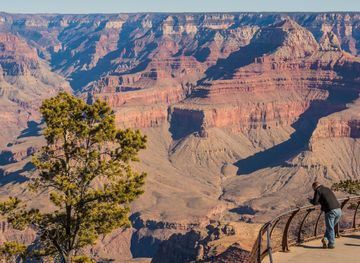
Looking beyond Havasu Falls? Discover Grand Canyon for broader travel guides, local hot-spots, and regional highlights.
Explore Grand CanyonExplore More of Arizona

Looking beyond Havasu Falls? Discover Arizona for broader travel guides, local hot-spots, and regional highlights.
Explore ArizonaHavasu Falls in Photos
Browse through our photo collection highlighting the charm and character of the destination.


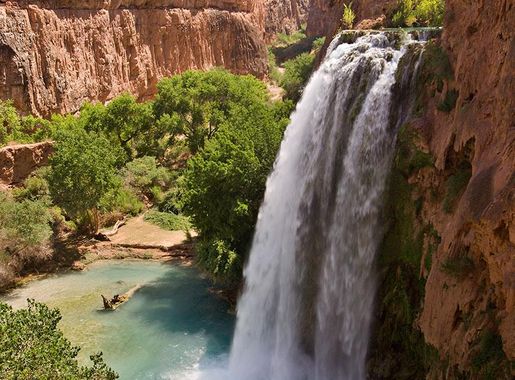


Havasu Falls: A Natural Oasis in the Heart of the Grand Canyon
Nestled deep within the Havasupai Reservation in Arizona, Havasu Falls is a breathtaking natural wonder renowned for its stunning turquoise blue waters cascading over vibrant red rocks. This enchanting waterfall is a must-see for nature lovers and adventurers alike. The falls are part of the Havasu Creek, which flows into the Colorado River, adding to the mesmerizing beauty of the Grand Canyon. Reaching Havasu Falls requires a bit of effort, as it involves a 10-mile hike from the trailhead at Hualapai Hilltop. The journey, however, is well worth it. The trail offers stunning desert landscapes, towering cliffs, and the chance to encounter local wildlife. Upon arrival, visitors are greeted with the sight of the falls plunging into a tranquil pool, perfect for a refreshing swim. The Havasupai people, who have lived in this area for centuries, manage the falls. Their rich culture and history add a unique dimension to the visit. Tourists are encouraged to respect the land and the customs of the Havasupai Tribe. Nearby, the village of Supai offers basic amenities and a glimpse into the lives of the local people. Exploring Havasu Falls provides not only a visual feast but also an opportunity to connect with the natural and cultural heritage of this unique destination.