Skjoldnaes Lighthouse Travel Guide
Free Guide: Granite tower on Ærø’s far northwestern tip, Skjoldnæs Lighthouse blends big‑sky sea views, Ice Age geology and quiet legend into one wild, windwashed headland.


A brief summary of Skjoldnaes Lighthouse
Granite tower on Ærø’s far northwestern tip, Skjoldnæs Lighthouse blends big‑sky sea views, Ice Age geology and quiet legend into one wild, windwashed headland.
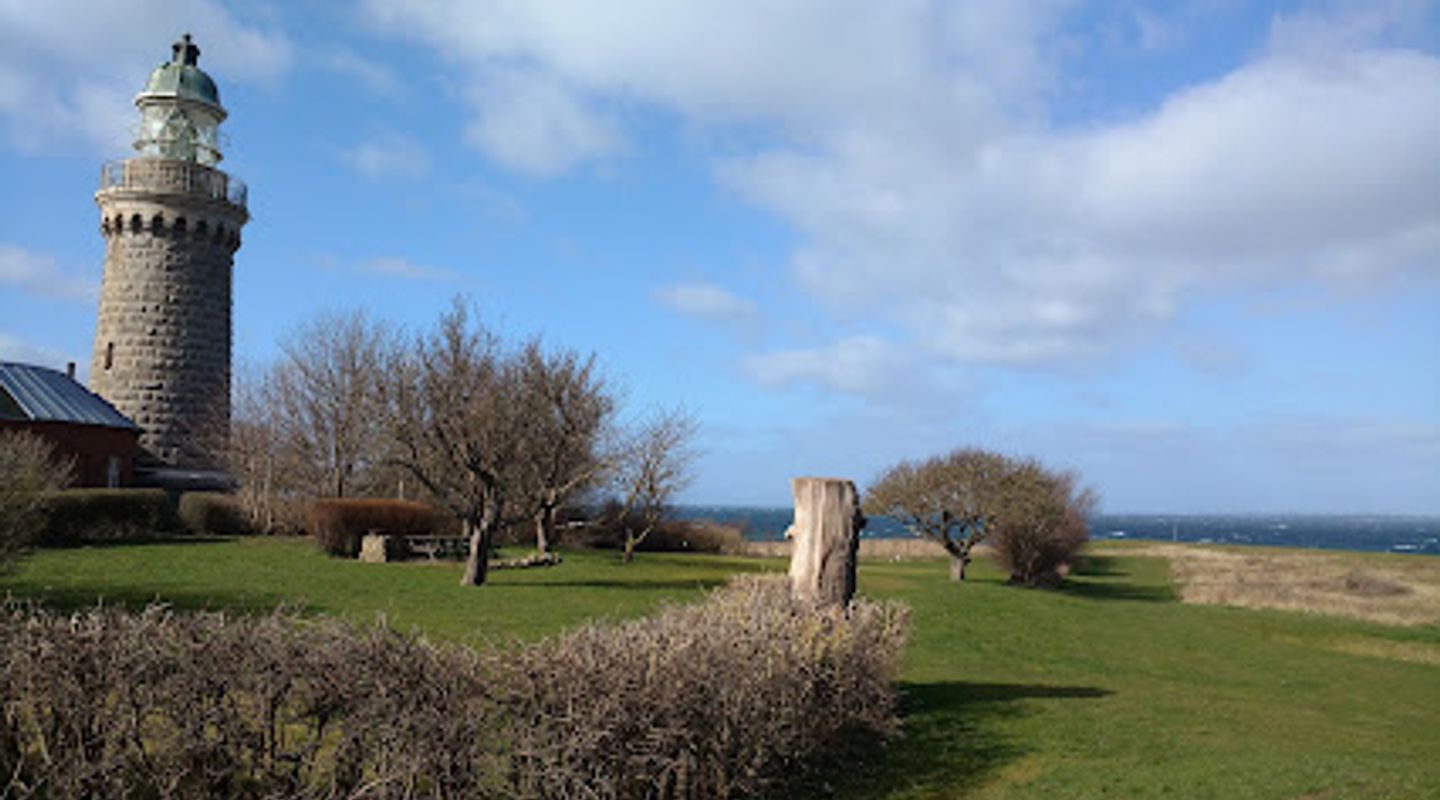
Standing sentinel at the northwestern tip of Ærø, Skjoldnæs Lighthouse is a handsome granite tower surrounded by sea on three sides and framed by a seaside golf course. Built in 1881 from finely cut Bornholm granite, the 22 m lighthouse offers sweeping views over the South Funen Archipelago and, on clear days, all the way to Germany and surrounding islands. Open around the clock for a modest fee, it is as much a place for quiet coastal walks and geology-rich shorelines as for sunset photos and stargazing from the lantern gallery.
On-site amenities
 Restrooms
 Seating areas
 Trash bins
 Information boards
- Address
- Skjolnæs Fyr, Skjoldnæsvej, 5985 Søby Ærø
Getting there
Local bus from Ærøskøbing or Søby
Car or rental car on Ærø
Bicycle across the island
Discover more about Skjoldnaes Lighthouse
An island sentinel on Ærø’s wild northwest tip
Skjoldnæs Lighthouse crowns the narrow peninsula that forms the northwestern tip of Ærø, surrounded by water on three sides and buffeted by Baltic winds. Here the landscape feels wonderfully exposed: low fields, a fringe of rough coastal grass and the steady pulse of waves against the shore. The tower itself rises cleanly from this setting, a reference point for sailors and a natural full stop to the island’s long ridge.From the base of the lighthouse, the sea seems close in every direction. To the east lie views toward the South Funen Archipelago, while to the west the horizon dissolves into open water. The sense of being at the very edge of Ærø is strong, making this one of the island’s most atmospheric places to simply stand, look and breathe in the salt air.
Granite craftsmanship and a working coastal light
The lighthouse was completed in 1881, built by Swedish stonemasons who shaped fine Bornholm granite into a round tower with a subtle taper and precise joints. The structure stands about 22 m high, with its lantern set roughly 32 m above sea level, giving the light a far-reaching range over nearby shipping routes. Its flash pattern, a single pulse roughly every half minute, remains a familiar signal in local waters.Up close, you can trace the careful stonework in the stairwell and exterior courses, and feel the cool, slightly rough texture of the granite blocks. Iron details, small windows set deep into thick walls and the compact lantern room all speak of practical 19th‑century engineering, built to withstand decades of storms without drama or ornament.
Climbing to one of Denmark’s wide island views
Inside, a narrow, spiralling stair leads you towards the lantern. With each step the slit windows frame a little more sea and sky until you emerge onto the gallery that encircles the light. In clear weather, the panorama stretches over the Baltic Sea, the Little Belt waters and the islands of Als, Lyø, Bjørnø and Avernakø, with the low shapes of the “Funen Alps” in the distance.From this height, the 4.5 km Skjoldnæs peninsula reveals its shape: a tongue of land 600–800 m wide, patched with fields and edged by pale beaches, salt marsh and stony foreshore. To one side you look down over the greens and fairways of Ærø Golf Club, laid out as a classic seaside links, to the other you watch freighters and ferries sliding across the archipelago.
Dead‑ice hills, angular forelands and a restless coast
Beyond its maritime role, Skjoldnæs is also a textbook of Ice Age geology. The peninsula sits along an old ice‑margin line from the retreat of the so‑called Lillebælt glacier some 17,500 years ago. As the ice pulled back, blocks of dead ice were left behind and slowly melted, creating the knobbly dead‑ice topography visible in the low hills and depressions inland.Down on the coast, eroding cliffs reveal older layers of soft freshwater clay and mussel‑rich marine deposits from the last interglacial period. On the northeast shore, opposing currents have built a sharply angled foreland, a triangular fan of salt marsh and shingle that locals know simply as “the Beak”. Drainage ditches and borrow pits hint at former gravel and flint extraction, when stone from this shore helped build distant canals and fed porcelain mills.
Legends, starlight and quiet coastal wandering
Just inland from the beach path is the hollow known as Dronningens Hule, the Queen’s Cavern. A local legend tells of a young queen whose ship foundered offshore in an autumn storm; her body, cast up on the Skjoldnæs shore, was laid to rest in this sheltered dip in the landscape, giving the place its poignant name. Whether you treat it as folklore or history, it adds a gentle note of storytelling to a walk between lighthouse and sea.Today, the former keeper’s house serves as the clubhouse of Ærø Golf Club, and the area around the tower is freely accessible, with a small fee for climbing to the top. After dark, the site becomes an excellent stargazing spot thanks to low light pollution and wide horizons. By day, visitors wander the shore, study information about the geology, watch seabirds over the salt marshes and linger on the benches around the tower, letting the slow rhythm of the island sink in.
Evendo Review Centre
 Google
Guest reviews
Best time to go
Quietest: Jan, Feb & Mar · before 6am or from 10pm
Busy times are Evendo estimates for a typical year, to help you plan. Actual crowds vary with events, school holidays and the weather.
Explore Skjoldnaes Lighthouse on the map
A handpicked selection of must-see spots near Skjoldnaes Lighthouse, mapped for you.
Get your free copy of our complete guide to Skjoldnaes Lighthouse, delivered straight to you.
Everything on this page, from opening hours and how to get there to Eve’s tips and the best time to go, in one PDF you can read offline, print or share.
Already have an account? Sign in
Your Skjoldnaes Lighthouse guide is ready.
We'll send it to · Not you? Sign out

Getting your guide ready…
We are putting together a fresh copy of the Skjoldnaes Lighthouse guide. This can take up to a minute.
This can take a few moments. If your browser asks, choose Allow so the download can start. You'll find the guide in your Downloads folder.
Nothing happened? Download it again
Sorry, the guide is taking longer than usual. Please try again in a minute, or get it by email instead.
Other nearby places you may find interesting
The closest places of the same kind, if this one is not quite what you had in mind.
-
-
-
-
-


Swipe for more places
More to explore near Skjoldnaes Lighthouse

 Best experiences near Skjoldnaes Lighthouse
 Best hotels near Skjoldnaes Lighthouse
 Best landmarks near Skjoldnaes Lighthouse
 Best attractions near Skjoldnaes Lighthouse
 Best shops near Skjoldnaes Lighthouse
 Best restaurants near Skjoldnaes Lighthouse
 Best bars near Skjoldnaes Lighthouse
Do you manage this location?
Take control to get all the benefits, like improved information, better appearance, and stronger visibility across AI-powered discovery.
Explore more
Explore more of Aero
Discover the tranquil beauty of Ærø, Denmark's charming island paradise with historic towns, scenic landscapes, and rich maritime heritage.
Explore Aero
Explore more of Denmark
Discover Denmark: A perfect blend of history, modern design, and the cozy concept of hygge. Explore vibrant cities, serene landscapes, and world-class cuisine.
Explore Denmark