Bornholms Middelaldercenter Travel Guide
Free Guide: Step into a re‑created medieval Bornholm of manors, mills, craftsmen and archers, where hands‑on history, island scenery and family‑friendly storytelling meet.


A brief summary of Bornholms Middelaldercenter
Step into a re‑created medieval Bornholm of manors, mills, craftsmen and archers, where hands‑on history, island scenery and family‑friendly storytelling meet.
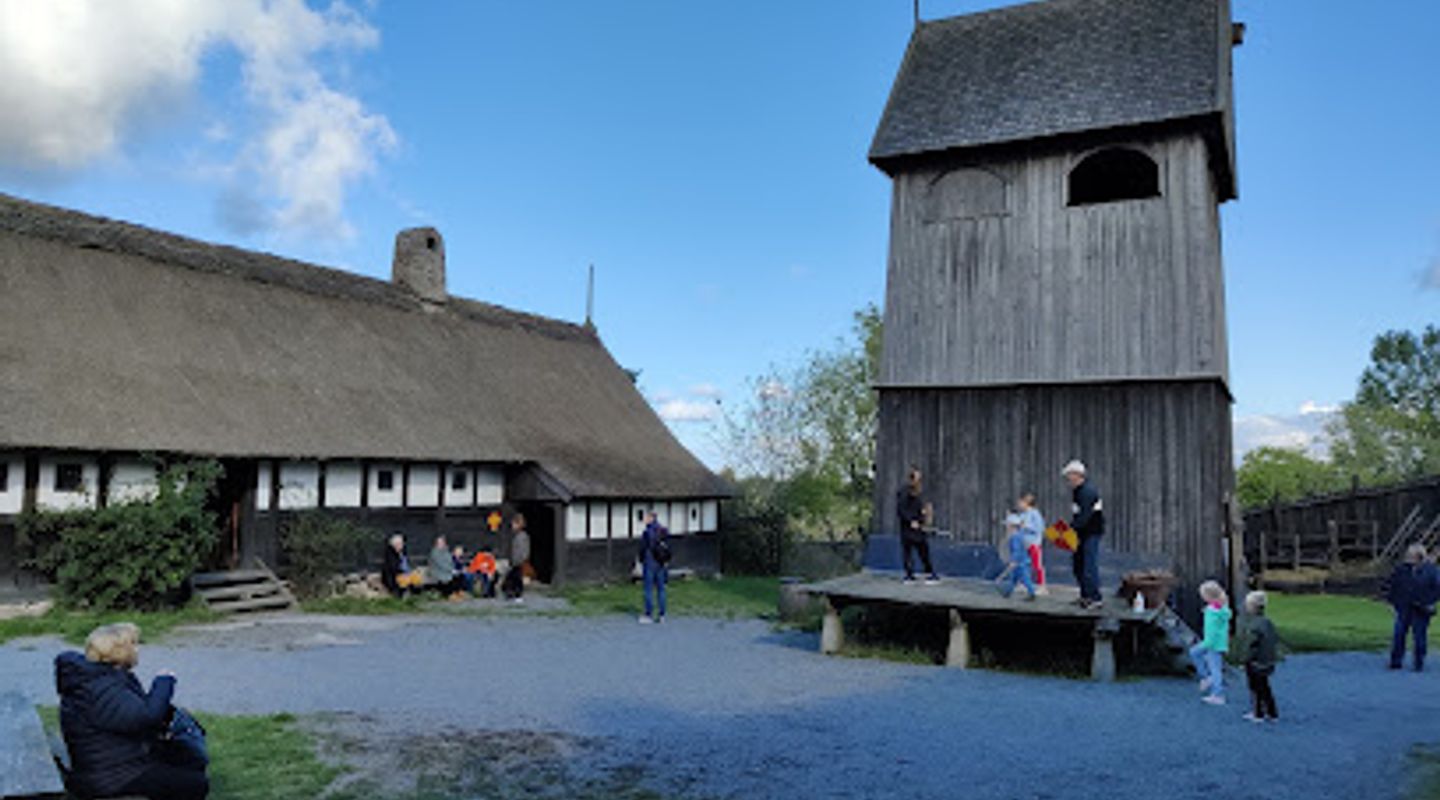
Bornholms Middelaldercenter, near Østerlars just outside Gudhjem on Bornholm, is an expansive open‑air medieval world where a fortified manor, watermill, craft houses and farmsteads bring the 14th century to life. Costumed interpreters, live demonstrations, animals and hands‑on activities like archery and old games make this a standout family attraction, blending playful learning with an evocative Baltic island landscape rich in history.
On-site amenities
 Restrooms
 Drink options
 Drinking water
 Food options
 Seating areas
 Sheltered areas
 Picnic areas
 Trash bins
 Information boards
 Visitor centre
Opening hours
- Mon–Sat11 am–3 pm
- SunClosed
Opening hours as listed on the venue’s Google Business Profile. Hours can change for services and special events, so check with the venue before you go.
- Address
- Stangevej 1, 3760 Gudhjem
- Phone
- Website
Getting there
Bus from Gudhjem
Bus from Rønne and central Bornholm
Taxi from Gudhjem or Rønne
Cycling from nearby villages
Discover more about Bornholms Middelaldercenter
A medieval island world brought back to life
Bornholms Middelaldercenter is an open‑air historical centre set in rolling countryside just inland from Gudhjem, where fields, forest and rocky outcrops frame a carefully re‑created medieval community. Focused on the years around 1300–1450, it feels more like stepping into a living village than visiting a conventional museum. Paths lead between simple farmhouses, fenced paddocks and a grand fortified residence, with the Baltic light and Bornholm’s characteristic bedrock shaping the backdrop.Rather than glass cases, the emphasis here is on immersive storytelling. Timber buildings lean slightly, smoke drifts from hearths and tools are left out as if their owners have just stepped away. The nearby Østerlars round church underlines how closely the centre is tied to Bornholm’s medieval landscape, and makes it easy to imagine how strategic this island once was in the Baltic power game.
The fortified manor at the heart of the story
The visual and narrative anchor of the site is a large fortified manor, encircled by an earthen rampart and wooden palisade. Towers rise above the walls and, inside, a frescoed great hall hints at the wealth and authority of the local elite. Here you can trace the social hierarchy of late‑medieval Bornholm, from noble residence to service rooms and storage spaces.Stepping into the painted hall, you are surrounded by colourful wall decorations inspired by medieval motifs, long tables and heavy benches that suggest feasts, negotiations and celebrations. The contrast between this refined space and the humbler peasant dwellings scattered outside highlights the gap between manor life and ordinary farm households, while still keeping everything within a walkable, coherent setting.
Craft, labour and the rhythm of rural life
Around the manor, smaller houses and workshops illustrate the many skills needed to keep a community running. A working smithy demonstrates how weapons, tools and fittings were forged, while nearby craft houses focus on textiles, woodwork and simple domestic tasks. During the main season, staff in period dress grind grain in a small watermill, tend gardens and fields, and handle traditional equipment.Footpaths link enclosures with historic breeds of farm animals, showing how livestock shaped daily routines and prosperity. You see how agriculture, craft and defence intertwined in a landscape that had to be largely self‑sufficient. The open layout encourages wandering and pausing: you might watch a cannon or hand‑gun being fired on the rampart at set times, then slip back to quieter corners to listen to the mill stream and birds in the surrounding woods.
Hands-on history for curious families
Bornholms Middelaldercenter is particularly geared towards families, with many activities designed for children to touch, try and play. Archery ranges, armour demonstrations and old‑fashioned games give younger visitors a visceral sense of what it meant to be a foot soldier or farm child in the 14th century. In an indoor activity room, simple experiments and themed tasks continue the experience even if the weather turns.A small archaeological dig area lets children carefully scrape away sand in search of buried objects, turning abstract talk of “finds” into something tangible. Seasonal programmes expand the offer with pirate‑themed exhibitions about Baltic sea raiders, medieval shows and special weeks where tents, stalls and extra workshops fill the grounds. The balance of fun and information makes it easy to spend the better part of a day without anyone losing interest.
Bornholm’s wider medieval tapestry
The centre also acts as a hub for exploring Bornholm’s broader medieval heritage. The island once sat at the crossroads of Danish, German, Swedish and Hanseatic ambitions, and traces of that strategic importance remain in castle ruins such as Hammershus, in distinctive churches and in place names. Staff from the centre are involved in interpretation and educational work at several of these sites, connecting the reconstructed village with real historical ruins.Within the grounds, information boards place the buildings and activities in this wider context, weaving in stories of trade routes, piracy in the Baltic and shifting alliances. For visitors, this means that a day here is not only about watching smiths at work or firing arrows; it also becomes a way to understand how a small rocky island could play an outsized role in northern European history, all while you walk between timber walls, grazing animals and the soft contours of Bornholm’s interior landscape.
Evendo Review Centre
 Google
Guest reviews
Best time to go
Quietest: Jan, Feb & Nov · before 8am or at 8pm
Busy times are Evendo estimates for a typical year, to help you plan. Actual crowds vary with events, school holidays and the weather.
Explore Bornholms Middelaldercenter on the map
A handpicked selection of must-see spots near Bornholms Middelaldercenter, mapped for you.
Get your free copy of our complete guide to Bornholms Middelaldercenter, delivered straight to you.
Everything on this page, from opening hours and how to get there to Eve’s tips and the best time to go, in one PDF you can read offline, print or share.
Already have an account? Sign in
Your Bornholms Middelaldercenter guide is ready.
We'll send it to · Not you? Sign out

Getting your guide ready…
We are putting together a fresh copy of the Bornholms Middelaldercenter guide. This can take up to a minute.
This can take a few moments. If your browser asks, choose Allow so the download can start. You'll find the guide in your Downloads folder.
Nothing happened? Download it again
Sorry, the guide is taking longer than usual. Please try again in a minute, or get it by email instead.
Other nearby places you may find interesting
The closest places of the same kind, if this one is not quite what you had in mind.
-
Hammershus Castle Ruins Bornholm’s great clifftop fortress, where vast medieval ruins, Baltic Sea panoramas and a striking modern visitor centre bring 800 years of history to life.
-
Opal Lake A flooded granite quarry turned emerald lake, Opal Lake on Bornholm blends raw cliffs, deep clear water and coastal views with swimming, cliff jumps and rugged trails.
-
Bornholms Rovfugleshow Immersive birds-of-prey shows and evolution-themed encounters on Bornholm, where owls, falcons, reptiles and farm animals turn science into a full, family-friendly day out.
-
Bornholmertarnet Former top-secret NATO listening post turned Cold War museum, crowned by a 70 m viewing tower with sweeping panoramas over Dueodde and eastern Bornholm.
-
Hammeren Lighthouse Compact granite lighthouse on Bornholm’s highest headland, offering free summer access, sweeping Baltic views and heather-clad coastal walking trails.
Swipe for more places
More to explore near Bornholms Middelaldercenter
-
 Best experiences near Bornholms Middelaldercenter
-
 Best hotels near Bornholms Middelaldercenter
-
 Best landmarks near Bornholms Middelaldercenter
-
 Best attractions near Bornholms Middelaldercenter
-
 Best shops near Bornholms Middelaldercenter
-
 Best restaurants near Bornholms Middelaldercenter
-
 Best bars near Bornholms Middelaldercenter







Do you manage this location?
Take control to get all the benefits, like improved information, better appearance, and stronger visibility across AI-powered discovery.
Explore more

Explore more of Bornholm
Explore Bornholm: Denmark's Baltic gem, offering stunning nature, rich history, and vibrant local culture. Perfect for nature lovers, history buffs, and food enthusiasts.
Explore Bornholm
Explore more of Denmark
Discover Denmark: A perfect blend of history, modern design, and the cozy concept of hygge. Explore vibrant cities, serene landscapes, and world-class cuisine.
Explore Denmark