Østerlars Church, Bornholm Travel Guide
Denmark’s largest round church, Østerlars blends 12th‑century stone fortification, vivid medieval frescoes and Viking rune stones in a single atmospheric Bornholm landmark.
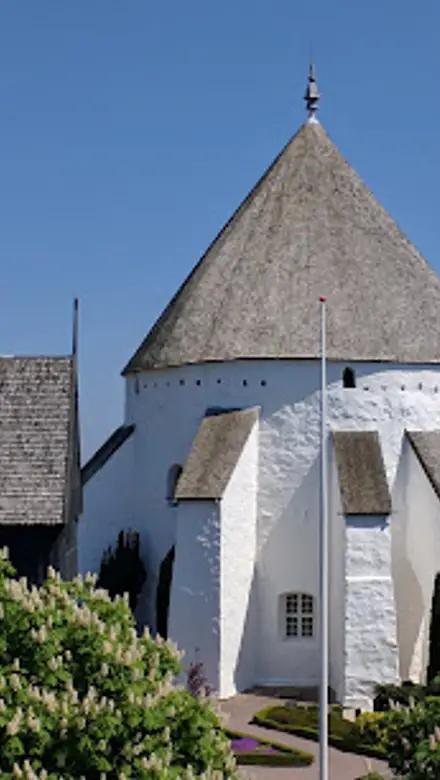
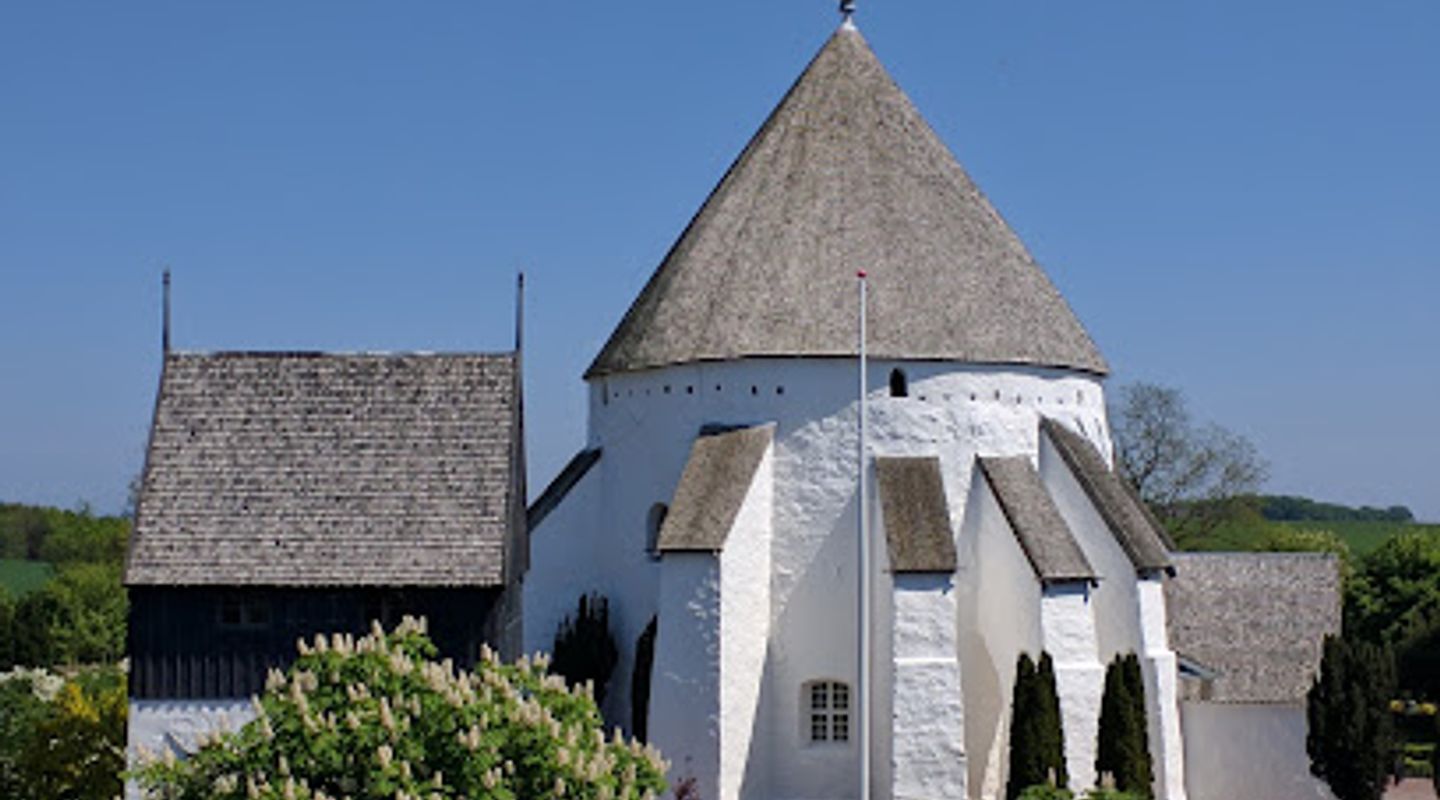
Østerlars Church on Bornholm is Denmark’s largest and likely oldest round church, a striking whitewashed Romanesque landmark dating from the mid‑12th century. Originally built as both sanctuary and fortification, it combines massive circular stone walls, a hollow central pillar, and a separate bell tower in a peaceful churchyard. Inside, 14th‑century frescoes circle the core column with vivid biblical scenes and Judgment Day imagery, while rune stones and upper levels hint at the island’s Viking past and medieval defensive role.
A brief summary to Østerlars Church
- Vietsvej 25, Gudhjem, 3760, DK
- Click to display
- Click to display
- Duration: 0.5 to 1.5 hours
- Budget
-
 Mixed
Mixed
- Mobile reception: 4 out of 5
- Monday 9 am-5 pm
- Tuesday 9 am-5 pm
- Wednesday 9 am-5 pm
- Thursday 9 am-5 pm
- Friday 9 am-5 pm
- Saturday 9 am-5 pm
- Sunday 12 pm-5 pm

Know before you go
Hi, I'm Eve. Here are a few practical things to know before exploring Østerlars Church.
- Bring a light jacket even in summer; the thick stone walls keep the circular interior noticeably cooler than the outside air.
- Have a few Danish kroner or a payment card ready for the modest entrance fee charged outside service times.
- If you plan to climb to the upper levels, wear stable shoes and be prepared for narrow, steep stairways built into the walls.
- Build in extra time to study the 14th‑century fresco cycle on the central pillar; walking around it slowly reveals the biblical story scene by scene.
- Pause by the rune stones inside the porch and in the churchyard to trace the bridge between Bornholm’s Viking era and its Christian middle ages.
Do you manage this location?
Take control to get all the benefits, like improved information, better appearance, and stronger visibility across AI-powered discovery. Learn more about listing your business on Evendo
Activate your presenceOther nearby places you may find interesting
The closest places of the same kind, if this one is not quite what you had in mind.
Explore Østerlars Church on the Map
A handpicked selection of must-see spots near Østerlars Church, mapped for you.
Unlock the Best of Østerlars Church
Buy tickets
-
No tickets available
Book tours with entry

Book tours without entry
-
No tours available
Getting There
-
Car from Gudhjem town
From central Gudhjem, driving to Østerlars Church typically takes about 10–15 minutes, following the main inland road across the short distance between town and church. Expect straightforward, well‑paved roads with occasional slow‑moving local traffic and cyclists. Parking is usually available in a designated area near the churchyard, and there is no separate parking fee, but spaces can fill up quickly in peak summer hours.
-
Local bus within Bornholm
Bornholm’s regional buses link Gudhjem and nearby villages with stops a short walk from Østerlars Church, with journeys usually taking 10–20 minutes depending on the route and season. A single adult ticket on these local buses is generally in the range of 25–40 DKK, with services running more frequently in summer and less often in winter. Check current timetables in advance, as evening and weekend departures may be limited.
-
Cycling from Gudhjem and surroundings
The gently hilly countryside around Gudhjem makes cycling to Østerlars Church a popular choice, with typical travel times of 20–35 minutes from Gudhjem depending on fitness and wind conditions. Dedicated bike routes and minor roads reduce interaction with faster car traffic, though there are some short climbs as you head inland. Renting a bicycle for a half or full day on Bornholm usually costs around 80–200 DKK, and you can leave bikes in informal parking areas near the church entrance.
For the on-the-go comforts that matter to you
-
 Restrooms
-
 Drink Options
-
 Drinking Water
-
 Food Options
-
 Seating Areas
-
 Sheltered Areas
-
 Trash Bins
-
 Information Boards
-
 Visitor Center
Discover more about Østerlars Church
A round white fortress in the Bornholm countryside
Østerlars Church rises from the rolling landscape of Bornholm like a whitewashed stone drum, capped with a dark conical roof and encircled by a quiet graveyard. Built around the mid‑1100s and dedicated to St Lawrence, it is the largest and probably the oldest of the island’s four medieval round churches. Its unusual circular plan immediately reads more like a compact fortress than a typical village church.The structure is Romanesque at heart: thick fieldstone walls resting on local limestone foundations, small original window openings later enlarged, and sturdy buttresses added in the 16th century to brace the outer wall. A separate, squat bell tower in the churchyard once served as a gate tower, underlining the building’s defensive purpose when seaborne threats loomed across the Baltic.Defensive design and mysterious central column
Step inside and the building’s military logic becomes clear. The large round nave, about sixteen metres across, is wrapped around a massive hollow central pillar sometimes called “the oven.” Higher levels once functioned as galleries and, in the top storey, as an open shooting platform where defenders could observe and, if needed, repel attackers.Narrow stairways are built into the thickness of the walls, leading to upper floors that reveal the layered construction of the church from within. The circular circulation, heavy stonework and dim light give a strong sense of enclosure, as if the architecture were designed as much for siege as for sermon.Medieval frescoes and carved church treasures
The central pillar is encircled by 14th‑century frescoes that read almost like a painted storyboard of the Christian narrative. Beginning with the Annunciation and birth of Christ, the scenes move through key episodes of his life and Passion, ending in a vivid Last Judgment where Christ weighs souls and the damned tumble toward a dragon‑like hellmouth.These murals were limewashed over after the Reformation and only rediscovered and restored in the late 19th and 20th centuries, so their colours and details feel surprisingly fresh. Around them, later furnishings chart changing tastes: a late‑16th‑century pulpit with carved panels, a richly ornamented altarpiece from around 1600, and more recent fittings that allow the church to function as a living parish rather than a static monument.Runestones and traces of earlier faiths
In the porch and churchyard you can see rune stones carved centuries before the church itself. One stone dating from the late Viking age stands outside, while another, slightly later, is incorporated inside the building. Their intertwined animal motifs and runic inscriptions hint at a society in transition from Norse belief to Christianity.Together with the round plan, these stones feed enduring speculation about the site’s deeper past. Some theories link Bornholm’s round churches with the Knights Templar or with medieval observatories, though no firm evidence confirms these ideas. What is certain is that Østerlars occupies a strategic position in the landscape and anchors a long continuum of sacred and symbolic use.Experiencing Østerlars today
Today the church still hosts regular services and ceremonies, while welcoming visitors during posted opening hours. There is usually a small entrance fee for sightseeing, which helps support maintenance of the medieval fabric and frescoes. In quieter moments you may hear only the creak of the timber roof above and the muffled sounds of the wind outside, lending the interior an almost monastic calm.A walk around the churchyard reveals carefully tended graves, stone paths and views across surrounding fields that underline how rural Bornholm still feels. Climbing to the upper levels, where permitted, offers close‑up views of the roof structure and glimpses out over the landscape, connecting the church’s fortified past with its present role as one of Denmark’s most distinctive historic churches.












Your all‑in‑one travel companion app
Explore expert travel guides, compare and book tours, experiences, hotels, and more—all from the palm of your hand. Download now for seamless trip planning wherever your wanderlust takes you.


Explore More of Bornholm

Looking beyond Østerlars Church? Discover Bornholm for broader travel guides, local hot-spots, and regional highlights.
Explore Bornholm
A quietly curious glacial boulder hidden in Almindingen Forest, Rokkestenen invites you to step off the path, brace your hands and feel ancient granite gently move.
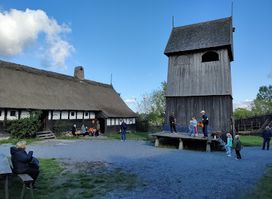
Step into a re‑created medieval Bornholm of manors, mills, craftsmen and archers, where hands‑on history, island scenery and family‑friendly storytelling meet.