

Hammershus Castle Ruins Travel Guide
Free Guide: Bornholm’s great clifftop fortress, where vast medieval ruins, Baltic Sea panoramas and a striking modern visitor centre bring 800 years of history to life.


A brief summary of Hammershus Castle Ruins
Bornholm’s great clifftop fortress, where vast medieval ruins, Baltic Sea panoramas and a striking modern visitor centre bring 800 years of history to life.
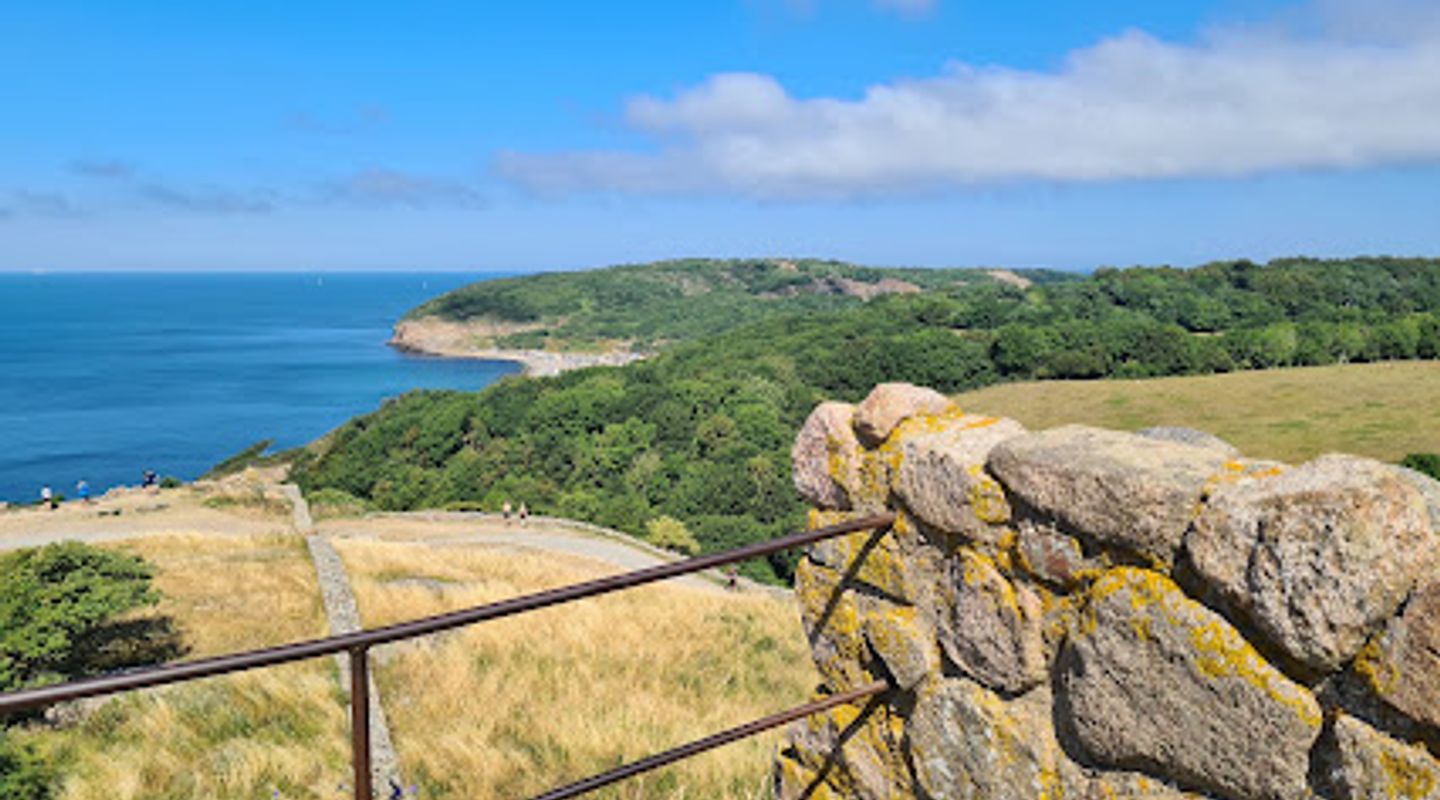
Perched dramatically on a cliff above the Baltic Sea at the northern tip of Bornholm, Hammershus Castle Ruins is the largest castle ruin in Northern Europe and one of Denmark’s most evocative historic sites. This sprawling medieval fortress, once the island’s power centre and a key stronghold in Baltic politics, now offers atmospheric stone walls, winding paths and sweeping sea views. Free to visit year-round, it combines layered history with rugged coastal scenery and an excellent modern visitor centre.
On-site amenities
 Restrooms
 Drink options
 Drinking water
 Food options
 Seating areas
 Sheltered areas
 Trash bins
 Information boards
 Visitor centre
- Address
- Langebjergvej 26, 3770 Allinge
- Phone
- Website
Getting there
Bus from Rønne
Car from Rønne
Cycling on Bornholm
Discover more about Hammershus Castle Ruins
Clifftop Stronghold Above the Baltic
Hammershus rises from a rocky headland on Bornholm’s northwestern coast, its crumbling walls and towers silhouetted against the Baltic Sea. From the moment you approach, the scale of the fortress becomes clear: this is Northern Europe’s largest castle ruin, spread across a high plateau of heather, grass and exposed rock. The wind often whips across the ramparts, carrying the smell of salt and seaweed from the cliffs below.From the ruins, you look down on the coastline and the small harbour of Hammerhavn, once a lifeline for supplies and troops. The elevated position was no accident. Hammershus was designed as a defensive lynchpin, controlling movement through the Baltic and asserting power over Bornholm. Today, the same position offers wide, cinematic views that change with the light, from bright summer evenings to brooding winter skies.
Centuries of Power, Conflict and Intrigue
The story of Hammershus reaches back to the late Middle Ages, when the Archbishop of Lund and the Danish crown wrestled for control of Bornholm. Built in the 13th century and expanded repeatedly over the next 500 years, the castle served as fortress, administrative centre and prison. Layers of walls, gate towers and bastions trace how its defences evolved as weaponry and threats changed.One of the most famous episodes unfolded in the 1660s, when Leonora Christina, daughter of King Christian IV, and her husband Corfitz Ulfeldt were held here on charges of treason. Their attempted escape down the steep cliffs has become part of the island’s lore, adding human drama to the austere stonework. Later, shifting alliances in the Baltic saw Hammershus and Bornholm pass, briefly, under Lübeck and Swedish control before returning firmly to Denmark.
From Abandoned Fortress to National Monument
By the 18th century, Hammershus had lost its military value. In 1743 it was finally abandoned, and for decades the castle served as an unofficial quarry as locals removed bricks and stones for new buildings. This slow dismantling might have erased the fortress entirely, but rising interest in national history in the early 1800s led to state protection. Hammershus was placed on the national historic register in 1822, securing its future as a preserved ruin.Conservation work over the last two centuries has stabilised walls and towers while keeping the rough, timeworn character intact. Walking through the site today, you pass through gateways, courtyards and remnants of residential wings where arches, doorways and window openings still hint at former grandeur. Discreet paths help manage erosion without turning the ruin into a polished showpiece.
Exploring the Ruins on Foot
Visiting Hammershus is as much about atmosphere as it is about individual sights. You can roam freely among outer ramparts, inner bailey and the remains of towers, choosing your own sequence of narrow passages, open terraces and sheltered nooks in the old curtain walls. Interpretation panels in key spots outline construction phases and everyday life, but it is the combination of wind, stone and sea that makes the strongest impression.Families often linger on the broad paths and grassy areas inside the walls, while more intrepid visitors follow trails down towards the cliff edges for alternative viewpoints. The elevation and uneven surfaces mean sturdy footwear is sensible, especially in wet or icy conditions. In summer, larks rise above the fortress, and in winter a dusting of snow turns the ruin into a stark, monochrome silhouette.
The Visitor Centre and Surrounding Landscape
A short distance across a gorge, the modern Hammershus Visitor Center has been carefully embedded into the landscape, its low profile and dark materials echoing the rocky terrain. Large panoramic windows frame the castle against the sea, allowing you to absorb the setting in comfort when the weather turns. Inside, an exhibition uses models, artefacts and visual storytelling to explain the castle’s construction, political role and later decline.The building also houses a café and shop, with a long exterior terrace that doubles as a viewpoint in its own right. From here, a bridge leads towards the ruins, underlining the connection between old and new. Beyond the immediate site, trails continue onto the broader Hammerknuden headland, where quarries, lighthouses and dramatic rock formations extend the sense of Bornholm’s rugged, maritime character.
Practical Visiting Notes
Hammershus Castle Ruins are open around the clock throughout the year, and admission to both the ruins and the visitor centre exhibition is free. Parking at the main car park is paid in the busier months, with fees helping fund conservation of the site. The open, exposed location means weather shapes the experience: summer offers long days and gentler conditions, while autumn and spring bring changeable skies and strong winds that heighten the drama of the cliffs.Allow at least two to three hours to wander the fortress, enjoy the viewpoints and spend time in the visitor centre. Longer stays are easy if you add a meal or snack in the café or link your visit with nearby coastal walks. The combination of monumental ruins and Bornholm’s crystalline light makes Hammershus as compelling for photographers and history enthusiasts as it is for casual sightseers.
Evendo Review Centre
 Google
Guest reviews
Best time to go
Quietest: Jan, Feb & Dec · before 6am or from 11pm
Busy times are Evendo estimates for a typical year, to help you plan. Actual crowds vary with events, school holidays and the weather.
Explore Hammershus Castle Ruins on the map
A handpicked selection of must-see spots near Hammershus Castle Ruins, mapped for you.
Get your free copy of our complete guide to Hammershus Castle Ruins, delivered straight to you.
Everything on this page, from opening hours and how to get there to Eve’s tips and the best time to go, in one PDF you can read offline, print or share.
Already have an account? Sign in
Your Hammershus Castle Ruins guide is ready.
We'll send it to · Not you? Sign out

Getting your guide ready…
We are putting together a fresh copy of the Hammershus Castle Ruins guide. This can take up to a minute.
This can take a few moments. If your browser asks, choose Allow so the download can start. You'll find the guide in your Downloads folder.
Nothing happened? Download it again
Sorry, the guide is taking longer than usual. Please try again in a minute, or get it by email instead.
Other nearby places you may find interesting
The closest places of the same kind, if this one is not quite what you had in mind.
-
-
-
-
-


Swipe for more places
More to explore near Hammershus Castle Ruins
-
 Best experiences near Hammershus Castle Ruins
-
 Best hotels near Hammershus Castle Ruins
-
 Best landmarks near Hammershus Castle Ruins
-
 Best attractions near Hammershus Castle Ruins
-
 Best shops near Hammershus Castle Ruins
-
 Best restaurants near Hammershus Castle Ruins
-
 Best bars near Hammershus Castle Ruins


Do you manage this location?
Take control to get all the benefits, like improved information, better appearance, and stronger visibility across AI-powered discovery.
Explore more

Explore more of Bornholm
Explore Bornholm: Denmark's Baltic gem, offering stunning nature, rich history, and vibrant local culture. Perfect for nature lovers, history buffs, and food enthusiasts.
Explore Bornholm
Explore more of Denmark
Discover Denmark: A perfect blend of history, modern design, and the cozy concept of hygge. Explore vibrant cities, serene landscapes, and world-class cuisine.
Explore Denmark
