

Madsebakke Travel Guide
Free Guide: Denmark’s largest Bronze Age rock carving field, where ships, sun symbols and ancient footprints emerge from a quiet Bornholm hillside of weathered granite.


A brief summary of Madsebakke
Denmark’s largest Bronze Age rock carving field, where ships, sun symbols and ancient footprints emerge from a quiet Bornholm hillside of weathered granite.
Tucked between Allinge and Sandvig on North Bornholm, Madsebakke is Denmark’s largest field of Bronze Age rock carvings. Up to 3,000 years old, the petroglyphs spread across a sloping granite outcrop, with ship figures, sun crosses and mysterious footprints picked out in red paint to make them visible. Simple paths, information boards and open farmland views create a tranquil, time‑slipping stop where you can stand exactly where ritual gatherings once took place.
On-site amenities
 Information boards
 Trash bins
 Seating areas
Opening hours
- Every dayOpen 24 hours
Opening hours as listed on the venue’s Google Business Profile. Hours can change for services and special events, so check with the venue before you go.
- Address
- Stadionvej 1, 3770 Allinge
- Phone
Getting there
Bus from Rønne to Allinge
Bicycle from Allinge or Sandvig
Taxi from Rønne or island resorts
Discover more about Madsebakke
Bronze Age stories etched into Bornholm granite
Madsebakke is a low, sloping granite hill just inland from the coast between Allinge and Sandvig, but its modest profile hides one of Northern Europe’s most important Bronze Age rock carving sites. Scattered across the rock are dozens of petroglyphs – ships, wheel-shaped sun symbols and pairs of feet – carved gradually over several centuries roughly 2,500–3,000 years ago. The field here is the largest concentration of such carvings in Denmark, turning this quiet patch of countryside into a key site for understanding Scandinavian prehistory.The granite itself once attracted quarrying, and several nearby carving fields were destroyed in the 19th century. Madsebakke’s main outcrop survived largely because the stone was considered poor for industrial use. Today the bedrock is protected, and many of the motifs are traced with a thin layer of red paint so their shallow lines can still be read against the weathered rock under changing light.
Symbols of sun, sea and ritual life
As you move along the rock, you can pick out elongated ship figures with high, curling prows, often interpreted as stylised longboats cutting across imagined seas. Circular crosses enclosed in rings – the so‑called sun crosses – hint at a cosmology where the sun, cycles and navigation were closely linked. Nearby, carved footprints seem to step across the rock, perhaps marking the presence of deities, ancestors or participants in ceremonies.Archaeological excavations around the rock have revealed fire-cracked stones, traces of stone paving and long hearths, suggesting that Madsebakke functioned as a ritual gathering place rather than just an isolated rock art panel. The combination of carvings, controlled fire and prepared surfaces points to ceremonies that may have blended offerings, communal meals, music and dance. The exact meanings are lost, but the physical evidence anchors the site in the lived religious landscape of the late Bronze Age.
A quiet landscape shaped by protection and care
The rock and its immediate surroundings form part of a protected area of open fields, low vegetation and scattered trees. Simple paths bring you close to the carvings without dominating the landscape, and low fencing guides you away from the most fragile surfaces. Information panels explain the key motifs and outline the site’s discovery in the 1880s, when systematic recording of Bornholm’s rock art began in earnest.Conservation here is a constant balancing act. Granite weathers faster than many imagine, and lichen, frost and modern air pollution all contribute to the slow softening of the carved lines. To reduce impact, visitors are urged not to walk on the carved areas or trace the figures by hand. The red paint you see is not decoration but a reversible conservation tool that makes the carvings legible while allowing specialists to maintain and, if necessary, renew the markings.
Experiencing Madsebakke with time and light
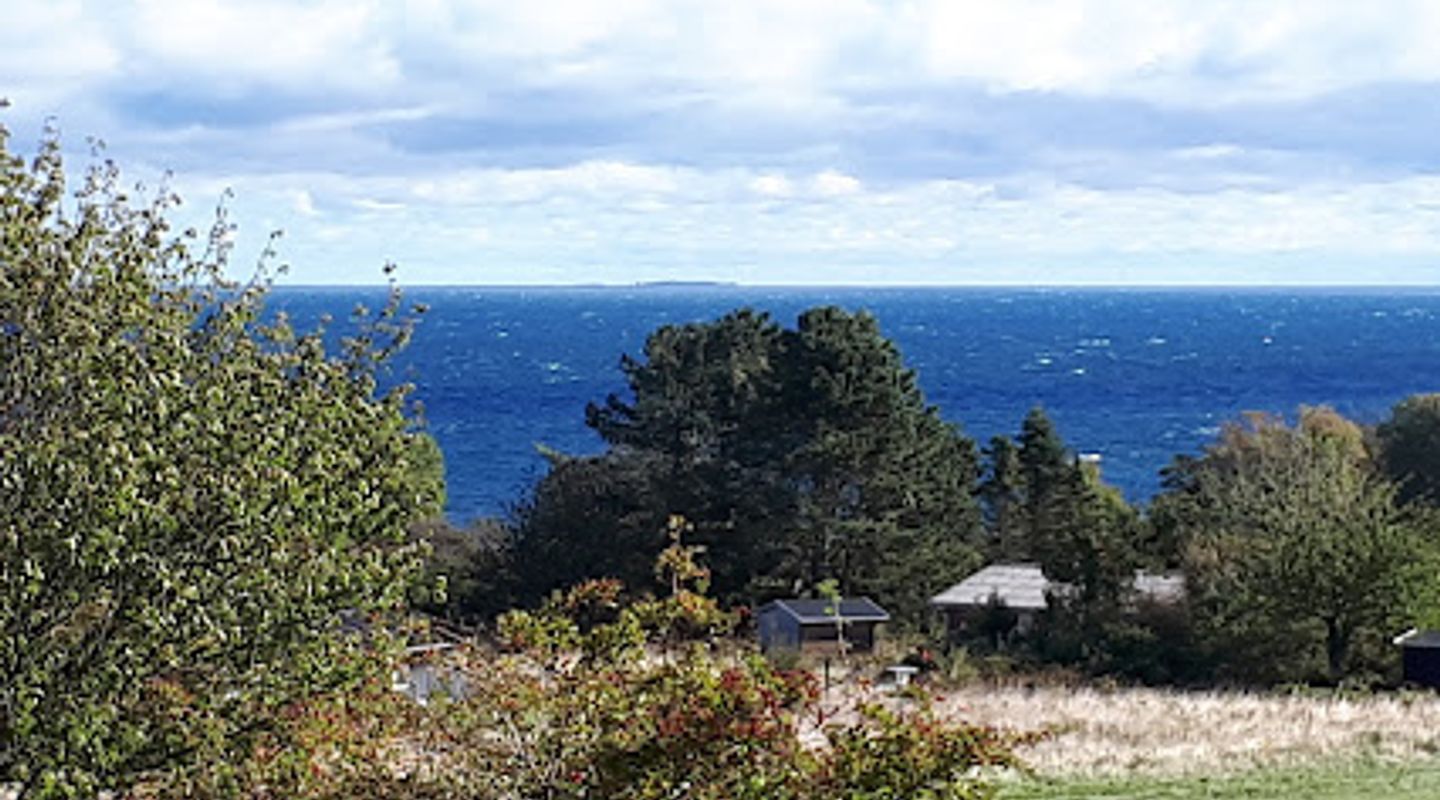
A visit to Madsebakke is less about spectacle and more about slowing down. The carvings are relatively small, and it takes time for your eyes to adjust and the motifs to emerge from the speckled granite. Moving around the rock, changing your viewing angle and letting shadows fall across the surface can suddenly reveal a ship or sun symbol you had just missed.The surroundings reinforce this reflective mood. Beyond the rock, you look out over farmland and, in places, towards the rocky coastline that once framed Bronze Age seafaring. Birds, wind in the grass and distant village sounds form the natural soundtrack. Many visitors pair a focused half‑hour at the carvings with a gentle walk on nearby paths, letting the experience settle while remaining within the same historic landscape.
Bornholm’s wider network of rock carvings
Madsebakke does not stand alone. Bornholm holds numerous rock carving sites, from smaller isolated panels to other multi‑motif outcrops. What makes Madsebakke distinctive is the density and variety of images gathered in one place. Here you can see almost the full range of motifs known from the island – ships, sun symbols, cup marks and feet – in a single compact area.This cluster has made Madsebakke a reference point for researchers comparing Scandinavian rock art traditions. For travellers, it provides an accessible way to step into that scholarly conversation, not through heavy interpretation, but by standing in front of the rock and considering what it meant to return to the same surface generation after generation. The result is a visit that quietly links present‑day Bornholm to its Bronze Age coastal communities.
Evendo Review Centre
 Google
Guest reviews
Best time to go
Quietest: Jan, Feb & Nov · before 7am or from 8pm
Busy times are Evendo estimates for a typical year, to help you plan. Actual crowds vary with events, school holidays and the weather.
Explore Madsebakke on the map
A handpicked selection of must-see spots near Madsebakke, mapped for you.
Get your free copy of our complete guide to Madsebakke, delivered straight to you.
Everything on this page, from opening hours and how to get there to Eve’s tips and the best time to go, in one PDF you can read offline, print or share.
Already have an account? Sign in
Your Madsebakke guide is ready.
We'll send it to · Not you? Sign out

Getting your guide ready…
We are putting together a fresh copy of the Madsebakke guide. This can take up to a minute.
This can take a few moments. If your browser asks, choose Allow so the download can start. You'll find the guide in your Downloads folder.
Nothing happened? Download it again
Sorry, the guide is taking longer than usual. Please try again in a minute, or get it by email instead.
Other nearby places you may find interesting
The closest places of the same kind, if this one is not quite what you had in mind.
-
-
-
-
-


Swipe for more places
More to explore near Madsebakke

 Best experiences near Madsebakke
 Best hotels near Madsebakke
 Best landmarks near Madsebakke
 Best attractions near Madsebakke
 Best shops near Madsebakke
 Best restaurants near Madsebakke
 Best bars near Madsebakke
Do you manage this location?
Take control to get all the benefits, like improved information, better appearance, and stronger visibility across AI-powered discovery.
Explore more

Explore more of Bornholm
Explore Bornholm: Denmark's Baltic gem, offering stunning nature, rich history, and vibrant local culture. Perfect for nature lovers, history buffs, and food enthusiasts.
Explore Bornholm
Explore more of Denmark
Discover Denmark: A perfect blend of history, modern design, and the cozy concept of hygge. Explore vibrant cities, serene landscapes, and world-class cuisine.
Explore Denmark
