Hammershus Castle Ruins, Bornholm Travel Guide
Northern Europe's largest castle ruin crowning a clifftop fortress with Baltic views, free and open 24/7.
Northern Europe's largest castle ruin crowns a dramatic clifftop on Bornholm's northwestern coast, commanding sweeping views of the Baltic Sea. Built in the late 13th century by Archbishop Jens Grand, this medieval fortress served as the island's administrative stronghold for over 450 years before its abandonment in 1743. Today, the restored ruins stand as Bornholm's most visited landmark, accessible 24/7 and entirely free to explore, complemented by a modern visitor center with exhibitions, café, and panoramic viewing terraces.
A brief summary to Hammershus Castle Ruins
- Langebjergvej 26, Allinge, 3770, DK
- Click to display
- Click to display
- Duration: 1.5 to 3.5 hours
- Free
-
 Outdoor
- Mobile reception: 4 out of 5

Know before you go
Hi, I'm Eve. Here are a few practical things to know before exploring Hammershus Castle Ruins.
- Visit early morning or late evening for solitude and exceptional photography, as the castle is accessible 24/7 while most visitors arrive during daytime hours.
- Combine your visit with the Stonecutters' Path, a marked 5.5-kilometer trail nearby that reveals Bornholm's quarrying heritage through dramatic rock formations and crevasse valleys.
- Wear sturdy footwear and layered clothing; the clifftop location experiences variable weather, and pathways can be uneven or slippery in wet conditions.
- Allocate at least 2–3 hours to explore the ruins, visit the exhibition at the visitor center, and enjoy the panoramic terrace views without rushing.
- Check visitor center opening hours before visiting in winter months, as the center operates weekends only from November through Easter, though the castle ruins remain accessible.
Do you manage this location?
Take control to get all the benefits, like improved information, better appearance, and stronger visibility across AI-powered discovery. Learn more about listing your business on Evendo
Activate your presenceOther nearby places you may find interesting
The closest places of the same kind, if this one is not quite what you had in mind.
Explore Hammershus Castle Ruins on the Map
A handpicked selection of must-see spots near Hammershus Castle Ruins, mapped for you.
Getting There
-
By Car
From Rønne (Bornholm's main town), drive north on Route 16 toward Allinge, following signs for Hammershus. The journey takes approximately 30–40 minutes covering roughly 35 kilometers. Ample parking is available at the large P2 parking lot near the visitor center; parking costs DKK 30 for 6 hours (approximately EUR 4) from Easter through autumn break. Winter parking is typically free.
-
By Bus
From Rønne, take bus lines 1, 2, or 7 heading toward Allinge; journey time is approximately 45–60 minutes depending on route and stops. From Nexø, bus line 7 serves the route. Buses operate year-round with reduced frequency in winter months. Single fares cost approximately DKK 40–50 (EUR 5–7). Journey times vary by route; confirm current schedules with local transport operators.
-
By Bicycle
The Rønne–Allinge cycle route offers a scenic 35-kilometer journey through Bornholm's countryside, taking 2.5–3.5 hours depending on fitness level and terrain. The route is well-marked and suitable for recreational cyclists. Bike rentals are available in Rønne and other towns. This option is most practical during warmer months (May–September) when weather is favorable.
-
Guided Tour
Several tour operators on Bornholm offer guided visits to Hammershus, typically departing from Rønne or other towns. Tours usually include transportation, entrance to the visitor center, and guided interpretation of the castle's history. Journey times from central Bornholm range from 30–50 minutes. Prices typically range from DKK 300–500 (EUR 40–67) per person; book through local tourism information or accommodation providers.
For the on-the-go comforts that matter to you
-
 Restrooms
-
 Food Options
-
 Drink Options
-
 Seating Areas
-
 Information Boards
-
 Visitor Center
Discover more about Hammershus Castle Ruins
A Medieval Fortress Shaped by Power and Conflict
Hammershus Castle Ruins represent one of the most significant medieval fortifications in Northern Europe, with roots extending back to the late 13th century. Recent archaeological research and excavations from 2015 suggest the fortress was completed around 1300, built by Archbishop Jens Grand of Lund to consolidate ecclesiastical control over Bornholm Island. The castle's strategic position on a steep rocky prominence at the island's northern tip made it an ideal defensive stronghold, overlooking the Baltic Sea and controlling vital maritime routes between Denmark, Sweden, and Poland.The fortress emerged during a turbulent period of Danish history marked by power struggles between the Crown and the Catholic Church. When the archbishop's forces destroyed the rival fortress of Lilleborg in the island's center in 1259, Hammershus became the undisputed seat of authority on Bornholm. For the next five centuries, the castle served as the headquarters of successive rulers, undergoing multiple expansions and renovations that reflected changing military technologies and political circumstances.Centuries of Occupation and Transformation
Hammershus endured a complex history of foreign occupation and shifting allegiances. From 1525 to 1575, the fortress fell under the control of the City of Lübeck, the powerful Hanseatic League merchant federation. Swedish forces occupied the castle twice—briefly from 1643 to 1645 and again in 1658—before local resistance movements restored Danish sovereignty. The castle even served as a prison; notably, in 1660–1661, King Christian IV's daughter Leonora Christina and her husband Corfitz Ulfeldt were imprisoned within its walls for treason, though their dramatic escape attempt down the fortress walls and cliffs ultimately failed.By the late 17th century, Hammershus's military importance had diminished as Denmark's eastern defenses shifted to the fortress on nearby Christiansø and fortifications at Rønne. The castle was finally abandoned as a stronghold in 1743, and for nearly 80 years, local residents freely quarried its bricks for building materials. This practice ended in 1822 when the Danish State granted Hammershus protected status as a national monument, recognizing its historical and cultural significance during the era of Danish nationalistic revival.The Ruins Today: Scale and Preservation
Today, Hammershus stands as Northern Europe's largest castle ruin, its restored stone walls and towers rising majestically above the surrounding landscape. A distinctive medieval stone bridge—the only surviving example of its kind in Denmark—leads across a dramatic gorge to the fortress entrance. The ruins themselves remain largely inaccessible for climbing, as preservation measures restrict visitors to designated pathways and viewing areas, allowing safe exploration while protecting the ancient stonework.The 2018 opening of the Hammershus Visitor Center transformed the visitor experience without compromising the site's historical integrity. Positioned approximately 200 meters east of the castle and separated by a natural gorge, the modern facility blends seamlessly into the landscape through thoughtful architectural design. Large panoramic windows frame spectacular views of the fortress and Baltic Sea, creating a visual dialogue between contemporary architecture and medieval ruins. Inside, comprehensive exhibitions chronicle the castle's rich history, from its construction through its role as an administrative center, fortress, and prison.A Living Landscape of History and Nature
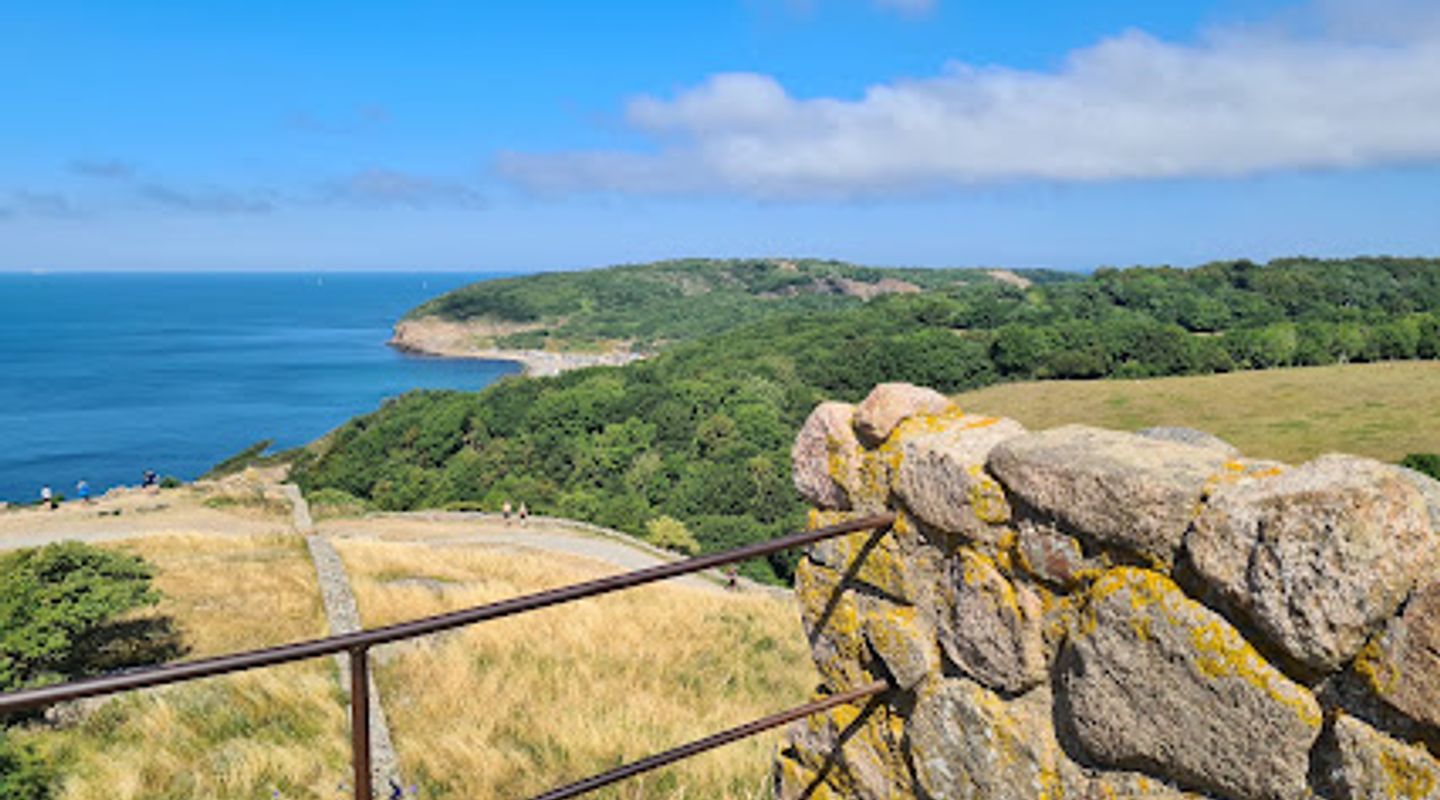
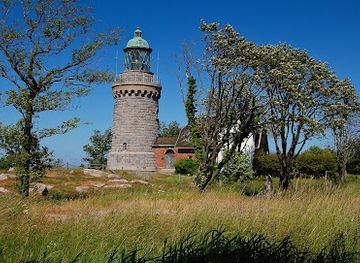
The setting itself contributes profoundly to Hammershus's appeal. Perched on steep cliffs overlooking the Baltic, the ruins command one of Bornholm's most dramatic natural landscapes. The surrounding area reveals traces of the island's industrial past through the Stonecutters' Path, a 5.5-kilometer marked trail that winds through quarries and crevasse valleys, following routes once used by granite workers transporting stone from Sandvig to Hammerhavn. Nearby attractions including Hammeren Fyr lighthouse (built 1872) and opportunities for rock climbing, zip-lining, and stand-up paddleboarding make the region a hub for both cultural and outdoor experiences.The castle's accessibility—open 24/7 and entirely free—ensures that visitors can experience its majesty at any hour, whether bathed in summer sunlight, softened by autumn mist, or dusted with winter snow. The visitor center's seasonal operations (extended summer hours, weekend-only winter access) accommodate varying travel patterns while the ruins themselves remain perpetually open to those seeking solitude or dramatic photography at dawn or dusk.More to explore near Hammershus Castle Ruins













Your all‑in‑one travel companion app
Explore expert travel guides, compare and book tours, experiences, hotels, and more—all from the palm of your hand. Download now for seamless trip planning wherever your wanderlust takes you.


Explore More of Bornholm

Looking beyond Hammershus Castle Ruins? Discover Bornholm for broader travel guides, local hot-spots, and regional highlights.
Explore Bornholm