
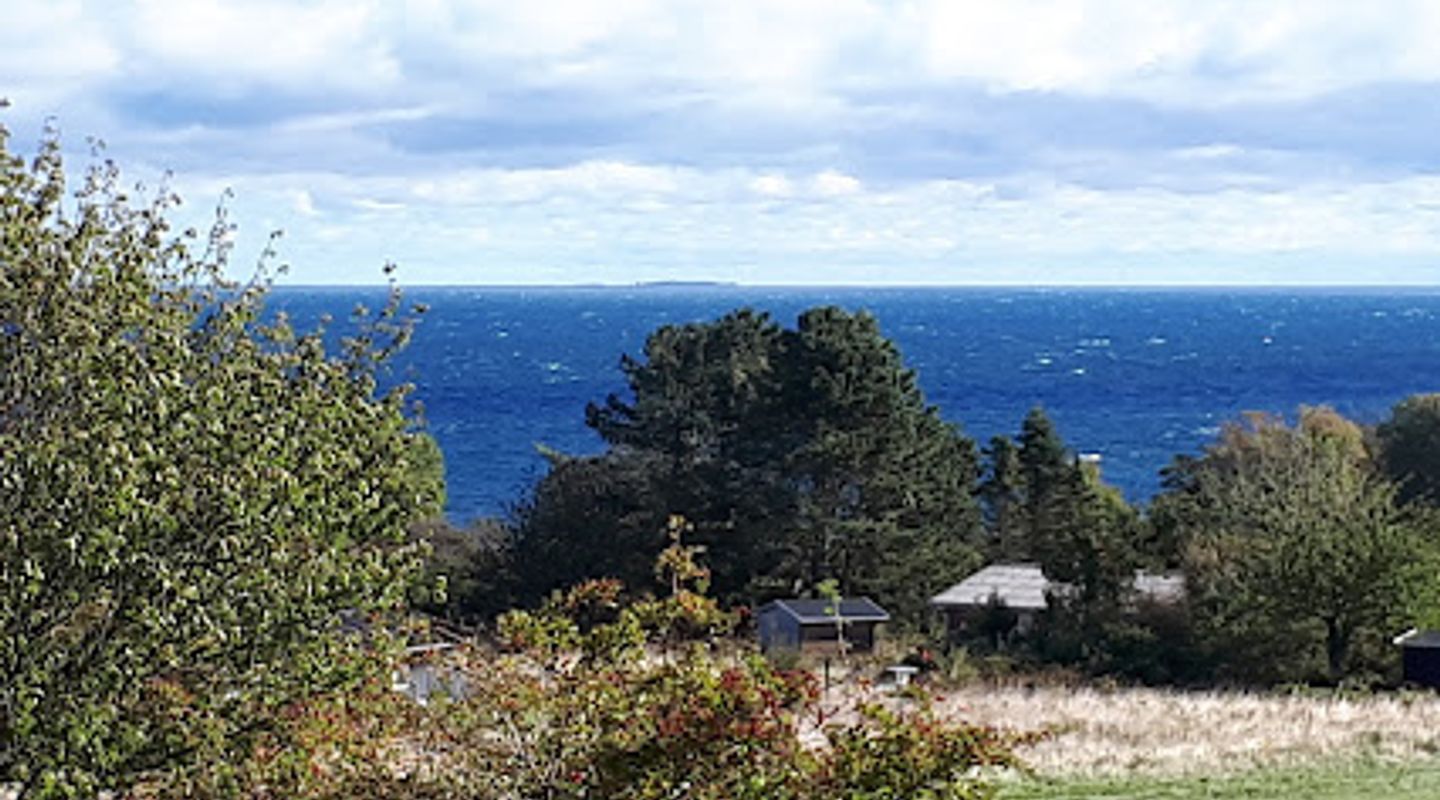
Madsebakke, Bornholm Travel Guide
Northern Europe's most significant Bronze Age rock carving site, revealing 3,000 years of sacred ritual and symbolic expression.
Denmark's largest and most significant Bronze Age rock carving site, Madsebakke features extensive petroglyphs dating back approximately 2,500–3,000 years. Located near Allinge in northern Bornholm, this protected archaeological site displays ships, sun crosses, and footprints carved into granite cliffs. The carvings are marked with red paint for visibility and represent one of Northern Europe's most important prehistoric ritual landscapes, offering insight into ancient ceremonial practices and symbolic expression.
A brief summary to Madsebakke
- Stadionvej 1, Allinge, 3770, DK
- Click to display
- Duration: 0.75 to 2 hours
- Free
-
 Outdoor
- Mobile reception: 4 out of 5

Know before you go
Hi, I'm Eve. Here are a few practical things to know before exploring Madsebakke.
- Visit early morning or late afternoon when low-angle sunlight enhances the visibility of carved details. The red paint markings help identify main carvings, but many additional petroglyphs require careful observation to locate.
- Wear sturdy, non-slip footwear as the granite surface can be uneven and slippery, especially after rain. Stay on designated paths and avoid stepping directly on carved areas to protect the ancient petroglyphs.
- Bring a camera or smartphone to document details, as photographing the carvings from different angles and lighting conditions helps reveal patterns that may be difficult to see with the naked eye.
- Allow at least 45 minutes to explore the main field and surrounding areas. The site rewards patient observation—many visitors initially miss carvings that become apparent with closer inspection and time.
- Combine your visit with nearby attractions in northern Bornholm, including the coastal villages of Sandvig and Allinge, which are within walking distance via scenic routes and cycling paths.
Do you manage this location?
Take control to get all the benefits, like improved information, better appearance, and stronger visibility across AI-powered discovery. Learn more about listing your business on Evendo
Activate your presenceOther nearby places you may find interesting
The closest places of the same kind, if this one is not quite what you had in mind.
Explore Madsebakke on the Map
A handpicked selection of must-see spots near Madsebakke, mapped for you.
Getting There
-
Car
Drive to Stadionvej 1, Allinge (3770). The site is accessible by private vehicle with limited roadside parking near the entrance. Travel time from Allinge town center is approximately 5–10 minutes. The final approach involves a short walk through residential areas and past summer houses to reach the cliff face. No formal parking facility exists; visitors must park considerately on nearby roads.
-
Bicycle
Cycle via the well-maintained network of Bornholm cycling routes. The site is accessible from Allinge and Sandvig via dedicated cycle paths that pass through the surrounding countryside. Journey time from Allinge is approximately 10–15 minutes depending on starting point. The cycling route is relatively flat and suitable for standard bicycles. Bike parking facilities are not formally designated but the site is accessible to cyclists.
-
Walking
Walk from Allinge town center or the nearby coastal village of Sandvig. The distance is approximately 1.5–2 kilometers from Allinge center, requiring 20–30 minutes on foot. The route follows local roads and cycling paths through residential and agricultural areas. Terrain is generally flat with some gentle slopes. The final approach involves navigating past summer houses and private properties to reach the cliff face.
-
Guided Tour
Join organized archaeological or heritage tours departing from Allinge or Bornholm Museum. Tour operators in the region offer guided visits that provide expert interpretation of the carvings and site history. Tours typically last 1.5–2 hours including travel time. Advance booking is recommended, particularly during peak summer season. Contact local visitor information centers for current tour schedules and pricing.
For the on-the-go comforts that matter to you
-
 Information Boards
Discover more about Madsebakke
An Ancient Sacred Landscape
Madsebakke stands as Denmark's largest concentration of rock carvings, a granite cliff face situated northwest of Allinge in northern Bornholm. The petroglyphs date from the later Bronze Age, spanning approximately 2,500 to 3,000 years of history. Unlike many other carving sites on Bornholm, Madsebakke was never quarried for industrial use because the granite at this location is of poor quality. This fortunate circumstance has preserved one of Northern Europe's most important archaeological treasures intact for modern visitors to experience.Archaeologists believe Madsebakke functioned as a sacred ceremonial center for the local Bronze Age population. The carvings were not created simultaneously; evidence suggests a span of roughly 400 years separates the oldest from the youngest ritual markings. The site's significance extends beyond the visible carvings themselves—excavations beneath the cliff face have revealed evidence of human activity including fire-damaged stones, stone pavements, and structures interpreted as ritual spaces.Symbols of Bronze Age Ritual and Belief
The rock carvings at Madsebakke display most of the major motifs found across Bornholm's Bronze Age petroglyphs. Ships are among the most prominent symbols, with some of the oldest examples dating to around 1,000–900 BCE. The sun cross—a circle with a cross inscribed within it—appears frequently and likely held deep spiritual significance. Footprints, both human and animal, are also carved into the stone, though their precise symbolic meaning remains subject to scholarly interpretation.The actual carving technique likely involved stone tools rather than metal implements, with artisans using pecking and scraping motions to create the designs. The granite's natural weathering, accelerated in recent decades by air pollution and lichen growth, gradually erodes these ancient patterns. To aid visibility and protect the carvings from further damage, the most prominent petroglyphs have been marked with a special red conservation paint that does not obscure the original carved surfaces.Ritual Functions and Archaeological Evidence
Archaeological investigation has revealed that Madsebakke was far more than a carving site. A palisade once marked the boundaries of the sacred precinct, defining where priests and ritual specialists conducted ceremonies. Long hearths discovered nearby are interpreted as ritual cooking areas where sacrificial animals were prepared as offerings. A burnt dwelling structure found immediately adjacent to the carvings contained human remains resting on a layer of flint chips, suggesting mortuary practices intertwined with the site's sacred functions.The rituals performed here likely included offerings, communal feasting, music, dance, and possibly invocations of spiritual forces. These ceremonies would have reinforced social bonds, transmitted cultural knowledge, and connected the community to the spiritual realm. The deliberate placement of carvings on exposed rock faces suggests they served as permanent records of these sacred acts, visible to all community members and enduring across generations.Preservation and Modern Challenges
Madsebakke was placed under legal protection in 1943, recognizing its exceptional historical and cultural value. The site is now owned and managed by Foreningen Bornholm, a heritage organization that has acquired approximately 8 hectares of protected land surrounding the main carving field. Despite this protection, the site faces ongoing threats from natural weathering, lichen growth, and visitor impact.Granite, though appearing durable, is vulnerable to environmental degradation. Weather cycles, moisture infiltration, and airborne pollutants gradually break down the stone's surface. Visitor behavior also poses risks—walking on the carvings, pulling on rock surfaces, and leaving debris accelerate deterioration. Conservation efforts include periodic repainting of the red markers and public education about respectful site visitation. Visitors are asked to avoid stepping on carved areas, refraining from touching the stone, and leaving no trace of their presence.












Your all‑in‑one travel companion app
Explore expert travel guides, compare and book tours, experiences, hotels, and more—all from the palm of your hand. Download now for seamless trip planning wherever your wanderlust takes you.


Explore More of Bornholm

Looking beyond Madsebakke? Discover Bornholm for broader travel guides, local hot-spots, and regional highlights.
Explore Bornholm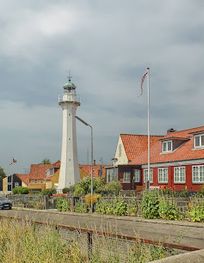
A slender white cast-iron lighthouse above Rønne’s harbour, once a vital guiding light and now a simple, elegant symbol of Bornholm’s maritime gateway.
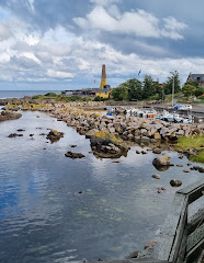
Geometric wooden dome on Allinge’s seafront, blending Baltic views, Folkemødet history and flexible cultural life in one striking, light-filled shell.
