Langelinie, Copenhagen Region Travel Guide
Copenhagen’s classic harbourfront walk, where a working quay, leafy parkland and the Little Mermaid’s rocky perch meet wide skies and ever‑moving ships.
Langelinie is Copenhagen’s classic waterfront promenade: a long, breezy quay and park curving around the harbour from the mighty Gefion Fountain to the outer pier. Home to the world‑famous Little Mermaid statue, historic monuments and views of cruise ships slipping into port, it blends maritime grit with leafy lawns, cherry trees and sculptures. Locals stroll, jog and sit on the quayside while visitors weave between memorials, fortifications and the gentle slap of waves against the stone.
A brief summary to Langelinie
- Langeliniekaj 2, Copenhagen, Østerbro, 2100, DK
- Click to display
- Click to display
- Duration: 1 to 3 hours
- Free
-
 Outdoor
- Mobile reception: 5 out of 5

Know before you go
Hi, I'm Eve. Here are a few practical things to know before exploring Langelinie.
- Arrive early in the morning or towards sunset for softer light, fewer crowds around the Little Mermaid and a calmer feel along the quay.
- Bring a light windproof layer even in summer; the exposed harbourfront can feel noticeably cooler and breezier than inner streets.
- Combine your stroll with detours into Kastellet fortress and the Gefion Fountain area to turn the promenade into a half‑day exploration.
- If you want photos of the Little Mermaid without people in the frame, scout side angles from the rocks and be patient between tour groups.
- Look out for seasonal cherry blossoms in Langelinie Park in spring; their short bloom makes this one of Copenhagen’s prettiest spots.
Do you manage this location?
Take control to get all the benefits, like improved information, better appearance, and stronger visibility across AI-powered discovery. Learn more about listing your business on Evendo
Activate your presenceOther nearby places you may find interesting
The closest places of the same kind, if this one is not quite what you had in mind.
Explore Langelinie on the Map
A handpicked selection of must-see spots near Langelinie, mapped for you.
Unlock the Best of Langelinie
Buy tickets
-
No tickets available
Book tours with entry
-
No tours available


Getting There
-
S‑train and walking
From Copenhagen Central, take an S‑train to Østerport Station, a common hub served by several lines; the ride usually takes 5–7 minutes and is covered by standard city tickets costing roughly 20–30 DKK depending on your ticket type. From Østerport it is an easy, mostly level 10–15 minute walk through a mix of city streets and green areas to the Langelinie waterfront, suitable for most visitors with basic mobility.
-
City bus
Several city bus routes serve the area around Langelinie and the nearby cruise terminals, with typical journey times of 10–20 minutes from central Copenhagen depending on traffic. Single tickets on city buses are generally around 20–30 DKK and can be bought via ticket machines or travel apps. Buses can be busy at peak commuter times, but they offer a straightforward option that drops you within a short walk of the promenade.
-
Bicycle
Copenhagen’s extensive cycle lanes make reaching Langelinie by bike simple from most central districts, usually in 10–20 minutes at a relaxed pace. City bike rentals and app‑based shared bikes typically cost from about 15–30 DKK for a short ride, rising with longer rental periods. The route is mostly flat, but be prepared for brisk harbour winds and remember that cycling directly on the promenade is restricted in the busiest sections.
-
Harbour boat service
In season, harbour boats and water buses connect central stops along the inner harbour with piers close to Langelinie, turning the journey into a short 15–30 minute cruise. Fares are generally comparable to other public transport options, around 20–40 DKK depending on the operator and ticket, and services may run less frequently outside peak times or in winter. Step off near the quay and walk a few minutes along the waterfront to reach the main promenade and park.
For the on-the-go comforts that matter to you
-
 Restrooms
-
 Drink Options
-
 Drinking Water
-
 Food Options
-
 Seating Areas
-
 Sheltered Areas
-
 Trash Bins
-
 Information Boards
-
 Visitor Center
Discover more about Langelinie
Harbourfront promenade with a maritime heartbeat
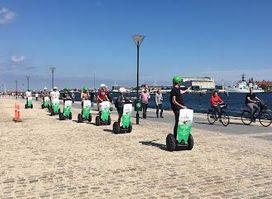
Langelinie stretches along Copenhagen’s inner harbour as a broad quay and promenade facing the Øresund, with the city on one side and open water on the other. The deep basin here was created in the late 19th century so large ocean‑going ships could dock, and you still see big cruise liners moored almost within arm’s reach. The long, straight line of the pier, scattered bollards and old warehouses tell you this is first and foremost a working harbour gently folded into city life.As you walk the promenade the soundtrack is a mix of gulls, lapping waves and the occasional ship’s horn. On clear days the light shimmers off the water and the views sweep across to modern districts and wind turbines out at sea. Despite its industrial roots, the atmosphere is relaxed and unhurried, especially away from the tight knot of cameras around one particular statue.From royal playground to public waterfront
The name Langelinie – “the long line” – dates back to the 17th century, when this stretch formed part of Copenhagen’s military defenses. For centuries the area was off‑limits to ordinary citizens, reserved first for strategic purposes and later as an exclusive promenade for the city’s elite, who paid a toll to enjoy the fresh air and sea views. Only after political upheavals in the mid‑19th century was the waterfront finally opened to everyone.Land reclamation and harbour expansion in the 1890s reshaped the shoreline into the pier and park layout seen today. That transformation turned a guarded strip of fortifications into a democratic urban space: a place where sailors stride along the quay, office workers eat lunch on benches and families come to watch ships arrive from distant ports.The Little Mermaid and other shoreline icons
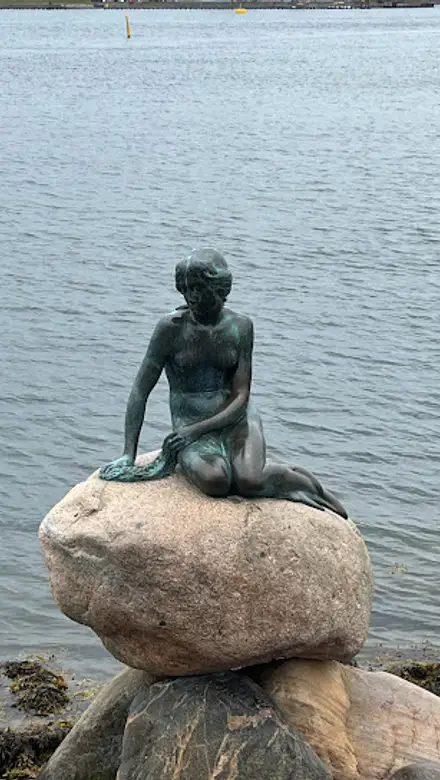
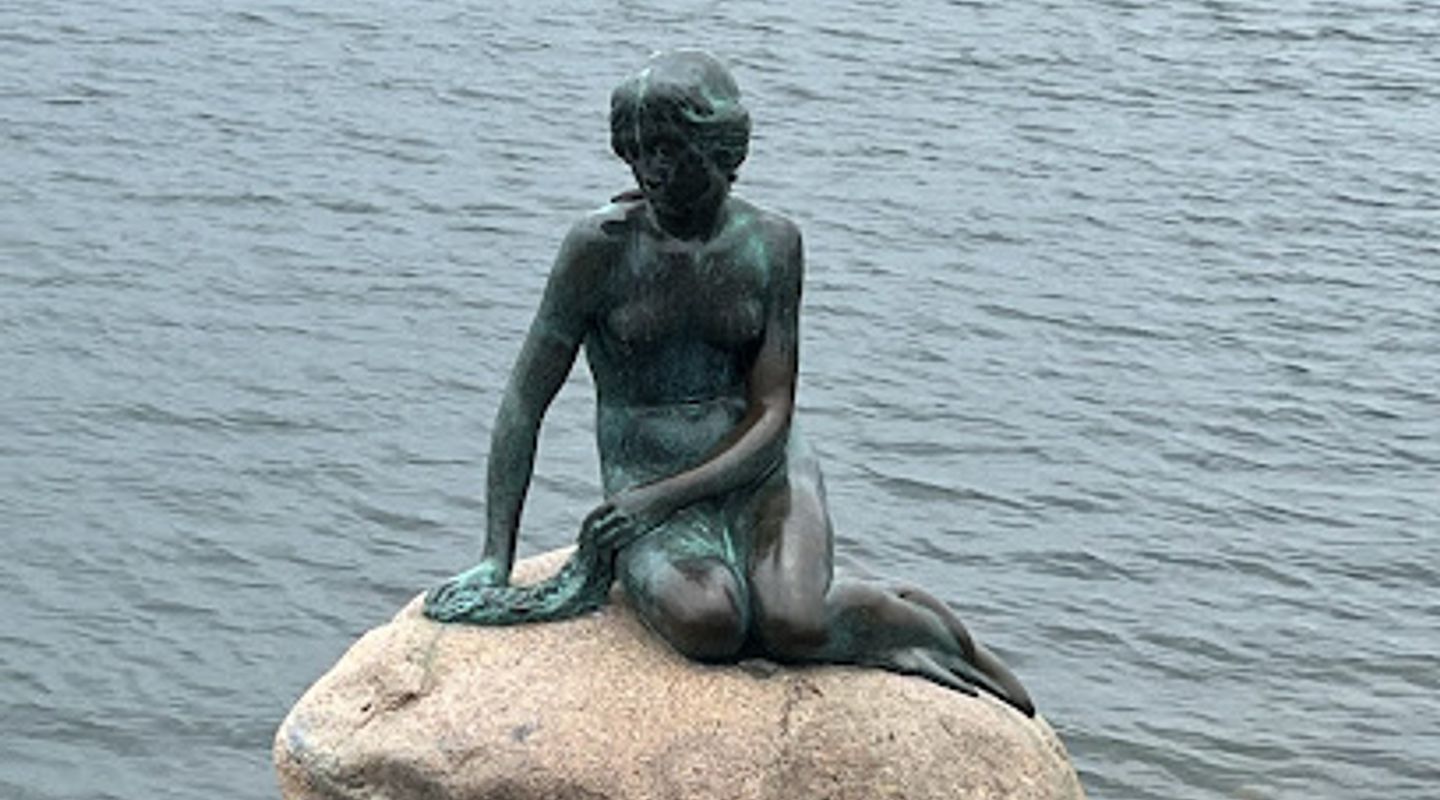
Midway along Langelinie, poised on a rock at the water’s edge, sits the Little Mermaid. Installed in 1913 and inspired by Hans Christian Andersen’s fairy tale, the bronze figure by sculptor Edvard Eriksen has become a symbol of Copenhagen, quietly gazing towards the city as tourist boats and harbour traffic glide past behind her. Seen up close she is small and human‑scaled, almost modest against the sweep of the harbour.Just south of the statue the promenade connects towards the Gefion Fountain, Copenhagen’s largest fountain, with its dynamic bronze figures of the Norse goddess driving her team of oxen. Scattered along the route you also encounter memorial columns, maritime monuments and contemporary sculptures, each adding another layer of story to the waterfront. Together they turn a simple stroll into an open‑air gallery of Danish myth, history and seafaring.Green parkland, fortress edges and cherry blossoms
On the landward side of the promenade, Langelinie Park softens the hard line of the quay with lawns, trees and winding paths. The greenery wraps around the outer edges of Kastellet, the star‑shaped 17th‑century fortress that still forms a striking geometric outline when seen from above. From the promenade you slip easily into shady avenues, grassy banks and viewpoints over moats and ramparts.In spring, rows of cherry trees near the waterfront erupt into pale pink blossom, giving the area a brief, almost theatrical transformation. Throughout the park you find benches, small playgrounds and tucked‑away corners where locals read or picnic while ferries and pilot boats criss‑cross the harbour beyond the railings.Everyday life on Copenhagen’s waterside
For visitors, Langelinie offers one of the city’s most effortless walks: level, spacious and constantly framed by water. Joggers pace along the quay at dawn, dog walkers weave through the park, and cyclists follow the harbourfront routes that knit this district to the rest of Copenhagen. Food stalls and kiosks appear in busier seasons, selling ice cream, coffee and quick snacks eaten leaning against the seawall.Architecturally, the surroundings are a blend of historic warehouses, functional harbour structures and the clean lines of the modern Langelinie Pavilion, with Danish design classics inside. Yet the dominant impression is space: big skies, open water and room to breathe only a short distance from the city’s royal palaces and museums. Langelinie works both as a standalone destination and as a scenic thread linking many of Copenhagen’s most recognisable sights.Seasons, weather and the feel of the place
Because it faces the harbour with little shelter, Langelinie changes character with the weather. On bright summer days it feels almost seaside‑like, with sparkling water and people lingering on benches late into the evening. In autumn and winter the wind can be sharp and bracing, turning a walk here into a refreshing, invigorating experience more than a leisurely lounge.The openness to sky and sea also means the promenade is ideal when the air is clear and visibility is good; distant landmarks stand out, and the bronze and stone of fountains and statues catch the light. Yet even under low clouds there is a quiet charm to watching ships move through grey‑green water while trees in the park sway overhead. Whatever the season, the essential character of Langelinie remains the same: a long, generous strip where Copenhagen meets the sea.












Your all‑in‑one travel companion app
Explore expert travel guides, compare and book tours, experiences, hotels, and more—all from the palm of your hand. Download now for seamless trip planning wherever your wanderlust takes you.


Explore More of Copenhagen Region
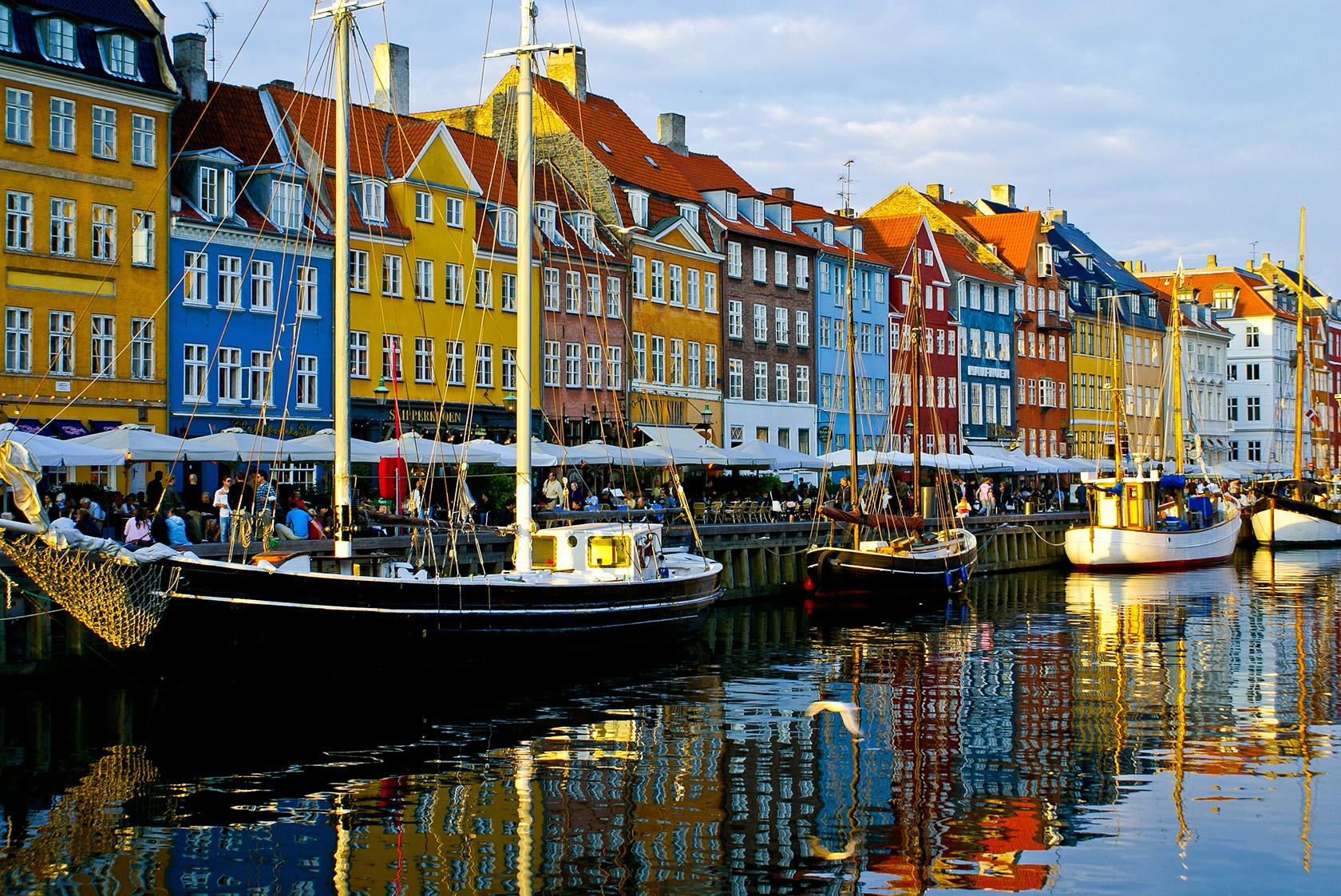
Looking beyond Langelinie? Discover Copenhagen Region for broader travel guides, local hot-spots, and regional highlights.
Explore Copenhagen Region
Industrial harbour vibes meet global street food, live events and a glowing winter ice rink at Copenhagen’s most atmospheric container village.
Step into the world of Vikings with ancient ships, hands-on crafts, and interactive exhibits on the scenic shores of Roskilde Fjord.