Turning Torso, Malmö
Scandinavia’s original twisted skyscraper, Turning Torso spirals above Malmö’s Western Harbour as a bold fusion of sculpture, engineering and waterfront city life.
Rising 190 meters above Malmö’s Western Harbour, Turning Torso is a neo‑futurist skyscraper and Scandinavia’s most famous twisted tower. Designed by Santiago Calatrava and completed in 2005, its nine stacked cubes rotate a full 90 degrees from base to top, creating a striking spiral form that has become the city’s defining landmark. While the building is primarily residential and not generally open to casual visitors, its dramatic silhouette, waterfront setting and surrounding promenades make it a must‑see for architecture lovers and urban explorers.
A brief summary to Turning Torso
- Lilla Varvsgatan 14, Malmö, 211 15, SE
- Click to display
- Click to display
- Duration: 0.5 to 1.5 hours
- Free
-
 Outdoor
- Mobile reception: 5 out of 5
- Monday 10 am-8 pm
- Tuesday 10 am-8 pm
- Wednesday 10 am-8 pm
- Thursday 10 am-8 pm
- Friday 10 am-8 pm
- Saturday 10 am-8 pm
- Sunday 10 am-8 pm

Know before you go
Hi, I'm Eve. Here are a few practical things to know before exploring Turning Torso.
- Plan your visit for clear weather if possible; the twist and façade details are most striking against blue skies, and you will enjoy wider views along the Öresund coast as you explore the waterfront paths.
- Remember that Turning Torso is primarily a residential building, so interior access is limited. Focus on walking around the base and along the harbour to photograph the tower from multiple angles.
- Combine your stop at the tower with extra time in Västra Hamnen to enjoy nearby cafés, the marina, and the seaside boardwalks that connect to other modern architecture and bathing spots.
- Wind from the Öresund can be strong even in warmer months, so bring an extra layer; the exposed harbour setting around the tower often feels cooler than central Malmö.
- Photographers should experiment with low vantage points near the base of the tower and framing the spiral through nearby residential blocks or reflections in puddles and harbour water.
Do you manage this location?
Take control to get all the benefits, like improved information, better appearance, and stronger visibility across AI-powered discovery. Learn more
Activate your presenceOther nearby places you may find interesting
Getting There
-
City bus from central Malmö
From Malmö Central Station, take a local city bus toward Västra Hamnen; several lines typically serve the Western Harbour area with stops within a short walk of Turning Torso. The ride usually takes around 10–15 minutes depending on traffic, and services run frequently throughout the day. A single adult ticket on local Malmö buses generally costs about 25–40 SEK when bought via regional transport apps or ticket machines. Buses are low‑floor and usually suitable for wheelchair users, though they can be crowded at peak commuter times.
-
Walking from Malmö Central Station
If you enjoy exploring on foot, allow roughly 25–35 minutes to walk from Malmö Central Station to Turning Torso through the harbourfront districts. The route is mostly flat and paved, passing canals and modern residential areas before reaching the open waterfront. It is suitable for most fitness levels, though strong winds and rain can make the exposed sections feel more demanding. In winter, be prepared for cold temperatures and potentially slippery surfaces in icy conditions.
-
Bicycle within Malmö
Malmö is very bike‑friendly, and cycling to Turning Torso from inner‑city neighbourhoods usually takes 10–20 minutes. Dedicated cycle paths lead toward Västra Hamnen, offering a largely flat and safe ride that is suitable for a wide range of ages. Visitors without their own bicycle can use local bike‑share schemes or rental shops, with typical costs starting around 50–120 SEK for a few hours. Keep in mind that coastal winds can be strong, and carry lights during the darker months, as daylight hours are short in winter.
-
Taxi from central Malmö
Taxis from areas around Malmö Central Station or the historic centre generally reach Turning Torso in about 10 minutes under normal traffic conditions. Fares vary by company and time of day, but a typical daytime journey within the city core often falls in the range of 120–220 SEK. Taxis provide a comfortable option in bad weather or for travellers with limited mobility, though availability can be tighter during major events or rush hours.
For the on-the-go comforts that matter to you
-
 Seating Areas
-
 Trash Bins
-
 Information Boards
-
 Restrooms
-
 Drink Options
-
 Food Options
Discover more about Turning Torso
A spiralling icon on Malmö’s waterfront
Turning Torso dominates the skyline of Västra Hamnen, Malmö’s Western Harbour, where former shipyards have been reborn as a showcase of contemporary Scandinavian urban design. Here, on a windswept peninsula facing the Öresund Strait, the 190‑metre tower rises like a white helix above low‑rise housing, parks and promenades. The structure is composed of nine stacked cubes, each five storeys high, which together twist a dramatic 90 degrees from ground to roof. Clad in white aluminium and glass, the façade catches changing Nordic light and reflections from the sea, ensuring the building looks different with every shift in weather.From ground level, the tower’s scale is immediately apparent: the base feels broad and muscular, while higher segments seem to pivot away, giving the impression of a body caught mid‑turn. The effect is both sculptural and technical, signalling that this is as much a piece of public art as a functional building.Calatrava’s human form translated into a tower
Turning Torso is the work of Spanish architect and engineer Santiago Calatrava, who drew direct inspiration from his earlier marble sculpture “Twisting Torso.” That piece abstracted a human body in motion; here, the same gesture has been translated into steel, concrete and glass. A central reinforced concrete core acts as the spine, while an external steel frame suggests ribs running up the corners of each cube.Each five‑storey cube is slightly rotated relative to the one below, creating the continuous spiral. This unusual geometry means no two apartments share identical layouts, and windows are oriented to capture different aspects of sea, city and bridge. The top floors house exclusive meeting and event spaces, reinforcing the building’s dual role as both residence and emblem.Symbol of Malmö’s post‑industrial transformation
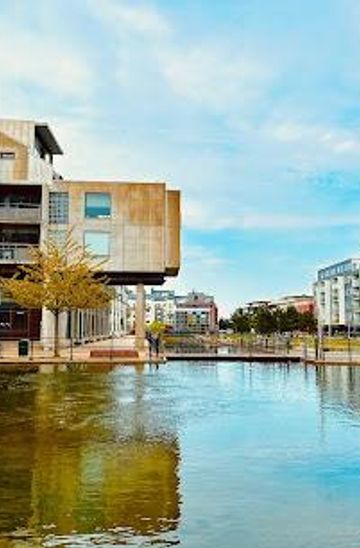
Before Turning Torso, Västra Hamnen was better known for shipbuilding cranes than designer apartments. As heavy industry declined, the city launched an ambitious regeneration of the waterfront, with this tower as the bold centrepiece. Completed in 2005, it quickly became shorthand for Malmö’s pivot toward sustainable urban development, clean technology and knowledge‑based industries.Around the base, landscaped paths, small lawns and reflecting water features soften the transition from tower to neighbourhood. Low‑energy housing, canals, and car‑lite streets underline the district’s green ambitions. Seen from across the water, the white spiral echoes both the masts in the nearby marina and the distant sweep of the Öresund Bridge, tying newer architecture to the region’s maritime past.Experiencing the tower from street level
For most visitors, the experience of Turning Torso happens outside rather than inside. The building is primarily residential, and access to upper floors is generally restricted to pre‑arranged group visits or private events. Instead, the attraction lies in circling the base along pedestrian paths, watching the twist change with every few steps.From certain angles, the tower appears slender and almost planar; from others, its rotation is pronounced, revealing the full torque of the design. Benches and informal seating spots along the waterfront invite you to sit and watch light move across the façade, or to contrast the engineering precision of the tower with the open horizon over the strait. Photographers will find countless compositions using nearby housing, marinas and boardwalks as framing elements.Neighbourhood life in the Western Harbour
The tower’s immediate surroundings are very much lived‑in Malmö rather than a fenced‑off monument. Cafés, restaurants and small shops dot the nearby streets, particularly around the Dockan marina area, where pleasure boats replace the heavy vessels of the past. Boardwalks loop around the coastline, linking the tower with bathing spots, green spaces and views toward Copenhagen.On warm days, Western Harbour fills with people walking dogs, jogging, or simply pausing with an ice cream to admire the interplay of sky, sea and steel. In colder months the district feels quieter but no less atmospheric, with the tower’s white surfaces standing out against low winter light and brisk winds off the water.A contemporary landmark for the Nordic skyline
Since its completion, Turning Torso has become one of the most recognisable silhouettes in Northern Europe and is frequently cited as the world’s first truly twisting skyscraper. Its influence can be traced in later spiral towers across the globe, but here in Malmö it retains a singular presence. At night, carefully placed lighting emphasises the rotational geometry, while by day the tower serves as a constant point of orientation visible from beaches, parks and city streets.Whether you approach as an architecture enthusiast, photographer, or casual stroller along the waterfront, the tower encapsulates a particular Nordic blend of daring design, engineering discipline and everyday livability. It is both a residential building with ordinary routines inside and an extraordinary object that anchors the city’s identity on the edge of the sea.Explore the best of what Turning Torso has to offer













More about Copenhagen Region
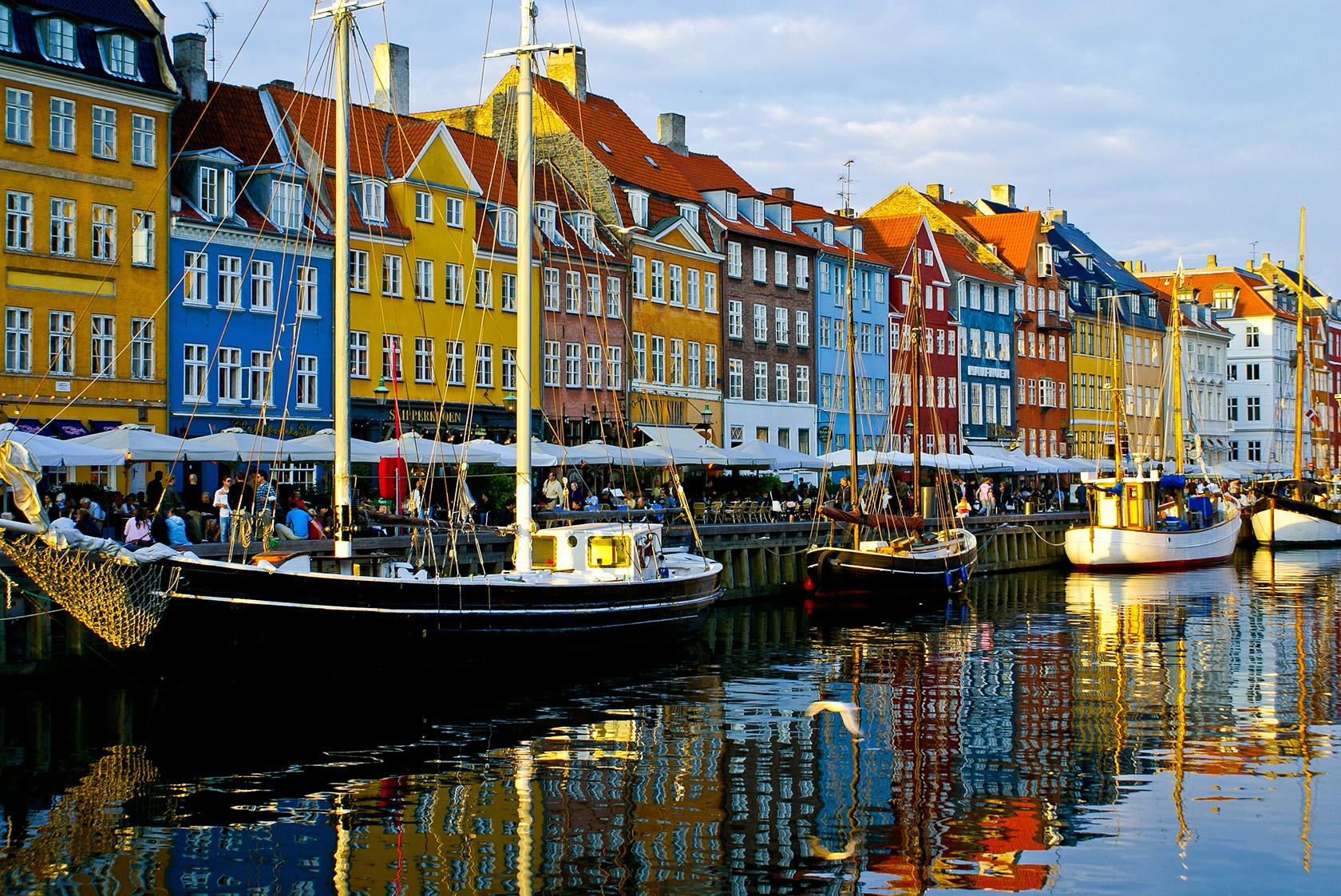
Discover the Copenhagen Region: A perfect mix of historic charm and modern vibrancy, offering scenic beauty, cultural landmarks, and a high quality of life.
Tell me more about Copenhagen Region