Lundegård Travel Guide
Free Guide: Quiet Funen manor with centuries of history, a charitable legacy and occasional cozy markets set among barns, gardens and open farmland near Broby.


A brief summary of Lundegård
Quiet Funen manor with centuries of history, a charitable legacy and occasional cozy markets set among barns, gardens and open farmland near Broby.
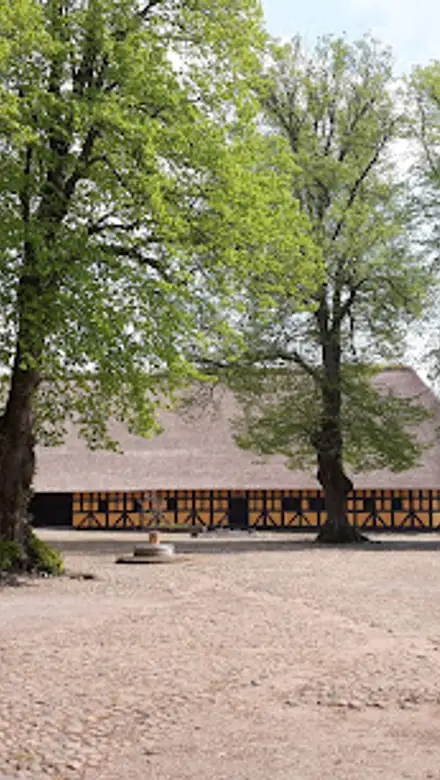
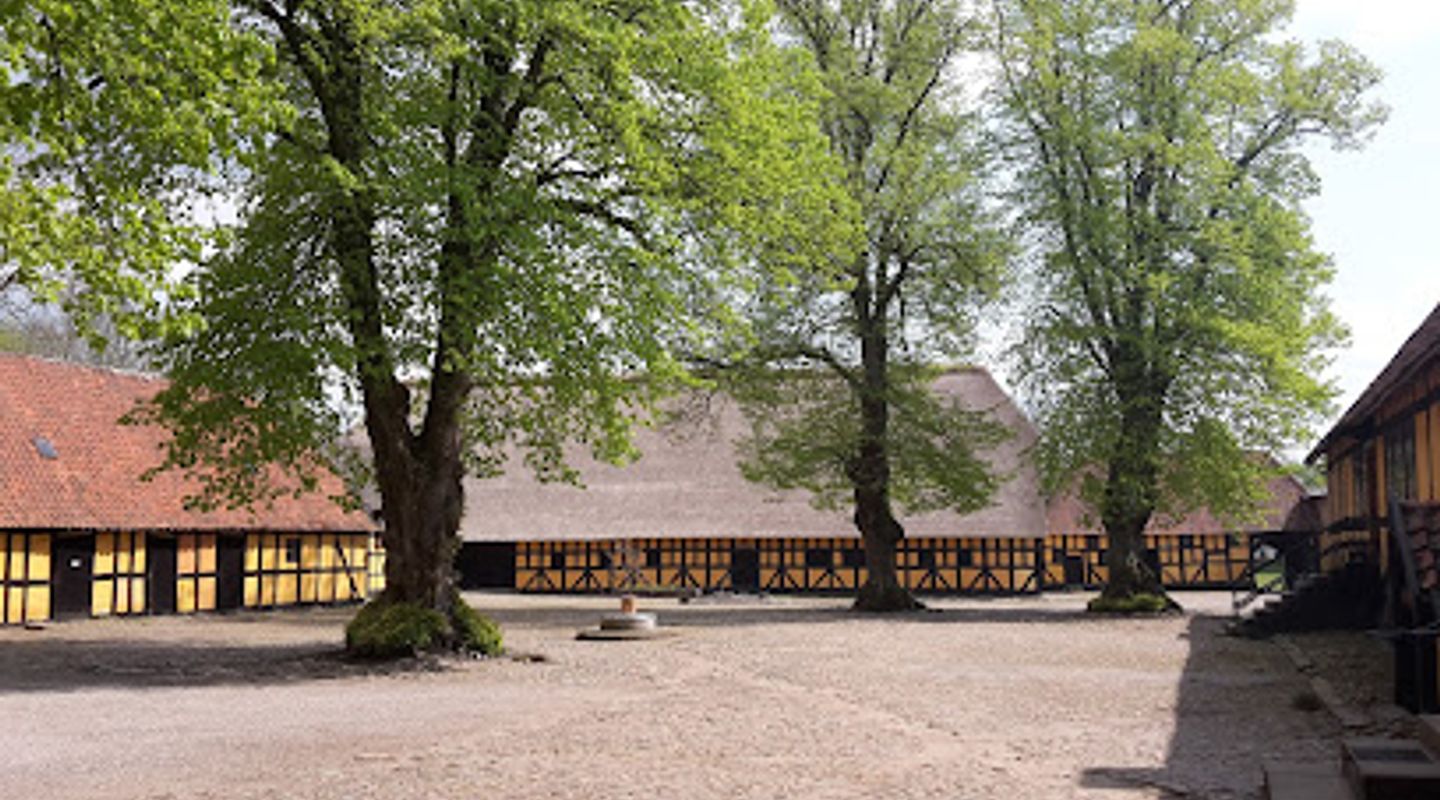
Herregården Lundegård is a historic manor in the countryside near Broby on the island of Funen, surrounded by fields, old trees and traditional farm buildings. Dating back to at least the 1500s, the estate gained its present main building form in 1801 and later became a charitable foundation for the poor of Funen. Today, Lundegård occasionally opens its picturesque courtyard, barns and gardens for seasonal markets and coffee-and-cake events, offering a quiet glimpse of classic Danish manor life.
On-site amenities
 Restrooms
 Drink options
 Food options
 Seating areas
 Sheltered areas
 Trash bins
 Information boards
- Address
- Lundegårdsvej 46, 5672 Broby
- Phone
- Website
Getting there
Car from Odense
Regional bus and short walk
Bicycle from Broby area
Discover more about Lundegård
A manor rooted in Funen’s rural history
Lundegård sits just outside Broby on central Funen, in a gently undulating landscape of fields, hedgerows and small woods that has shaped the estate for centuries. The manor has existed since at least the late Middle Ages, gradually absorbing land from nearby villages during the 1500s as small farms were folded into a larger main estate. Its position between parish villages and church land gives it a classic place in the traditional Danish manorial landscape, where agriculture, power and local welfare were closely intertwined.The estate’s role shifted notably in the 18th century, when a foundation was created here in 1752 to support poor people on Funen. This formalized Lundegård’s function not only as a landed property but also as a local institution with a social mission, tying its income and buildings to charitable purposes that echoed the ideals of the time.
Architecture and layout of a classic Danish manor
The main building at Lundegård received its characteristic appearance in 1801, when it was rebuilt in the restrained, symmetrical style common to Danish manors of the period. A low, elongated main house with a simple roofline and regular window rhythm faces a traditional farm courtyard, framed by older timber farm buildings and barns. The impression is one of solid, practical elegance rather than grand ostentation.Around the house, smaller details hint at layers of history: old masonry, reused timbers, and alterations that tell of changing owners and uses over time. While Lundegård is not a palace, it clearly reads as a herregård: a self-contained world where residence, administration and farm operations once sat closely side by side.
Grounds, gardens and working landscape
Beyond the buildings, Lundegård opens into a mix of garden, utility yards and cultivated land. Old trees and shelterbelts help define the manor’s immediate surroundings, while views stretch out over fields that have been managed from this estate for generations. The setting is fundamentally agricultural, offering a sense of how a historic main farm still anchors the surrounding landscape.Closer to the main buildings, simple garden spaces soften the transition between house and farmland. Depending on the season, visitors may notice flowering borders, kitchen-garden plots or neatly kept lawns used for small gatherings and outdoor coffee tables when events are held.
From noble seat to charitable foundation
Lundegård’s social role is central to its story. When the charitable foundation was established here in the mid-18th century, the estate’s income and facilities were partly directed toward supporting vulnerable residents of Funen. This created a long-running link between the manor and social welfare, extending beyond the private concerns of its owners.Over time, ownership and management evolved, but the idea of Lundegård as more than just a private residence has remained important. Its history connects notable Funen families, local clergy and community life; some of its former owners are even buried in nearby Broby Church, underscoring the close bond between manor and parish.
Seasonal events and visiting today
Today, Lundegård is a lived-in, working property that occasionally opens its doors for special events such as garden markets or festive gatherings. At such times, visitors can step into the courtyard, see parts of the barns and stables and enjoy coffee and traditional cakes served in simple, homely surroundings. The atmosphere is informal and rural, with an emphasis on coziness rather than spectacle.The estate is not a full-scale museum; access can be limited outside event days, and facilities are modest. For travelers exploring Funen’s hinterland, however, Lundegård offers an evocative stop: a chance to sense Danish manor culture in a quiet setting, framed by fields, history and the soft light of the countryside.
Evendo Review Centre
 Google
Guest reviews
Best time to go
Quietest: Jan, Feb & Mar · before 8am or at 8pm
Busy times are Evendo estimates for a typical year, to help you plan. Actual crowds vary with events, school holidays and the weather.
Explore Lundegård on the map
A handpicked selection of must-see spots near Lundegård, mapped for you.
Get your free copy of our complete guide to Lundegård, delivered straight to you.
Everything on this page, from opening hours and how to get there to Eve’s tips and the best time to go, in one PDF you can read offline, print or share.
Already have an account? Sign in
Your Lundegård guide is ready.
We'll send it to · Not you? Sign out

Getting your guide ready…
We are putting together a fresh copy of the Lundegård guide. This can take up to a minute.
This can take a few moments. If your browser asks, choose Allow so the download can start. You'll find the guide in your Downloads folder.
Nothing happened? Download it again
Sorry, the guide is taking longer than usual. Please try again in a minute, or get it by email instead.
Other nearby places you may find interesting
The closest places of the same kind, if this one is not quite what you had in mind.
-
-
-
-
-


Swipe for more places
More to explore near Lundegård

 Best experiences near Lundegård
 Best hotels near Lundegård
 Best landmarks near Lundegård
 Best attractions near Lundegård
 Best shops near Lundegård
 Best restaurants near Lundegård
 Best bars near Lundegård
Do you manage this location?
Take control to get all the benefits, like improved information, better appearance, and stronger visibility across AI-powered discovery.
Explore more
Explore more of Funen
Discover Funen, Denmark's lush island treasure, where fairy tales come to life amidst scenic landscapes, historic castles, and vibrant cultural heritage.
Explore Funen
Explore more of Denmark
Discover Denmark: A perfect blend of history, modern design, and the cozy concept of hygge. Explore vibrant cities, serene landscapes, and world-class cuisine.
Explore Denmark