
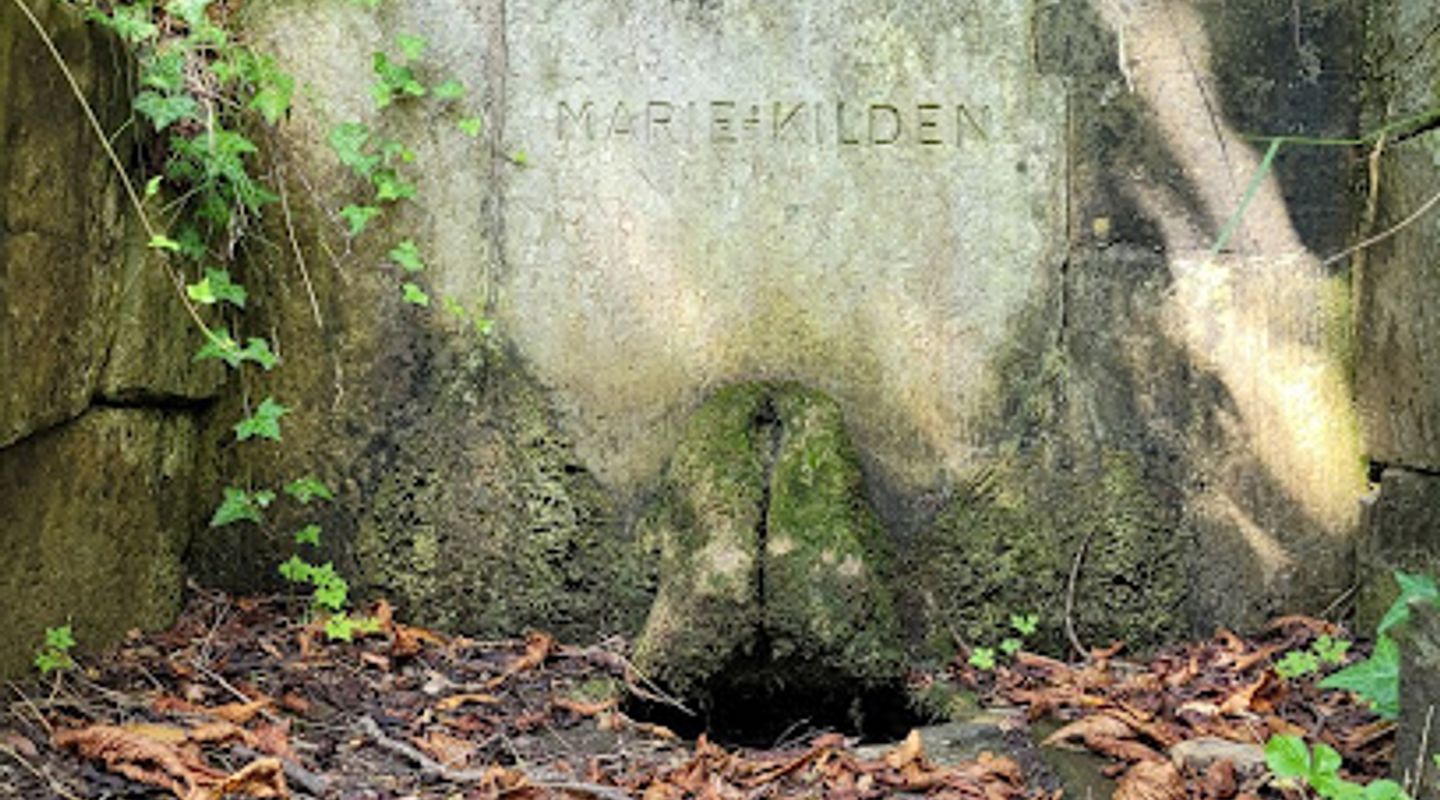
Marie-Kilden, Odense Travel Guide
A small historic spring hidden in Odense’s riverside green belt, Marie-Kilden offers a quiet glimpse of parish history and folklore amid trees, paths and gentle birdsong.
Marie-Kilden is a small historic spring and wayside shrine tucked along the leafy vicarage path between Dalum Church and Fruens Bøge in southern Odense. Framed by tall trees and the nearby Odense River, this modest monument blends local religious history, folklore, and everyday nature into a tranquil pause point. It is a quiet place to sit, reflect, and sense how rural Odense once felt, just a short step from the city’s suburban streets.
A brief summary to Marie-Kilden
- Odense, Odense SV, DK
- Duration: 0.5 to 1.5 hours
- Free
-
 Outdoor
- Mobile reception: 4 out of 5

Know before you go
Hi, I'm Eve. Here are a few practical things to know before exploring Marie-Kilden.
- Wear shoes suitable for dirt paths and potentially muddy ground, especially after rain, as the approach follows a natural riverside trail.
- Combine a brief visit to Marie-Kilden with a longer walk between Dalum Church and Fruens Bøge to make the most of the green corridor.
- Visit in early morning or late afternoon for softer light filtering through the trees, which is ideal for quiet contemplation and photos.
Do you manage this location?
Take control to get all the benefits, like improved information, better appearance, and stronger visibility across AI-powered discovery. Learn more about listing your business on Evendo
Activate your presenceOther nearby places you may find interesting
The closest places of the same kind, if this one is not quite what you had in mind.
Explore Marie-Kilden on the Map
A handpicked selection of must-see spots near Marie-Kilden, mapped for you.
Getting There
-
City bus from central Odense
From central Odense, use a city bus toward the Dalum or Odense SV area; typical routes take about 15–25 minutes depending on traffic. A single adult ticket usually costs around 24–30 DKK within the city zones and can be bought via ticket machines or mobile apps. Buses run frequently during the day but less often in evenings and weekends, so check departure times in advance. From the nearest stop, expect a short walk on local streets and then along the riverside path to reach the spring.
-
Bicycle from Odense city centre
Cycling from Odense city centre to the Dalum riverside area typically takes 15–25 minutes at a moderate pace, using the city’s network of bike lanes and quiet residential streets. There is no fee to cycle, and public bike racks can usually be found near Dalum Church or along nearby roads, though dedicated secure parking is limited. The final stretch follows a shared path that can be narrow and busy with walkers, so ride considerately and be prepared to walk your bike on the narrower sections.
-
Car or taxi within Odense
Reaching the Dalum area by car or taxi from central Odense generally takes 10–20 minutes, depending on traffic. Taxis within the city typically start around 50–70 DKK plus 10–15 DKK per kilometre, so a ride from the centre can cost roughly 120–200 DKK. Street parking in nearby residential areas is usually available but may be time-limited and not directly beside the riverside path. From where you park, allow time to walk on footpaths to the green belt where Marie-Kilden is located.
For the on-the-go comforts that matter to you
-
 Seating Areas
-
 Trash Bins
-
 Information Boards
Discover more about Marie-Kilden
A quiet spring hidden in a green corridor
Marie-Kilden is a modest historic spring set along a narrow green belt that follows the Odense River on the edge of Dalum. The small structure and its setting feel almost tucked away, screened by trees and undergrowth, so that you step out of suburban Odense and into a sheltered strip of nature. The path here is used by walkers and cyclists, yet the spring itself often has a gentle, almost private atmosphere.The name refers to a holy or venerated spring, echoing a time when water sources were both practical lifelines and objects of devotion. Standing here, you can hear birdsong from the river corridor and the rustle of the wind through the leaves, while the murmur of the nearby city fades into the background. It is a simple spot, but its character comes from this sense of seclusion in the middle of a lived-in district.From holy well to local landmark
Like many springs across Denmark, Marie-Kilden has roots in a landscape shaped by both Christianity and older traditions. Springs were often connected with saints, healing powers, or local legends, and later folded into parish life as quiet places of reflection. The connection to Dalum Church and the old vicarage path underlines that this was once part of a small network of meaningful sites in the parish rather than an isolated curiosity.The structure you see today reflects more recent centuries of care, when the spring was marked, walled, or framed to protect the water and give it a recognisable form. Over time, it shifted from everyday resource to historical feature, a reminder of how people once related to water, faith, and the land. The modest scale is part of its charm: this is not a grand monument but a small piece of local heritage preserved in situ.Following the vicarage path between river and woods
Marie-Kilden lies on the path that threads between Dalum Church and the leafy quarter of Fruens Bøge, following the river in a green ribbon. As you approach, the route alternates between open views to the water and enclosed stretches where tree trunks and banks rise around you. The spring appears almost incidentally, just off the footpath, inviting a short detour.Benches and small clearings nearby offer informal places to pause, watch the light on the river, or listen to the distant rhythm of trains and traffic beyond the trees. The surroundings change markedly with the seasons: bright fresh greens in spring, deep shade in summer, russet carpets of leaves in autumn, and a more exposed, skeletal beauty in winter when the structure of the landscape becomes visible.A contemplative stop on a local stroll
Visiting Marie-Kilden is less about a long checklist of sights and more about a short, contemplative stop woven into a longer walk. Many people combine it with a riverside stroll, time in the woods at Fruens Bøge, or a visit to Dalum Church and its churchyard. The spring offers a natural moment to slow down, notice the details of moss-covered stones, water trickling or lying still, and the way the path curves along the slope.The terrain around the spring includes some uneven ground and can be muddy after rain, but the main path itself is generally straightforward for walkers. Because the site is small, visits tend to be brief, with the experience defined more by the route you take to get here and the sense of stepping into a shaded corner than by facilities or interpretation panels.Stories, symbolism and simple nature
Part of the appeal of Marie-Kilden lies in its open-endedness: apart from its basic historical identity as a spring, the site invites your own associations. You might see it as a relic of sacred water traditions, a marker of the old parish landscape, or simply a pretty, slightly mysterious feature in the woods. The combination of water, shade, and stone creates a naturally contemplative setting.On a sunny day, slanting light through the canopy can make the spring feel almost like a small stage set into the bank. In winter or in wet weather, it has a starker, more introspective character. Either way, this is a place to linger quietly for a few minutes, listen to the river, and sense how the boundary between town and countryside blurs along the margins of Odense.












Your all‑in‑one travel companion app
Explore expert travel guides, compare and book tours, experiences, hotels, and more—all from the palm of your hand. Download now for seamless trip planning wherever your wanderlust takes you.


Explore More of Odense
Looking beyond Marie-Kilden? Discover Odense for broader travel guides, local hot-spots, and regional highlights.
Explore Odense
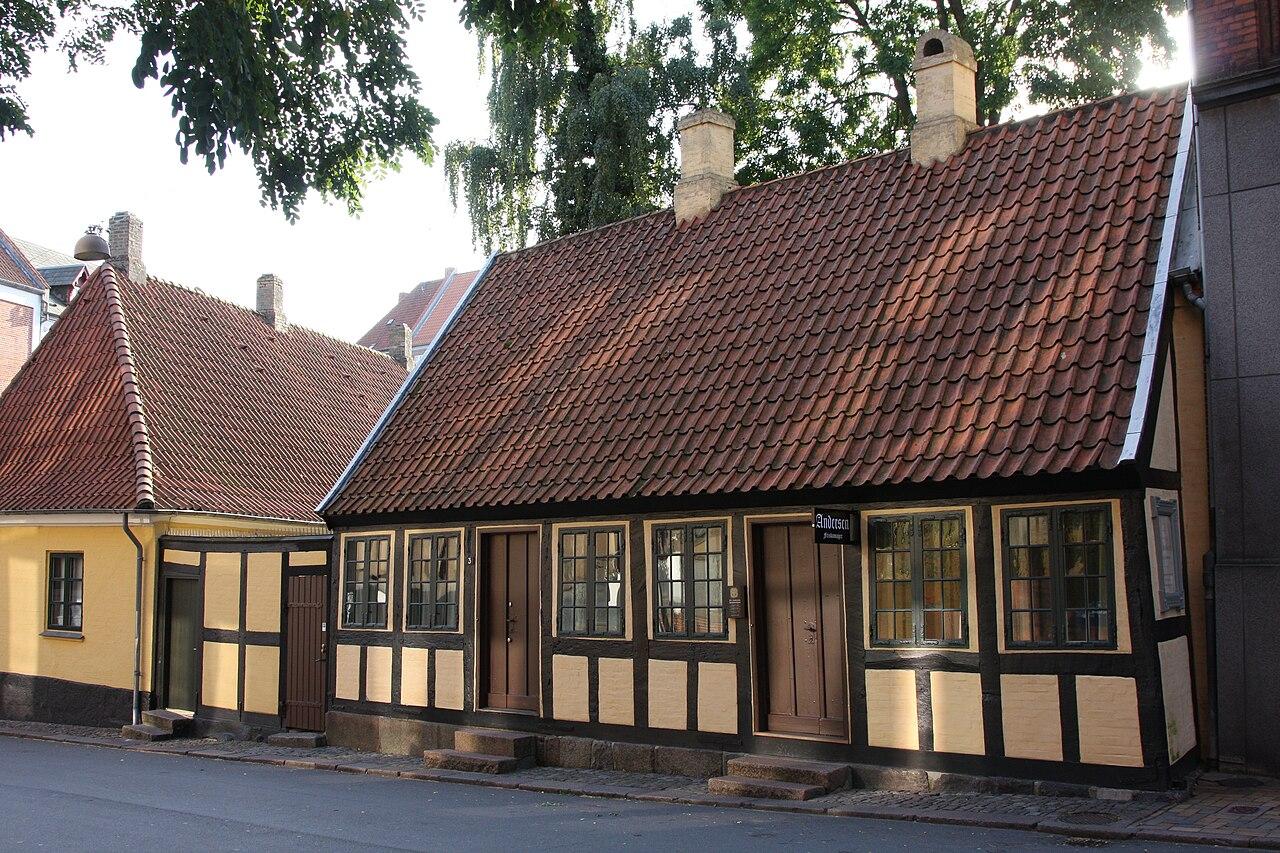
Step into the tiny yellow cottage in Odense where Hans Christian Andersen’s extraordinary imagination grew out of the simplest, humblest of childhood surroundings.

Experience authentic 18th-century Danish village life through restored buildings, costumed interpreters, and hands-on traditional crafts.
