

The Ship Burial Mound, Funen Travel Guide
Step into a reconstructed burial mound above Kerteminde Fjord and gaze down on Denmark’s only preserved Viking ship grave, resting where a 10th‑century king was laid to sail beyond.
Set on a low hill above Kerteminde Fjord, the Ship Burial Mound at Vikingemuseet Ladby shelters Denmark’s only preserved Viking ship grave. Inside the reconstructed mound you step into a dim burial chamber to see the ghostly outline of a 10th-century warship, where a local king was laid to rest around 925 with his horses, dogs and rich grave goods. Outside, grassy paths lead down towards the fjord and the Ladby Dragon, a full-scale reconstructed longship moored where the original once came ashore.
A brief summary to The Ship Burial Mound
- Vikingevej 123, Kerteminde, 5300, DK
- Click to display
- Duration: 1 to 3 hours
- Mid ranged
-
 Mixed
Mixed
- Mobile reception: 4 out of 5

Know before you go
Hi, I'm Eve. Here are a few practical things to know before exploring The Ship Burial Mound.
- Start in the main museum before walking to the mound so the ship grave’s layout, grave goods and timeline make more sense once you step into the burial chamber.
- Wear sturdy shoes and weather-appropriate clothing; the path to the mound is gravel and dirt, and the exposed fjordside can feel windy and cool even in summer.
- If you’re visiting with children, plan time for dress-up in the Vikings’ Wardrobe and seasonal hands-on activities, which help keep younger visitors engaged.
- Bring snacks or a picnic to enjoy on the lawns by the fjord; supplement with hot drinks or ice cream from the small café and shop inside the museum.
- Check the seasonal program in advance if you’d like to see the Ladby Dragon longship in the water or catch special Viking crafts and storytelling events.
Do you manage this location?
Take control to get all the benefits, like improved information, better appearance, and stronger visibility across AI-powered discovery. Learn more about listing your business on Evendo
Activate your presenceOther nearby places you may find interesting
The closest places of the same kind, if this one is not quite what you had in mind.

Explore The Ship Burial Mound on the Map
A handpicked selection of must-see spots near The Ship Burial Mound, mapped for you.
Getting There
-
Car from Kerteminde
From central Kerteminde, driving to the Viking Museum Ladby typically takes 10–15 minutes. You follow local roads through low farmland to Vikingevej, where the museum is signposted. Parking at the museum is free but can feel busy on summer weekends and during school holidays, so arriving earlier in the day usually makes it easier to find a space.
-
Bus from Kerteminde town
Regional bus services run between Kerteminde and Ladby on select routes and mainly on school days, with a short onward walk to the museum taking around 15 minutes on quiet village roads and paths. The bus ride itself is around 5–10 minutes and fares are usually in the range of 20–30 DKK one way, payable by card or travel card depending on the operator.
-
Car from Odense via Funen motorway
From Odense, allow around 35–45 minutes by car. You join the E20 motorway briefly before turning towards Kerteminde, then follow regional roads across the island to Ladby. The route is straightforward but can slow at peak commuter times or in summer holiday traffic near the coast. Parking at the museum is free; height restrictions do not usually affect standard cars or small campervans.
-
Bicycle from Kerteminde
Cycling from Kerteminde to the Ship Burial Mound takes roughly 25–35 minutes at a moderate pace, following small country roads and lanes with gentle hills. The route is well suited to confident cyclists and older children, though it can feel exposed in strong winds. There is no charge for bike access, and you can usually secure your bicycle near the museum building while you explore.
For the on-the-go comforts that matter to you
-
 Restrooms
-
 Drink Options
-
 Drinking Water
-
 Food Options
-
 Seating Areas
-
 Sheltered Areas
-
 Picnic Areas
-
 Trash Bins
-
 Information Boards
-
 Visitor Center
Discover more about The Ship Burial Mound
A Viking king resting above the fjord
The Ship Burial Mound crowns a gentle rise above Kerteminde Fjord, a grassy knoll that hides one of Denmark’s most evocative Viking sites. Beneath this earth, a warship was pulled ashore and transformed into a royal tomb around the year 925. Archaeological investigations revealed the outline of the vessel, iron rivets, animal bones and traces of rich offerings, pointing to a powerful local ruler known today as the Ladby King. Standing outside, with the wind coming off the fjord, it is easy to imagine sails furled here more than a thousand years ago.The mound you see today is a careful reconstruction built directly over the excavation site. It recreates how the grave would have risen from the landscape in the Viking Age, while protecting the fragile remains inside. Simple paths across open lawns connect the mound with the main museum building, weaving through a five-hectare area of grass, trees and low scrub that frames the fjord and underlines how closely this tomb was tied to the sea.Stepping into the burial chamber
A discreet entrance tunnel leads you into the Ship Burial Mound itself. As the doors close behind you, the light dims and the temperature drops, and the outline of the Ladby ship gradually emerges under soft illumination. You walk on a narrow gangway around the vessel, looking down on the ghostly imprint of its wooden hull and the iron fastenings that held it together. At the bow and stern, the ship’s curved lines are still visible, creating a powerful sense of standing beside a vanished warship.Scattered within the hull are the skeletal remains of horses and dogs, sacrificed to accompany the king into the next world. Where weapons, jewellery and other grave gifts once lay, labels and displays now hint at their original position. The atmosphere is hushed and almost theatrical; without spoken commentary, the creaking of the structure and the faint echo of footsteps become part of the experience, inviting you to picture the funeral ceremony that took place here more than a millennium ago.From grave goods to living stories
Back in the main museum, the ship grave is unfolded in detail. Exhibitions explore the Ladby King’s world: his power, beliefs, and connections across the Viking realm. Cases display original grave goods and other local finds in gold, silver and bronze, while reconstructions show how the king might have looked, and how his ship appeared before it was buried. A full-size replica hull, models and immersive displays reconstruct the moment when the dead ruler was laid out in his vessel surrounded by offerings.Family-friendly features make the story tangible. In the “Vikings’ Wardrobe”, adults and children can try on replica clothing based on archaeological textiles, from simple wool tunics to more ornate outfits that signal status. Seasonal programs add further layers, with activities such as experimental archaeology, craft workshops and demonstrations of archery or javelin throwing that echo the skills prized in the Viking Age.The Ladby Dragon and the fjord landscape
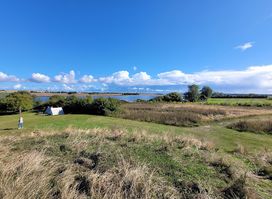
From the mound, a short walk leads down towards the water across open lawns dotted with benches and picnic tables. Here, in summer, the Ladby Dragon – a seaworthy reconstruction of the original ship – lies moored in the fjord below the burial site. Its dragon-headed prow and sweeping lines give a three-dimensional sense of the vessel now preserved as a shadow in the mound. Even when the ship is hauled ashore for maintenance in the colder months, you can usually see it up close as volunteers care for the hull under cover.The setting is as much a part of the visit as the archaeology. The museum grounds stretch along the fjord, with wide views of gentle hills and low islands. On calm days the water reflects the sky and the longship’s silhouette; in rough weather, gusts drive waves against the shore, underlining why fjord-side landing places like Ladby mattered so much to seafaring rulers. The open space invites unhurried exploration, from quiet corners by the water to vantage points where you can look back at the green mound.Planning your time at the mound
Most visits begin in the museum building before continuing to the Ship Burial Mound, which lies roughly 200 metres away along a gravel and dirt path. The route is mostly level but can feel uneven in wet weather, so sturdy footwear is useful. Benches along the way offer rest stops and viewpoints over the fjord. The burial chamber itself is compact, with a single walkway, so at busy times you may share the space with other visitors, adding to the shared hush around the ship.Allow at least an hour to combine the mound with the core exhibition, and longer if you want to linger by the fjord or join seasonal activities. The museum provides restrooms, a small café area and a shop stocked with Viking-themed jewellery, books, mead and toys. With picnic areas and plenty of open grass, the Ship Burial Mound works well as a leisurely half-day stop where you can move between indoor interpretation and the atmospheric outdoor setting that first drew a Viking king here to rest.












Your all‑in‑one travel companion app
Explore expert travel guides, compare and book tours, experiences, hotels, and more—all from the palm of your hand. Download now for seamless trip planning wherever your wanderlust takes you.


Explore More of Funen
Looking beyond The Ship Burial Mound? Discover Funen for broader travel guides, local hot-spots, and regional highlights.
Explore Funen
A modest riverside platform where washerwomen toiled, the Washing Site at Odense River quietly preserves the everyday world that shaped Hans Christian Andersen’s childhood.
Denmark's only Viking ship grave—step into a 10th-century king's tomb and explore a thousand years of Norse history.
