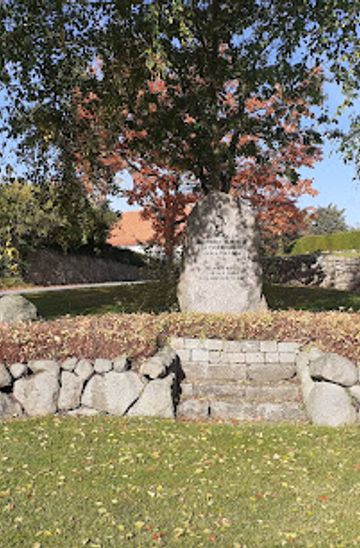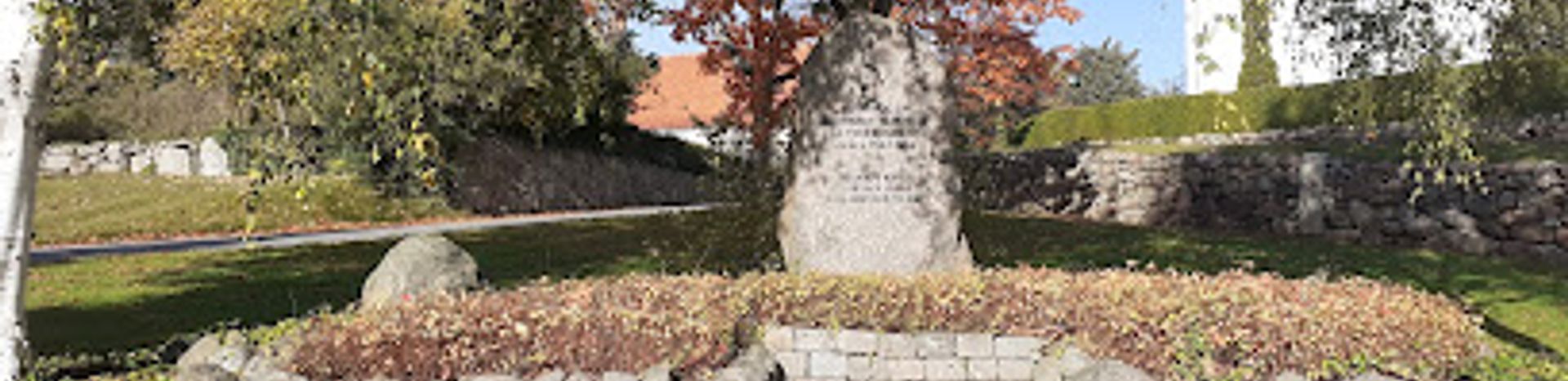
Befrielsesstenen i Vindinge
A modest village liberation stone in front of Vindinge Church, quietly commemorating Denmark’s 1945 freedom amid the calm of rural eastern Funen.
Befrielsesstenen i Vindinge is a modest yet poignant liberation stone standing in front of Vindinge Church in Nyborg. Erected to commemorate Denmark’s liberation from German occupation in May 1945, the engraved boulder anchors national history in a quiet village setting. Surrounded by churchyard greenery and traditional buildings, it offers a reflective stop where you can pause, read the inscription, and sense how the Second World War touched even the smallest Danish communities.
A brief summary to Befrielsessten i Vindinge
- Nyborg, 5800, DK
- Duration: 0.25 to 1 hours
- Free
-
 Outdoor
- Mobile reception: 5 out of 5

Know before you go
Hi, I'm Eve. Here are a few practical things to know before exploring Befrielsessten i Vindinge.
- Combine a stop at Befrielsesstenen with a look at Vindinge Church to appreciate how the liberation story sits within a much older village setting.
- Take a close look at the inscription and any date or wording details, which reflect how local communities chose to remember 1945.
- Visit during daylight for easier reading of the text and to enjoy the calm churchyard atmosphere and surrounding village architecture.
Do you manage this location?
Take control to get all the benefits, like improved information, better appearance, and stronger visibility across AI-powered discovery. Learn more
Activate your presenceOther nearby places you may find interesting
Getting There
-
Car from central Nyborg
From central Nyborg, driving to Vindinge typically takes about 10–15 minutes, using local roads that connect the town with the village 5 km to the west. Parking is usually possible on nearby village streets close to the church, but spaces are limited and shared with local residents and church visitors. There is no fee for visiting the stone itself, and fuel costs for such a short trip are minimal, roughly 10–20 DKK in total depending on your vehicle.
-
Local bus within Nyborg Municipality
Vindinge is served by regional or local buses running between Nyborg and surrounding villages, with journey times commonly around 15–25 minutes depending on the route and stops. Buses generally run less frequently in the evenings and on weekends, so checking current timetables in advance is important. A single adult ticket on local routes in this part of Denmark typically falls in the range of 20–35 DKK, and the nearest stop is within walking distance of the church and liberation stone.
-
Bicycle from Nyborg area
Cycling from Nyborg to Vindinge is a realistic option for reasonably fit riders, taking about 20–30 minutes each way over gently undulating terrain on paved local roads. There are no specific fees, but you should be comfortable sharing stretches of road with car traffic and prepared for wind from the Great Belt area. A bicycle with lights and basic rain protection is advisable in all but the brightest, driest weather, especially outside summer.
For the on-the-go comforts that matter to you
-
 Seating Areas
-
 Trash Bins
-
 Information Boards
Discover more about Befrielsessten i Vindinge
A village stone with a national story
Befrielsesstenen i Vindinge is a simple fieldstone monument set just in front of Vindinge Church in Nyborg Municipality. The stone belongs to a widespread Danish tradition of liberation stones raised after 5 May 1945 to mark the end of the German occupation during the Second World War. Here, in this small village on eastern Funen, the national story is distilled into a single boulder, carefully placed so that everyone entering the churchyard is reminded of those dramatic years.The inscription, carved in clear capital letters, dedicates the stone to the memory of Denmark’s liberation. Many such stones were sponsored and erected by local committees in the late 1940s, and Vindinge’s monument fits that pattern: a locally sourced stone, minimal ornamentation, and a focus on words rather than imagery. The setting, between church wall and village street, underlines the link between faith, community, and collective remembrance.Vindinge Church as a historical backdrop
The liberation stone gains much of its character from its backdrop: Vindinge Church, whose medieval origins give the site a deep time perspective. Stepping into the small forecourt, you stand between centuries of Danish history. The red-brick church, with its traditional tower and churchyard, speaks of village life shaped by agriculture, parish traditions, and gradual change, while the liberation stone fixes a very specific twentieth‑century moment.Around the church, low stone walls, mature trees, and neatly kept graves create an intimate enclosure. Birds and the distant sound of traffic from the Nyborg area mix with the soft rustle of leaves, making the stone feel both exposed to the world and sheltered by the churchyard. This contrast heightens the emotional impact: the calm of the present against the memory of a far more uncertain time.Remembering the occupation years
Although the stone itself is unadorned, it evokes a powerful chapter in Danish history. During the occupation from 1940 to 1945, even rural parishes like Vindinge felt the constraints of censorship, shortages, and the constant awareness of foreign troops in the country. Liberation stones were never triumphalist monuments; instead, they were conceived as quiet markers of relief, gratitude, and hope for a more peaceful future.On commemorative days, the stone can serve as a natural gathering point for wreath‑laying or brief ceremonies, connecting local residents to national remembrance. For visitors, it offers a chance to consider how the global conflict filtered down into small communities, and how people chose to remember it once peace returned.A brief but meaningful stop in the village
From a traveler’s perspective, Befrielsesstenen i Vindinge is not a destination that demands a long visit; it is a short, reflective stop that pairs well with exploring Vindinge Church and the surrounding village streets. You can walk around the stone, take in the inscription, and then step back to see how it aligns visually with the church façade, the path, and nearby greenery.Benches in or near the churchyard, if available, invite a few minutes of quiet contemplation. The monument’s modest size makes it easy to overlook, yet that humility is part of its charm: it feels like a natural element of the village scene, something discovered rather than staged.Fyn landscape and nearby heritage
Vindinge lies just west of Nyborg, close to the Great Belt and the gentle farmland of eastern Funen. The liberation stone thus sits within a wider landscape dotted with manors, small forests, and coastal views. Other memorials and historic features in the parish tell stories of earlier centuries, from medieval ecclesiastical history to regional politics.Using Befrielsesstenen as a starting point, you can frame the area’s heritage across time: early church architecture, early modern estates, and modern‑era memory culture all intersect within a short radius. In this way, the stone becomes a subtle anchor in a broader cultural route on Fyn.Quiet atmosphere and practical notes
As an open‑air monument beside a parish church, the site is freely accessible on foot at most hours of the day, though any access restrictions to the churchyard itself should be respected. There are no dedicated facilities specifically for the stone; amenities, if any, belong to the church area or the wider village. Mobile reception in and around Nyborg and Vindinge is generally reliable, making it easy to combine the stop with digital maps or background reading.Most visitors spend only a short time here, often less than half an hour, yet for those interested in Danish history, war memory, or small‑scale monuments, the stone adds a thoughtful layer to a journey across Funen. Its strength lies in its understatement: a single boulder, a few lines of text, and an entire era quietly contained within.Explore the best of what Befrielsessten i Vindinge has to offer













More about Funen
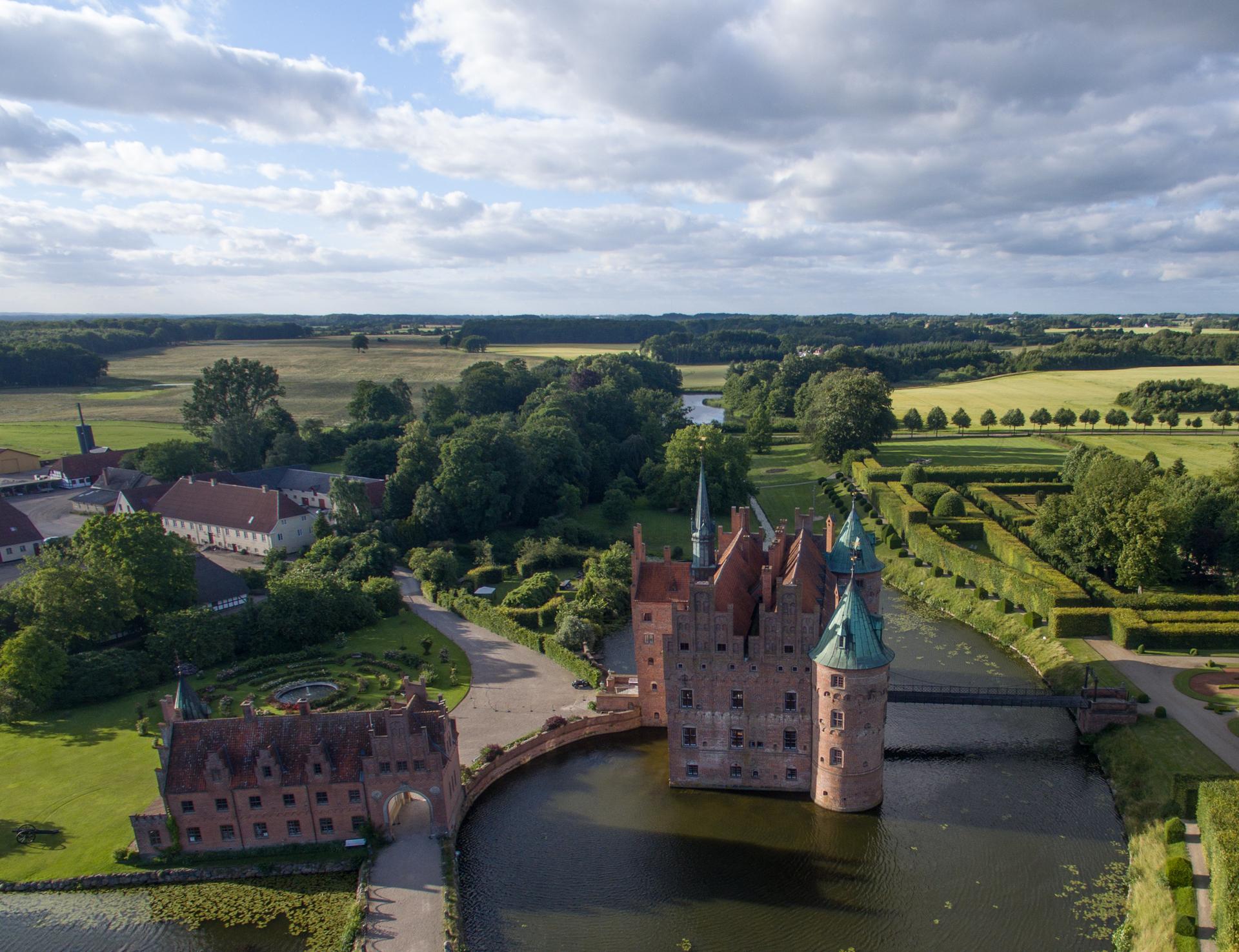
Discover Funen, Denmark's lush island treasure, where fairy tales come to life amidst scenic landscapes, historic castles, and vibrant cultural heritage.
Tell me more about Funen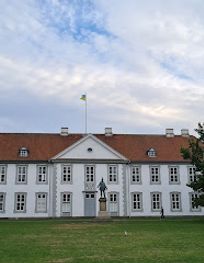
A stately Baroque residence turned civic landmark, Odense Castle pairs calm Scandinavian architecture with a leafy park right in the heart of the city.

A solemn memorial to Denmark's 1945 liberation, nestled in a forested valley near historic Sulkendrup Mill.