
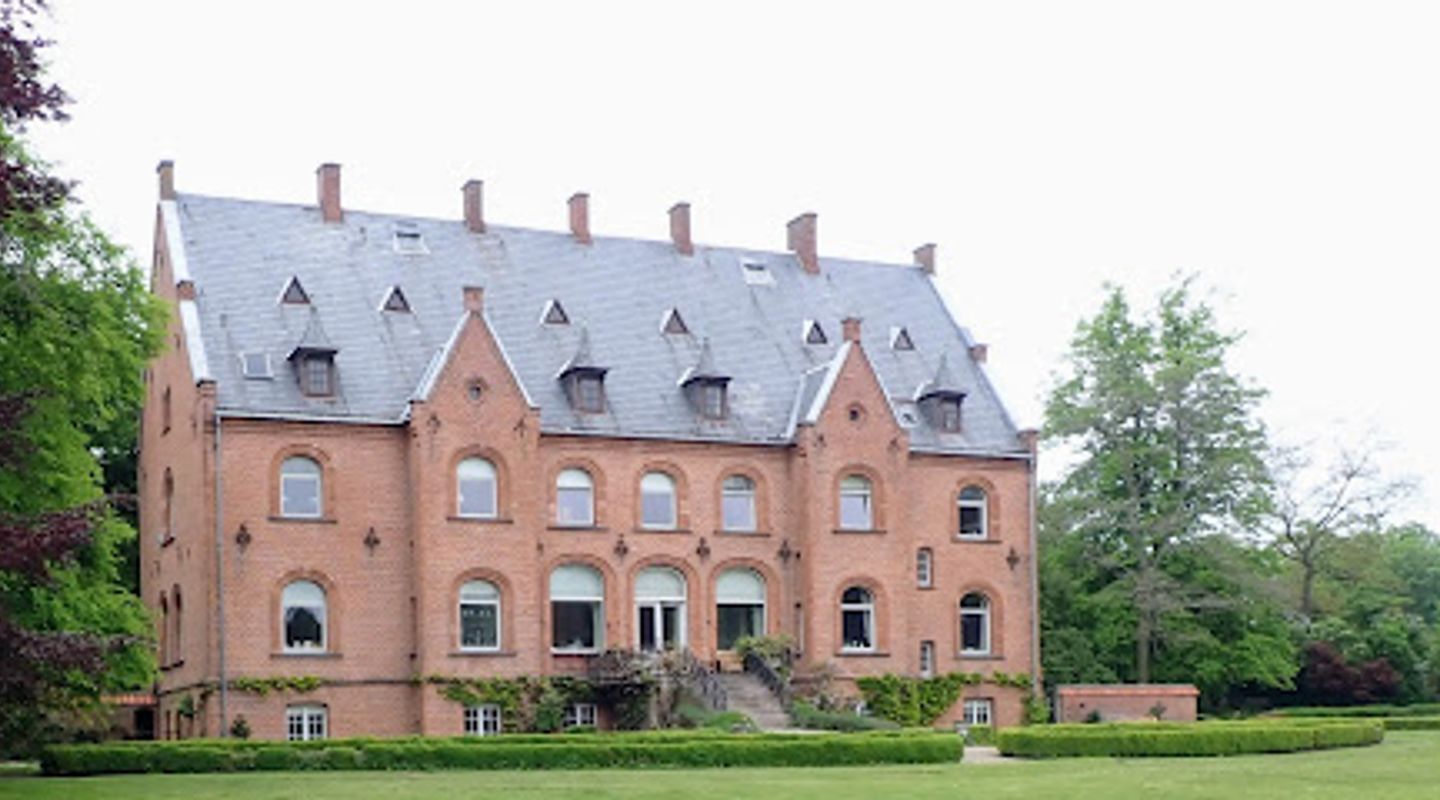
Sanderumgaard v/Erik Vind, Funen Travel Guide
Historic Fyn manor and restored Romantic landscape garden, where peony-filled paths, quiet pavilions and winding waterways create a gently theatrical escape near Odense.
Set in the gentle countryside just outside Odense, Sanderumgaard is a historic manor estate wrapped in a 15‑hectare Romantic landscape garden of lakes, canals and winding paths. Created in the early 1800s as one of Denmark’s first English‑style gardens and painstakingly restored from old paintings and diaries, it mixes peony-filled borders, woodland glades and charming pavilions with working farmland. Today you can wander at your own pace, pause in hidden seating nooks, and experience a rare blend of manor-house history and quietly theatrical garden design.
A brief summary to Sanderumgaard v/Erik Vind
- Sanderumgårdvej 150, Odense, Odense SØ, 5220, DK
- Click to display
- Click to display
- Duration: 1.5 to 4 hours
- Mid ranged
-
 Outdoor
- Mobile reception: 4 out of 5
- Tuesday 11 am-5 pm
- Wednesday 11 am-5 pm
- Thursday 11 am-5 pm
- Friday 11 am-5 pm
- Saturday 11 am-5 pm
- Sunday 11 am-5 pm

Know before you go
Hi, I'm Eve. Here are a few practical things to know before exploring Sanderumgaard v/Erik Vind.
- Plan your visit in late May or June if you want to experience the peonies at their most impressive, with thousands of blooms lighting up the Romantic garden.
- Wear comfortable, flat footwear; many of the paths are grass or gravel and you will enjoy the estate most by exploring on foot at a slow pace.
- Check opening days and special-event dates in advance, as the garden has set hours and seasonal markets that can change the overall feel and level of activity.
- Bring a light jacket even in summer; the areas near water and within the woodland can feel cooler and breezier than central Odense.
- Allow time to simply sit in one of the small pavilions or on a secluded bench; stillness is a key part of understanding this Romantic landscape design.
Do you manage this location?
Take control to get all the benefits, like improved information, better appearance, and stronger visibility across AI-powered discovery. Learn more about listing your business on Evendo
Activate your presenceOther nearby places you may find interesting
The closest places of the same kind, if this one is not quite what you had in mind.

Explore Sanderumgaard v/Erik Vind on the Map
A handpicked selection of must-see spots near Sanderumgaard v/Erik Vind, mapped for you.
Getting There
-
Car from central Odense
Driving from central Odense to Sanderumgaard typically takes 15–25 minutes, depending on traffic. The route follows main roads through the southeastern outskirts of the city into open countryside. There is on-site parking at the estate, but spaces can fill up on market days and during larger events, so arriving earlier in the day helps. There is no additional fee for short-term parking beyond the normal garden entrance ticket.
-
Regional bus plus short walk
Several regional bus lines run between Odense and the southeastern suburbs and villages near Sanderumgaard, with journey times of around 25–40 minutes from the city centre. Services are more frequent on weekdays and daytime hours, with reduced timetables in the evening and on Sundays. Expect to pay roughly 25–40 DKK each way within the local zone system. From the nearest stop you should be prepared for a country-road walk on uneven surfaces; this option is not ideal for travelers with limited mobility.
-
Taxi from Odense
A taxi from central Odense to Sanderumgaard typically takes 15–20 minutes, depending on traffic and exact starting point. Fares usually fall in the range of 250–350 DKK one way, with higher prices at night and on holidays. Taxis can drop you close to the garden entrance, making this a convenient choice if you are short on time or traveling in a small group that can share the cost.
-
Bicycle from Odense area
Confident cyclists can reach Sanderumgaard from Odense in roughly 35–55 minutes, depending on the starting neighbourhood and pace. The ride combines urban streets with quieter country roads, some without dedicated cycle lanes, so visibility gear and caution are important. The terrain is mostly gentle, but wind can make the journey more demanding. There is no cost beyond bike rental if needed, making this a scenic, budget-friendly option in light and dry conditions.
For the on-the-go comforts that matter to you
-
 Restrooms
-
 Drink Options
-
 Drinking Water
-
 Food Options
-
 Seating Areas
-
 Sheltered Areas
-
 Picnic Areas
-
 Trash Bins
-
 Information Boards
-
 Visitor Center
Discover more about Sanderumgaard v/Erik Vind
A Fyn Manor Steeped in Centuries of History
Sanderumgaard lies in the rolling countryside southeast of Odense, a classic Fyn manor surrounded by fields, woodland and water. The estate’s roots stretch back to the 1400s, when this landscape still bordered Odense Fjord, and much of the land is reclaimed seabed that later became fertile farmland. Over time the property evolved into a substantial estate of fields and forest, with the main house and farm buildings forming a compact historic core.The manor has long been a working agricultural and forestry property, and you still sense that productive rhythm in the barns, fields and shelterbelts that frame the garden. Yet behind the practical surface lies a layered cultural story of landscape design, changing tastes and the ambitions of successive owners.The Birth of Denmark’s Romantic Landscape Garden
In the early 1800s, owner Johan Bülow reshaped the land around the house into a Romantic landscape garden in the English style, one of the very first of its kind in Denmark. Instead of formal parterres, he created meandering paths, small islands, quiet coves and sweeping views across water and meadow. The idea was to invite contemplation and emotion rather than display strict symmetry.Bülow dotted the grounds with small pavilions, viewpoints and intimate resting places. The garden became a living narrative, encouraging visitors to wander, pause and reflect as the scenery shifted from open water to shady thicket or flowering banks. This deliberate choreography of movement and mood still underpins the experience today.Restoration from Paintings, Diaries and Memory
By the 20th century, much of the original design had softened or disappeared under more utilitarian planting. The current owning family, led by Susanne and Erik Vind, undertook a major restoration, reopening the garden to the public in 2010 after years of research and careful work. Old paintings, maps and garden journals were used as guides, allowing historic sightlines, path curves and planting themes to be recreated.The result is not a museum piece frozen in time but a garden that feels both authentic and alive. Historic structures have been repaired, bridges renewed and water features revitalised, while new plantings respect the Romantic spirit. Seasonal markets and events are held in and around the garden, adding contemporary life to the historic framework.A Peony-Rich Tapestry of Water, Trees and Flowers
One of Sanderumgaard’s signatures is its extensive collection of peonies, with thousands of plants woven into beds and borders throughout the 15‑hectare garden. Early summer brings clouds of blossom in whites, pinks and deep reds, set against lawns, shrubs and mature trees. The peonies have become a point of pride for the estate, linking present-day horticulture to the first peony plantings recorded here in the early 1800s.Beyond the flowers, the garden is structured around canals, ponds and small lakes, often edged with reed beds, willows and romantic wooden structures. Yellow waterlilies dot the surfaces in warmer months, and reflections of trees and pavilions give the scene a quietly theatrical quality, especially in the soft evening light.Paths, Hideaways and Moments of Quiet
For visitors, the main pleasure lies in wandering. Winding paths lead through woodland, across bridges and along narrow banks with water on both sides. Here and there, you encounter small shelters, benches, a swing by a pavilion or a viewpoint framed by branches. These are designed as places to linger with a book, share a conversation or simply listen to the sounds of wind and birds.Despite its historical importance, Sanderumgaard feels immediately approachable: a place to sit on the grass, watch dragonflies over the water or trace the route of an old canal. The blend of history, horticulture and gentle Fyn landscape makes it an appealing half-day escape from town life.Events, Manor Life and Today’s Estate
The manor buildings themselves host private events such as weddings, meetings and celebrations, and their restored interiors echo the estate’s long story while functioning to modern standards. On selected dates, seasonal markets bring stalls, produce and crafts into the garden setting, underlining the estate’s role as a living rural hub.Yet even on ordinary open days, the atmosphere remains calm and unhurried. You move between glimpses of working farmland and carefully framed garden scenes, always with a sense that this is both a historic place and a contemporary home. That dual identity—productive estate and Romantic refuge—is what gives Sanderumgaard its particular character.More to explore near Sanderumgaard v/Erik Vind













Your all‑in‑one travel companion app
Explore expert travel guides, compare and book tours, experiences, hotels, and more—all from the palm of your hand. Download now for seamless trip planning wherever your wanderlust takes you.


Explore More of Funen
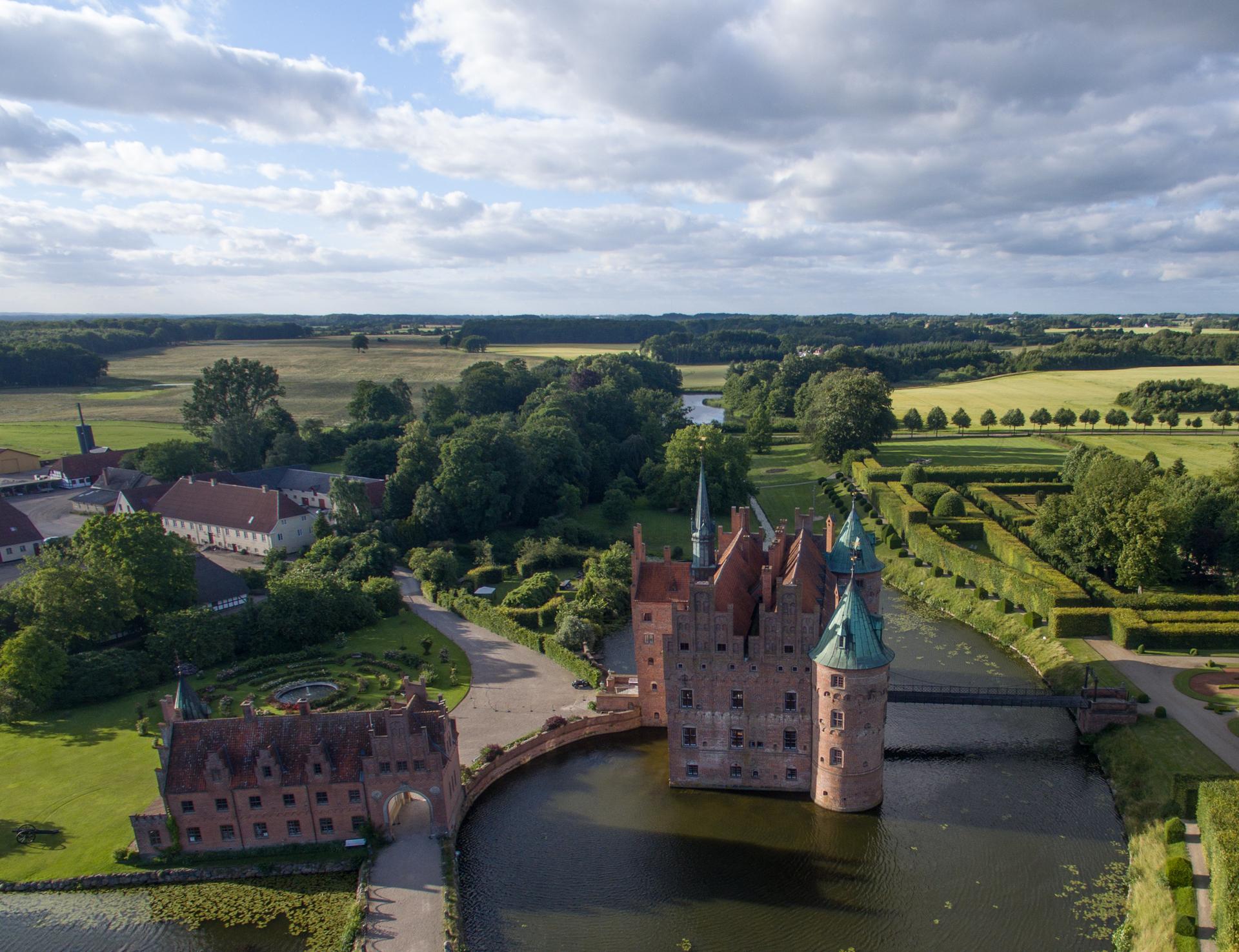
Looking beyond Sanderumgaard v/Erik Vind? Discover Funen for broader travel guides, local hot-spots, and regional highlights.
Explore Funen
A small historic spring hidden in Odense’s riverside green belt, Marie-Kilden offers a quiet glimpse of parish history and folklore amid trees, paths and gentle birdsong.
A cosy countryside museum where glacial boulders, sparkling minerals and ancient fossils from the Tarup–Davinde gravel pits reveal Funen’s deep geological past.
