Dragør Havn (Dragør Harbour)
Historic Dragør Havn blends centuries of maritime heritage with a working waterfront, cosy quayside cafés and wide Øresund views just south of Copenhagen.
A historic harbour shaped by the Øresund
Dragør Havn is the beating heart of one of Denmark’s best-preserved maritime towns, set on the shallow strait of Øresund south of Copenhagen. For centuries this modest harbour was a major player: in the Middle Ages it hosted huge herring markets serving traders from across northern Europe, and later it became one of the country’s busiest sailing ports. The curve of quays and moles you see today follows that long history, with layers of stone, timber and brick telling of constant adaptation to wind, waves and trade. Because the waters off Dragør are shallow and tricky to navigate, the harbour naturally developed into a place of pilots and salvage crews. Ships bound for Copenhagen or the Baltic relied on local expertise to guide them safely through the sandbanks. This mix of everyday work and international traffic gave the port a cosmopolitan edge, even as it remained firmly rooted in small-town life.Old port buildings and quiet corners
Along the quays you pass a string of low, sturdy buildings that once supported the harbour’s busiest days: a former blacksmith’s workshop, pitch house, port office, quarantine facilities and the old pilot station. Many date back to the 18th and 19th centuries, when Dragør’s sailing fleet was rivalled only by Copenhagen. Their simple brick walls, small-paned windows and red-tiled roofs reflect traditional Danish coastal architecture, adapted to salt air and hard use. Today these houses have new roles as small museums, clubhouses and exhibition spaces, but they still feel closely connected to the sea. Nets sometimes hang to dry, tools and buoys are stacked beside doors, and plaques recall pilots, captains and craftspeople who worked here. Step away from the main quay and you find quieter nooks: a former drying ground for fishing nets, sheds used by local fishermen, and narrow alleys leading straight back into the old town.Life on the waterfront today
Although its days as a major commercial port are over, Dragør Havn remains a living harbour rather than a set piece. A handful of fishing boats still head out into Øresund, moored alongside sleek yachts and visiting sailing ships. Maritime clubs bring regular activity, from dinghy training to weekend regattas, and there is a relaxed chatter of boat maintenance, clinking rigging and gulls overhead. Cafés and restaurants cluster around the inner basin, their terraces spilling onto cobbles in summer. Locals and visitors nurse coffee or beer while watching the light change over the water. Children clamber over rocks and along the breakwater, and walkers follow the promenade towards Dragør Fort and the open coast. Even on colder days, the harbour has a quiet appeal, with clear northern light and a briny wind that reminds you why ships once flocked here.Fortifications, pilots and sea stories
Dragør’s strategic position meant it was not only about trade and fishing but also defence and control. Just south of the main harbour lies Dragør Fort, built in the early 1900s on an artificial island as part of the sea defences for Copenhagen. From the harbour it appears as a low, grassed-over shape with concrete structures, a reminder that the placid Øresund has long been a guarded gateway. The town also played a crucial role in piloting, with one of Denmark’s earliest organised pilot services based here since the 17th century. Stories from the pilot station tell of winter storms, narrow escapes on the shoals and long nights watching for mast lights on the horizon. Other tales reach into more recent history, when local cutters and fishing boats helped people across to neutral Sweden during the Second World War, anchoring Dragør’s maritime identity in both everyday work and moments of quiet heroism.Between harbour, old town and horizon
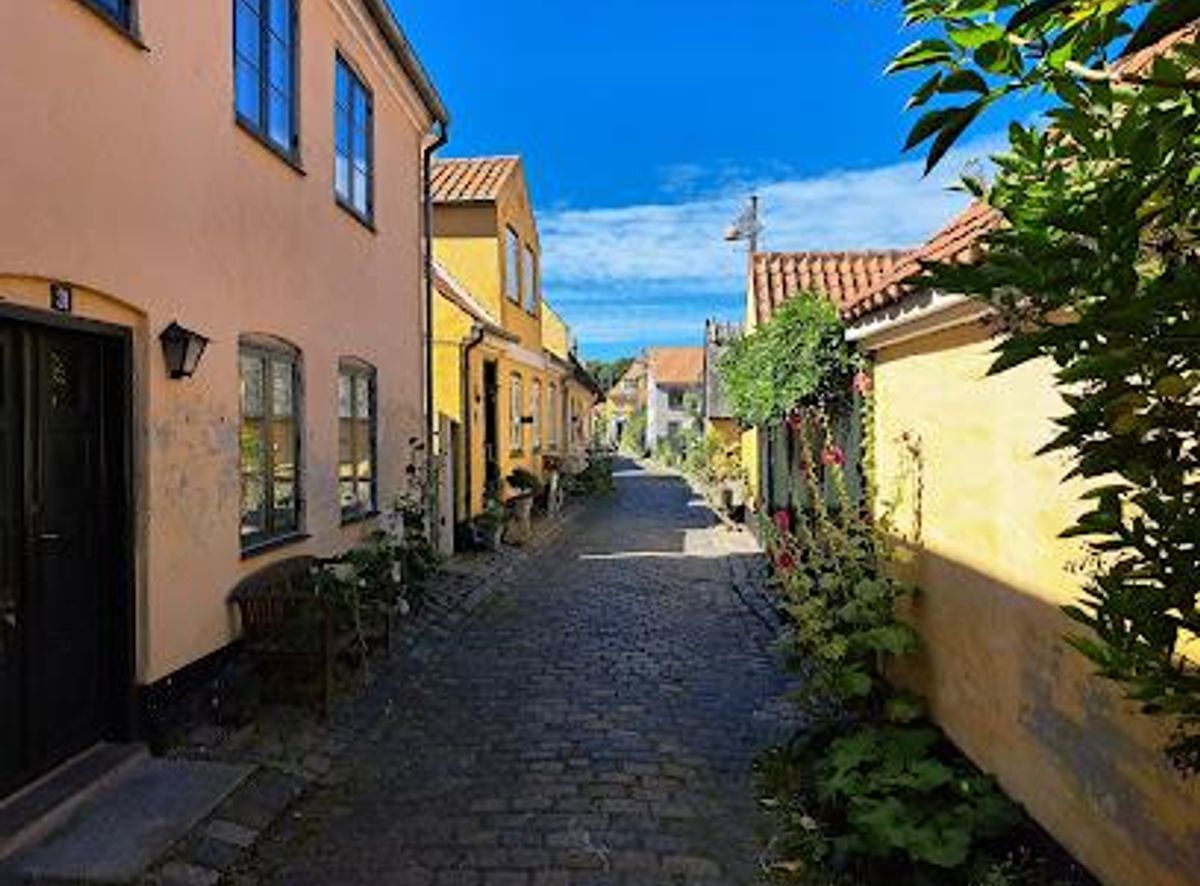
One of the pleasures of Dragør Havn is how seamlessly it connects to its surroundings. Turn your back on the water and you are immediately in a maze of cobbled lanes and low yellow houses, the old town that grew directly from the harbour’s prosperity. Turn towards the sea and the view opens to Øresund, the long sweep of coastline and, in clear weather, the modern line of the bridge arching towards Sweden. This interplay of intimate scale and wide horizon defines the experience here. The harbour is compact enough to explore slowly in an hour, yet rich enough in detail to reward repeat wanderings: changing light on old brick, reflections of masts in still water, the smell of tarred wood and seaweed. Whether you come for a brief stroll, a lingering meal by the quay or as part of a wider exploration of Dragør, the harbour is the place where the town’s past and present meet most vividly.Local tips
- Bring a windproof layer: the harbour is often breezy, even on sunny days, especially along the outer moles and near Dragør Fort.
- Combine a harbour stroll with time in Dragør’s old town; the cobbled lanes and yellow houses begin just behind the quays.
- If you enjoy maritime history, check opening hours for the local museums and pilot-related exhibits around the harbour in advance.
- Photographers get the best light in early morning or late afternoon, when the low sun warms the yellow facades and softens reflections on the water.
A brief summary to Dragør havn
- Vestgrønningen 4, Dragør, 2791, DK
- Visit website
- Monday 12 am-12 am
- Tuesday 12 am-12 am
- Wednesday 12 am-12 am
- Thursday 12 am-12 am
- Friday 12 am-12 am
- Saturday 12 am-12 am
- Sunday 12 am-12 am
Getting There
-
Bus from central Copenhagen
From Copenhagen’s central area, take an S-bus towards Dragør (such as line 250S) and ride to the Dragør Skole stop near Vestgrønningen. The trip typically takes 35–50 minutes depending on traffic, and standard zone-based tickets cost roughly 24–36 DKK each way. Buses run frequently during the day but less often late at night, and most vehicles are low-floor, making this a practical option for travellers with limited mobility.
-
Bike ride via Amager
Cycling from Copenhagen to Dragør Havn is a popular choice in good weather, following marked bike routes across Amager. Expect 60–90 minutes of easy, mostly flat riding each way, with stretches along quieter roads and coastal paths. There is no extra cost beyond any bike rental, and several racks are available around the harbour, though space can be tight on warm summer weekends.
-
Taxi from Copenhagen Airport
From Copenhagen Airport, a taxi ride to Dragør Havn generally takes 15–25 minutes, depending on traffic around Amager. Fares usually fall in the range of 160–260 DKK one way, with surcharges in late evening or at night. This is the most direct option if you are travelling with luggage or a small group, but note that vehicles cannot enter all of the narrow historic streets immediately behind the harbour.