St. Anne's Church, North Zealand Travel Guide
Art Nouveau Catholic basilica on Amager, where golden panels, carved altars and quiet devotion reveal a different spiritual side of Copenhagen.
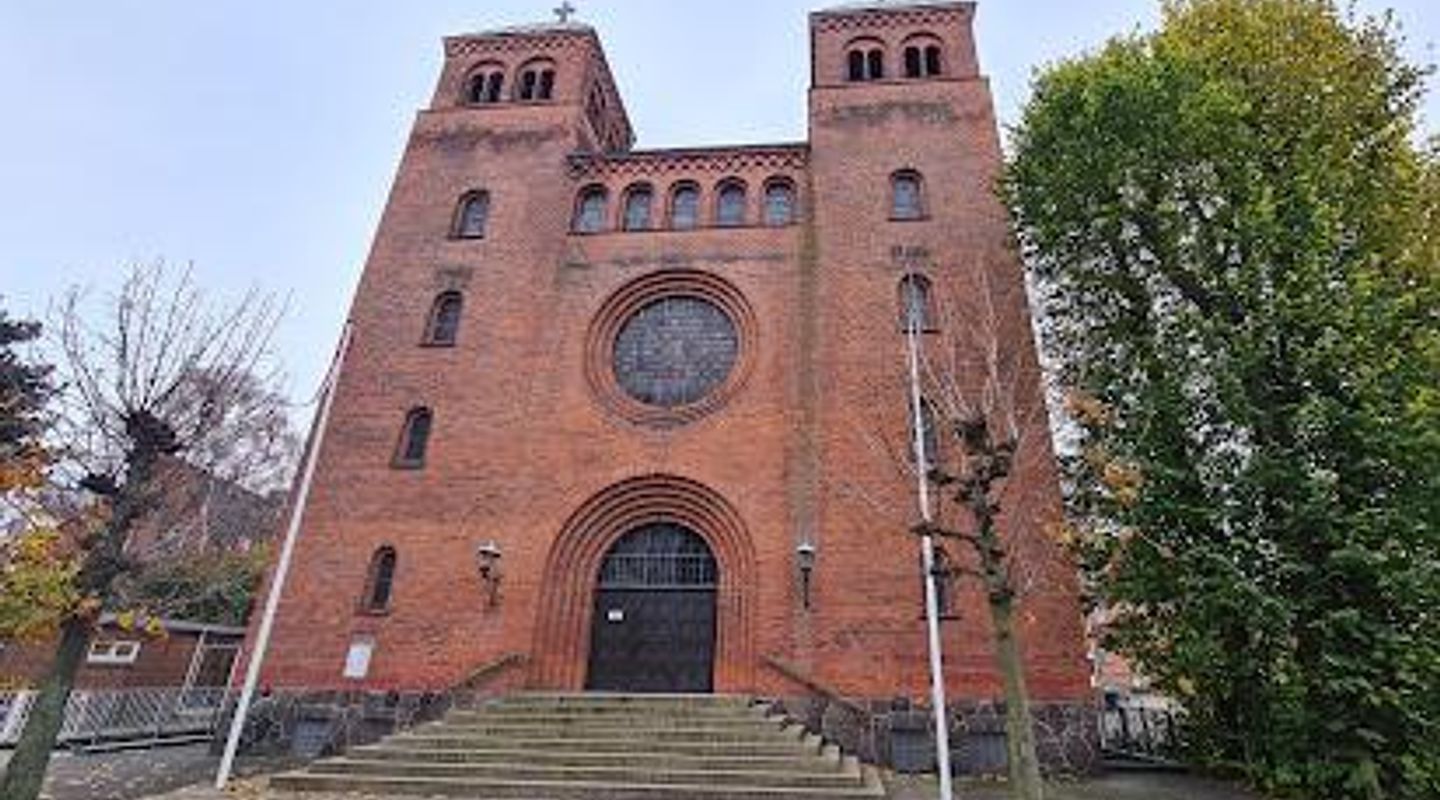
St. Anne’s Church on Amager is one of Copenhagen’s principal Catholic churches, blending early 20th‑century Art Nouveau with a basilica-inspired façade and twin towers. Behind its brick exterior lies a warm, richly decorated interior with side altars, carved woodwork and golden panels depicting key scenes from the life of Christ. More than a parish church, it is a spiritual hub for Copenhagen’s diverse Catholic community and a calm, contemplative stop beyond the city center.
A brief summary to St. Anne's Church
- Dronning Elisabeths Allé 3, Copenhagen, Amager Vest, 2300, DK
- Click to display
- Duration: 0.5 to 1.5 hours
- Free
-
 Indoor
- Mobile reception: 5 out of 5

Know before you go
Hi, I'm Eve. Here are a few practical things to know before exploring St. Anne's Church.
- Check typical church opening hours in advance; outside service times the main doors may be unlocked only for limited daytime slots.
- Dress modestly and keep voices low; this is an active parish church where services and private prayer often take place.
- Allow time to study the side altar to Our Lady of Perpetual Help and the gold-backed panels around the sanctuary; small binoculars or a zoom lens help with details.
- Combine your visit with a stroll through the surrounding Amager neighborhood to experience everyday Copenhagen alongside this religious landmark.
Do you manage this location?
Take control to get all the benefits, like improved information, better appearance, and stronger visibility across AI-powered discovery. Learn more about listing your business on Evendo
Activate your presenceOther nearby places you may find interesting
The closest places of the same kind, if this one is not quite what you had in mind.

Explore St. Anne's Church on the Map
A handpicked selection of must-see spots near St. Anne's Church, mapped for you.
Unlock the Best of St. Anne's Church
Buy tickets
-
No tickets available
Book tours with entry


Book tours without entry
-
No tours available
Getting There
-
Metro and short walk
From central Copenhagen, take the M1 or M2 metro line to Øresund or Amagerbro station; trains typically run every few minutes and the journey takes about 5–10 minutes. A straightforward walk of around 10–15 minutes on mostly flat pavements leads through residential streets to the church, suitable for most visitors including those with light mobility issues. Standard metro tickets for this zone combination usually cost in the range of 20–30 DKK one way.
-
City bus
Several city bus routes run between central Copenhagen and Amager, with stops within a 5–10 minute walk of the church. Travel time is usually 15–25 minutes depending on traffic, with more frequent departures on weekdays and daytime hours. Modern low-floor buses provide easy boarding, and a single bus ticket within the relevant zones generally costs about 20–30 DKK.
-
Bicycle
Copenhagen’s cycling infrastructure makes it practical to reach St. Anne’s Church by bike from most central districts in around 15–25 minutes. Dedicated cycle lanes cover much of the route and the terrain is flat, though riders should be comfortable with urban traffic and obey local cycling rules. Rental bikes and city bike schemes are widely available, usually priced either per hour or as a daily rate comparable to a few standard public transport tickets.
-
Taxi or rideshare
Taxis and licensed rideshare services from central Copenhagen to the church typically take 10–20 minutes, depending on traffic over the harbour and along Amager’s main roads. Vehicles can drop passengers close to the church entrance, making this a convenient option for those with limited mobility. Fares for such a journey are commonly in the range of 100–200 DKK, with higher prices at night and on weekends.
For the on-the-go comforts that matter to you
-
 Restrooms
-
 Seating Areas
-
 Sheltered Areas
-
 Trash Bins
-
 Information Boards
Discover more about St. Anne's Church
A Catholic landmark in Lutheran Copenhagen
St. Anne’s Church stands in the Amager district as one of Copenhagen’s most important Roman Catholic churches, in a country where Lutheranism has long dominated religious life. The parish traces its roots to the late 19th century, when a modest chapel dedicated to St. Anne served a small but growing Catholic community on the island. As the congregation expanded, a larger permanent church became essential, and the present building was completed in the 1930s, giving Amager a fully fledged Catholic parish church with its own monastery community.The church has since become a focal point for Catholics from Denmark and far beyond, reflecting the increasingly international character of the city. Masses and activities draw worshippers from many cultural backgrounds, and the building frequently hosts services in multiple languages. Even for non-Catholic visitors, it offers an intriguing glimpse into the history of religious minorities in Denmark and the gradual return of Catholic life after centuries of restriction.Architecture shaped by Art Nouveau and basilica traditions
Architecturally, St. Anne’s Church is a fascinating blend of influences. Its twin-towered façade recalls the profile of older European basilicas, yet the details belong firmly to the early 20th century. Built largely in brick and stone, the exterior is composed in a restrained, almost austere style that fits Denmark’s architectural sensibilities, while subtle Art Nouveau accents soften the lines around windows, portals and decorative reliefs.The church’s plan follows a traditional longitudinal layout, leading the eye toward the high altar. The proportions feel generous without overwhelming the visitor, and the two towers frame the entrance, acting as a visual anchor along Dronning Elisabeths Allé. Inside, the basilican idea continues: a central nave with side aisles, an elevated sanctuary and a strong axial focus. This combination of classical church planning and early modern detail makes St. Anne’s an appealing study for architecture enthusiasts.An interior rich with carvings, altars and golden imagery
The interior is where St. Anne’s truly reveals its character. Warm-toned materials, carved wood and soft light filtering through tall windows create an atmosphere that is both solemn and welcoming. One of the most striking features is a side altar dedicated to Our Lady of Perpetual Help, a motif closely associated with the Redemptorist order that has long served the parish. The altar incorporates intricate carvings, including 19th-century work attributed to Danish sculptor Axel Thielman, connecting the church to a broader tradition of Catholic devotional art.Around the sanctuary, large panels backed in gold depict pivotal scenes from the life of Christ: the Nativity, the Last Supper, a moving Pietà and the Ascension. These images, glowing against their gilded grounds, offer a visual catechism that rewards unhurried contemplation. Elsewhere, a nine-paneled wooden structure centered on St. Anne illustrates the evolution of the parish—from early chapel to the first church and finally to the present building—turning the church’s own history into a work of art.A living parish and spiritual refuge
Beyond its architectural and artistic interest, St. Anne’s functions as a vibrant parish church. Regular Masses, sacraments and community events bring together a mosaic of nationalities, including long-established Danish Catholics and newer communities from Europe, Asia and beyond. The presence of resident clergy and religious adds to the sense of continuity, and liturgy often includes strong choral and congregational singing that fills the vaulted interior.For visitors, the atmosphere inside is notably calm compared with the busier quarters of central Copenhagen. Even outside service times, the church offers a quiet space to sit, reflect or simply absorb the details of the decoration. Candles, devotional statues and side chapels provide intimate corners for private prayer, while the main nave invites a slower, more expansive kind of contemplation.Exploring the surroundings on leafy Amager
St. Anne’s stands in a largely residential part of Amager, a short distance from parks, local cafés and everyday Copenhagen life. The setting gives the visit a neighborhood feel: outside the doors, you are as likely to encounter cyclists on their daily commute as fellow sightseers. This contrast between the sacred interior and the relaxed, domestic surroundings is part of the church’s charm.Combining architectural interest, layered history and a lived sense of faith, St. Anne’s Church rewards those who venture slightly beyond the tourist core. Whether you come for quiet reflection, to admire early 20th‑century church design or simply to experience a different facet of Copenhagen’s cultural tapestry, this Amager landmark offers a thoughtful, unhurried stop on any city itinerary.












Your all‑in‑one travel companion app
Explore expert travel guides, compare and book tours, experiences, hotels, and more—all from the palm of your hand. Download now for seamless trip planning wherever your wanderlust takes you.


Explore More of North Zealand
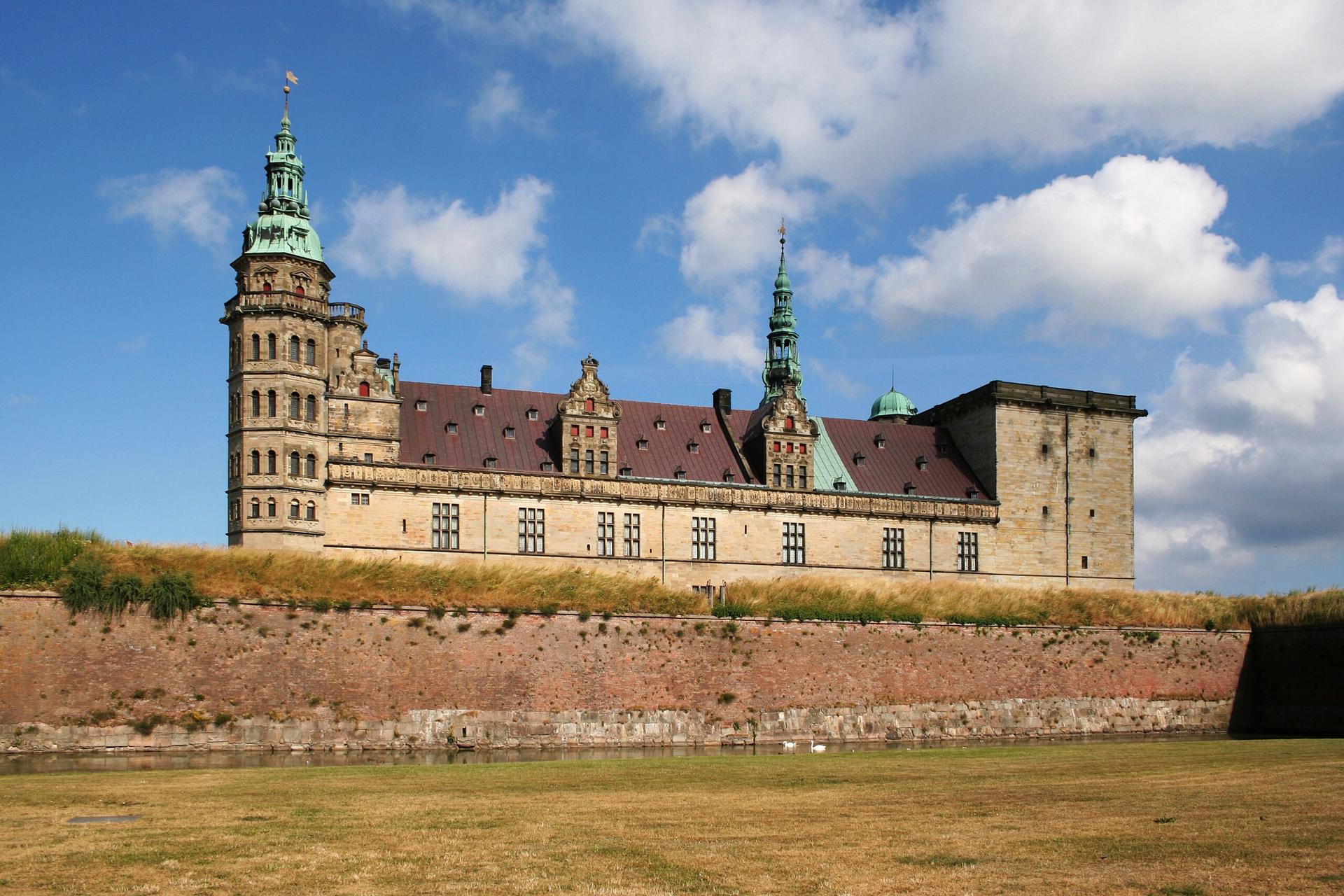
Looking beyond St. Anne's Church? Discover North Zealand for broader travel guides, local hot-spots, and regional highlights.
Explore North Zealand