Læsø Saltsyderi Travel Guide
Free Guide: Living saltworks on remote Læsø where smoke, steam and medieval craft turn briny groundwater into Denmark’s most distinctive sea salt.


A brief summary of Læsø Saltsyderi
Living saltworks on remote Læsø where smoke, steam and medieval craft turn briny groundwater into Denmark’s most distinctive sea salt.
Læsø Saltsyderi is a working open‑air saltworks and living museum set amid the flat salt meadows of Læsø, where Denmark’s medieval salt‑making craft has been revived. In reconstructed wooden seething huts, salty groundwater from the nearby Rønnerne marshes is gently evaporated in large iron pans above open fires, creating the island’s famous crystalline sea salt. Free talks by salt workers, rustic timber architecture, and a shop stocked with local salt products make this one of Læsø’s signature experiences.
On-site amenities
 Restrooms
 Drink options
 Drinking water
 Food options
 Seating areas
 Sheltered areas
 Trash bins
 Information boards
 Visitor centre
Opening hours
- Mon–Sat10 am–4 pm
- Sun10 am–2 pm
Opening hours as listed on the venue’s Google Business Profile. Hours can change for services and special events, so check with the venue before you go.
- Address
- Hornfiskrønvej 3, 9940 Læsø
- Phone
- Website
Getting there
Car from Vesterø Havn ferry terminal
Local bus across Læsø
Bicycle from Byrum
Discover more about Læsø Saltsyderi
Salt Island Stories on the Edge of the Kattegat
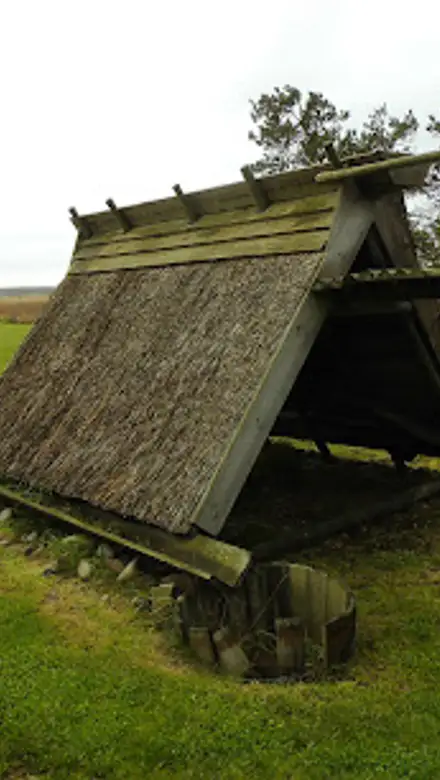
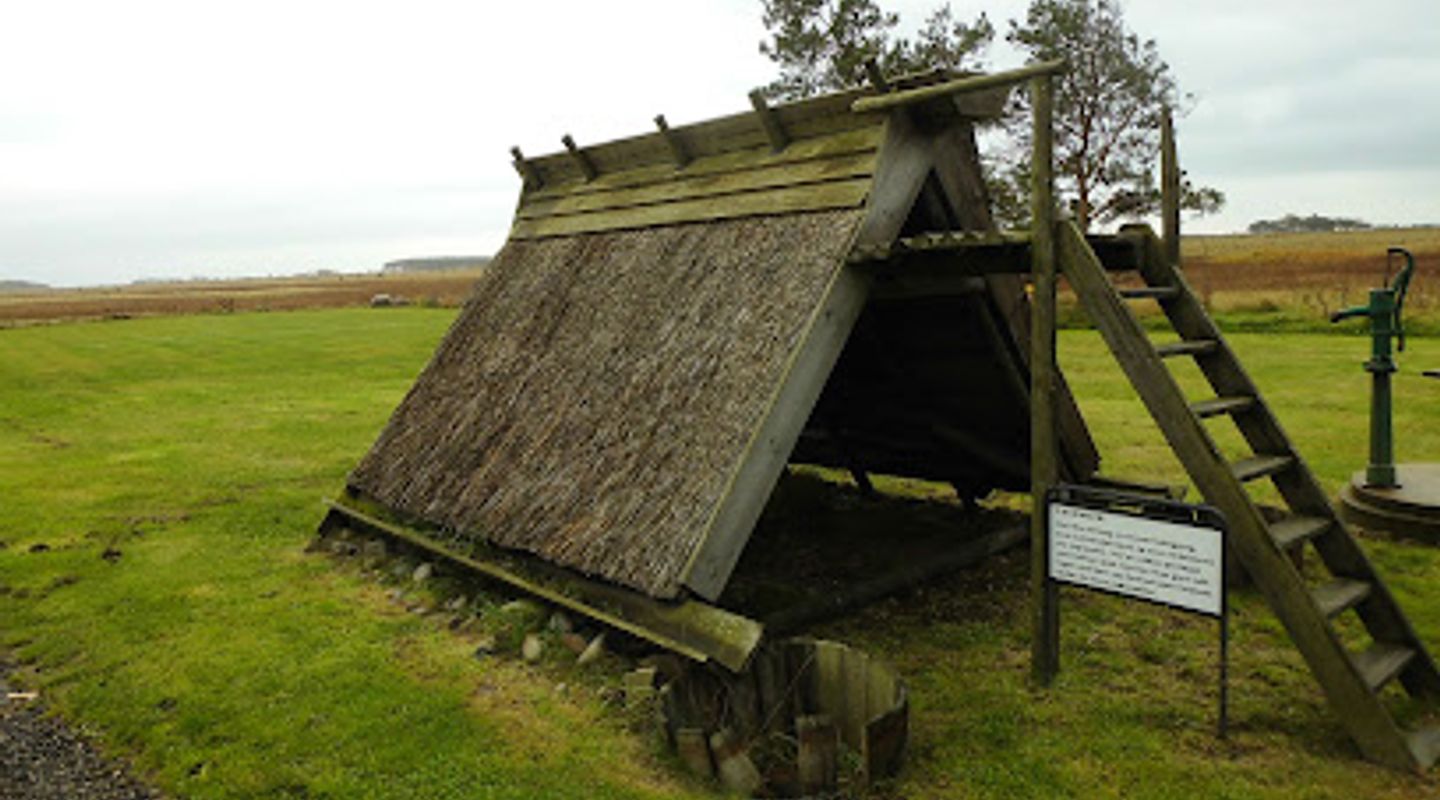
Læsø Saltsyderi sits low in the landscape, surrounded by open salt meadows and big northern skies that give you an immediate sense of Læsø’s relationship with the sea. Here, the island’s identity is distilled into a single element: salt. For centuries, Læsø’s fortunes rose and fell with this precious mineral, which was once as valuable as coin. The saltworks revives that story in a tactile, atmospheric setting where smoke, steam and weathered timber create the feeling of stepping back several hundred years.From the outside, the complex looks almost like a small hamlet: clusters of tar‑dark wooden huts, turf roofs and stacked firewood. There is nothing polished or urban here; instead, the wind, the cries of seabirds and the scent of brine and smoke frame your first impression. It is a place where geology, climate and human ingenuity intersect in a very concrete way.
Reviving a Medieval Craft in Seething Huts
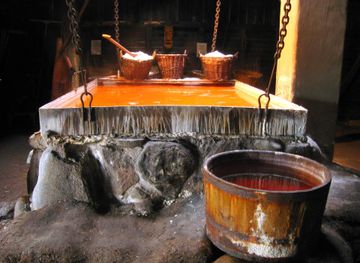
Inside the seething huts, the craft of salt‑making is recreated as it was practised on Læsø from the 12th century for roughly 500 years. Salty groundwater is still drawn from wells in the nearby Rønnerne area, where winter storm surges, sandy soils and a layer of blue clay trap seawater close to the surface until evaporation raises the brine to remarkable concentrations. This mineral‑rich water is poured into broad iron pans suspended over open fires that must never quite reach a rolling boil.As the brine gently simmers, salt crystals begin to form, thickening into a glistening layer that is raked and lifted into baskets to drain and dry. The process is deliberately slow, more alchemy than industry. Throughout the main season, salt workers give scheduled talks in the huts, explaining temperature control, crystal formation and the island’s salt history while pushing wooden rakes through the shimmering surface. The combination of crackling fire, shafts of light through the rafters and the low hum of explanation gives the room an almost ritual quality.
Architecture Inspired by Archaeology
Læsø Saltsyderi is not a generic reconstruction but the outcome of years of archaeological work on medieval salt sites around the island. Excavations led to detailed knowledge of hut layouts, hearth positions and building dimensions, which have been translated into the current structures. The first seething hut was opened in the early 1990s as a faithful interpretation of a 12th‑century building; later, a larger double hut was added, mirroring an excavated longhouse‑like complex.Timber beams are left exposed, their darkened surfaces bearing the patina of smoke and heat. Roofs are low and functional, designed to trap warmth and guide steam up and out. Earthen floors, stacked firewood and simple tools reinforce the sense of a working production site rather than a conventional museum gallery. Outside, the huts blend almost seamlessly into the flat, windswept coast, linking the architecture to the very landscape that made the salt trade possible.
From Brine to Table in the Salt Shop
A central part of the experience is seeing how the mineral that drips from those iron pans becomes an everyday ingredient. The on‑site shop stocks a wide range of Læsø salt in different grain sizes and blends, from coarse kitchen salt to flavored varieties mixed with herbs or seaweed. Packaging is simple and tactile, often in glass jars or rustic containers that echo the setting.You can trace a straight line from the brine wells, through the seething huts, to the labeled jars on the shelves just a few steps away. In addition to salt itself, shelves usually hold locally produced items that incorporate Læsø salt, such as bath salts or culinary specialties. For many visitors this becomes the tangible souvenir of an otherwise fleeting sensory encounter: the aroma of woodsmoke and the damp heat of the hut carried home in crystalline form.
Seasonal Atmosphere and Island Rhythm
The mood at Læsø Saltsyderi shifts with the calendar. In the main season, when the scheduled talks run regularly, the site feels lively and educational, with the rhythm of hourly explanations and the constant hiss of evaporating brine. In shoulder seasons and on quieter days, there is more space to linger, listen to the fire and watch steam curling out of roof vents against a clear Nordic sky.Because much of the experience unfolds outdoors or in semi‑open huts, you remain closely attuned to the weather: sharp winter light and cool air, or soft summer warmth and the smell of sun on timber. The saltworks connects naturally to broader explorations of Læsø’s nature and culture, pairing easily with walks on the nearby flats or visits to other island attractions, but it stands on its own as a compact, evocative introduction to why this small island became famous far beyond its shores.
Evendo Review Centre
 Google
Guest reviews
Best time to go
Quietest: Jan, Feb & Nov · before 8am or from 8pm
Busy times are Evendo estimates for a typical year, to help you plan. Actual crowds vary with events, school holidays and the weather.
Explore Læsø Saltsyderi on the map
A handpicked selection of must-see spots near Læsø Saltsyderi, mapped for you.
Get your free copy of our complete guide to Læsø Saltsyderi, delivered straight to you.
Everything on this page, from opening hours and how to get there to Eve’s tips and the best time to go, in one PDF you can read offline, print or share.
Already have an account? Sign in
Your Læsø Saltsyderi guide is ready.
We'll send it to · Not you? Sign out

Getting your guide ready…
We are putting together a fresh copy of the Læsø Saltsyderi guide. This can take up to a minute.
This can take a few moments. If your browser asks, choose Allow so the download can start. You'll find the guide in your Downloads folder.
Nothing happened? Download it again
Sorry, the guide is taking longer than usual. Please try again in a minute, or get it by email instead.
Other nearby places you may find interesting
The closest places of the same kind, if this one is not quite what you had in mind.
-
-
-
-
-


Swipe for more places
More to explore near Læsø Saltsyderi

 Best experiences near Læsø Saltsyderi
 Best hotels near Læsø Saltsyderi
 Best landmarks near Læsø Saltsyderi
 Best attractions near Læsø Saltsyderi
 Best shops near Læsø Saltsyderi
 Best restaurants near Læsø Saltsyderi
 Best bars near Læsø Saltsyderi
Do you manage this location?
Take control to get all the benefits, like improved information, better appearance, and stronger visibility across AI-powered discovery.
Explore more
Explore more of Læsø
Læsø: Discover Denmark's serene island escape with its tranquil beaches, rich cultural heritage, unique saltworks, and delicious seafood cuisine.
Explore Læsø
Explore more of Denmark
Discover Denmark: A perfect blend of history, modern design, and the cozy concept of hygge. Explore vibrant cities, serene landscapes, and world-class cuisine.
Explore Denmark