

Korsør Fortress Travel Guide
Free Guide: Harbor‑side stronghold where a medieval tower, star‑style ramparts and historic warehouses tell the story of Denmark’s Great Belt crossing in one compact ensemble.


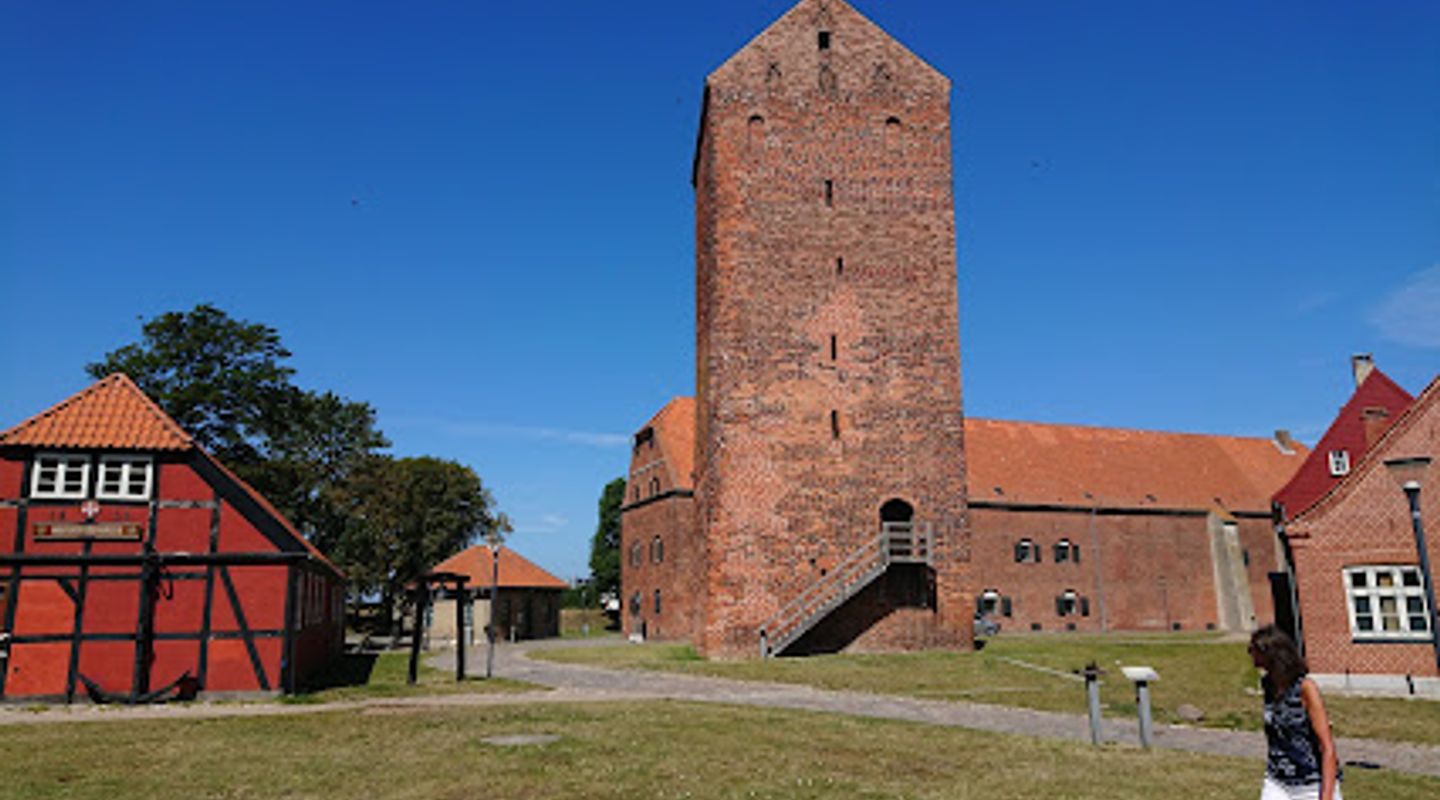
A brief summary of Korsør Fortress
Harbor‑side stronghold where a medieval tower, star‑style ramparts and historic warehouses tell the story of Denmark’s Great Belt crossing in one compact ensemble.
Set on Korsør’s harbor at the Great Belt, Korsør Fortress is a compact historic stronghold where a medieval tower, 17th‑century ramparts and handsome half‑timbered buildings tell the story of Denmark’s maritime crossroads. You can wander the grassy earthworks, examine the old magazine that now hosts the Town and Strait Crossing Museum, and look out toward the Great Belt Bridge, all within a calm, walkable waterfront setting that blends military history, local heritage and sea air.
On-site amenities
 Restrooms
 Seating areas
 Trash bins
 Information boards
- Address
- Søbatteriet 3, 4220 Korsør
Getting there
Train and walking
Car from Zealand
Bus within West Zealand
Discover more about Korsør Fortress
Harbor Stronghold on the Great Belt
Korsør Fortress sits right on the edge of Korsør’s natural harbor, guarding the narrow Great Belt strait between Zealand and Funen. For centuries this was one of Denmark’s crucial crossing points, so the town grew up as a place of ferries, trade and fortifications clustered around the water. Walking through the gate today, you step into a compact historic enclave framed by low earthen ramparts, with ships and modern harbor life unfolding just beyond.The first mention of Korsør dates to 1241, and it is from this period that the stout medieval tower within the fortress originates. Once part of a full castle complex, the tower is the last surviving vertical reminder of the medieval stronghold that once dominated the shoreline. Around it, later buildings and embankments create a layered scene where different centuries meet within a few minutes’ walk.
From Medieval Castle to Coastal Battery
In the mid‑14th century a proper castle was established here, later expanded in the 17th century to serve not only as a fortress but also as a residence for the royal governor and a stopping place for the royal family when crossing the Great Belt. Long residential wings flanked the tower, enclosing a busy courtyard where administration and logistics for the crossing were handled. Over time, as military technology and political priorities shifted, the castle’s importance waned, and by the early 1800s most of the surrounding castle buildings were demolished, leaving the distinctive tower as a solitary witness.The earth ramparts that ring parts of the site are younger than the tower. They were thrown up during the Danish‑Swedish conflicts of 1658–1660, when Swedish forces occupied Korsør and reinforced the defenses in the then‑fashionable star‑fort style. When Denmark regained control, the strengthened ramparts were kept. By the mid‑19th century, the position no longer made sense as a full fortress, and it was converted into a coastal battery to protect the harbor entrance, tying Korsør into Denmark’s network of naval defenses.
Historic Buildings Around the Courtyard
Much of the appeal of Korsør Fortress lies in its ensemble of surviving buildings, each with a specific role in the town’s maritime story. The Great Magazine, built around 1609–1610 under King Christian IV, is a long, sturdy structure that once stored grain tithed from local farmers as well as gunpowder and shot in its vaulted lower levels. Today, its first floor houses the Korsør Town and Strait Crossing Museum, while other levels are used for exhibitions and collections, turning a former military storehouse into a hub of local heritage.Nearby stands the Commandant’s Residence, a wood‑faced, half‑timbered house from the 1720s that once accommodated the fortress commander. It shares the area with the later harbor master’s residence, underlining how military and civil maritime administration overlapped here. Across from the medieval tower you will spot a red‑painted half‑timbered building from 1826, originally a store for gun carriages. Over the years it has served as a youth hostel and museum; today it is used by the Marine Society and contains their historical collection.
Ramparts, Views and Everyday Calm
The low grassy ramparts that encircle the fortress area invite a slow circuit on foot. As you follow their curves you can look back over the tower and historic buildings, then out across the harbor toward the sweeping line of the Great Belt Bridge in the distance. The earthworks are a good place to appreciate how the fortress once controlled access to the harbor, while also offering open sky, sea breeze and a sense of space rare in such a compact site.Within the grounds you will find a small 19th‑century guardhouse that in summer operates as a simple coffee house, underlining the fortress’s transformation from defensive installation to gentle public space. The lawns between the buildings provide informal seating and are often used for small events and local gatherings. Even on quiet days, there is enough detail in brickwork, timber framing and old doors to reward careful exploration and photography.
Living Link Between Past Crossings and Modern Bridge
Although the military left Korsør Fortress in 1856, the site continues to embody the town’s role as Denmark’s gateway across the Great Belt. For centuries, ferries departed near here; today the dramatic Great Belt Bridge carries road and rail traffic high over the water instead. Standing on the ramparts or by the harbor wall, you can frame the medieval tower against this modern engineering landmark, visually compressing eight centuries of transport history into a single view.Inside the museum spaces, exhibitions focus on Korsør’s evolution as a crossing point, from early shipping routes and wartime defenses to the era of car ferries and ultimately the fixed link. Taken together, the fortress buildings, ramparts and harbor panorama offer a concise but rich introduction to how maritime geography shaped Denmark’s history—and how a once‑strategic stronghold has become a peaceful historic quarter in a small coastal town.
Evendo Review Centre
 Google
Guest reviews
Best time to go
Quietest: Jan, Feb & Mar · before 7am or from 9pm
Busy times are Evendo estimates for a typical year, to help you plan. Actual crowds vary with events, school holidays and the weather.
Explore Korsør Fortress on the map
A handpicked selection of must-see spots near Korsør Fortress, mapped for you.
Get your free copy of our complete guide to Korsør Fortress, delivered straight to you.
Everything on this page, from opening hours and how to get there to Eve’s tips and the best time to go, in one PDF you can read offline, print or share.
Already have an account? Sign in
Your Korsør Fortress guide is ready.
We'll send it to · Not you? Sign out

Getting your guide ready…
We are putting together a fresh copy of the Korsør Fortress guide. This can take up to a minute.
This can take a few moments. If your browser asks, choose Allow so the download can start. You'll find the guide in your Downloads folder.
Nothing happened? Download it again
Sorry, the guide is taking longer than usual. Please try again in a minute, or get it by email instead.
Other nearby places you may find interesting
The closest places of the same kind, if this one is not quite what you had in mind.
-
-
-
-
-


Swipe for more places
More to explore near Korsør Fortress

 Best experiences near Korsør Fortress
 Best hotels near Korsør Fortress
 Best landmarks near Korsør Fortress
 Best attractions near Korsør Fortress
 Best shops near Korsør Fortress
 Best restaurants near Korsør Fortress
 Best bars near Korsør Fortress
Do you manage this location?
Take control to get all the benefits, like improved information, better appearance, and stronger visibility across AI-powered discovery.
Explore more
Explore more of Lolland
Discover Lolland, Denmark's tranquil island retreat, offering lush landscapes, historic sites, and delightful local cuisine for an unforgettable escape.
Explore Lolland
Explore more of Denmark
Discover Denmark: A perfect blend of history, modern design, and the cozy concept of hygge. Explore vibrant cities, serene landscapes, and world-class cuisine.
Explore Denmark
