

Sprogø Travel Guide
Free Guide: A wind-swept, protected island in the Great Belt where rare wildlife, medieval fortifications, social history and the Great Belt Bridge converge on one dramatic stage.


A brief summary of Sprogø
A wind-swept, protected island in the Great Belt where rare wildlife, medieval fortifications, social history and the Great Belt Bridge converge on one dramatic stage.
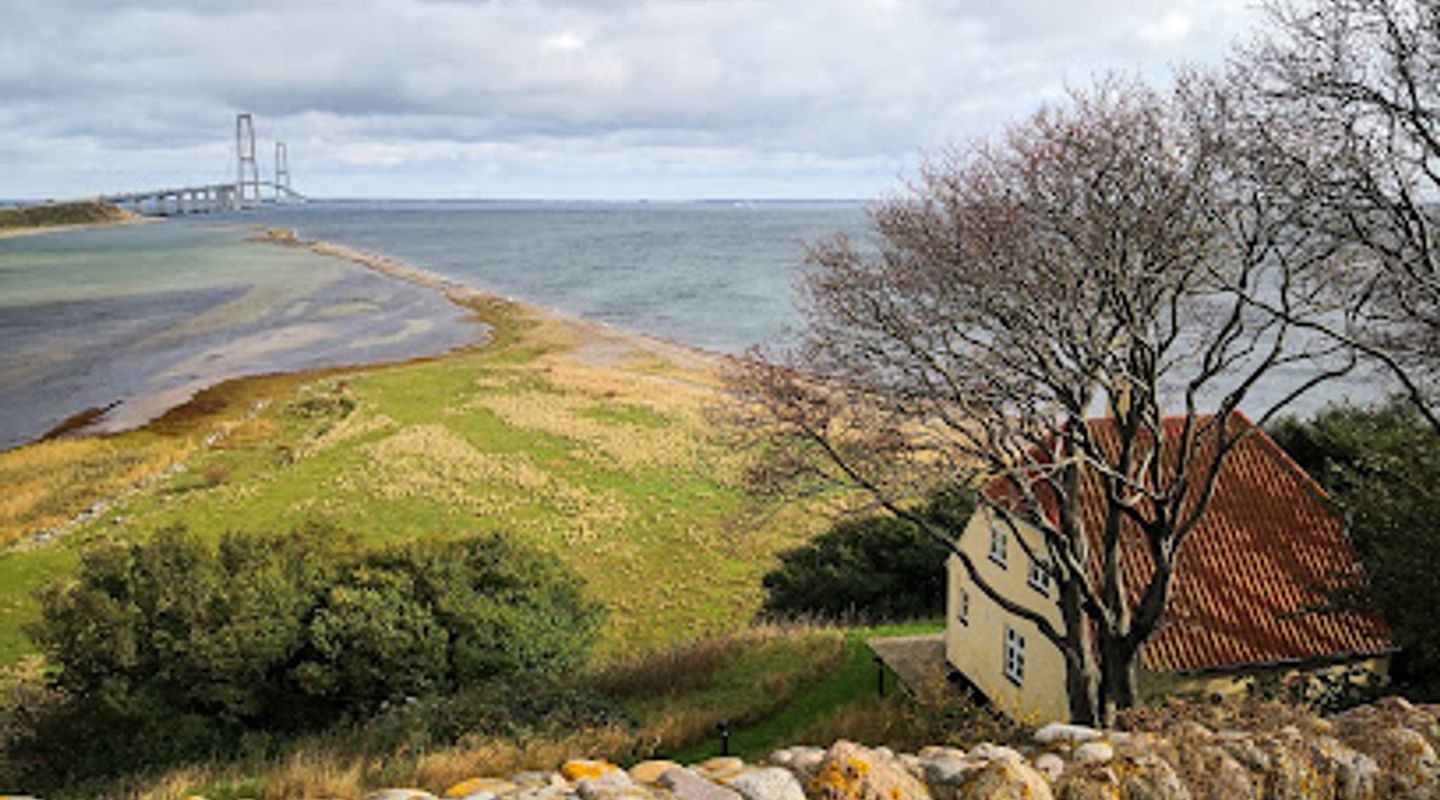
Sitting in the middle of Denmark’s Great Belt, Sprogø is a protected, windswept island where wild nature, powerful engineering and complex history meet. Once a medieval fortress, later a controversial women’s institution, and today the hinge of the Great Belt Fixed Link, the island is home to rare plants, birds and amphibians. Access is limited to pre-booked guided tours, which explore its lighthouse hill, former institutional buildings and open coastal landscapes.
On-site amenities
 Restrooms
 Information boards
- Address
- Slagelse Municipality
Getting there
Guided bus tour from Nyborg
Guided bus tour from Korsør
Private group tour via regional operator
Discover more about Sprogø
An island anchored in the middle of Denmark
Sprogø rises from the Great Belt like a self-contained world between Zealand and Funen, framed today by the sweeping lines of the Great Belt Bridge and rail link. Once a small moraine hill shaped by the last Ice Age, it was dramatically enlarged when the fixed link was built, creating the present division between Old Sprogø and New Sprogø. Despite the traffic streaming past, the island itself remains closed, quiet and carefully controlled, accessible only on organised tours.At its core, Sprogø is both a geographical pivot and a symbolic one. For more than a thousand years it has been the midway stepping-stone across Denmark, a place rulers, merchants, soldiers and later engineers have used to knit the kingdom together. Standing here, you feel how crucial this low, windswept island has been to movement, power and communication.
Layers of history from Valdemar to modern Denmark
Sprogø’s story reaches back to the 12th century, when King Valdemar the Great had a fortress built on the island as part of a wider defensive chain. The high slopes and isolated position made it an ideal lookout and refuge, and it served as a prison, treasury and safe overnight stop for royal journeys. Later, the island became a station on an early semaphore telegraph line that linked Nyborg and Korsør in the age before electricity.In the 20th century, Sprogø took on a darker role. From the 1920s to the early 1960s, its main buildings housed an institution for women and girls placed here because they were deemed socially or sexually transgressive. The combination of isolation and control has since become a powerful symbol in debates about social policy and human rights. Walking around the former institution, the handsome facades and open views contrast starkly with the history they contain.
Unique nature in a protected seascape
Although altered by land reclamation, Sprogø has become a showcase for restoration and careful nature management. The old island’s beach meadows and slopes are protected, and the new land has been planted and grazed so that Old and New Sprogø form one continuous landscape. Low rainfall and plenty of sunshine favour an unusual flora; several hundred plant species have been recorded here, including species with roots in Central and Eastern Europe and Asia.The island is equally important for wildlife. Large numbers of migratory birds rest here, and around fifty species are known to breed, with eiders particularly prominent. Rare amphibians, including the European green toad, find refuge in ponds and damp hollows. Sheep and cattle graze many of the grasslands, keeping the vegetation open and benefiting ground-nesting birds. Despite the constant rumble of the bridge, the interior of the island can feel surprisingly wild.
Lighthouse hill and the marks of engineering
The visual focal point of Sprogø is its lighthouse, perched on the 24‑metre hill that once held Valdemar’s fortress. The current tower dates from the 19th century and stands on the old foundations, tying together medieval defence and modern navigation. From this height you overlook the Great Belt, the vast concrete of the fixed link and the curving shoreline of the island itself.The creation of New Sprogø for the bridge project reshaped the coastline with granite revetments and new embankments, forming the landfall for both road and rail. Conservation plans required that habitats lost on Old Sprogø were compensated on the new land, so soil and seed-rich turf were transplanted. Within a short time, many of the original plant species had recolonised, turning a raw construction site into a functioning coastal ecosystem.
Today’s strictly guided experience
Sprogø has no permanent residents; it is managed primarily by the company that operates the Great Belt link, together with local authorities and conservation bodies. A small team, including army veterans, maintains the historic buildings and oversees the gradual rewilding of the open spaces. Their work keeps the island’s dual character intact: both a piece of critical infrastructure and a nature reserve.Visitors experience Sprogø on tightly controlled guided tours, usually combining bus transport, short walks and talks at key points such as the lighthouse, the old institution and selected nature spots. There are no public services, cafés or casual facilities; the focus is on stories, scenery and reflection. For many, the most striking impression is the juxtaposition of roaring traffic just beyond the shoreline and the quiet, wind-whipped grasslands under soaring seabirds.
Evendo Review Centre
 Google
Guest reviews
Best time to go
Quietest: Jan, Feb & Nov · before 7am or from 8pm
Busy times are Evendo estimates for a typical year, to help you plan. Actual crowds vary with events, school holidays and the weather.
Explore Sprogø on the map
A handpicked selection of must-see spots near Sprogø, mapped for you.
Get your free copy of our complete guide to Sprogø, delivered straight to you.
Everything on this page, from opening hours and how to get there to Eve’s tips and the best time to go, in one PDF you can read offline, print or share.
Already have an account? Sign in
Your Sprogø guide is ready.
We'll send it to · Not you? Sign out

Getting your guide ready…
We are putting together a fresh copy of the Sprogø guide. This can take up to a minute.
This can take a few moments. If your browser asks, choose Allow so the download can start. You'll find the guide in your Downloads folder.
Nothing happened? Download it again
Sorry, the guide is taking longer than usual. Please try again in a minute, or get it by email instead.
Other nearby places you may find interesting
The closest places of the same kind, if this one is not quite what you had in mind.
-
-
-
-
-


Swipe for more places
More to explore near Sprogø

 Best experiences near Sprogø
 Best hotels near Sprogø
 Best landmarks near Sprogø
 Best attractions near Sprogø
 Best shops near Sprogø
 Best restaurants near Sprogø
 Best bars near Sprogø
Do you manage this location?
Take control to get all the benefits, like improved information, better appearance, and stronger visibility across AI-powered discovery.
Explore more

Explore more of The North Sea Islands
Discover the North Sea Islands of Denmark: idyllic sandy beaches, vibrant local culture, and unique natural landscapes await you on Fanø, Rømø, and Mandø.
Explore The North Sea Islands
Explore more of Denmark
Discover Denmark: A perfect blend of history, modern design, and the cozy concept of hygge. Explore vibrant cities, serene landscapes, and world-class cuisine.
Explore Denmark
