Nyborg Vold – The Historic Ramparts of a Royal Fortress Town
Stroll the grassy ramparts and mirror-still moats that once guarded Denmark’s medieval power center, now a peaceful green belt wrapping historic Nyborg.
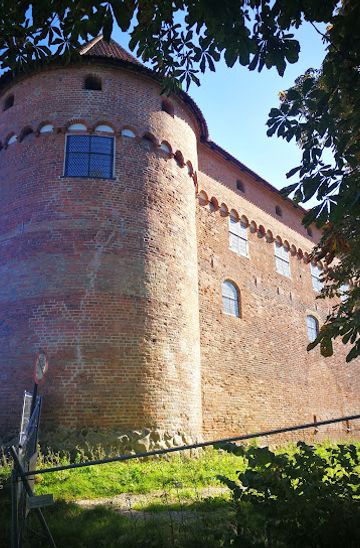
Encircling Nyborg Castle and much of the old town, Nyborg Vold is a sweeping system of grassy ramparts, moats and bastions that once guarded Denmark’s medieval power center. Today the former fortifications are a green park-like belt where you can trace the outline of the old fortress, stroll along tree-lined embankments, look across mirror-still castle lakes and sense how this quiet coastal town was once a royal stronghold and de facto capital.
A brief summary to Nyborg Vold
- Nørrevoldgade 63, Nyborg, 5800, DK
- Duration: 0.5 to 2 hours
- Free
-
 Outdoor
- Mobile reception: 4 out of 5

Know before you go
Hi, I'm Eve. Here are a few practical things to know before exploring Nyborg Vold.
- Walk a full loop of the ramparts to appreciate how the fortifications encircle both Nyborg Castle and the historic town center.
- Time your visit for early morning or late evening light, when the slopes glow and reflections in the moat are at their most atmospheric.
- Wear comfortable shoes; although paths are generally easy, some sections of the ramparts involve slopes or uneven surfaces.
- Bring a picnic or coffee and pause on the grassy banks or benches to soak in the contrast between quiet parkland and historic defenses.
- Combine your rampart walk with a visit to Nyborg Castle to better understand how the fortifications protected the royal stronghold.
Do you manage this location?
Take control to get all the benefits, like improved information, better appearance, and stronger visibility across AI-powered discovery. Learn more
Activate your presenceOther nearby places you may find interesting

Getting There
-
Train and short walk
From Odense, take a regional train to Nyborg Station; services usually run at least twice per hour and the journey takes around 20–30 minutes. A standard adult ticket typically costs about 60–90 DKK one way in standard class. From the station it is an easy, mostly level walk of around 10–20 minutes through central Nyborg to reach the ramparts near Nørrevoldgade. Trains run in most weather conditions, but late-night services are less frequent.
-
Car from Funen or Zealand
Arriving by car from elsewhere on Funen or across the Great Belt Bridge from Zealand, allow around 25–40 minutes from Odense or 60–90 minutes from Copenhagen under normal traffic. The Great Belt Bridge toll for a standard car is substantial, often in the range of several hundred DKK each way, so factor this into your budget. Public parking is available in and around central Nyborg, though spaces near the historic quarter can be limited in summer and during events, so plan a short walk from a slightly more distant lot.
-
Regional bus within East Funen
Regional buses connect smaller East Funen towns and villages with Nyborg, typically taking 20–50 minutes depending on your starting point. Single tickets usually cost around 30–60 DKK, and buses run less frequently in the evenings and on weekends. Most services stop within a short, straightforward walk of the old town and the ramparts. Expect standard curb-height boarding; some but not all buses are low-floor and step-free.
For the on-the-go comforts that matter to you
-
 Restrooms
-
 Drink Options
-
 Drinking Water
-
 Food Options
-
 Seating Areas
-
 Sheltered Areas
-
 Picnic Areas
-
 Trash Bins
-
 Information Boards
-
 Visitor Center
Discover more about Nyborg Vold
Fortress Earthworks Shaping a Royal Town
Nyborg Vold is the surviving ring of ramparts and water defenses that once wrapped tightly around Nyborg Castle and its medieval town. Raised and refined over centuries, the embankments were part of a sophisticated fortress system that helped secure the Great Belt crossing, a strategic bottleneck in the Danish kingdom. The earthworks still trace the historic outline of the fortifications, curving gently through the middle of modern Nyborg while preserving a distinctly old-world structure in the townscape.Heavy banks of earth, sculpted bastions and broad moats once formed a formidable barrier against invaders approaching from land or sea. The engineering was advanced for its time: water was led in from nearby streams through a controlled canal system, flooding the moat and marshy approaches. What was designed as a military machine has softened over time into a green haven, but the overall form of the defenses remains clearly legible as you wander along the crest of the ramparts.From Medieval Stronghold to Open Green Belt
The story of Nyborg Vold is inseparable from Nyborg Castle, founded around 1200 when Danish royal power sought to control the Great Belt and centralize rule. For several centuries the castle hosted the Danehof, the kingdom’s medieval assembly, and Nyborg effectively functioned as Denmark’s political heart. The ramparts were repeatedly strengthened as artillery developed and as the town’s role as royal residence and later garrison demanded stronger defenses.Wars with Sweden in the 17th century battered both castle and town, and as royal power shifted towards Copenhagen the fortress gradually lost its strategic importance. By the 19th and early 20th centuries, military functions were abandoned and the ramparts were protected as cultural heritage. What had been restricted defensive ground slowly opened to residents as a public promenade and parkland, giving the town a generous green corridor that still wraps around the historic core.A Park-Like Walk Through Layers of History
Today Nyborg Vold feels at once intimate and expansive. Broad grassy tops invite you to stroll, jog or pause on benches beneath mature trees, with views down to calm water on one side and red-tiled roofs on the other. In some stretches the ramparts are high and steep, dropping sharply to the moat below; elsewhere they sink to gentler slopes where locals picnic, walk dogs or cycle through in the soft evening light.As you move along the ramparts you can pick out the shapes of old bastions that once held cannons, and glimpses of the castle’s towers rise between branches. Seasonal changes add to the charm: spring brings fresh green and blossoms reflected in the water; summer fills the paths with dappled shade; autumn burns the slopes with copper leaves; and in winter a dusting of snow turns the fortress line into a quiet white ridge above the town.Encountering Castle Lakes, Wildlife and Quiet Corners
The water surrounding Nyborg Vold is as integral as the earth itself. Moats and lakes mirror the sky and city walls, while reeds and overhanging trees give sections a distinctly natural feel. Ducks, swans and coots patrol the surface, and you may spot herons or smaller birds hunting along the edges. The soundscape is a mix of gentle city life—church bells in the distance, faint traffic, children playing in nearby squares—and rustling leaves, water lapping against the banks and birds calling across the moat.Scattered along the route, information boards and sightlines help you connect the present-day tranquility with the fortress that once stood here. Some corners feel secluded and contemplative, tucked away from the town just a few steps below, while more open stretches frame broad views toward Nyborg Castle, the old streets and, in places, out towards the flat landscapes of eastern Funen.Explore the best of what Nyborg Vold has to offer













More about Funen
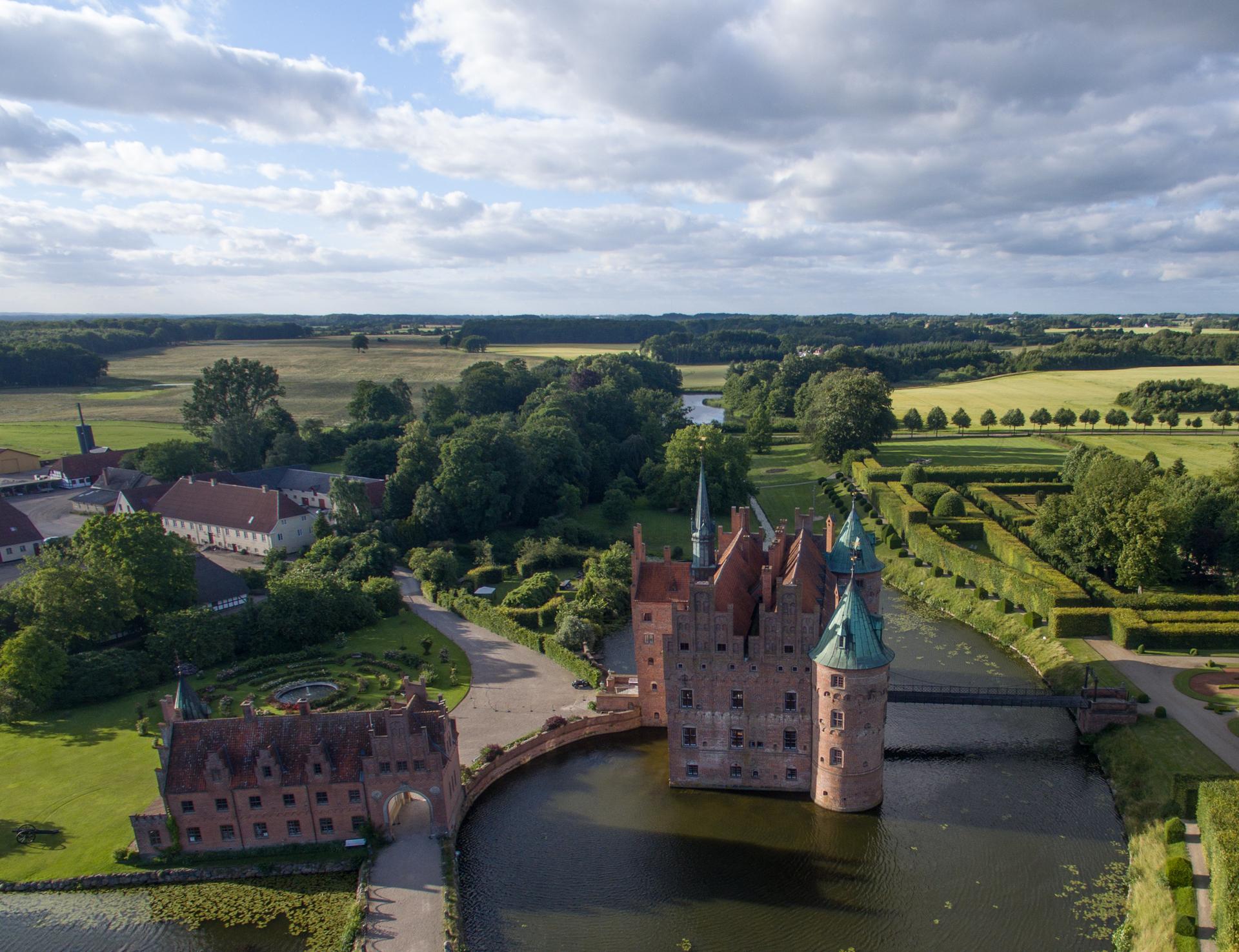
Discover Funen, Denmark's lush island treasure, where fairy tales come to life amidst scenic landscapes, historic castles, and vibrant cultural heritage.
Tell me more about Funen
Where Danish cinema's greatest visionary is celebrated through iconic characters and cultural memory.
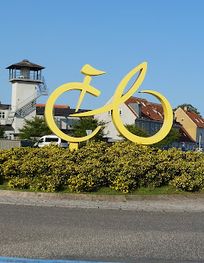
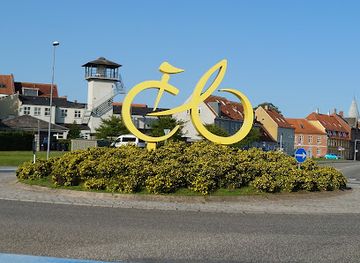
Bold yellow bicycle sculpture in Svaneparken celebrating Nyborg’s role as Tour de France Stage 2 finish in 2022, blending public art, cycling heritage and coastal scenery.