Geomuseum Faxe Travel Guide
Free Guide: Stand on the brink of a vast white quarry, handle fossils from a 63‑million‑year‑old coral sea, and see how geology and industry shaped this corner of Denmark.


A brief summary of Geomuseum Faxe
Stand on the brink of a vast white quarry, handle fossils from a 63‑million‑year‑old coral sea, and see how geology and industry shaped this corner of Denmark.
Perched on the rim of Denmark’s vast Faxe Limestone Quarry, Geomuseum Faxe plunges you 63 million years back to a time when a warm ocean and a deep-water coral reef covered this corner of Zealand. Inside, fossils of sharks, crocodiles and countless marine creatures share space with stories of centuries of limestone quarrying and local life. Step outside and you can walk straight into the brilliant white quarry, hunt for your own fossils with hammer and chisel, and feel how geology, industry and landscape meet in one dramatic open-air scene.
On-site amenities
 Restrooms
 Drink options
 Food options
 Seating areas
 Sheltered areas
 Picnic areas
 Trash bins
 Information boards
 Visitor centre
Opening hours
- Every day10 am–5 pm
Opening hours as listed on the venue’s Google Business Profile. Hours can change for services and special events, so check with the venue before you go.
- Address
- Østervej 2b, 4640 Faxe
- Phone
- Website
Getting there
Regional train and bus from Copenhagen
Car from Copenhagen and Zealand
Cycling from nearby towns on South Zealand
Discover more about Geomuseum Faxe
An ancient coral sea beneath modern Denmark
Geomuseum Faxe stands at the edge of Faxe Limestone Quarry, where the flat fields of South Zealand suddenly drop into a dazzling white amphitheatre. Here you are quite literally looking into an ancient ocean. Around 63 million years ago, long after the dinosaurs disappeared, this area lay beneath a warm sea where one of the world’s oldest known deep-sea coral reefs grew, layer upon layer.The limestone you see in the quarry walls is the compacted remains of that reef. It holds an astonishing diversity of fossils: corals, shells, crabs, sea urchins, shark teeth and the bones of marine reptiles. In the museum’s galleries, carefully prepared specimens reveal delicate structures that would be easy to miss out in the chalk, giving a vivid sense of the rich marine life that once thrived here.
From quarrymen’s toil to a modern-day museum
For more than 900 years, people have quarried limestone at Faxe. That long human story is woven through the exhibitions, from early hand tools and horse-drawn carts to the heavy machinery that still works in the pit today. Displays explore how the stone has been used in churches, grand buildings and everyday homes across Denmark, shaping both architecture and livelihoods.Photographs, models and objects trace the daily routines of quarry workers, the hazards they faced and the tight-knit communities that developed around the industry. The juxtaposition of industrial heritage with deep geological time is one of the museum’s defining features: a place where hard hats and fossil corals feel like parts of the same narrative.
Hands-on encounters with fossils and rock
Geomuseum Faxe is designed to be touched, tested and explored. Interactive stations let you handle real fossils, compare their weight and texture, and match them to illustrations of the living animals they once were. Simple experiments demonstrate how coral skeletons become limestone, how layers build up and how paleontologists read the rock like a history book.For many visitors the highlight begins when you step outside. From the museum you can head directly into the quarry, armed with a rented hammer and chisel. The bright chalk underfoot, the echo of your blows and the thrill of splitting open a rock to reveal a 63‑million‑year‑old fossil of your own make this a uniquely physical way to meet the past. The fossils you find and identify can usually be taken home as personal treasures.
The otherworldly drama of Faxe Limestone Quarry
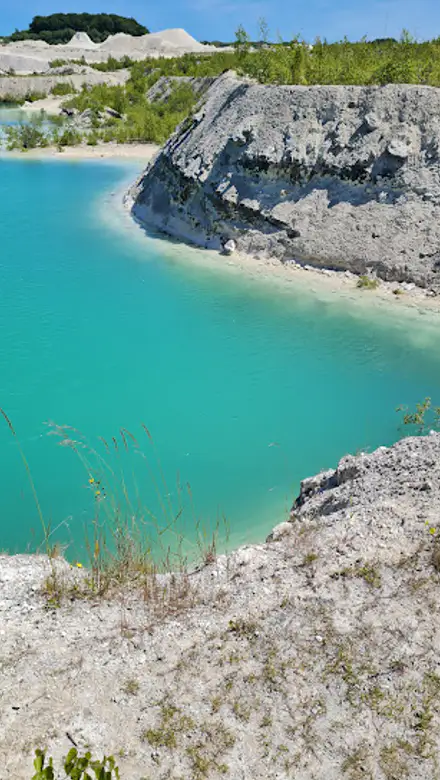
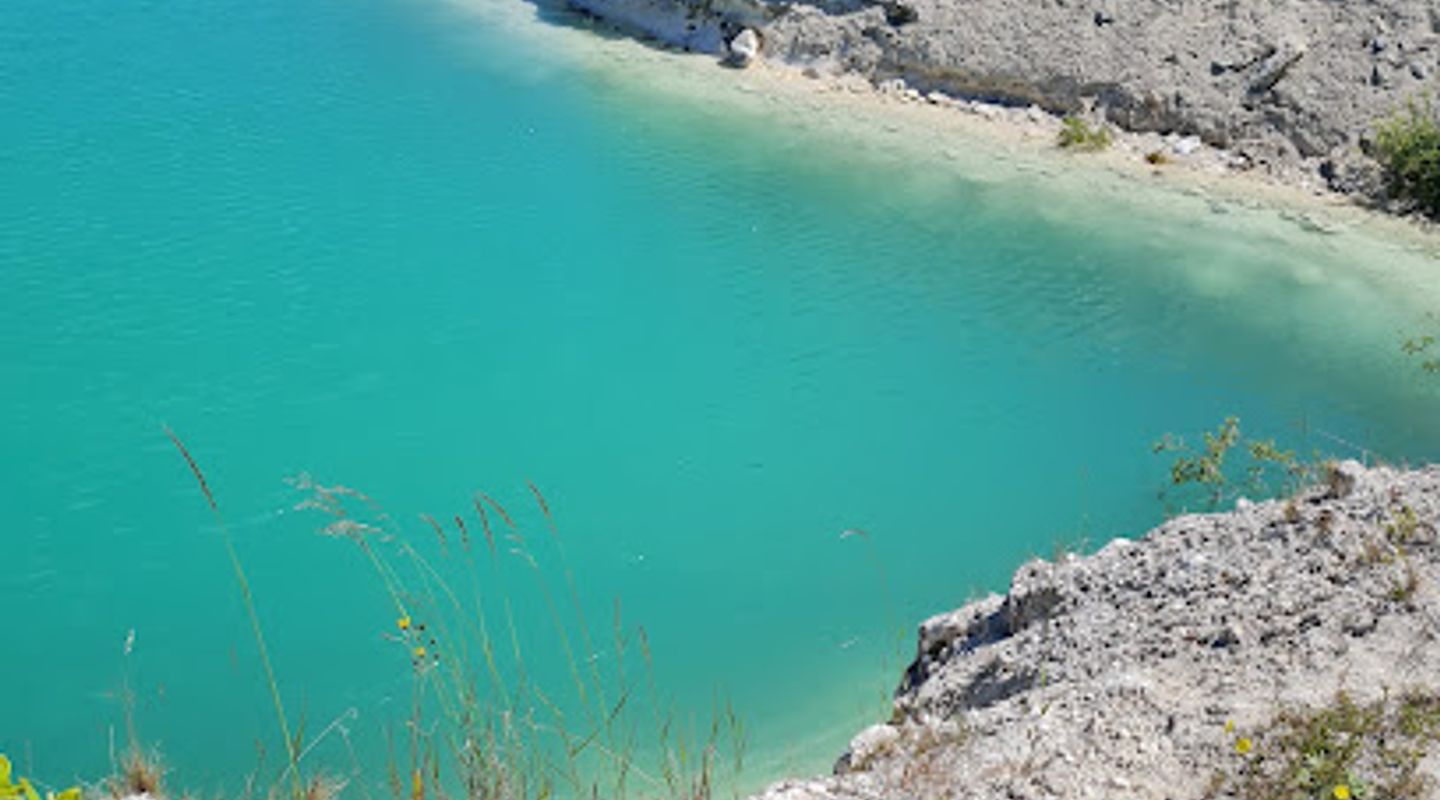
Standing on the quarry rim, the landscape feels almost lunar: broad terraces of white stone, turquoise rainwater pools and the distant movement of working machines. On sunny days the light is intense, bouncing off the chalk and sharpening every contour. Clouds of dust drift slowly above the pit, while gulls and small birds wheel along the edges.As you walk the paths into the quarry you pass through time, descending through rock layers laid down over thousands of years. Here and there you can see fossil-rich bands studded with shells and coral fragments, or large blocks where ancient burrows and reef structures are clearly visible. The sheer scale of the excavation, and the contrast between quiet fossil hunting corners and active industrial zones, gives the site a striking, cinematic atmosphere.
A family-friendly gateway to deep time
Despite dealing with vast timescales, Geomuseum Faxe keeps the experience accessible. Exhibits use clear language and visual storytelling, making it easy for both children and adults to grasp the basics of geology and paleontology. Seasonal guided fossil hunts add expert insight, turning the quarry into an open classroom where questions are encouraged and finds are explained on the spot.Around the museum you will find a small café-style area, outdoor seating and green patches where you can rest between indoor galleries and outdoor exploring. On warm days the combination of chalk dust, sun lotion and the click of hammers becomes part of the sensory memory of the place. It is an attraction that combines learning, fresh air and a touch of adventure in a single compact visit.
Seasons, conditions and practical atmosphere
The character of Geomuseum Faxe changes with the weather and time of year. In high summer, heat and sharp light dominate the quarry; sunglasses, sturdy shoes and water are indispensable. In cooler seasons, the pit feels starker and quieter, but the museum’s indoor spaces remain an inviting refuge where you can linger over displays without rushing.Because the quarry is an active worksite, some paths can be uneven and certain areas may be off limits at times. Information panels and staff help you understand how the site is managed for safety while remaining open to the public. Whether you stay mainly indoors with the fossils or spend most of your time roaming the chalk, the overall mood balances scientific curiosity with the simple pleasure of being out in a very unusual landscape.
Evendo Review Centre
 Google
Guest reviews
Best time to go
Quietest: Jan, Feb & Nov · before 7am or from 7pm
Busy times are Evendo estimates for a typical year, to help you plan. Actual crowds vary with events, school holidays and the weather.
Explore Geomuseum Faxe on the map
A handpicked selection of must-see spots near Geomuseum Faxe, mapped for you.
Get your free copy of our complete guide to Geomuseum Faxe, delivered straight to you.
Everything on this page, from opening hours and how to get there to Eve’s tips and the best time to go, in one PDF you can read offline, print or share.
Already have an account? Sign in
Your Geomuseum Faxe guide is ready.
We'll send it to · Not you? Sign out

Getting your guide ready…
We are putting together a fresh copy of the Geomuseum Faxe guide. This can take up to a minute.
This can take a few moments. If your browser asks, choose Allow so the download can start. You'll find the guide in your Downloads folder.
Nothing happened? Download it again
Sorry, the guide is taking longer than usual. Please try again in a minute, or get it by email instead.
Other nearby places you may find interesting
The closest places of the same kind, if this one is not quite what you had in mind.
-
Stevns Klint UNESCO World Heritage Stand on the edge of a white Danish cliff where a thin dark band in the rock marks the asteroid impact that ended the dinosaurs and reshaped life on Earth.
-
Roneklint Fyr Small historic lighthouse at the mouth of Præstø Fjord, with shallow child‑friendly beaches, rich snorkelling waters and tranquil coastal scenery.
-
Stevns Lighthouse Historic lighthouse on the edge of Stevns Klint, blending maritime heritage with wide Baltic Sea views and windswept chalk‑cliff scenery near Store Heddinge.
-
Gjorslev One of Denmark’s oldest inhabited medieval castles, Gjorslev combines Gothic stonework, moats and beech forest walks in a quietly atmospheric manor landscape.
-
Kalvehave Labyrintpark A 20,000 m² outdoor maze park of puzzles, illusions and giant games, turning a day in rural South Zealand into relaxed, brain-teasing fun for all ages.
Swipe for more places
More to explore near Geomuseum Faxe

 Best experiences near Geomuseum Faxe
 Best hotels near Geomuseum Faxe
 Best landmarks near Geomuseum Faxe
 Best attractions near Geomuseum Faxe
 Best shops near Geomuseum Faxe
 Best restaurants near Geomuseum Faxe
 Best bars near Geomuseum Faxe
Do you manage this location?
Take control to get all the benefits, like improved information, better appearance, and stronger visibility across AI-powered discovery.
Explore more
Explore more of South Zealand
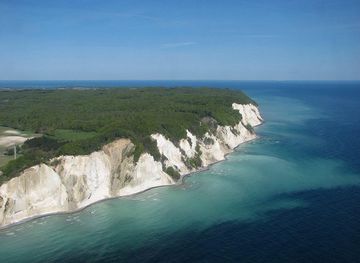
Discover South Zealand, where dramatic cliffs, historic castles, and charming coastal towns create the perfect Danish escape.
Explore South Zealand
Explore more of Denmark
Discover Denmark: A perfect blend of history, modern design, and the cozy concept of hygge. Explore vibrant cities, serene landscapes, and world-class cuisine.
Explore Denmark