

Vadehavscentret, Ribe Travel Guide
Free Guide: Award-winning reed-clad gateway to the Wadden Sea, blending sculptural architecture, immersive exhibitions and guided nature tours in Denmark’s great tidal landscape.


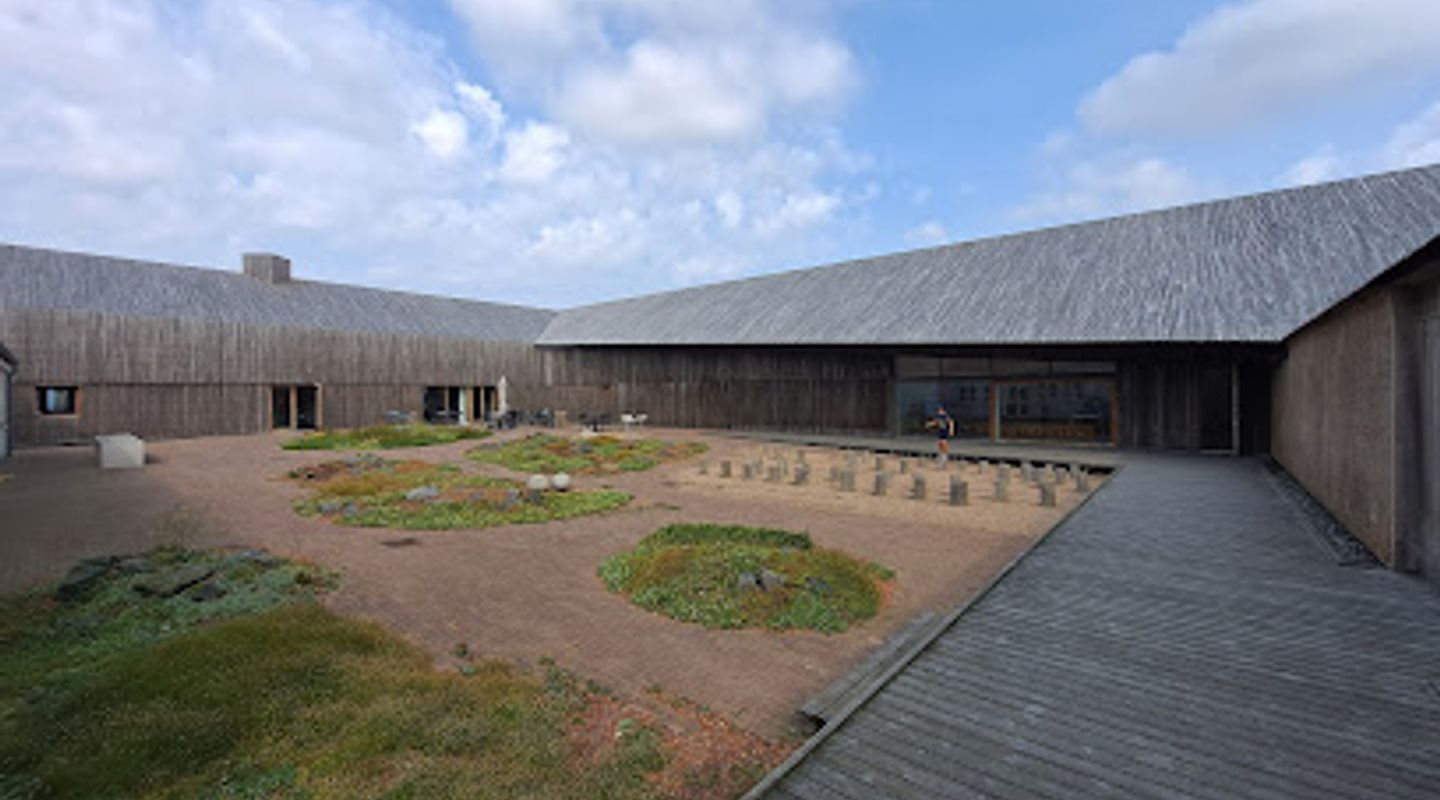
A brief summary of Vadehavscentret
Award-winning reed-clad gateway to the Wadden Sea, blending sculptural architecture, immersive exhibitions and guided nature tours in Denmark’s great tidal landscape.
South of Ribe, Vadehavscentret is the award-winning gateway to Denmark’s Wadden Sea National Park and UNESCO World Heritage. Set low in the flat marsh landscape, its thatched, reed-clad architecture seems to grow from the earth, leading into immersive exhibitions on tides, migrating birds and the unique ecology and culture of the Wadden Sea. With hands-on displays, guided nature tours and a relaxed café, it’s an inspiring starting point for exploring this remarkable coastal environment.
On-site amenities
 Restrooms
 Drink options
 Drinking water
 Food options
 Seating areas
 Sheltered areas
 Picnic areas
 Trash bins
 Information boards
 Visitor centre
Opening hours
- Every day10 am–5 pm
Opening hours as listed on the venue’s Google Business Profile. Hours can change for services and special events, so check with the venue before you go.
- Address
- Okholmvej 5, Vester Vedsted, 6760 Ribe
- Phone
- Website
Getting there
Car from Ribe
Taxi from Ribe
Bicycle from Ribe
Organised tour from the region
Discover more about Vadehavscentret
A sculpted reed house in the marshlands
Vadehavscentret sits at the edge of the Wadden Sea marshes, a low, elongated complex wrapped in dense thatch and weathered wood. Designed by Danish architect Dorte Mandrup, the building uses around 25,000 bundles of reeds to echo traditional coastal farmsteads while feeling distinctly contemporary. Viewed from a distance, the gently sloping roofs and muted tones nearly dissolve into the flat landscape, as if the center has emerged from the surrounding marsh.The interior continues this dialogue with nature. Daylight filters through carefully placed openings, casting soft bands of light across timber, clay and reed surfaces. Long sightlines pull your gaze toward the horizon and out to the tidal flats, constantly reminding you that this is not just a museum, but a threshold to a living, shifting coastline.
A journey through the world of tides and birds
The core exhibition, spread over roughly 1,000 m² within the larger 2,800 m² center, is devoted to the Wadden Sea as a crossroads for millions of migratory birds. Dramatic installations recreate swirling flocks, allowing you to stand “inside” the murmuring formations that characterise spring and autumn skies. Detailed models and multimedia displays explain how tides, currents and mudflats create one of Europe’s richest feeding grounds.Species profiles, soundscapes and tactile elements bring the ecology close: waders probing the mud, geese resting in the marshes, tiny invertebrates that fuel the entire food chain. The exhibition also looks at human interaction with this environment, from dikes and drainage to fishing traditions, and how people have adapted to life in a landscape that floods and drains twice a day.
UNESCO World Heritage in context
Vadehavscentret serves as an introduction to the wider Wadden Sea World Heritage Site, which stretches some 500 km along the coasts of Denmark, Germany and the Netherlands. Inside, clear explanations unpack why this low, wet landscape has global significance: its dynamic geomorphology, its role as a refuelling station for up to 15 million migratory birds, and its mosaic of salt marsh, sandbank and mudflat habitats.Exhibits explore conservation challenges such as sea-level rise, coastal protection and sustainable use of natural resources. Panels and models illustrate how the national park was established and how different zones balance protection with traditional livelihoods like grazing and shellfish harvesting. The center positions itself as both storyteller and steward, encouraging visitors to see their own visit as part of a longer narrative of care for the coast.
Guided safaris and outdoor experiences
Beyond the galleries, Vadehavscentret functions as a base for guided trips into the tidal landscape. Depending on season and tide, the program can include mudflat walks, oyster and seal safaris, birdwatching outings and evening tours timed to starling murmurations. These excursions translate abstract concepts from the exhibition into lived experience: feeling the suction of the mud, tasting salty oysters or watching flocks settle on distant sandbanks.The immediate surroundings invite slower exploration as well. Low vegetation, shallow ditches and open skies create a horizontal panorama ideal for quiet walks and contemplative pauses. Simple outdoor elements and viewpoints help you sense wind direction, cloud movement and the subtle rise and fall of the tide, even when the water itself is out of sight.
Architecture, light and daily life at the center
Within the main building you find a compact but thoughtful mix of functions: exhibition halls, a shop, flexible meeting and learning spaces, and a café that looks out over the marsh. The café menu typically leans on regional ingredients, making it a comfortable stop before or after time outside. Large windows frame ever-changing weather, so even a stormy day feels like part of the experience rather than an obstacle.Interpretive displays are designed for a wide age range, from children drawn to interactive elements to adults interested in detailed maps and diagrams. Temporary displays, events and educational programs complement the permanent exhibition, making the center equally suited to a short introduction or a deeper half-day immersion in the Wadden Sea’s nature and culture.
Evendo Review Centre
 Google
Guest reviews
Best time to go
Quietest: Jan, Feb & Mar · before 8am or at 8pm
Busy times are Evendo estimates for a typical year, to help you plan. Actual crowds vary with events, school holidays and the weather.
Explore Vadehavscentret on the map
A handpicked selection of must-see spots near Vadehavscentret, mapped for you.
Get your free copy of our complete guide to Vadehavscentret, delivered straight to you.
Everything on this page, from opening hours and how to get there to Eve’s tips and the best time to go, in one PDF you can read offline, print or share.
Already have an account? Sign in
Your Vadehavscentret guide is ready.
We'll send it to · Not you? Sign out

Getting your guide ready…
We are putting together a fresh copy of the Vadehavscentret guide. This can take up to a minute.
This can take a few moments. If your browser asks, choose Allow so the download can start. You'll find the guide in your Downloads folder.
Nothing happened? Download it again
Sorry, the guide is taking longer than usual. Please try again in a minute, or get it by email instead.
Other nearby places you may find interesting
The closest places of the same kind, if this one is not quite what you had in mind.
-
-
-
-
-


Swipe for more places
More to explore near Vadehavscentret

 Best experiences near Vadehavscentret
 Best hotels near Vadehavscentret
 Best landmarks near Vadehavscentret
 Best attractions near Vadehavscentret
 Best shops near Vadehavscentret
 Best restaurants near Vadehavscentret
 Best bars near Vadehavscentret
Do you manage this location?
Take control to get all the benefits, like improved information, better appearance, and stronger visibility across AI-powered discovery.
Explore more
Explore more of Ribe
Discover Ribe, Denmark's oldest town, where medieval charm meets modern allure. Experience Viking history, stunning architecture, and breathtaking natural wonders.
Explore Ribe
Explore more of Denmark
Discover Denmark: A perfect blend of history, modern design, and the cozy concept of hygge. Explore vibrant cities, serene landscapes, and world-class cuisine.
Explore Denmark
