

Mammutbunkeren Travel Guide
Free Guide: A colossal World War II radar bunker half-buried in Rømø’s dunes, Mammutbunkeren offers a stark, atmospheric encounter with coastal military history.


A brief summary of Mammutbunkeren
A colossal World War II radar bunker half-buried in Rømø’s dunes, Mammutbunkeren offers a stark, atmospheric encounter with coastal military history.
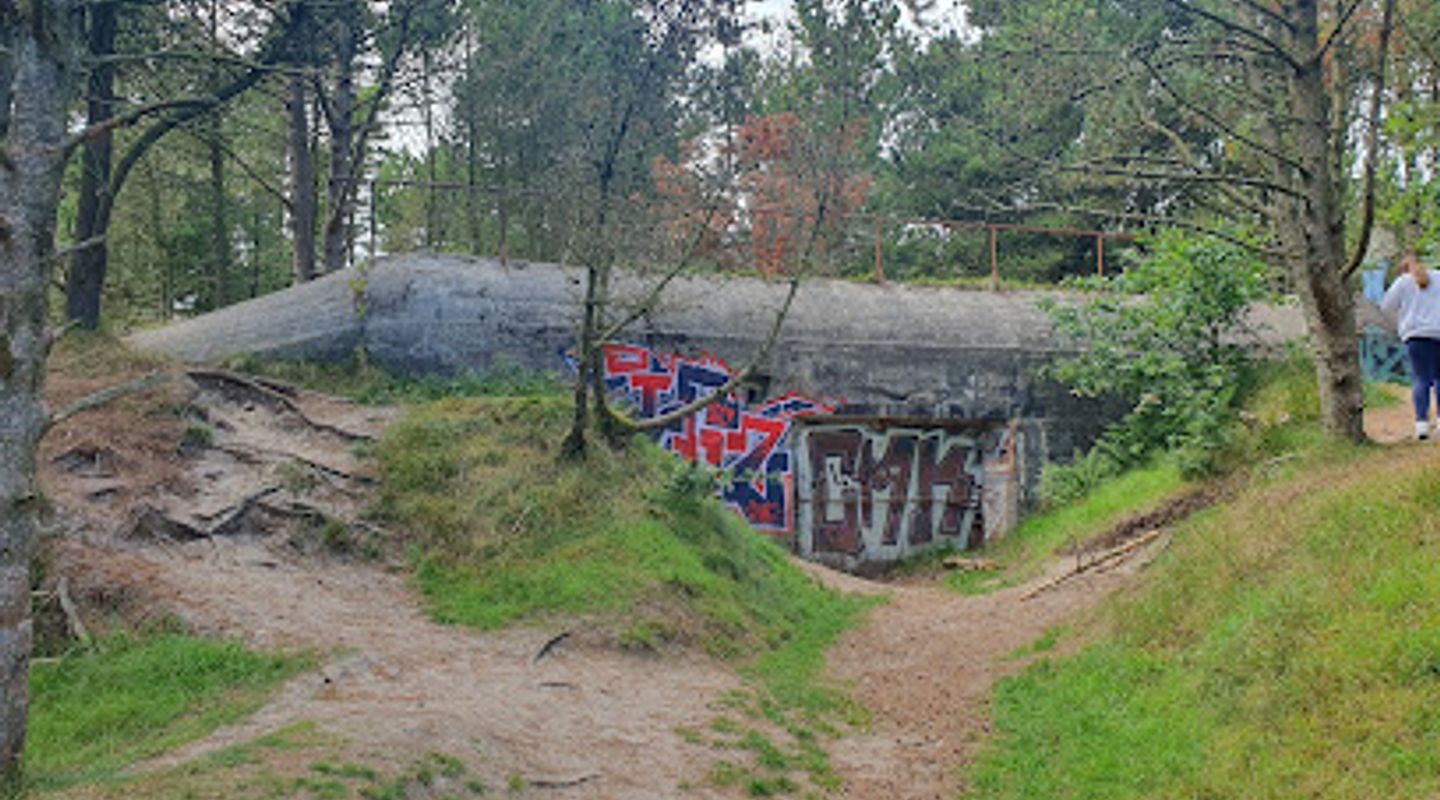
Hidden in the trees of Tvismark Plantation on Rømø, the so‑called Mammutbunkeren is one of the island’s most impressive World War II fortifications. Built by the occupying German forces as part of the Atlantic Wall, it once housed a massive radar installation watching the North Sea. Today, the huge concrete structure is partly buried in dunes and heather, offering an atmospheric glimpse of military history in the middle of a quiet coastal landscape.
On-site amenities
 Information boards
- Address
- Blåbærvej 32, 6792 Rømø
- Website
Getting there
Car from Rømø causeway area
Bicycle on island roads and forest tracks
Public bus plus short walk
Walking from nearby holiday homes
Discover more about Mammutbunkeren
A giant of concrete in the dunes
Mammutbunkeren sits quietly in Tvismark Plantation, a patchwork of pines, dunes and heathland between the Rømø causeway and Lakolk’s broad beach. From the outside, it appears as a hulking, angular mass of grey concrete, softened at the edges where sand and vegetation have crept up over the decades. Its nickname, the “Mammut bunker”, reflects both its size and the impression of a prehistoric beast half-buried in the ground.The structure was built with thick reinforced walls designed to withstand bombardment and stormy North Sea weather. Narrow openings, sealed doors and protruding edges make the exterior look almost sculptural in the late afternoon light. Walking around it, you notice how the bunker has become part of the landscape, with lichens on the concrete and low shrubs gripping the cracks.
Watching the skies in wartime
During the German occupation of Denmark in World War II, Rømø formed part of a wider coastal defence line along the North Sea. Mammutbunkeren was constructed here to house a large radar installation, giving early warning of aircraft and ships moving across the Wadden Sea and beyond. Together with smaller bunkers scattered through Tvismark Plantation, it formed a technical outpost supporting the wider Atlantic Wall system.Even without interior access, you can easily imagine cables, equipment and operators once filling the rooms inside. The thick walls muffled the roar of the wind and sea, while antennae and radar dishes rose above the treetops. After the war, attempts were made to remove or demolish many of these structures, but the sheer mass of Mammutbunkeren meant it remained, gradually slipping into peacetime as an inert reminder of conflict.
From abandoned fort to quiet time capsule
In the years that followed, nature slowly reclaimed the site. Sand drifts piled against the concrete, heather and grasses colonised the edges, and the inland pines of Tvismark Plantation grew taller around it. Today the bunker feels more like a strange geological formation than a piece of military hardware, especially when mist hangs between the trees.Some bunkers in the plantation can occasionally be visited on guided tours arranged locally, allowing a closer look at rooms, corridors and technical features. Even if Mammutbunkeren itself is closed on a given day, its exterior, scale and setting still convey how impossible it was to erase these wartime constructions. The surrounding paths offer a gentle forest walk that contrasts sharply with the bunker’s stark geometry.
Exploring Tvismark Plantation around the bunker
The plantation is an inviting place to linger. Trails wind between conifers, low dunes and open patches of moorland, with changing scents of resin, dry grass and salt carried in from the west. Birdsong and the rustle of wind in the trees replace any industrial noise once linked to the bunker’s machinery.Because Mammutbunkeren is just one of around 15 bunkers in this area, you can turn a visit into a small discovery route, spotting other concrete shapes partly hidden in the landscape. Occasional information panels in the broader plantation area help place the site within Rømø’s coastal history, which also includes later military use further north. It is an environment where natural and cultural layers sit side by side.
Atmosphere, safety and practical considerations
The mood around Mammutbunkeren changes with the weather. On bright days, sunlight sharpens the lines of the structure and makes it a striking subject for photography. In overcast or windy conditions, the bunker can feel more sombre and reflective, underlining the seriousness of the history it represents. Footpaths are generally easy, but tree roots, uneven sand and occasional puddles mean sturdy footwear is helpful.There are no permanent facilities right at the bunker, so visitors should bring water and any snacks they might want. Restrooms and food options can be found elsewhere on Rømø, particularly near Lakolk or the causeway area. Mobile reception on the island is usually adequate, but signals can fluctuate slightly among the trees. Most visitors spend an hour or two combining the bunker with a short forest walk, using this secluded spot as a quiet counterpoint to Rømø’s wide, windswept beaches.
Evendo Review Centre
 Google
Guest reviews
Best time to go
Quietest: Jan, Feb & Mar · before 7am or at 8pm
Busy times are Evendo estimates for a typical year, to help you plan. Actual crowds vary with events, school holidays and the weather.
Explore Mammutbunkeren on the map
A handpicked selection of must-see spots near Mammutbunkeren, mapped for you.
Get your free copy of our complete guide to Mammutbunkeren, delivered straight to you.
Everything on this page, from opening hours and how to get there to Eve’s tips and the best time to go, in one PDF you can read offline, print or share.
Already have an account? Sign in
Your Mammutbunkeren guide is ready.
We'll send it to · Not you? Sign out

Getting your guide ready…
We are putting together a fresh copy of the Mammutbunkeren guide. This can take up to a minute.
This can take a few moments. If your browser asks, choose Allow so the download can start. You'll find the guide in your Downloads folder.
Nothing happened? Download it again
Sorry, the guide is taking longer than usual. Please try again in a minute, or get it by email instead.
Other nearby places you may find interesting
The closest places of the same kind, if this one is not quite what you had in mind.
-
-
-
-
-


Swipe for more places
More to explore near Mammutbunkeren

 Best experiences near Mammutbunkeren
 Best hotels near Mammutbunkeren
 Best landmarks near Mammutbunkeren
 Best attractions near Mammutbunkeren
 Best shops near Mammutbunkeren
 Best restaurants near Mammutbunkeren
 Best bars near Mammutbunkeren
Do you manage this location?
Take control to get all the benefits, like improved information, better appearance, and stronger visibility across AI-powered discovery.
Explore more

Explore more of Rømø
Discover Rømø: Denmark's serene island with expansive beaches, rich Viking history, and thrilling windsurfing adventures in the heart of the Wadden Sea National Park.
Explore Rømø
Explore more of Denmark
Discover Denmark: A perfect blend of history, modern design, and the cozy concept of hygge. Explore vibrant cities, serene landscapes, and world-class cuisine.
Explore Denmark
