Christiansborg Palace
Denmark's 800-year seat of power where Parliament, courts, and royalty converge in a palace reborn from fire.
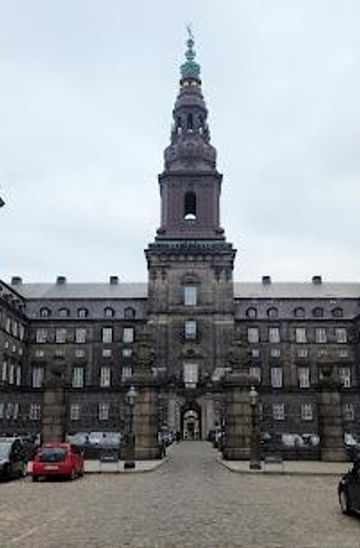
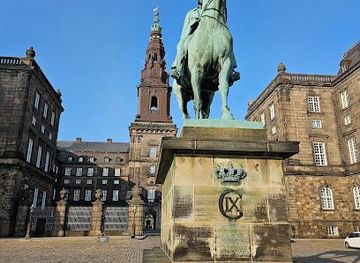
Christiansborg Palace stands as Denmark's seat of power for over 800 years, housing the Parliament, Supreme Court, and Ministry of State on the historic Slotsholmen islet in central Copenhagen. Visitors explore opulent Royal Reception Rooms adorned with modern tapestries depicting 1,000 years of Danish history, the ceremonial Throne Room where monarchs are proclaimed, and medieval ruins dating to 1167. The palace represents three architectural eras following two devastating fires, blending Baroque, Neoclassical, and Historicist styles.
A brief summary to Christiansborg Palace
- Prins Jørgens Gård 1, Copenhagen, Indre By, 1218, DK
- Click to display
- Click to display
- Duration: 1.5 to 3.5 hours
- Mid ranged
-
 Mixed
Mixed
- Mobile reception: 5 out of 5
- Tuesday 10 am-5 pm
- Wednesday 10 am-5 pm
- Thursday 10 am-5 pm
- Friday 10 am-5 pm
- Saturday 10 am-5 pm
- Sunday 10 am-5 pm

Know before you go
Hi, I'm Eve. Here are a few practical things to know before exploring Christiansborg Palace.
- Book tickets online in advance to avoid queues, especially during peak season. Children under 18 enter free but require a ticket. Last entry is at 16:30.
- The Christiansborg Tower offers panoramic views of Copenhagen's inner city and is free to access, though expect long waiting lines during busy hours. Tower hours differ from palace hours (Tuesday–Saturday 11:00–21:00, Sunday 11:00–17:30, closed Mondays).
- The palace may close without notice for state visits, royal events, or parliamentary sessions. Check opening hours on the official website before your visit.
- Combine your visit with the Royal Kitchen tour and medieval ruins exploration—all included in the full-access ticket. The guided tour of the Royal Reception Rooms is complimentary with admission.
- Visit the Palace Chapel, a stunning Neoclassical space with a distinctive dome, and the Royal Stables to experience the full scope of the complex. The small 1740s palace theatre, completely preserved with original atmosphere, offers a glimpse into royal entertainment history.
Do you manage this location?
Take control to get all the benefits, like improved information, better appearance, and stronger visibility across AI-powered discovery. Learn more
Activate your presence
Getting There
-
Metro
From Copenhagen Central Station, take the red or blue metro line toward Vanløse or Vestamager and exit at Gammel Strand station. Journey time is approximately 5–8 minutes. Christiansborg Palace is a 2–3 minute walk from the station. Single journey ticket costs approximately 24 DKK (3.20 EUR).
-
Walking
From Nyhavn or the city center, Christiansborg Palace is within 15–20 minutes on foot across the historic bridges and streets of central Copenhagen. The route is flat, well-marked, and passes through pedestrian-friendly areas. No parking required; the palace is car-free accessible.
-
Bus
Multiple bus routes serve the area around Slotsholmen. Routes 1A, 2A, 6A, and 15 stop near the palace. Journey time from the city center is 10–15 minutes depending on traffic. Single ticket costs approximately 24 DKK (3.20 EUR). Service runs frequently throughout the day.
-
Bicycle
Copenhagen's extensive cycle network makes cycling a practical option. Bike rental is widely available throughout the city at approximately 80 DKK (10.70 EUR) per day. The palace is accessible via flat, dedicated cycle lanes. Journey time from central areas is 10–15 minutes. Secure bike parking is available on-site.
For the on-the-go comforts that matter to you
-
 Restrooms
-
 Drink Options
-
 Food Options
-
 Seating Areas
-
 Information Boards
-
 Visitor Center
Discover more about Christiansborg Palace
Eight Centuries of Power and Resilience
ChristiansborgPalace occupies ground that has served as Denmark's center of power since approximately 1167, when Bishop Absalon, founder of Copenhagen, constructed a fortified castle on Slotsholmen. This medieval fortress stood for over two centuries until its destruction by the Hanseatic League in 1369. The site then hosted Copenhagen Castle, which became the principal residence of Danish kings from the 15th century onward. In 1731, King Christian VI demolished the aging castle to make way for a grand new vision.The first Christiansborg Palace, commissioned by Christian VI and designed by architect Elias David Häusser, rose between 1733 and 1745 in lavish Baroque style. At completion, it was the largest palace in Northern Europe. Tragedy struck in 1794 when fire consumed much of the structure, forcing the royal family to relocate permanently to Amalienborg Palace. A second palace, built in French Empire style by architect Christian Frederik Hansen between 1803 and 1828, also fell victim to flames in 1884. Only King Frederik VII lived in this iteration, between 1852 and 1863.The Modern Palace: Architecture for Democratic Governance
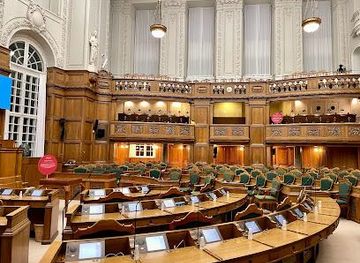
The current Christiansborg Palace, constructed between 1907 and 1928, represents a fundamental shift in purpose. Designed by architect Thorvald Jørgensen in Historicist style blending Baroque and Neoclassical elements, this palace was built to house Denmark's executive, legislative, and judicial branches—making it the only building in the world containing all three governmental powers. The Danish Parliament (Folketinget), Supreme Court, and Ministry of State occupy its halls alongside the Royal Reception Rooms reserved for official royal functions.The palace's architecture deliberately references its predecessors through stylistic echoes, creating a visual narrative of continuity despite the ruptures of fire and reconstruction. The Great Hall, a 40-meter-long gallery, dominates the interior with its overwhelming scale and grandeur. The chapel, reconstructed in 1826 in strict Neoclassical style with a distinctive dome, was consecrated to mark the 1,000th anniversary of Christianity's introduction to Denmark.Royal Rooms and Ceremonial Splendor
The Royal Reception Rooms, located on the first floor's bel étage (beautiful floor), showcase the palace's most spectacular interiors. Visitors ascend the King's Staircase to reach the Tower Room, which displays a series of tapestries with motifs from Danish folk ballads designed by Joakim Skovgaard. The oval Throne Room features twin thrones and serves as the ceremonial heart where foreign ambassadors are received and where the proclamation of Danish monarchs takes place—most recently when HM Frederik X's accession was announced from the balcony in 2024.The Royal Banquet Hall displays three retracted mural paintings depicting Christian VI, Frederik VI, and Christian VIII. The Abildgaard Room preserves three large paintings salvaged from the first palace: portraits of Christian I, Christian III, and Frederik II. The Alexander Room is decorated with Bertel Thorvaldsen's marble frieze, "The Entry of Alexander the Great into Babylon," originally created for the second Christiansborg.The Great Hall's Modern Tapestries: A Thousand Years Woven
The most striking contemporary feature is the Great Hall's seventeen monumental tapestries, designed by Danish artist Bjørn Nørgaard between 1990 and 2000. These colorful, modern works depict over 1,000 years of Danish and world history, replacing traditional historical tapestries with a contemporary artistic vision. The tapestries' bold aesthetics and historical scope create a powerful visual statement about Denmark's place in the broader sweep of human civilization.Layers of History: Medieval Ruins and Royal Stables
Beneath the palace lie 800-year-old ruins accessible to visitors, including medieval walls dating to Bishop Absalon's original 1167 fortress and remnants of subsequent structures. These archaeological layers provide tangible connection to Copenhagen's founding era. The Royal Stables, preserved from earlier palace iterations, showcase the equestrian heritage of Danish royalty. The Palace Chapel, with its Rococo interior designed by Nicolai Eigtved and later Neoclassical reconstruction, remains an active sacred space where royal ceremonies and services continue to take place.A Living Palace: Governance and Ceremony in Balance
ChristiansborgPalace functions as an active governmental and ceremonial center, not a museum frozen in time. The Danish Parliament conducts legislative business within its walls, the Supreme Court administers justice, and the Royal Family uses the reception rooms for state visits, audiences, and official dinners. This dual purpose—simultaneously a working seat of power and a heritage site open to public exploration—distinguishes Christiansborg from purely historical palaces. Visitors walk the same corridors where contemporary political decisions are made and where the monarchy continues to perform its constitutional role.Explore the best of what Christiansborg Palace has to offer













More about North Zealand
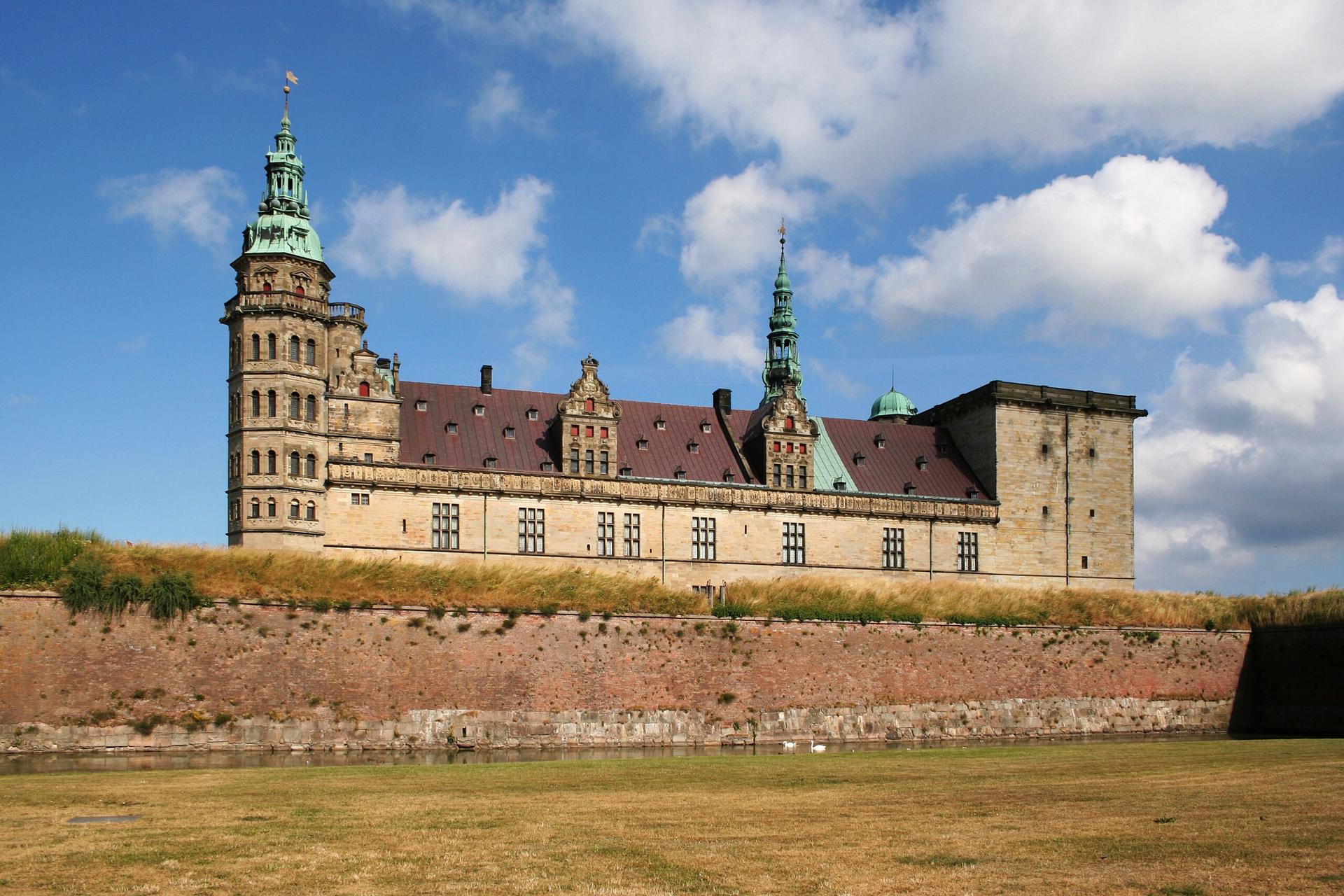
Explore North Zealand, Denmark's enchanting region of castles, beaches, and royal estates, perfect for history buffs, nature enthusiasts, and seaside lovers.
Tell me more about North Zealand
Medieval square in Copenhagen's Latin Quarter where historic architecture, local cafés, and bohemian charm converge.
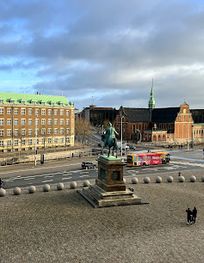
Bronze monument in central Copenhagen commemorating King Frederik VII and Denmark’s 19th-century transition to constitutional monarchy, steps from political landmarks.