Vippefyret, Skagen Travel Guide
A simple wooden tilting beacon on a dune above Skagen’s shore, Vippefyret brings Denmark’s early lighthouse history to life amid sea views and northern light.
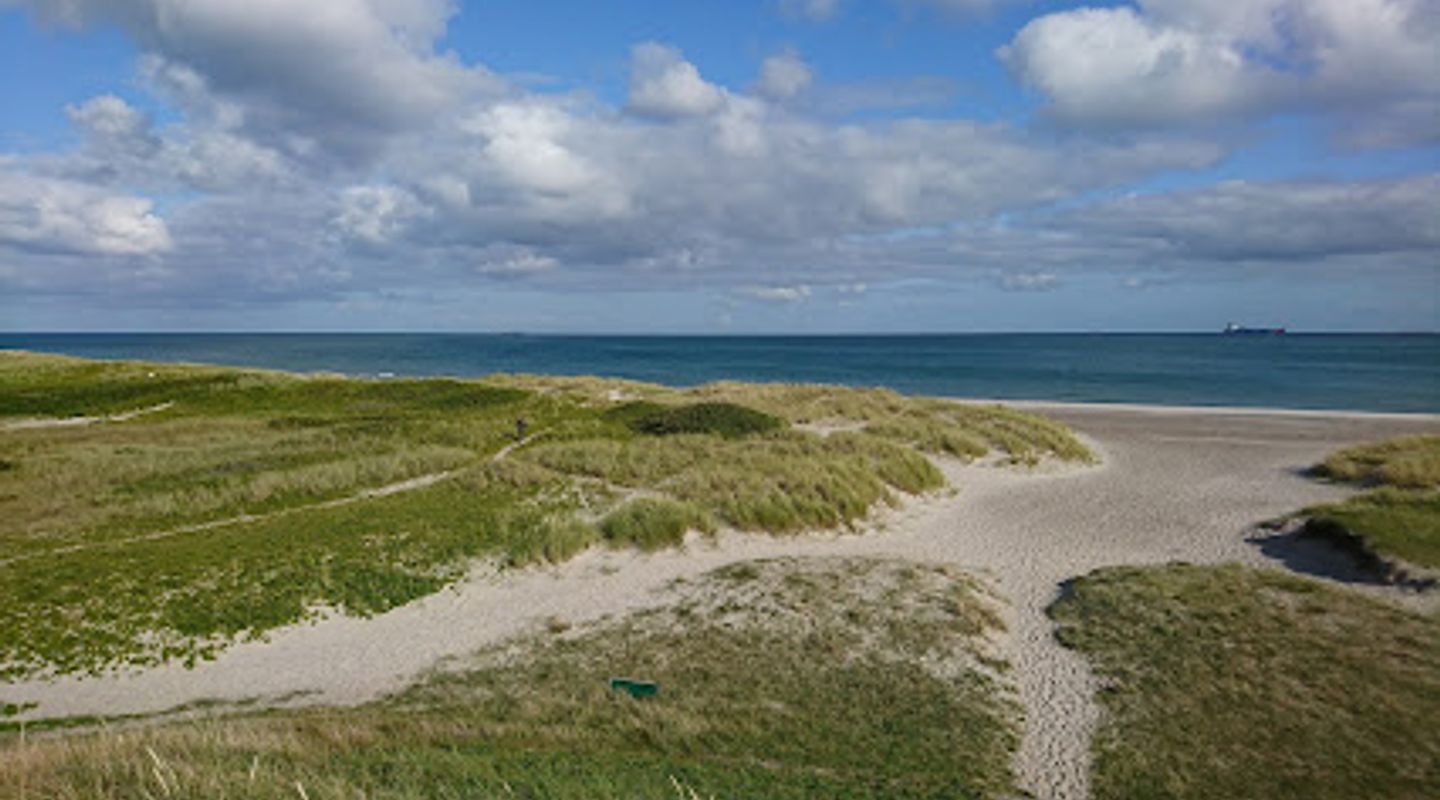
Perched on a sandy rise just east of Skagen, Vippefyret is a full-scale reconstruction of Denmark’s first tilting lighthouse, originally built in 1627 to guide ships safely past the treacherous reefs off Grenen. The striking wooden beam with its iron fire basket now serves as an open-air monument to early maritime navigation, set between dunes, beach and town. It is also an easily reached viewpoint, with sweeping vistas over Sønderstrand, Skagen Harbour and the ever-restless Kattegat.
A brief summary to Vippefyret
- Fyrstuevej 17, Skagen, 9990, DK
- Duration: 0.5 to 1 hours
- Free
-
 Outdoor
- Mobile reception: 4 out of 5

Know before you go
Hi, I'm Eve. Here are a few practical things to know before exploring Vippefyret.
- Combine your stop at Vippefyret with a walk along Sønderstrand; the short climb up the dune is rewarded with broad views over beach, harbour and town.
- Come near sunset on a clear day to see the tilting beam silhouetted against dramatic skies and soft golden light over the Kattegat.
- Wear shoes suitable for sand and short, uneven paths; the approach involves walking over dunes rather than paved surfaces right up to the beacon.
- If you visit around Midsummer (Sankt Hans), check locally whether the beacon will be ceremonially lit during the evening celebrations on the beach below.
Do you manage this location?
Take control to get all the benefits, like improved information, better appearance, and stronger visibility across AI-powered discovery. Learn more about listing your business on Evendo
Activate your presenceOther nearby places you may find interesting
The closest places of the same kind, if this one is not quite what you had in mind.

Explore Vippefyret on the Map
A handpicked selection of must-see spots near Vippefyret, mapped for you.
Getting There
-
Walking from central Skagen
From Skagen’s central streets, reaching Vippefyret on foot typically takes 10–20 minutes, depending on your starting point and pace. The route is gently sloping and follows pavements and sandy paths, with a short climb over firm dune terrain near the end. Surfaces can be uneven and windy conditions are common, so bring a windproof layer. This option is free and suits most visitors with average mobility.
-
Bicycle within Skagen area
Cycling is a popular way to reach Vippefyret from accommodation around Skagen, with journey times usually between 5 and 15 minutes. Several local roads and cycle-friendly routes lead towards the shoreline near the beacon. You can leave your bike at the edge of the dunes before walking the final sandy stretch. Bike rental in Skagen typically starts around 80–120 DKK per day, and this option offers flexibility to continue further towards Grenen or other coastal viewpoints.
-
Bus and short walk from wider Skagen
If you are staying slightly outside the town, regional buses stopping in Skagen allow you to get close before walking the last part to the dunes. Travel time from nearby villages in North Jutland is commonly 20–45 minutes, with tickets in the range of 25–60 DKK depending on distance and ticket type. Bus services run more frequently in daytime and summer than late evenings or off-season, so checking schedules in advance is advisable. From the bus stops in town, expect an additional 10–20 minutes of walking on mostly level streets.
For the on-the-go comforts that matter to you
-
 Restrooms
-
 Trash Bins
-
 Information Boards
Discover more about Vippefyret
An ingenious wooden beacon above the dunes
Vippefyret stands on a low sandy hill just outside central Skagen, a simple yet arresting silhouette against the North Jutland sky. At first glance it looks almost like a giant seesaw: a massive horizontal timber beam resting on a sturdy wooden frame, with an iron basket suspended from one end. Today the basket is empty, but in the 17th century it held blazing tar, wood or coal, hoisted high above the surf to guide ships along one of Denmark’s most dangerous stretches of coast.The construction is deceptively straightforward. The long arm can be raised and lowered by hand, so the fire basket could be brought down to ground level for refuelling before being tipped aloft again. This practical mechanism gave the structure its name: “vippefyr” literally means a tilting or rocking lighthouse, a working tool as much as a landmark.From lifesaving innovation to careful reconstruction
The history behind this modest structure is far-reaching. The first tilting lighthouse at Skagen was erected in 1627, after an earlier beacon on the headland burned down. Its task was to warn sailors away from the shallow reefs and shifting sands of Grenen, where the Skagerrak and Kattegat meet and countless ships had been lost. The system proved so effective that similar tilting beacons were later built on other exposed Danish coasts.The original Skagen tilt beacon eventually disappeared as more modern lighthouses took over, but the idea of its revival never quite faded. A faithful reconstruction was first raised in 1913 to mark Skagen’s 500th anniversary as a market town. The current structure dates from 1958, rebuilt once more as an authentic copy, right down to the proportions of the beam and the form of the iron basket. It is no longer essential to navigation, yet it preserves a crucial chapter of maritime heritage in tangible form.Wide horizons over sea, harbour and town
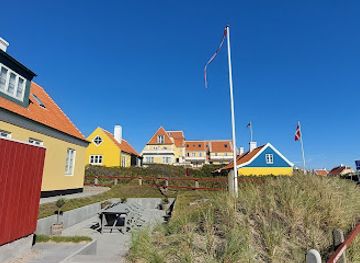
Beyond its historical value, Vippefyret is a viewpoint that neatly frames Skagen’s special setting between two seas. From the sandy knoll you can look out over Sønderstrand, a broad, pale beach often ruffled by wind and dotted with bathers in summer. Turn slightly, and the old harbour and parts of the town’s yellow houses with red-tiled roofs come into view, illustrating how close city and sea sit together.The light here is famously clear, the same northern glow that drew generations of painters to Skagen. On days with drifting clouds, the beam of Vippefyret cuts a dark line against continually shifting tones of blue and grey. In the evening, the low sun washes the dunes in soft gold, while the surf rolls in as a constant, muffled soundtrack below the hill.Everyday stillness and midsummer fire
Most of the year, the area around Vippefyret feels relaxed and unhurried. A sandy path leads up from the beach and neighbouring streets, and people linger briefly to take photographs, read the information board and watch the horizon before continuing towards Grenen, the town centre or the nearby white lighthouse. The open site, with short grass and patches of sand, invites you to pause, sit on the slope and simply watch waves, seabirds and passing fishing boats.Once a year, however, the beacon briefly comes back to symbolic life. For the Midsummer Eve celebration of Sankt Hans, festivities on the beach below are accompanied by lighting the basket at Vippefyret. Flames flare against the pale northern twilight, echoing the fires that once served as vital signals for seafarers. It is a reminder that this quiet wooden mechanism was, in its time, an advanced piece of safety infrastructure for a maritime nation.A compact stop on a broader Skagen walk
Vippefyret is not a large complex but a compact outdoor stop that fits naturally into a wider exploration of Skagen’s coast. You can comfortably see the structure, read about its story and enjoy the views in a short visit, yet the simplicity of the setting encourages you to slow your pace. Combined with a stroll along Sønderstrand, a detour to the nearby lighthouses or a walk further towards Grenen, it becomes one of several small but distinctive touchpoints with the region’s strong relationship to the sea and its light.












Your all‑in‑one travel companion app
Explore expert travel guides, compare and book tours, experiences, hotels, and more—all from the palm of your hand. Download now for seamless trip planning wherever your wanderlust takes you.


Explore More of Skagen
Looking beyond Vippefyret? Discover Skagen for broader travel guides, local hot-spots, and regional highlights.
Explore Skagen