

The Viking Fortress Trelleborg, Slagelse Travel Guide
Free Guide: Denmark's best-preserved Viking ring fortress—a thousand-year-old military masterpiece with museum, reconstructed village, and annual festival.


A brief summary of The Viking Fortress Trelleborg
Denmark's best-preserved Viking ring fortress—a thousand-year-old military masterpiece with museum, reconstructed village, and annual festival.
Trelleborg is one of Denmark's most significant Viking monuments—a perfectly preserved circular ring fortress built around 980 AD by King Harald Bluetooth near Slagelse on Zealand. This UNESCO World Heritage site features reconstructed longhouses, an on-site museum displaying archaeological artifacts, a Viking village, and hosts the renowned annual Viking Festival. The fortress once housed approximately 1,300 people and commanded strategic control of the Great Belt's sea traffic between Zealand and Funen.
On-site amenities
 Restrooms
 Food options
 Drink options
 Information boards
 Seating areas
 Visitor centre
 Picnic areas
- Address
- Trampestien Tude Ådal, 4200 Slagelse
- Website
Getting there
Car from Copenhagen
Public Transport from Copenhagen
Bus from Slagelse Town
Cycling from Slagelse
Discover more about The Viking Fortress Trelleborg
A Masterpiece of Viking Military Engineering
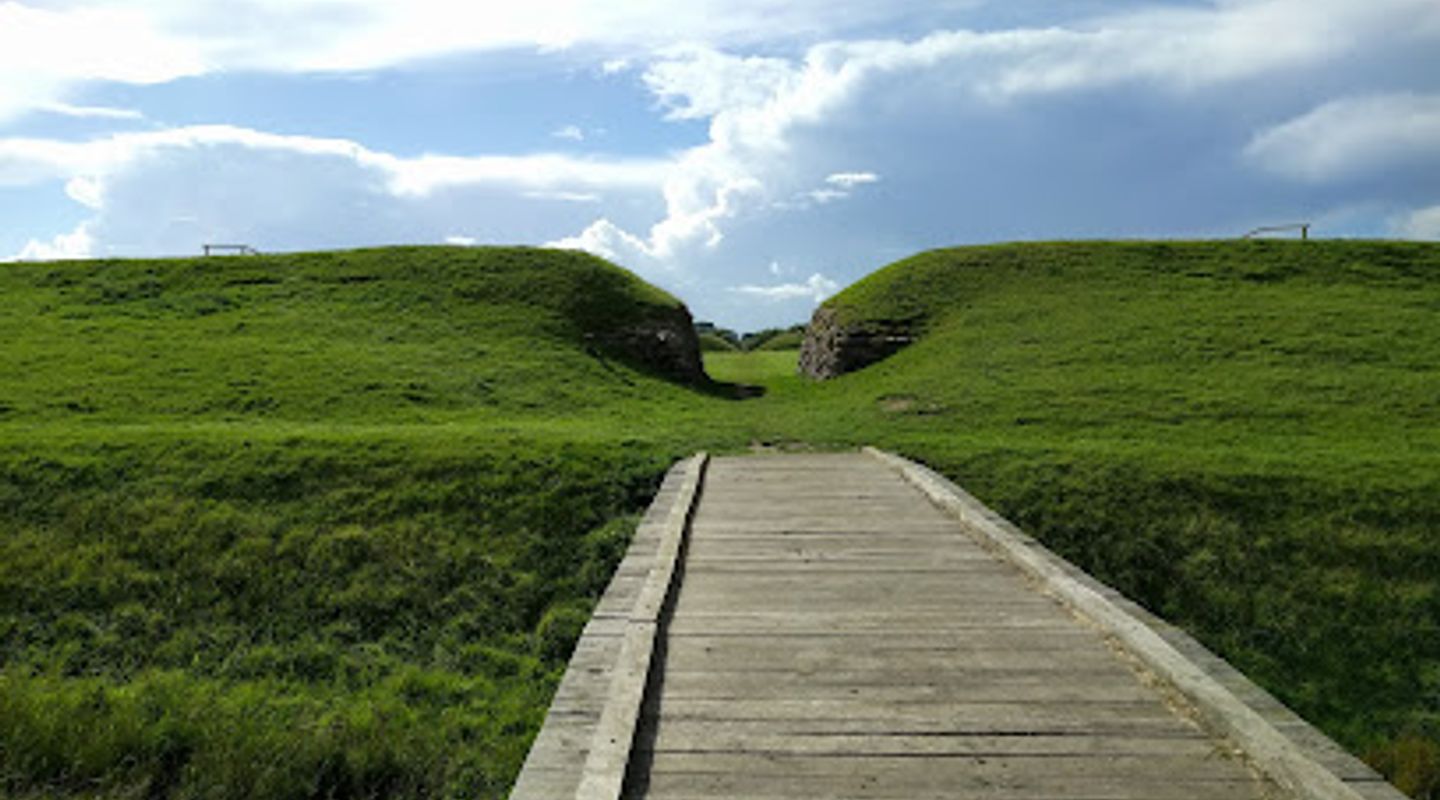
Trelleborg stands as the finest surviving example of Viking ring fortress architecture. Built around 980 AD by King Harald Bluetooth, this perfectly circular fortification was strategically positioned on a peninsula jutting into swampland between two rivers, with direct access to the Great Belt via navigable waterways. The fortress's geometric precision is striking: two roads cross at right angles through the exact center, leading to four gates positioned opposite one another. Within the four quarters stood sixteen nearly identical longhouses arranged in squares, capable of sheltering approximately 1,300 people. Unlike other Viking ring fortresses, Trelleborg featured an additional bailey structure, making it uniquely fortified among its contemporaries.
Archaeological Revelations and Daily Life
Excavations between 1934 and 1942 transformed Trelleborg from mysterious earthworks into a vivid window onto Viking existence. Archaeologists uncovered pottery, locks, knives, combs, scissors, and needles that illuminate domestic routines. Workshops for silver, gold, and bronze work reveal the fortress's economic sophistication. Three mass graves containing soldiers with deep combat wounds suggest violent conflict, while strontium analysis of skeletal remains indicates that many fallen warriors originated from Norway and Poland, revealing King Harald's far-reaching military alliances. Evidence of fire and destruction points to the fortress being attacked and possibly burned, though some gate areas show signs of extended occupation before abandonment.
The Museum and Reconstructed Village
The on-site museum, established in 1995, presents artifacts from the archaeological excavations alongside detailed models and reconstructions that bring the fortress to life. Visitors can examine the only surviving Viking shield in Denmark, skeletal remains of Viking inhabitants, and objects from sacrificial wells. A restored Viking longhouse stands near the museum, allowing visitors to step inside and experience the scale and atmosphere of original structures. The reconstructed Slagløse Viking village nearby showcases Viking-era buildings, including a house replica from Hedeby, providing additional context for understanding settlement patterns and construction techniques.
UNESCO Recognition and Cultural Significance
In 2023, Trelleborg joined four other Danish ring fortresses—Aggersborg, Fyrkat, Nonnebakken, and Borgring—as a UNESCO World Heritage Site. This recognition honors the fortresses' unique architecture and their testimony to the strategic and military power of the House of Knýtlinga (Jelling Dynasty). Trelleborg's prominence in Viking studies is underscored by its appearance in popular culture, including Michael Crichton's novel "Eaters of the Dead," where it features as a significant stop on Ibn Fadlan's journey.
The Annual Viking Festival Experience
Each July, Trelleborg transforms into a living Viking settlement during the two-week Viking Festival, one of Denmark's largest historical reenactments. The event draws up to 1,000 reenactors, featuring massive battle recreations with 500 Viking warriors, extensive marketplaces, and demonstrations of traditional crafts including blacksmithing and wood carving. This immersive experience allows visitors to witness combat techniques, trade practices, and daily activities that characterized life within the fortress walls a thousand years ago.
Landscape and Natural Setting
The fortress occupies a landscape of natural beauty within the Tude valley, where the original swampy terrain has evolved into a picturesque countryside setting. The visible earthwork ramparts, particularly the outer eastern rampart, remain impressive despite some sections never being completed before the site's abandonment. Walking the grounds, visitors can trace the fortress's geometric layout and imagine the strategic advantage its position provided for controlling maritime traffic and defending the Danish realm.
Evendo Review Centre
 Google
Guest reviews
Best time to go
Quietest: Jan, Feb & Mar · before 7am or from 7pm
Busy times are Evendo estimates for a typical year, to help you plan. Actual crowds vary with events, school holidays and the weather.
Explore The Viking Fortress Trelleborg on the map
A handpicked selection of must-see spots near The Viking Fortress Trelleborg, mapped for you.
Get your free copy of our complete guide to The Viking Fortress Trelleborg, delivered straight to you.
Everything on this page, from opening hours and how to get there to Eve’s tips and the best time to go, in one PDF you can read offline, print or share.
Already have an account? Sign in
Your The Viking Fortress Trelleborg guide is ready.
We'll send it to · Not you? Sign out

Getting your guide ready…
We are putting together a fresh copy of the The Viking Fortress Trelleborg guide. This can take up to a minute.
This can take a few moments. If your browser asks, choose Allow so the download can start. You'll find the guide in your Downloads folder.
Nothing happened? Download it again
Sorry, the guide is taking longer than usual. Please try again in a minute, or get it by email instead.
Other nearby places you may find interesting
The closest places of the same kind, if this one is not quite what you had in mind.
-
-
-
-
-


Swipe for more places
More to explore near The Viking Fortress Trelleborg
-
 Best experiences near The Viking Fortress Trelleborg
-
 Best hotels near The Viking Fortress Trelleborg
-
 Best landmarks near The Viking Fortress Trelleborg
-
 Best attractions near The Viking Fortress Trelleborg
-
 Best shops near The Viking Fortress Trelleborg
-
 Best restaurants near The Viking Fortress Trelleborg
-
 Best bars near The Viking Fortress Trelleborg


Do you manage this location?
Take control to get all the benefits, like improved information, better appearance, and stronger visibility across AI-powered discovery.
Explore more
Explore more of Slagelse
Discover Slagelse: A captivating blend of Viking history, vibrant culture, and natural beauty on the charming island of Zealand, Denmark.
Explore Slagelse
Explore more of Denmark
Discover Denmark: A perfect blend of history, modern design, and the cozy concept of hygge. Explore vibrant cities, serene landscapes, and world-class cuisine.
Explore Denmark
